

Can women use finasteride before hair transplantation? In selected adult women, a doctor may consider it for certain forms of hair loss, but it is not suitable for everyone and requires careful safety screening. It is generally avoided during pregnancy and in women who could become pregnant without reliable contraception, so your doctor must confirm whether it is appropriate before a transplant plan is made.
- Finasteride may be considered off-label for selected women with androgen-related hair loss after a medical assessment.
- Pregnancy exposure is a major safety concern, so women who are pregnant or may become pregnant should not use finasteride.
- Hair loss should be diagnosed before medication or transplantation, because shedding has many possible causes.
- Finasteride can take several months to show whether it is helping and does not create immediate transplant results.
- A hair transplant plan should protect existing hair as well as replace areas where follicles have been permanently lost.
01Can Women Use Finasteride Before Hair Transplantation?
Can women use finasteride before hair transplantation? The answer is sometimes, but only after a doctor has identified the likely cause of hair loss and reviewed important safety factors. Finasteride is most often discussed for androgen-related pattern hair loss, where hormones may contribute to gradual thinning. In women, its use is more complex than in men because pregnancy exposure can cause serious risks to a developing male fetus. For this reason, a transplant clinic should not treat finasteride as a routine step for every female patient. The decision needs an individual medical assessment and clear counselling.
Before recommending a surgical procedure, clinicians usually look at whether the hair loss is active, stable, temporary, or linked to an untreated health issue. Female pattern hair loss can resemble other conditions, including iron deficiency, thyroid disease, stress-related shedding, traction alopecia, inflammatory scalp disorders, nutritional problems, and hair loss after childbirth. A transplant cannot correct every type of thinning. If the underlying cause remains active, native hairs around transplanted grafts may continue to miniaturise or shed, which can affect the long-term cosmetic balance.
For women who are medically suitable, finasteride may be considered as one part of a wider hair-preservation plan rather than as a replacement for transplantation. The aim is usually to help maintain vulnerable existing hairs while surgical grafts are planned for suitable areas. However, medication response varies, and some patients will not be candidates for finasteride at all. Your doctor will consider your diagnosis, age, menstrual and reproductive status, medical history, current medicines, and the pattern and speed of hair loss before advising on the next step.
02Why finasteride is used for certain types of female hair loss
Finasteride works by blocking an enzyme called 5-alpha-reductase. This enzyme converts testosterone into dihydrotestosterone, often shortened to DHT. In genetically susceptible scalp follicles, DHT can contribute to progressive miniaturisation. The hairs may become finer, grow for a shorter period, and provide less coverage over time. By reducing DHT levels, finasteride may help slow this process in some people with androgen-related hair loss. It does not restore every weakened follicle, and it does not address hair loss caused by scarring, nutritional deficiencies, autoimmune disease, or a sudden temporary shedding event.
In many settings, finasteride is approved for male pattern hair loss rather than female pattern hair loss. When it is prescribed to a woman for hair loss, it may therefore be an off-label use. Off-label prescribing can be clinically appropriate, but it means the doctor should explain why the medicine is being considered, what alternatives are available, and what monitoring or precautions may be needed. A patient should have enough information to make an informed decision rather than assuming that a medicine commonly used for men will have the same role for women.
Whether finasteride is likely to help depends heavily on the diagnosis. Women with gradual widening of the part line, diffuse thinning over the top of the scalp, or a family history of pattern hair loss may need evaluation for female pattern hair loss. Some women also have signs of increased androgen activity, such as acne, irregular periods, or increased facial hair, although these signs are not present in every case. Blood tests are not required for all patients, but a doctor may request them when the history or examination suggests a hormonal, nutritional, or medical cause.
03Who may need to avoid finasteride or use extra precautions
The most important safety point is pregnancy. Finasteride is generally contraindicated in women who are pregnant because of the potential risk to development of external genitalia in a male fetus. Women who may become pregnant also need careful medical advice before it is considered. Depending on the clinical situation, a doctor may discuss reliable contraception, pregnancy testing, or a different treatment approach. If a patient is planning pregnancy in the near future, this should be raised early because it can change the treatment plan and the timing of any hair transplant.
Finasteride may also be unsuitable or require special consideration in women who are breastfeeding, have certain liver conditions, are taking particular medicines, or have a history that makes hormonal treatment less appropriate. Possible side effects can include changes in mood, reduced sexual desire, breast tenderness, headaches, or other symptoms. Not every patient experiences side effects, but they should be discussed before treatment begins. Any new or concerning symptom should be reported to the prescribing clinician promptly rather than managed alone or ignored.
Can women use finasteride safely if they are past menopause? In some cases, doctors may be more willing to consider it for postmenopausal women because pregnancy-related risk is no longer a concern. This does not mean it is automatically suitable. The diagnosis still needs to be correct, possible side effects still matter, and the expected benefit should be realistic. A medication review and scalp assessment remain important, especially when a transplant is being considered as part of longer-term hair restoration.
04Finasteride timing before a female hair transplant
There is no single timetable that suits every woman before hair transplantation. If a doctor prescribes finasteride for an appropriate diagnosis, it may be started well before surgery to see whether hair shedding slows or existing hairs appear more stable. Hair growth cycles are slow, so any benefit is usually assessed over months rather than weeks. Starting treatment may also help the clinical team understand whether the apparent thinness is partly reversible with medical care, which can influence whether surgery is needed and how many grafts should be planned.
In other situations, a doctor may recommend delaying surgery while the cause of shedding is investigated or treated. This is especially relevant when hair loss began suddenly, follows illness, childbirth, rapid weight loss, emotional stress, or a major dietary change. Temporary shedding conditions can improve as the trigger resolves, while transplanting too early may be unnecessary or may not produce the balanced result a patient expects. A careful diagnosis can protect both the donor area and the future design of the hairline or part-line coverage.
Can women use finasteride as a way to guarantee that transplanted grafts will grow? No medication can guarantee a surgical result. Transplanted follicles and surrounding native hairs are different parts of the treatment picture. Finasteride, where medically appropriate, is generally intended to support vulnerable non-transplanted hair in androgen-sensitive areas. Graft survival depends on multiple clinical and aftercare factors. At Acibadem Hair Transplant Center, graft outcomes are assessed using trichoscopic graft-survival measurement at month 12, but your doctor will explain which factors apply to your individual plan.
05Finasteride, spironolactone, and other medical options
Finasteride and spironolactone are sometimes discussed for female pattern hair loss, but they work differently and neither is universally better. Spironolactone has anti-androgen effects and may be considered by doctors for selected women, particularly where clinical features suggest androgen sensitivity. Finasteride lowers DHT by targeting 5-alpha-reductase. The more appropriate choice depends on the diagnosis, reproductive plans, blood pressure, kidney function, potassium level, other medicines, potential side effects, and the clinician’s judgement. It is not advisable to choose between them based only on online reviews or another person’s experience.
Spironolactone can have its own precautions. It may affect blood pressure and potassium levels, and it can cause symptoms such as dizziness, breast tenderness, menstrual changes, or increased urination in some patients. It also requires pregnancy-related caution. A clinician may recommend blood tests or follow-up depending on the dose, medical history, and other medicines being used. For these reasons, it should only be taken under medical supervision. Combining treatments may be considered in selected cases, but only a prescribing doctor can determine whether this is medically reasonable.
Other management options may include topical treatments, correction of a documented deficiency, changes to hairstyles that place less tension on the roots, treatment of scalp inflammation, or management of an underlying hormonal condition. Some women may benefit from non-surgical measures alone, while others may later be suitable for transplantation once the hair loss pattern is understood. A balanced plan focuses on preserving present hair, treating reversible contributors where possible, and using surgery only where it has a clear role.

06How doctors assess women before recommending transplantation
A responsible assessment begins with a detailed history. The clinician may ask when thinning started, whether shedding is sudden or gradual, whether there is itching or scalp pain, what hairstyles and chemical treatments are used, and whether there have been recent illnesses, pregnancies, changes in diet, or stressful events. Family history can also be relevant. This discussion helps distinguish a long-term pattern from a sudden shedding episode and helps identify concerns that may need medical treatment before any surgical decision is made.
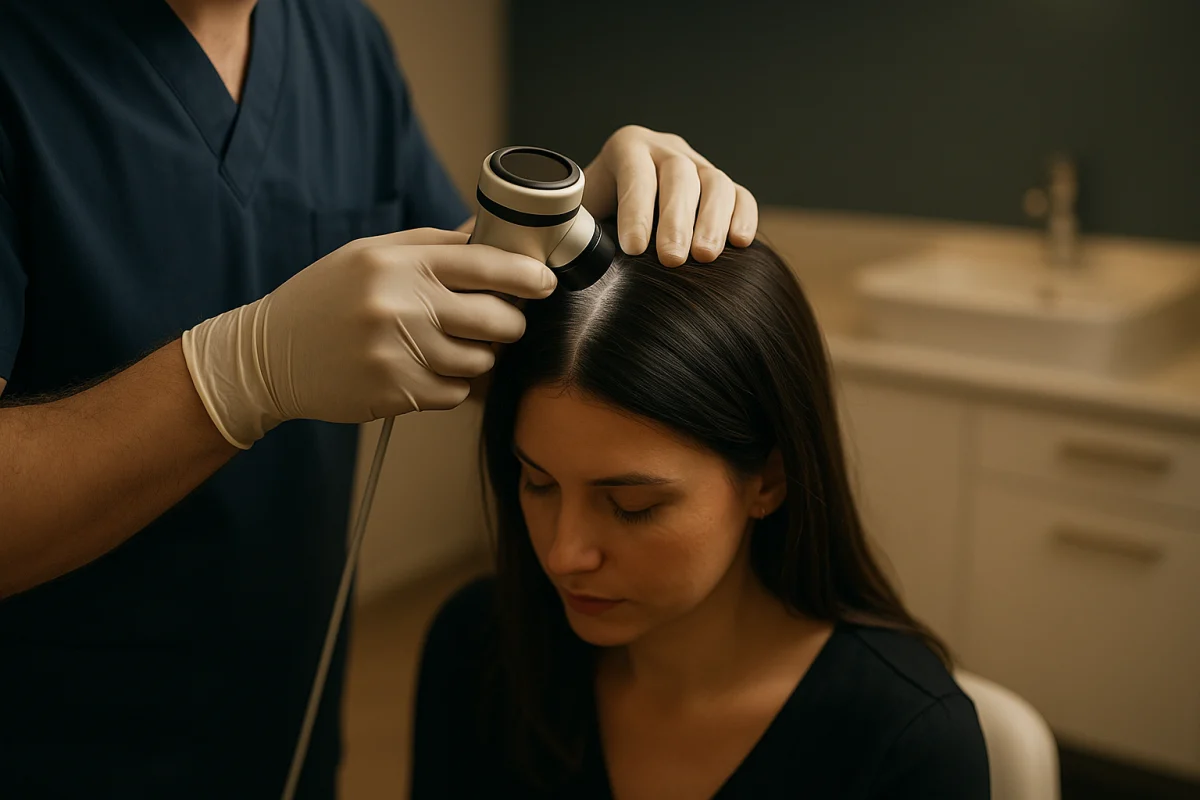
The scalp examination is equally important. A doctor may assess the distribution of thinning, the quality and density of the donor hair, the width of the part line, and whether there are signs of inflammation or scarring. Trichoscopy can help examine hair shaft variation and follicle patterns in greater detail. For female patients, donor-area assessment is particularly important because diffuse thinning may sometimes affect areas that might otherwise be considered for graft harvesting. Surgery should be planned conservatively to avoid weakening the donor zone.
At our dedicated hair restoration clinic in Istanbul, patients can begin with a free online hair analysis reviewed by doctors. This can help identify whether an in-person assessment and further medical investigation may be needed. A photograph-based review cannot replace an examination, laboratory assessment, or prescribing consultation, but it can provide an initial direction. Patients receive follow-up support for 12 months as part of all-inclusive packages, which also include VIP transfer, a 4-star hotel, and a care kit for those who proceed with an eligible treatment plan.
07Questions to ask before starting medication or booking surgery
Before taking finasteride, ask what type of hair loss you have and how confident the diagnosis is. It is reasonable to ask whether a scalp examination, trichoscopy, blood tests, or referral to another specialist may be useful. You can also ask what changes would suggest that the treatment is working, how long an evaluation period should be, and what symptoms should be reported. Clear answers are important because hair treatments often require patience, and early expectations can strongly affect satisfaction with later decisions.
If you are considering a transplant, ask whether your hair loss is stable enough for surgery and whether your donor area is strong enough to support the intended coverage. Women often have different patterns of thinning from men, so a copied hairline design or a standard graft number is not appropriate. The surgical plan should take account of existing density, future hair-loss risk, the need to preserve donor reserves, and whether medication may help protect non-transplanted hair. A clinic should explain these considerations in plain language.
You should also tell the medical team if you are pregnant, breastfeeding, trying to conceive, uncertain about contraception, or expecting to make reproductive changes in the near future. This information is essential, not a minor detail. Do not start, stop, share, or adjust finasteride without speaking with the prescribing clinician. With an accurate diagnosis and a realistic plan, women can explore medical and surgical options in a safer, more informed way.
08Frequently Asked Questions
What does finasteride do in the female body?
Finasteride reduces the conversion of testosterone to DHT, a hormone that can contribute to follicle miniaturisation in genetically susceptible people. In selected women with androgen-related hair loss, this may help slow further thinning, but response varies. It can also cause side effects and has important pregnancy-related risks, so it requires a doctor’s assessment.
For female hair loss, is finasteride or spironolactone better?
Neither medicine is automatically better for every woman. The suitable option depends on the type and cause of hair loss, reproductive plans, medical history, other medicines, and possible side effects. A doctor may consider one, the other, neither, or a broader treatment plan after proper evaluation.
What did Jennifer Lopez use for hair loss?
There is no reliable clinical reason to use a celebrity’s reported beauty routine as guidance for treating hair loss. Public reports can be incomplete, promotional, or inaccurate, and they do not confirm a diagnosis or treatment outcome. A medical assessment is a safer basis for choosing hair-loss care.
Is there a female version of finasteride?
There is not generally a separate finasteride medicine made specifically for women with hair loss. The same active ingredient may be considered for selected women under medical supervision, often as an off-label prescription depending on local regulations and clinical judgement. It is not appropriate during pregnancy and may not be appropriate for women who could become pregnant.
هذا المقال للمعلومات العامة فقط، وهو ليس بديلاً عن الاستشارة الطبية المتخصصة.
 06
 12