في هذا المقال9
- نظرة عامة
- Normal dht levels in men: why reference ranges need context
- Why a single DHT result cannot diagnose male pattern hair loss
- Medical assessment before hair transplant surgery
- How DHT-related hair loss affects graft and hairline planning
- Medication discussions and stabilising existing hair
- Choosing a technique after the diagnosis is clear
- Recovery, follow-up, and evaluating the result at month 12
- Frequently Asked Questions
DHT is an important factor in common male pattern hair loss, but normal dht levels in men do not alone show whether someone needs a hair transplant. Your doctor will assess your hair-loss pattern, scalp condition, donor area, family history, and long-term treatment plan before recommending surgery.
- DHT can contribute to male pattern hair loss in people with genetically sensitive follicles, even when blood results are within a reference range.
- A DHT blood test is not usually enough to diagnose hair loss or decide whether a transplant is appropriate.
- Stabilising progressive hair loss may be discussed before surgery to help protect existing native hair.
- Donor density, hair calibre, scalp health, and realistic graft planning are central to a safe transplant plan.
- A hair transplant redistributes resistant donor follicles; it does not remove the underlying tendency for pattern hair loss.
01Dihydrotestosterone Levels and Male Hair Transplant Planning
Dihydrotestosterone, usually called DHT, is a hormone made from testosterone. It has normal roles in male development and adult health. However, in men with inherited follicle sensitivity, DHT can gradually shorten the active growth phase of scalp hair. This process is known as follicle miniaturisation and is a key feature of androgenetic alopecia, or male pattern hair loss. For this reason, normal dht levels in men should be understood in the wider context of hair and scalp findings, rather than as a stand-alone answer about hair loss.
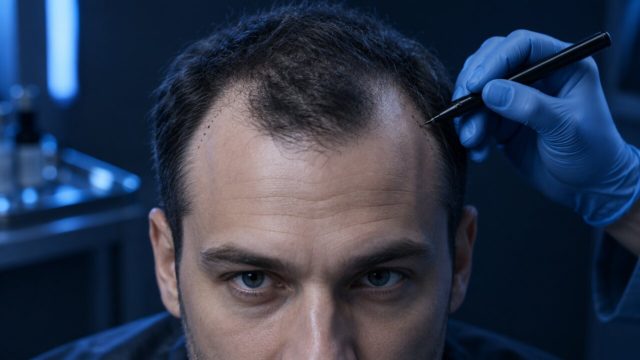
Hair transplant planning is not based on a hormone number alone. A specialist normally looks at where thinning has started, how quickly it has progressed, whether the donor area appears stable, and whether there are signs of another condition such as inflammation, diffuse shedding, or scarring. The aim is to identify the cause as carefully as possible and create a plan that can still look natural if hair loss continues over time.
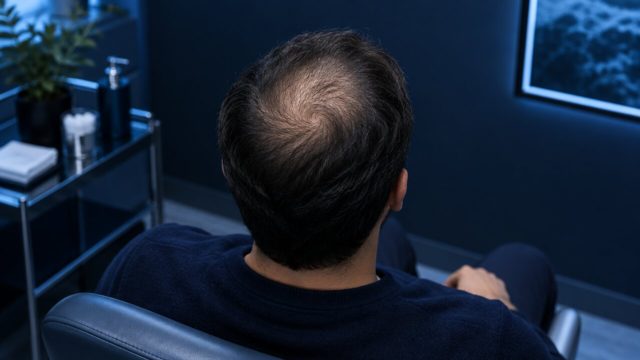
For many patients, DHT matters most because of how individual scalp follicles respond to it. Some men have considerable crown or hairline thinning despite laboratory values within their local reference range. Others may have higher measured levels and little visible hair loss. Genetics, local follicle sensitivity, age, and the pattern of loss all influence the clinical picture. This is why a professional consultation should combine medical history, examination, and long-term design planning.
02Normal dht levels in men: why reference ranges need context
There is no single DHT value that can predict who will lose hair or who will benefit from a transplant. Laboratories use their own methods, units, and reference intervals, which may vary by country and by age group. A result may be reported as within range while a person still has androgenetic alopecia. Your doctor will interpret any result using the laboratory report, your symptoms, relevant medicines, and the appearance of your scalp.
DHT is produced when an enzyme called 5-alpha-reductase converts some testosterone into DHT. This activity occurs in several tissues, including the skin and hair follicles. A blood test measures circulating hormone at one point in time, but it does not directly measure the sensitivity of follicles in a particular area of the scalp. It also does not reliably show the local hormonal environment around each hair follicle.
Testing may be more relevant when hair loss is unusually rapid, diffuse, associated with other symptoms, or not typical of male pattern loss. Depending on the history, a clinician may consider other assessments, such as thyroid-related testing, iron status, nutritional factors, or evaluation for scalp disease. Tests should be selected by a qualified clinician rather than ordered simply because a person is considering hair restoration surgery.
03Why a single DHT result cannot diagnose male pattern hair loss
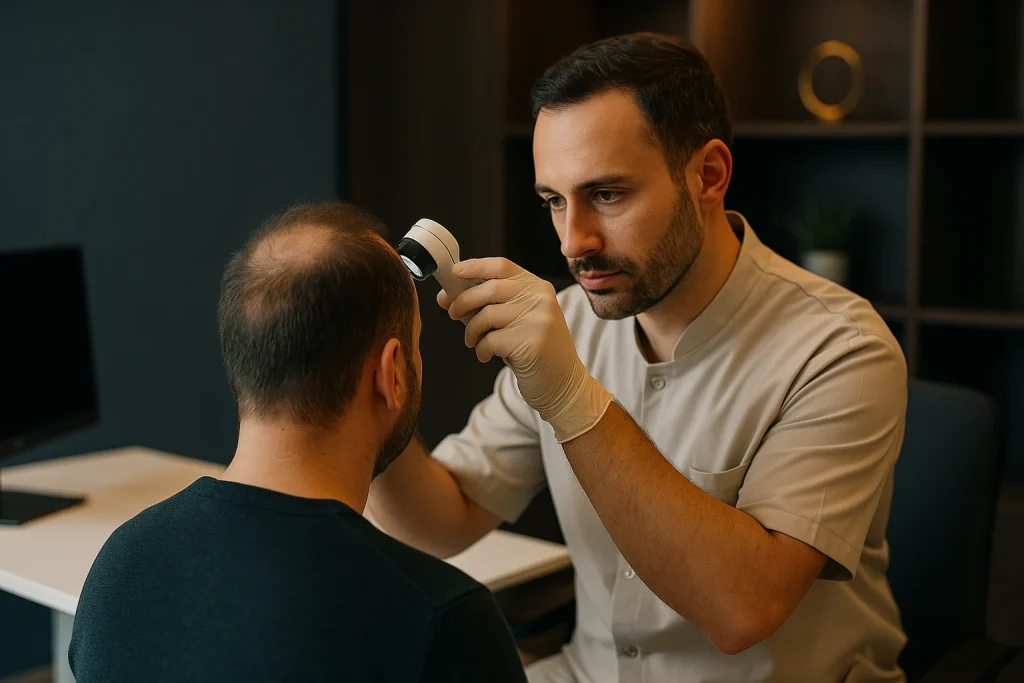
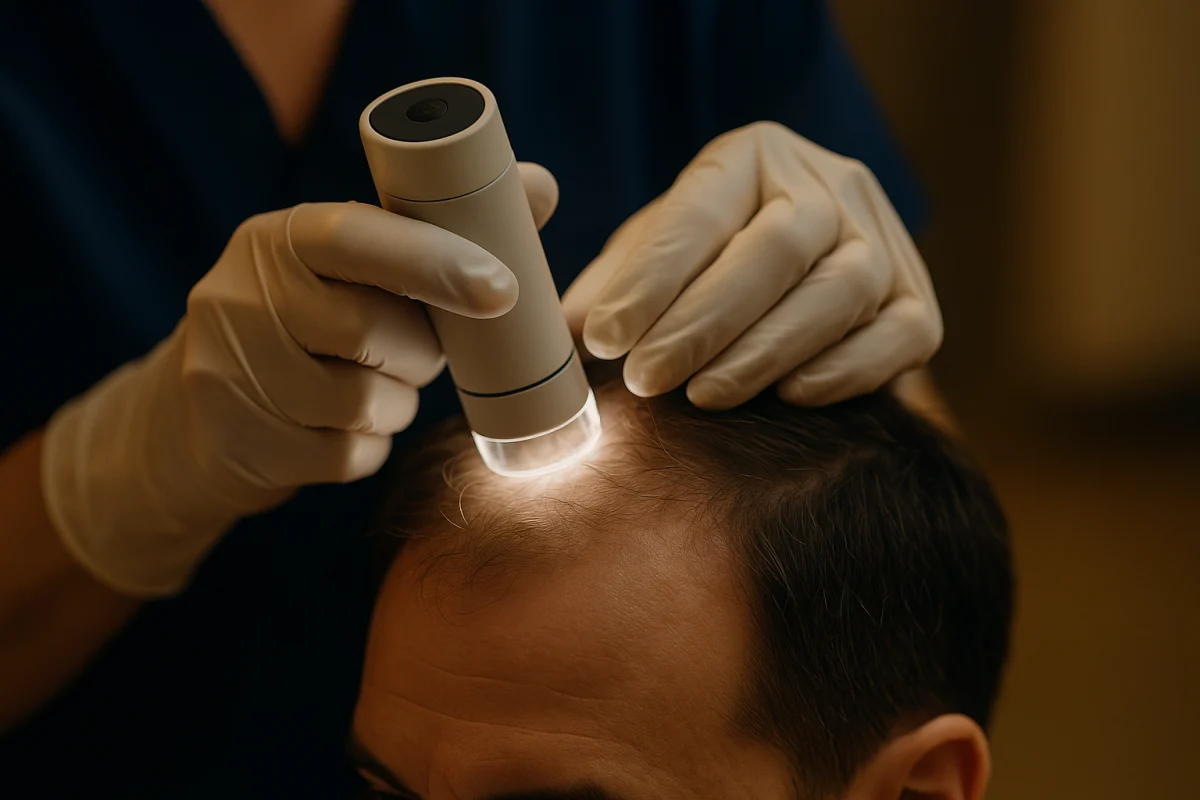
Male pattern hair loss usually follows a recognisable distribution. The temples may recede, the frontal hairline may become less dense, and the crown may gradually thin. In some men, thinning is more diffuse across the top of the scalp. A clinician can often identify this pattern through a careful examination, photographs, and trichoscopic assessment, which magnifies the scalp and helps show variation in hair shaft thickness.
Trichoscopy may reveal miniaturised hairs alongside thicker terminal hairs in areas affected by androgenetic alopecia. This mixed pattern can help distinguish progressive pattern loss from some other forms of shedding. It also helps the team assess the donor zone at the back and sides of the head. Donor assessment is essential because these follicles are generally more resistant to DHT, but no donor supply is unlimited.
A blood result can add clinical information in selected cases, but it should not be used to self-diagnose. Results may also be influenced by timing, laboratory technique, supplements, health conditions, and medication use. If you have a report, share it with the clinician assessing your hair rather than changing treatment based on the number alone. A safe plan begins with the correct diagnosis, not with an isolated laboratory value.
04Medical assessment before hair transplant surgery
Before a hair transplant, the first question is whether the hair loss is stable enough for surgical planning. A transplant can place follicles into thinning or bald areas, but it cannot prevent future loss in surrounding native hair. When loss is actively progressing, an early low hairline or dense packing in a large area may look less balanced later. Doctors therefore consider your age, family history, rate of change, and likely future pattern.
Your medical history also matters. The consultation should cover prior hair-loss treatments, current medication, allergies, past scalp procedures, smoking status, and relevant health conditions. Scalp symptoms such as pain, itching, scaling, pustules, or patches of sudden hair loss should be reported. These signs may need medical investigation or treatment before transplant surgery is considered.
At Acibadem Hair Transplant Center in Istanbul, patients can begin with a free online hair analysis reviewed by doctors. Clear photographs can help provide an initial opinion about pattern, donor appearance, and possible next steps, although an online review cannot replace all aspects of an in-person medical assessment. Questions sent through WhatsApp typically receive a reply within around two hours, helping international patients understand the process before travelling.
05How DHT-related hair loss affects graft and hairline planning
A hairline is not designed only for the way a patient looks today. It should also take account of possible future thinning behind it. In DHT-sensitive pattern loss, the front and temples can continue to change over many years. For this reason, surgeons usually aim for a conservative, age-appropriate hairline that preserves donor grafts and can remain visually harmonious if further loss occurs.
Graft allocation is equally important. The frontal zone often has the greatest cosmetic effect because it frames the face and is visible in everyday interactions. The crown can require many grafts because of its circular growth pattern and larger surface area. A surgeon may recommend prioritising one area or planning stages, depending on donor capacity and the extent of hair loss. Your doctor will confirm what is realistically achievable in your case.
Hair characteristics affect coverage as much as graft count. Coarser hair, natural wave, colour contrast between hair and scalp, and existing density can all change the appearance of fullness. This is another reason normal dht levels in men do not tell the whole story. A detailed transplant plan is based on visible anatomy, donor quality, expected progression, and the visual goal discussed during consultation.
06Medication discussions and stabilising existing hair
Some patients with androgenetic alopecia discuss medical options that may reduce DHT activity or support hair growth. These treatments are not suitable for everyone, and the possible benefits, limitations, side effects, and monitoring needs should be reviewed with a doctor. A hair transplant clinic should not encourage patients to start, stop, or change prescription treatment without appropriate medical guidance.
When treatment is clinically appropriate, the purpose before or after surgery may be to help retain vulnerable native hairs that have not yet been permanently lost. This can be especially relevant around transplanted areas, where ongoing thinning of original hair could affect the visual result. Response varies between individuals, and a treatment plan should be revisited if there are side effects, changes in health, or continued shedding.
Non-prescription measures can support general hair and scalp care, but they cannot reliably change genetic sensitivity to DHT. Adequate nutrition, management of underlying illness, gentle hair practices, and treatment of scalp inflammation may all be useful parts of care. They should not be presented as proven substitutes for medical assessment when a person has progressive pattern hair loss.
07Choosing a technique after the diagnosis is clear
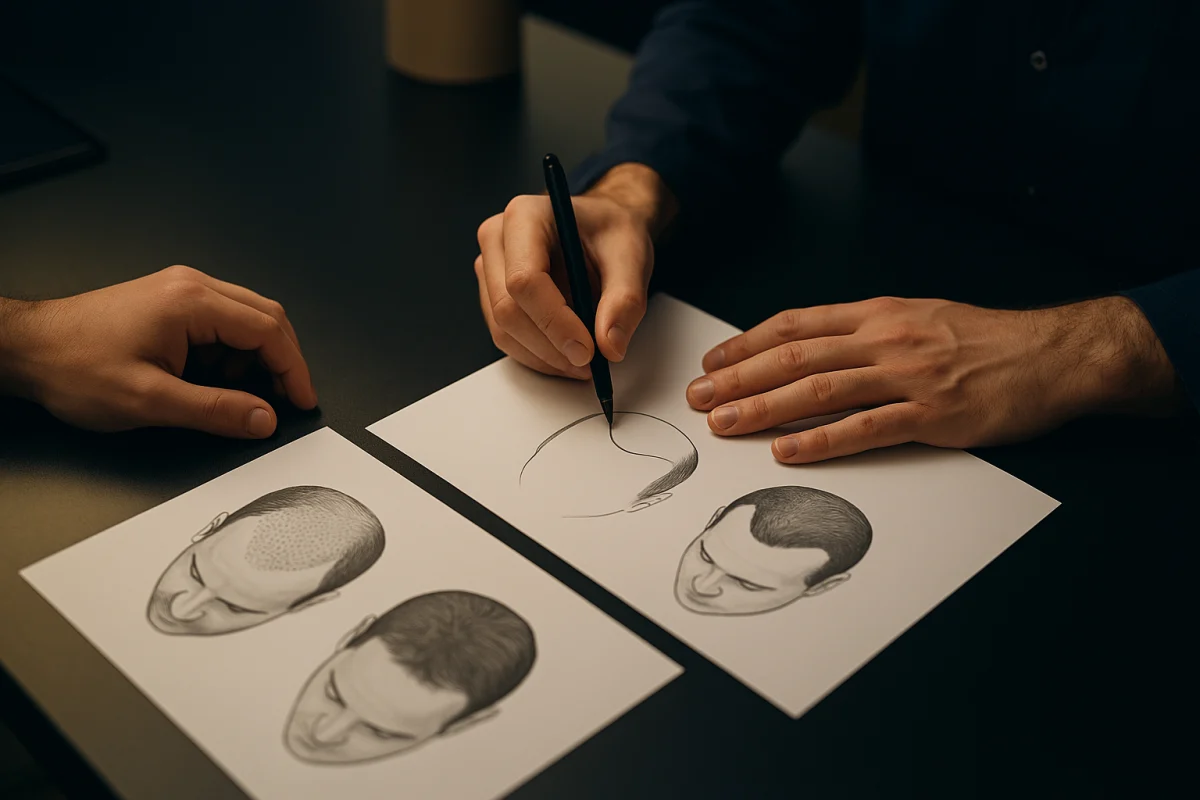
Once the diagnosis, donor evaluation, and long-term goals are clear, the surgical technique can be selected. Follicular unit extraction, or FUE, removes individual follicular units from the donor area and places them in recipient sites. Sapphire FUE uses sapphire blades to prepare the recipient channels. DHI places grafts using an implantation tool, which may be considered for selected placement goals and scalp conditions.
Neither technique changes the biology of DHT-related hair loss. The quality of planning, careful graft handling, appropriate recipient-site design, and protection of donor reserves remain fundamental. A doctor will recommend the most suitable approach after reviewing the pattern of loss, hair characteristics, scalp condition, graft requirement, and practical expectations. The best option is not necessarily the same for every patient.
Acibadem Hair Transplant Center is a dedicated hair restoration clinic in Istanbul licensed by the Turkish Ministry of Health. Sapphire FUE and DHI are available, and needle-free anaesthesia may be offered where appropriate. The centre has welcomed patients from 38 countries over 12 years. These practical details can support the patient experience, but suitability for surgery must always be decided through medical assessment.
08Recovery, follow-up, and evaluating the result at month 12
After a transplant, the implanted follicles enter a normal recovery cycle. Early shedding of transplanted hair can occur before new growth becomes visible, and the pace of change differs from person to person. It is important to follow the aftercare instructions provided by the clinical team, protect the recipient area, and attend or complete scheduled follow-up checks. Contact the clinic promptly if you have concerning symptoms during recovery.
The final appearance should be judged with patience. Hair growth often develops gradually, and density, texture, and maturation can continue to improve over many months. At the same time, native non-transplanted hair may still be influenced by androgenetic alopecia. Ongoing review allows the medical team to monitor progress and discuss any future concerns in a timely way.
Acibadem Hair Transplant Center provides all-inclusive packages that include VIP transfer, a 4-star hotel, a care kit, and 12 months of follow-up. The centre measures results through trichoscopic graft survival at month 12 and documents a 98% rate under a written guarantee. This measurement describes the clinic's documented process and does not mean that every individual will have identical cosmetic density, growth pattern, or long-term hair-loss progression.
09Frequently Asked Questions
Is DHT the same as free testosterone?
No. Free testosterone is the portion of testosterone in the blood that is not tightly bound to proteins and may be biologically available to tissues. DHT is a separate androgen hormone created when some testosterone is converted by the enzyme 5-alpha-reductase. Both can be relevant to health, but they are not interchangeable test results.
How can females reduce DHT naturally?
There is no proven natural method that reliably and safely lowers DHT in all females. New or noticeable hair thinning, excess facial hair, acne, irregular periods, or other hormone-related symptoms should be assessed by a qualified doctor, as the cause may need investigation. This is especially important during pregnancy planning, pregnancy, or breastfeeding, when some treatments may not be appropriate.
Is having high DHT always beneficial?
Not necessarily. DHT has normal biological roles, but a higher blood level is not generally considered a health goal, and it does not automatically mean a person will have more hair loss. The meaning of a result depends on symptoms, medical history, medications, laboratory ranges, and clinical examination. A doctor can explain whether a result needs further assessment.
Can hair lost because of DHT grow back?
It depends on how far follicle miniaturisation has progressed. In earlier stages, some people may see improvement or stabilisation with clinician-guided treatment, while follicles that have been inactive for a long time may not regrow enough to provide visible coverage. A hair transplant can redistribute donor follicles into suitable areas, but it does not reverse the underlying genetic tendency for future loss in native hair.
هذا المقال للمعلومات العامة فقط، وهو ليس بديلاً عن الاستشارة الطبية المتخصصة.
هذا الدليل للمعلومات العامة ولا يغني عن الاستشارة الطبية. تُتخذ قرارات العلاج بعد تقييم الطبيب حضورياً أو عبر الإنترنت.