في هذا المقال9
- What the FUE Method Means in Hair Transplantation
- Who May Be a Suitable Candidate for FUE?
- Why Donor Area Quality Is Central to the Decision
- How an FUE Procedure Is Typically Performed
- Recovery: What Patients Commonly Experience After FUE
- FUE Method Versus DHI: Understanding the Difference
- How Long FUE Results May Last
- Limits, Risks and Important Downsides to Consider
- Frequently Asked Questions
The fue method may be suitable for adults with stable hair loss, a healthy donor area and realistic expectations about coverage and density. It is commonly used for scalp, beard and eyebrow restoration, but a doctor must assess your hair characteristics, medical history and donor supply before confirming suitability.
- FUE removes individual follicular units from a donor area rather than taking a strip of scalp.
- Suitable candidates typically have adequate donor density, manageable hair loss and realistic goals for coverage.
- A personalised donor assessment is essential because donor hair is limited and must be used carefully.
- Most transplanted hairs are intended to grow long term, although ongoing natural hair loss can still affect the overall appearance.
- FUE has recovery and scarring considerations, so technique selection should be based on clinical assessment rather than trend alone.
01What the FUE Method Means in Hair Transplantation
The fue method is a hair transplant technique in which naturally occurring groups of hair follicles, called follicular units or grafts, are removed one by one from a donor area. For most scalp procedures, this donor area is the back and sides of the head, where hair is often more resistant to genetic thinning. The grafts are then prepared and placed into areas affected by hair loss. Unlike strip-based surgery, FUE does not involve removing a long section of scalp. Instead, it uses many very small extraction sites.
Each follicular unit may contain one, two, three or sometimes more hairs. The medical team plans how to use these units according to the recipient area. Single-hair grafts are often selected for a softer, natural-looking hairline, while grafts containing more hairs may help build coverage behind it. Planning should take account of the direction, angle and distribution of your existing hair. A transplant is not simply about placing the highest possible number of grafts; it is about using a limited donor resource responsibly.
FUE is an umbrella term for the extraction approach, not a single identical procedure for every patient. The instruments, incision design, graft handling and implantation method can vary. At Acibadem Hair Transplant Center in Istanbul, Sapphire FUE and DHI techniques are available after clinical evaluation. The most appropriate option depends on factors such as the treatment area, hair texture, donor capacity, scalp condition and the goals discussed during your consultation.
02Who May Be a Suitable Candidate for FUE?
People who may be suitable are usually adults with a clearly assessed pattern of hair loss and enough healthy donor hair for the planned restoration. Male and female patients can both be considered, although the cause of hair loss must first be understood. Pattern hair loss is common, but hair shedding can also be linked to medical conditions, nutritional issues, inflammatory scalp disease, medication or other causes. A doctor should identify whether surgery is appropriate before any graft plan is made.
A stable or reasonably predictable hair-loss pattern can be helpful. In younger patients or in people whose loss is progressing quickly, doctors may advise caution because the appearance of the native hair can continue to change after surgery. This does not automatically rule out transplantation. However, it may affect the timing of treatment, the proposed hairline and the number of grafts used. Conservative planning can help leave donor hair available for possible future needs.
Good general health and a healthy scalp also matter. Conditions that affect healing, bleeding, infection risk or hair growth may need medical review before surgery. Smoking, certain medicines and unmanaged health concerns can influence preparation and recovery. During a doctor-reviewed online hair analysis, patients are usually asked for clear images, their age, health information and hair-loss history. This preliminary assessment can indicate whether an in-person examination is likely to support treatment, but it does not replace a final clinical decision.
03Why Donor Area Quality Is Central to the Decision
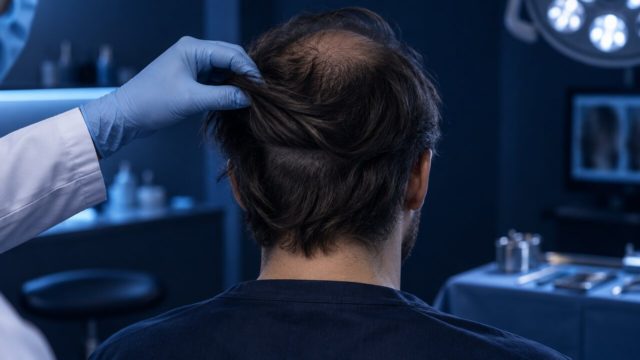
The donor area is one of the most important parts of FUE planning. Hair follicles are not unlimited, and extracting too many grafts from one area can make the donor region appear thinner. Doctors assess donor density, the thickness of the hair shafts, the number of hairs in each follicular unit, scalp flexibility, hair colour contrast and the likely progression of future loss. These details influence what level of coverage may be realistic.
The fue method can be especially useful when a patient prefers to keep shorter hair because it generally leaves small dot-like scars rather than a linear scar. However, these extraction marks are still surgical scars and may be visible if the hair is shaved very closely, if the donor area heals unpredictably or if too many grafts are extracted. Careful spacing of extractions and respect for the safe donor zone are therefore important clinical principles.
Some patients have limited donor supply because of naturally low density, advanced hair loss, previous surgery or scalp scarring. In these situations, the doctor may discuss whether a smaller treatment area, a more conservative hairline or another approach is more appropriate. Beard or body hair may be considered in selected cases, but it does not behave exactly like scalp hair and is not suitable for everyone. An honest donor assessment is more valuable than an overly ambitious plan.
04How an FUE Procedure Is Typically Performed
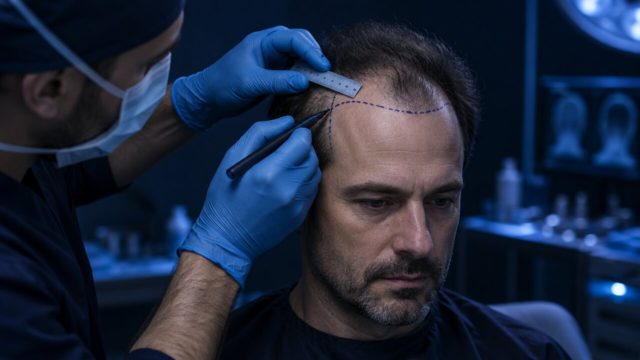
Before the procedure, the team confirms the design, treatment priorities and planned donor area. The hair may be trimmed to allow accurate access to the follicles. Local anaesthesia is commonly used to numb the donor and recipient areas. Needle-free anaesthesia is also available at Acibadem Hair Transplant Center for suitable patients. Your medical team will explain the preparation process and advise you about any medicines, alcohol, smoking or scalp products that may need to be avoided before treatment.
During extraction, a small punch instrument is used around each follicular unit, and the graft is gently removed. The grafts are kept in controlled conditions while the recipient sites are created or while implantation is planned. In a Sapphire FUE procedure, sapphire blades may be used to create recipient channels. The choice of tool is only one part of the procedure; safe graft handling, correct placement and a medically appropriate design remain essential to the final result.
The fue method may take several hours, depending on the number of grafts, the complexity of the area and the treatment plan. It is often performed in one day, but more extensive cases can require a different schedule. Patients are generally awake, and the team provides breaks when appropriate. After the procedure, the scalp is protected and aftercare instructions are reviewed carefully. Following these instructions is an important part of reducing avoidable irritation and supporting normal healing.
05Recovery: What Patients Commonly Experience After FUE
In the first days after treatment, mild swelling, redness, tenderness and small crusts can occur in both the donor and recipient areas. These effects are commonly temporary, but the exact experience varies from person to person. Patients are usually asked to sleep with the head elevated for an initial period, avoid touching or rubbing the grafts and follow the clinic's washing guidance. Strenuous exercise, swimming, direct sun exposure and headwear may also need to be limited for a period confirmed by the medical team.
Crusting usually clears gradually with gentle washing rather than forceful picking. The donor area often heals visibly sooner than the recipient area, although short-term changes in appearance are normal. Many people can return to light daily activities relatively quickly, but social recovery is individual. If work involves physical activity, dust, heat or a risk of contact with the scalp, more planning may be needed. Your doctor will provide individual return-to-activity guidance based on your procedure and recovery.
Transplanted hairs commonly shed in the weeks after surgery. This can be worrying, but it is often a normal part of the growth cycle because the follicles remain beneath the skin while the visible hair shafts shed. New growth generally begins gradually over the following months. Density and maturation take time, and the final visual assessment is commonly made around month 12. Acibadem Hair Transplant Center follows results with trichoscopic graft-survival assessment at month 12 under its written guarantee process.
06FUE Method Versus DHI: Understanding the Difference
The fue method and DHI are often compared, but they are not always direct opposites. FUE describes how grafts are extracted individually from the donor area. DHI usually refers to an implantation approach in which extracted grafts are placed using a specialised implanting device. In many cases, grafts used for DHI are still obtained through FUE-style extraction. For this reason, the more useful question is often which extraction and implantation plan best suits your scalp, hair characteristics and treatment goals.
DHI may be considered when detailed control of placement is needed in a smaller area, such as hairline refinement, existing-hair zones or selected eyebrow procedures. Sapphire FUE may be considered for patients who need wider recipient-area coverage or a different channel-opening approach. Neither technique is automatically better for every person. The skill of the medical team, graft preservation, donor management and realistic planning can have more influence than the name of the technique alone.
The term DHT should not be confused with DHI. DHT is a hormone associated with androgenetic hair loss in people who are genetically sensitive to it; it is not a hair transplant technique. If you see a comparison between “FUE and DHT,” it may be a wording error or a discussion about hair-loss biology rather than surgery. A doctor can explain whether medical management of ongoing hair loss should be considered alongside, before or after a transplant.
07How Long FUE Results May Last
FUE transplantation is designed to move follicles from an area that is usually more resistant to pattern hair loss into an area where more hair is desired. In most patients, successfully transplanted follicles can continue to grow for many years and are generally regarded as a long-term solution. However, no procedure can stop the natural ageing process, changes in hair calibre or the progression of non-transplanted hair loss. This is why long-term planning matters from the beginning.
The final appearance depends not only on graft survival but also on what happens to the hair that was already present. If native hair continues to thin around transplanted grafts, the contrast can become more noticeable over time. Some patients may later consider medical management, a second procedure or a revised plan, depending on their donor availability and clinical situation. These choices should be made with a doctor rather than based on photographs or another person's experience.
Results also depend on appropriate aftercare and individual healing. Patients should attend scheduled follow-up appointments and report unexpected symptoms promptly. At Acibadem Hair Transplant Center, all-inclusive packages can include VIP transfer, a 4-star hotel, a care kit and 12 months of follow-up. These services can make travel planning easier for international patients, but they do not replace the need for careful medical assessment and realistic expectations about long-term density.
08Limits, Risks and Important Downsides to Consider
FUE is surgery, so it has limitations and possible side effects. Temporary swelling, numbness, discomfort, redness, crusting and itching can occur. Less commonly, patients may experience infection, prolonged inflammation, folliculitis, delayed healing, uneven growth, scarring or changes in sensation. There is also a possibility that some grafts will not grow as expected. A properly licensed clinic should explain these issues clearly before treatment and provide instructions on when to contact the clinical team.
One significant downside is the finite donor supply. An attempt to create very high density in a large bald area can overuse the donor zone or leave too few grafts for future changes in hair loss. FUE can also require shaving or closely trimming a donor area, which may not suit every lifestyle or preference. Very curly hair, scarred scalp tissue, very fine hair and certain skin characteristics can make extraction or placement more technically demanding, although they do not automatically exclude treatment.
Expectations are another important consideration. A transplant can improve coverage, frame the face and help restore hair in selected areas, but it cannot always recreate the density of teenage hair across an extensive bald scalp. The safest plan often prioritises a natural hairline and long-term donor preservation. Acibadem Hair Transplant Center is a dedicated hair restoration clinic in Istanbul licensed by the Turkish Ministry of Health. Patients can request a free online hair analysis, reviewed by doctors, with WhatsApp replies typically available within about two hours.
09Frequently Asked Questions
How long do FUE hair transplant results usually last?
In most patients, transplanted follicles are intended to grow for many years because they are usually taken from a more hair-loss-resistant donor area. However, the surrounding non-transplanted hair may continue to thin over time, and ageing can still change the overall appearance. Your doctor can discuss how your pattern of hair loss may affect long-term planning.
Did Elon Musk have an FUE hair transplant?
There is no confirmed public medical information that can establish which treatment, if any, Elon Musk had. Photographs and online speculation cannot reliably identify a hair transplant technique. It is best not to use a celebrity's appearance as evidence that a particular method is suitable or responsible for a result.
Which is better: FUE or DHT?
FUE and DHT are not equivalent options to compare. FUE is a graft-extraction method used in hair transplantation, while DHT is a hormone that can contribute to genetic hair loss in susceptible people. You may mean FUE versus DHI; in that case, the better choice depends on your donor area, recipient area, hair characteristics and the doctor's treatment plan.
What are the main downsides of an FUE hair transplant?
Potential downsides include a limited donor supply, small extraction scars, temporary swelling or numbness, a recovery period and the possibility of uneven growth or less density than expected. FUE also does not prevent future loss of existing hair. A careful assessment and conservative graft plan can help address some of these limitations, but no surgical result can be guaranteed.
هذا المقال للمعلومات العامة فقط، وهو ليس بديلاً عن الاستشارة الطبية المتخصصة.
هذا الدليل للمعلومات العامة ولا يغني عن الاستشارة الطبية. تُتخذ قرارات العلاج بعد تقييم الطبيب حضورياً أو عبر الإنترنت.