
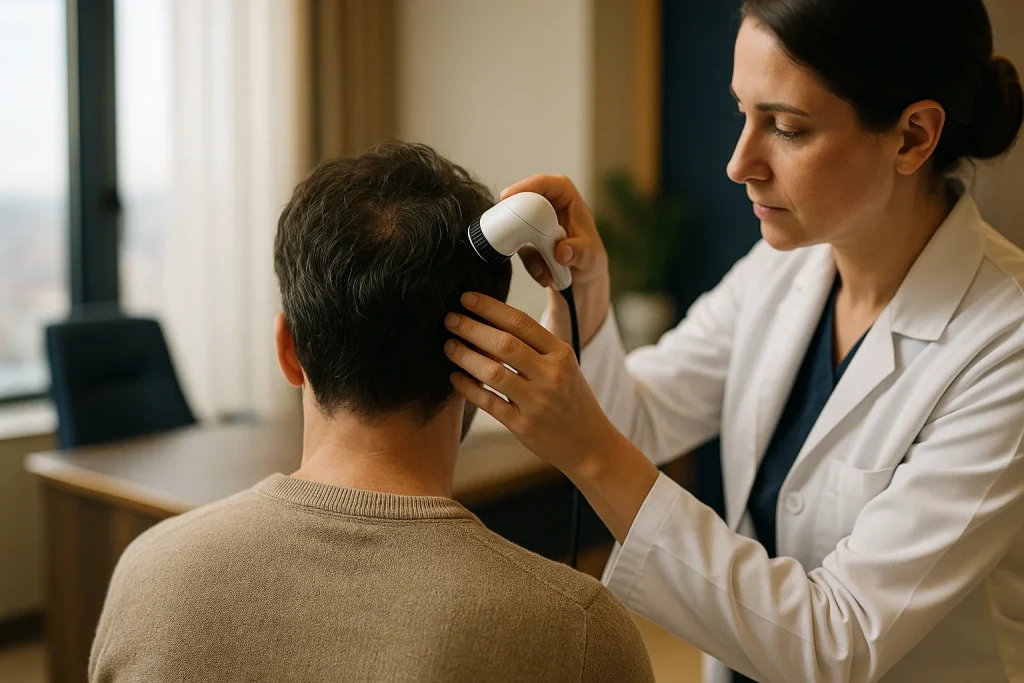
Hair thinning weight gain can occur together when hormonal changes, thyroid conditions, nutritional issues, stress, medication effects, or lifestyle changes affect both the hair cycle and metabolism. A medical assessment can help identify possible causes before hair restoration, because treating an active underlying condition may support more stable planning and results.
- Hair shedding and weight changes may share a cause, but they do not always occur for the same reason.
- Thyroid disorders, hormonal changes, low iron stores, restrictive diets, stress and some medicines can affect hair growth.
- Pattern hair loss on the top of the head is often related to genetic sensitivity, although other conditions should be excluded.
- Blood tests and scalp assessment may be useful when hair loss is sudden, diffuse or accompanied by other symptoms.
- Hair restoration is usually planned after active shedding and relevant health concerns have been assessed.
01When hair and body changes happen at the same time
Hair thinning weight gain may feel worrying, especially when both changes appear within a short period. Hair growth depends on a regular cycle, healthy follicles, adequate nutrients and hormonal balance. Body weight can also change when hormones, appetite, sleep, activity, stress levels or medicines change. For this reason, the two symptoms can sometimes be connected, although they can also happen separately. A careful review of the timing, pattern of hair loss and general health gives more useful information than assuming there is one explanation.
It is normal to lose some hair each day as older hairs complete their growth cycle. Noticeable shedding, a wider parting, reduced ponytail volume, scalp visibility or gradual recession may suggest that more follicles are affected. Weight gain may be mild and related to a change in routine, or it may occur alongside tiredness, changes in skin, menstrual changes, constipation, swelling or changes in mood. These additional signs are important to mention to a doctor because they can guide the assessment.
Before considering a cosmetic hair procedure, it is sensible to understand whether hair loss is active and why it may be happening. This does not mean that every patient needs extensive testing. In many cases, a doctor can identify a likely pattern through a medical history, scalp examination and discussion of family history. When symptoms are new, rapid or accompanied by body changes, further evaluation may be recommended to rule out treatable health concerns.
02How hormones, metabolism and the hair cycle are connected
Hair follicles are biologically active structures. They move through growth, transition and resting phases, and this process can be influenced by hormones. Thyroid hormones, insulin-related metabolic changes, reproductive hormones and stress hormones can all affect the normal balance of the hair cycle. A disruption may cause more hairs to enter the resting phase, leading to increased shedding several weeks or months later. The exact effect varies widely between individuals.
An underactive thyroid is one possible medical reason for weight gain and diffuse hair changes. It may also be associated with fatigue, feeling cold, dry skin, constipation or slower thinking, but not every person has the same symptoms. An overactive thyroid can also affect hair, usually with different body symptoms such as weight loss, palpitations or heat intolerance. Only a qualified clinician can interpret symptoms and thyroid blood test results in the context of a person’s full health history.
Hormonal changes related to polycystic ovary syndrome, pregnancy, the period after childbirth, perimenopause or menopause may also alter the scalp hair pattern in some women. In men and women, genetic sensitivity to androgens can gradually reduce follicle size in certain areas of the scalp. This process is known as androgenetic alopecia. Weight change does not prove that hormones are the cause, but it can be a useful reason to discuss broader health factors with a doctor.
03Hair thinning weight gain: common links to investigate
When hair thinning weight gain develops together, clinicians often consider several categories rather than focusing on one diagnosis. These may include thyroid function, changes in diet, iron status, vitamin levels, stress, sleep quality, medication history and reproductive hormone symptoms where relevant. A family tendency for pattern hair loss may be present at the same time as a separate cause of weight gain. More than one factor can influence the hair cycle, so a balanced assessment is important.
Rapid dieting, repeated weight cycling and a major reduction in protein intake can place stress on the body. Even when a diet leads to weight loss rather than weight gain, later changes in appetite or routine may lead to weight regain while delayed shedding becomes noticeable. This type of shedding is often called telogen effluvium. It commonly becomes visible two to three months after a trigger, which can make the connection difficult to recognise without looking back at recent events.
Poor sleep and chronic stress can affect eating habits, energy levels and wellbeing, while also contributing to a temporary change in hair shedding for some people. This does not mean that stress is the only explanation or that the symptoms are “all in the mind.” It means that physical and emotional health should both be considered. A doctor may ask about recent illness, surgery, fever, bereavement, work pressure, sleep disruption and significant changes in daily life.
04Why thinning may be most visible on the top of the head
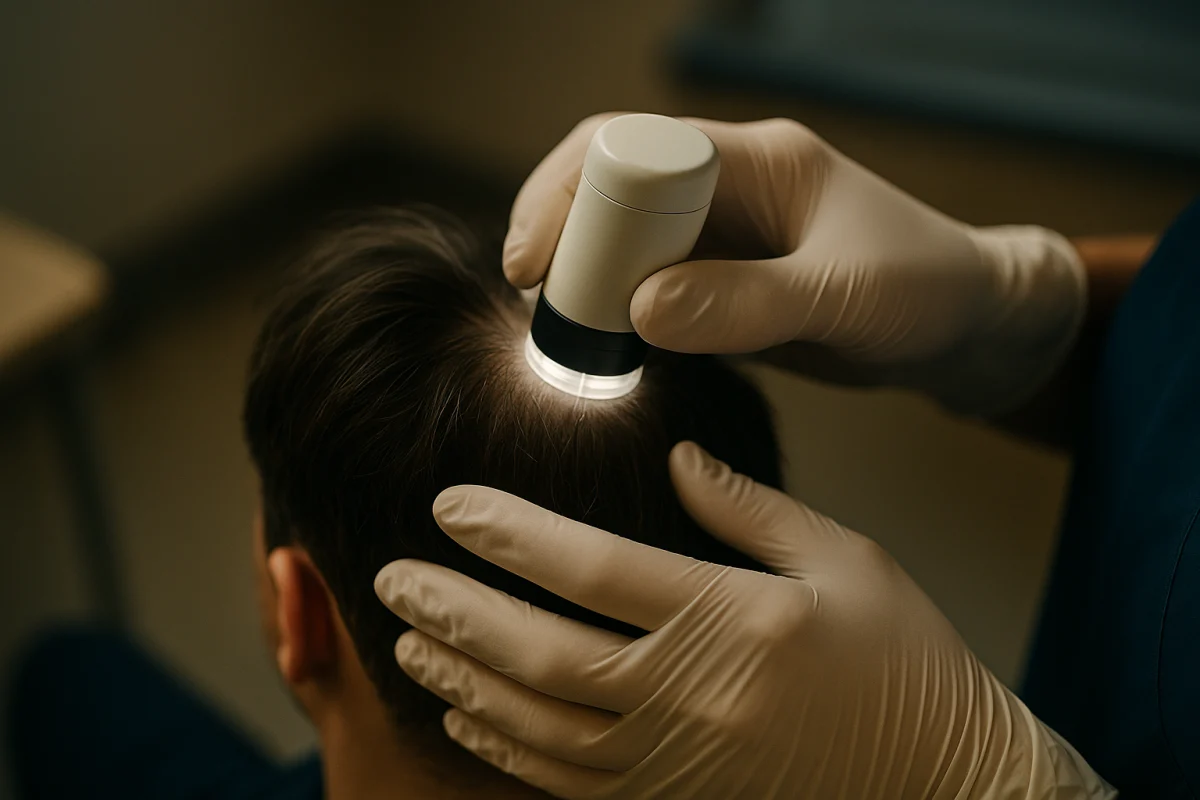
Thinning on the top of the head often has a recognisable pattern. In men, it may begin at the temples, frontal hairline or crown, then slowly progress over time. In women, it may appear as a broader central parting, reduced density over the mid-scalp or a more visible scalp under bright light. These patterns are commonly associated with androgenetic alopecia, which is influenced by inherited follicle sensitivity and does not necessarily mean that a person has abnormal hormone levels.
The crown and top of the scalp can look thinner sooner than other areas because hairs in these zones may gradually become finer, shorter and less pigmented. This process is called miniaturisation. A person may not notice dramatic daily shedding, yet density can decline over years. Conversely, diffuse shedding related to illness, stress, nutritional deficiency or medication may affect the whole scalp, although it can still be most noticeable where hair was already naturally finer.
Other scalp conditions can sometimes resemble pattern thinning. Inflammation, scaling, itching, pain, patchy hair loss or broken hairs need medical attention because they may point to a different cause. A scalp examination can help distinguish between miniaturisation, active shedding, scarring conditions and hair shaft breakage. Taking clear photographs over several months may also help document whether the hairline, parting or crown is changing gradually or more quickly.
05Nutrition, iron and vitamin factors in hair shedding
Hair is made largely from keratin, and the body needs enough energy, protein and micronutrients to support normal growth. Iron deficiency, especially low iron stores, is often considered when a patient reports diffuse shedding, fatigue or heavy menstrual bleeding. Ferritin is one marker that may be checked by a clinician, but the meaning of results depends on the laboratory range, symptoms and the person’s overall medical picture. Taking iron without medical guidance is not advisable because excess iron can be harmful.
Low vitamin D, vitamin B12, zinc and folate levels may also be assessed in selected patients, depending on diet, symptoms, digestive health and risk factors. Severe protein restriction can affect the hair cycle as well. However, supplements are not automatically the answer to hair loss. If a deficiency is not present, high-dose vitamins may offer no benefit and can occasionally cause side effects. Biotin is a notable example because high doses may interfere with certain laboratory tests.
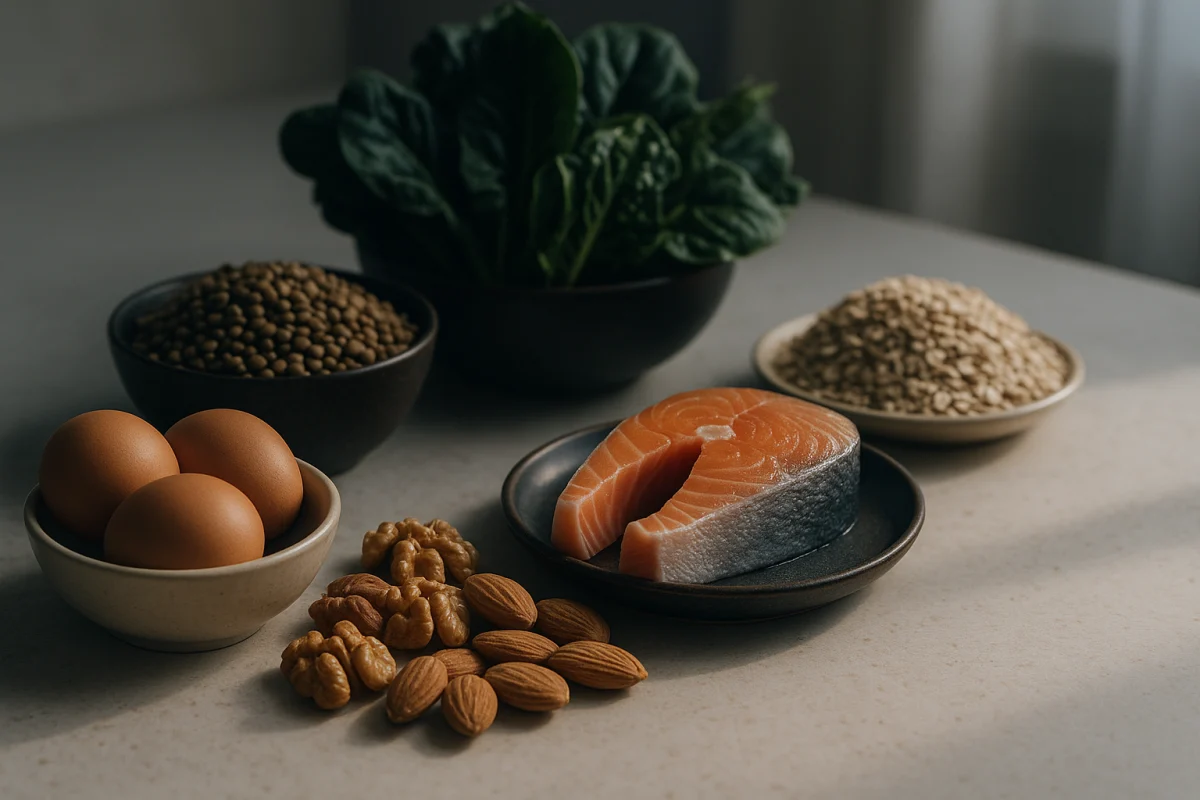
The phrase hair thinning weight gain can sometimes lead people to search for a single supplement that will solve both concerns. In practice, nutritional care works best when it is based on an identified need. A varied diet with sufficient protein, vegetables, fruit, whole grains and healthy fats supports general health, but it cannot reverse every form of genetic hair loss. Your doctor or a registered dietitian can advise whether dietary changes, blood tests or targeted treatment are appropriate.
06What a medical hair loss assessment may include
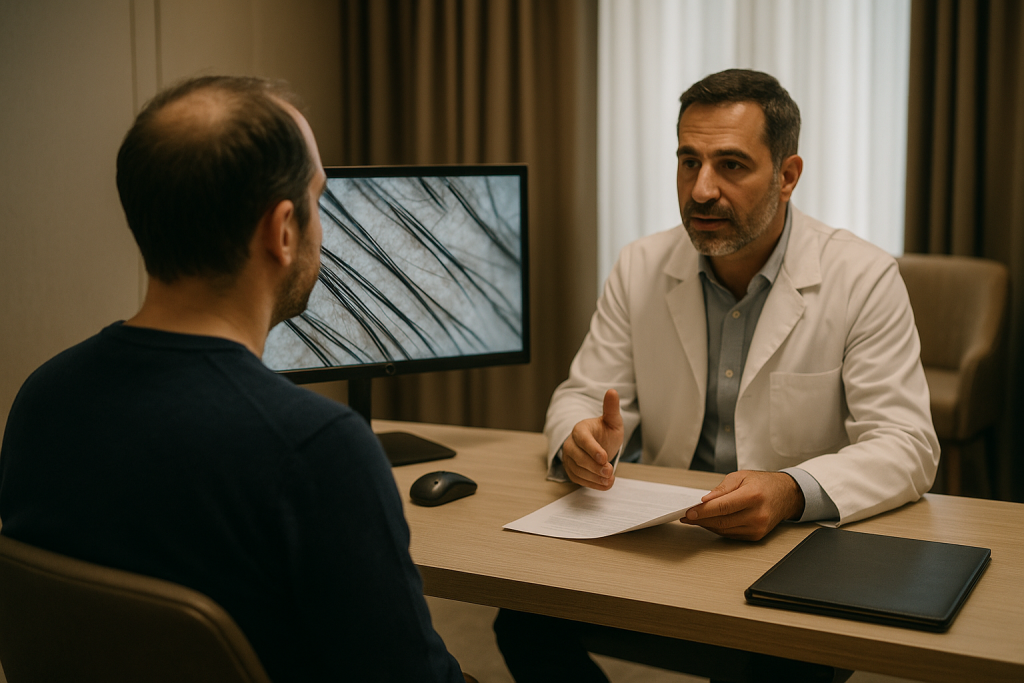
A consultation for hair loss usually begins with questions about when thinning started, whether shedding is ongoing, how quickly it has changed and which areas are involved. A clinician may ask about recent weight changes, appetite, menstrual history where relevant, family hair patterns, medical conditions, operations, infections and current medicines. It can be helpful to bring a list of supplements as well, since these may affect both health and blood test interpretation.
The scalp may be examined with magnification or trichoscopy. This method allows the clinician to look at hair shaft diameter, follicle openings, hair density and signs of inflammation. In a dedicated hair restoration setting, trichoscopic assessment can help determine whether donor hair appears suitable and whether thinning is stable enough for procedural planning. It does not replace medical assessment when there are symptoms that suggest an underlying condition.
Blood testing is not required for every person with hair thinning. It may be considered when shedding is diffuse, sudden or unexplained, or when symptoms such as weight change, fatigue, irregular periods, dietary restriction or digestive concerns are present. Tests are selected by the treating doctor and may include thyroid markers, blood count, iron-related measures or selected vitamin levels. Results should be interpreted clinically rather than viewed as a simple pass-or-fail list.
07Stabilising hair health before considering restoration
Hair restoration can improve the appearance of selected areas of permanent pattern hair loss, but it does not treat every cause of shedding. If active telogen effluvium, thyroid disease, nutritional deficiency, scalp inflammation or another medical concern is suspected, the first priority is usually assessment and appropriate management. In many patients, addressing a reversible trigger can reduce shedding over time, although regrowth speed and density vary from person to person.
For genetic thinning, a doctor may discuss medical or non-surgical options intended to support existing hair before deciding whether a procedure is suitable. The right approach depends on age, hair loss pattern, donor area quality, medical history and future expectations. It is especially important to consider long-term hair loss progression, because transplanted hair and surrounding native hair can change differently over the years. A conservative, medically informed plan is generally safer than focusing only on immediate density.
At Acibadem Hair Transplant Center in Istanbul, patients can start with a free online hair analysis reviewed by doctors. The clinic offers Sapphire FUE and DHI techniques, with treatment planning based on individual assessment. Patients should share relevant health history and recent changes in shedding so the team can advise whether an in-person medical review is needed before scheduling. A procedure should only proceed when the doctor considers it appropriate.
08When to seek prompt medical advice
Hair loss deserves earlier medical attention when it is sudden, patchy, painful, associated with scalp redness or scaling, or accompanied by marked fatigue, unexplained weight change, fever or other new symptoms. These signs do not always indicate a serious illness, but they should not be ignored. A primary care doctor, dermatologist or other appropriate clinician can assess the situation and decide whether further investigation is required.
It is also wise to arrange an appointment if hair shedding continues for several months, if the scalp becomes increasingly visible, or if weight gain occurs despite no clear change in food intake or activity. People who are pregnant, recently postpartum, managing a chronic condition, or taking regular prescription medicines should discuss new hair loss with their healthcare professional. Do not stop a prescribed medicine because of shedding without first speaking to the clinician who prescribed it.
For patients considering hair restoration, clear information creates better decisions. Photographs, a timeline of symptoms, a family history and recent laboratory results, if available, can make a consultation more productive. Hair loss can be emotionally difficult, but there are often practical next steps. Identifying the pattern, checking relevant health factors and setting realistic goals can help create a safer path toward treatment or restoration.
09Frequently Asked Questions
Why might I be losing hair while also putting on weight?
Hair loss and weight gain may occur together because of thyroid changes, hormonal shifts, stress, sleep disruption, nutritional concerns, medication effects or changes in lifestyle. They can also be unrelated and happen at the same time. A doctor can review your symptoms, timeline and medical history to decide whether testing is appropriate.
Which nutrient deficiencies can be linked with hair loss?
Low iron stores, vitamin D, vitamin B12, zinc and folate may be associated with hair shedding in some patients. Inadequate protein or overall calorie intake can also affect the hair cycle. Testing and treatment should be guided by a clinician, as supplements are not useful for every type of hair loss.
Why does it seem like so much of my hair is falling out?
Increased shedding may follow stress, illness, fever, surgery, childbirth, rapid dietary change or some medications, often after a delay of several weeks or months. Genetic pattern hair loss can also make shedding or reduced density more noticeable. Sudden, patchy or painful hair loss should be assessed promptly by a medical professional.
What can cause thinning on the top of the scalp?
Gradual thinning on the top of the head is commonly caused by androgenetic alopecia, an inherited pattern of follicle miniaturisation. Diffuse shedding, scalp inflammation, nutritional issues and some medical conditions can also make the top appear less dense. A scalp examination can help clarify the likely pattern before hair restoration is considered.
هذا المقال للمعلومات العامة فقط، وهو ليس بديلاً عن الاستشارة الطبية المتخصصة.
 06
06 12
12