
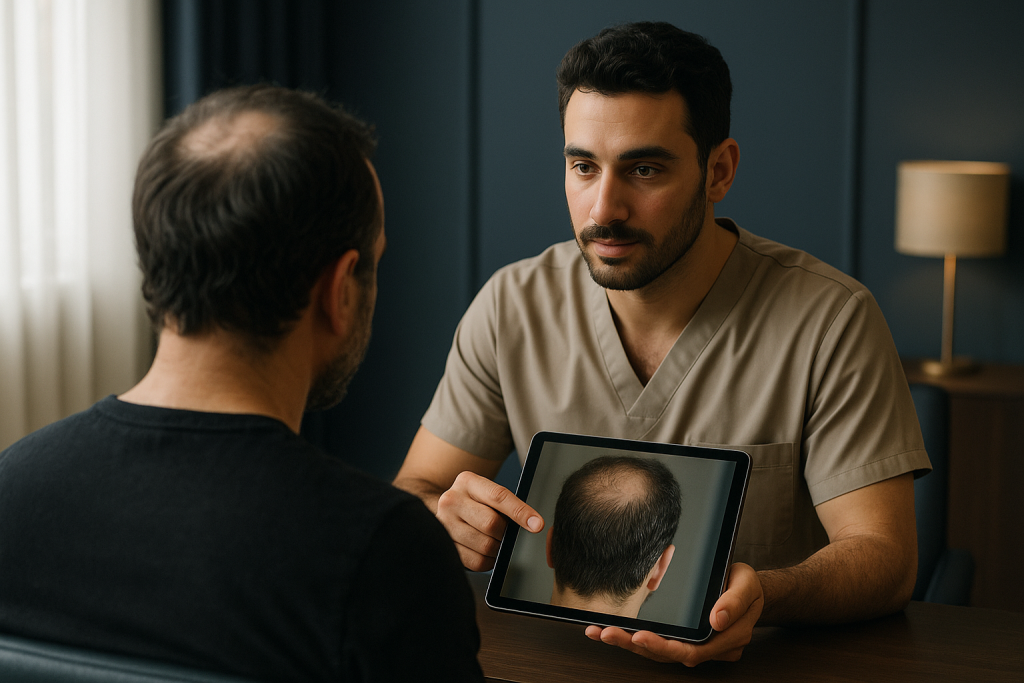
Hair transplant cost is usually shaped by the number of grafts needed, the technique selected, the complexity of the case and what is included in your care plan. A safe treatment plan should begin with a medical assessment of your hair loss, donor area and long-term goals rather than a price alone.
- The required graft number is one of the main factors affecting the overall treatment plan.
- Your donor area, hair characteristics and future hair-loss pattern help determine whether a procedure is appropriate.
- Sapphire FUE and DHI are different implantation approaches, and your doctor will confirm which technique may suit your case.
- A clear quote should explain clinical care, accommodation, transfers, aftercare and follow-up, where these are included.
- A transplant can provide long-lasting transplanted hair, but future loss of non-transplanted hair may still need monitoring.
01Hair Transplant Cost: The Main Factors Behind a Treatment Plan
Hair transplant cost is not based on one standard figure because each treatment plan is designed around the individual patient. In most patients, the most important considerations are the size of the area to be restored, the number of grafts that can be safely harvested, the chosen technique, the time needed for the procedure and the level of care included before and after surgery. A responsible clinic should assess these points before giving a final recommendation.
A graft is a naturally occurring group of one to several hairs taken from the donor area, usually at the back and sides of the scalp. It is not the same as a single hair. For this reason, two people who both wish to improve a similar-looking area may require different graft numbers. Hair thickness, curl, colour contrast between hair and scalp, and the pattern of hair loss can all influence how much visual coverage may be achieved.
The least expensive-looking option is not always the most suitable option. A plan should place safety, donor preservation and realistic coverage before a high graft count. Removing more grafts than the donor area can support may affect the appearance of the donor region and may limit options for the future. Your doctor will confirm whether the available donor supply is appropriate for your goals.
It is also helpful to view the procedure as a long-term decision rather than a one-day service. The initial design, graft distribution and protection of the donor area can influence how natural the result looks as you age and as any existing hair loss continues. This is why an individual medical review is more useful than choosing a treatment only from a published package description.
02How the Number of Grafts Changes the Scope of Treatment
The number of grafts is often the first point patients ask about, but it should be considered alongside the quality of the donor area. A small hairline adjustment may need a relatively limited number of grafts, while broader thinning across the frontal scalp, mid-scalp and crown can require a larger session or a staged approach. The aim is typically to create balanced, natural-looking coverage within safe donor limits.
Doctors estimate graft needs by examining the areas of concern, the degree of miniaturisation in existing hair and the desired design. A person with strong, thick hair may create a fuller visual effect with fewer grafts than someone with very fine hair. Similarly, restoring a lower hairline generally uses more grafts than designing a mature, age-appropriate hairline that allows for future changes.
Graft planning is also about placement, not only quantity. The frontal hairline needs careful angle, direction and irregularity to avoid an artificial appearance. Behind it, grafts may be distributed to improve density and transition into existing hair. The crown has a different natural growth pattern and can use a significant number of grafts, particularly when the area is wide.
A higher graft number does not automatically mean a better result. In suitable candidates, a larger session may be possible, but only after the donor area and scalp condition have been evaluated. If hair loss is progressing or the donor supply is limited, your doctor may advise a more conservative design or discuss the possibility of future planning rather than trying to cover every area at once.
03Technique Choice: Sapphire FUE, DHI and Surgical Planning
Technique selection can affect the structure of a treatment plan. At Acibadem Hair Transplant Center in Istanbul, Sapphire FUE and DHI techniques are available. Both methods involve extracting grafts from the donor area and placing them into recipient sites, but they differ in how channels are prepared and how implantation may be organised. The most suitable approach depends on your clinical assessment rather than on a general claim that one method is best for everyone.
With Sapphire FUE, grafts are commonly implanted into channels created with sapphire blades. The channel design helps guide the angle, direction and distribution of the transplanted hair. This can be useful when planning broad areas of restoration, although the final approach will depend on scalp characteristics, graft availability and the treatment objective.
With DHI, grafts are implanted using a specialised implantation tool that can support controlled placement. In some patients, this may be considered when working around existing hair or when the treatment area requires particular placement planning. However, technique names alone do not determine the outcome. The experience of the clinical team, careful graft handling, appropriate design and suitable aftercare all remain important.
Needle-free anaesthesia is available for patients who are concerned about needles, subject to clinical suitability. Anaesthesia and comfort arrangements should always be discussed before the procedure. During your consultation, the medical team can explain the practical differences between techniques and confirm which option may be appropriate for your scalp, hair-loss pattern and donor area.
04Donor Area Quality, Hair Characteristics and Medical Assessment
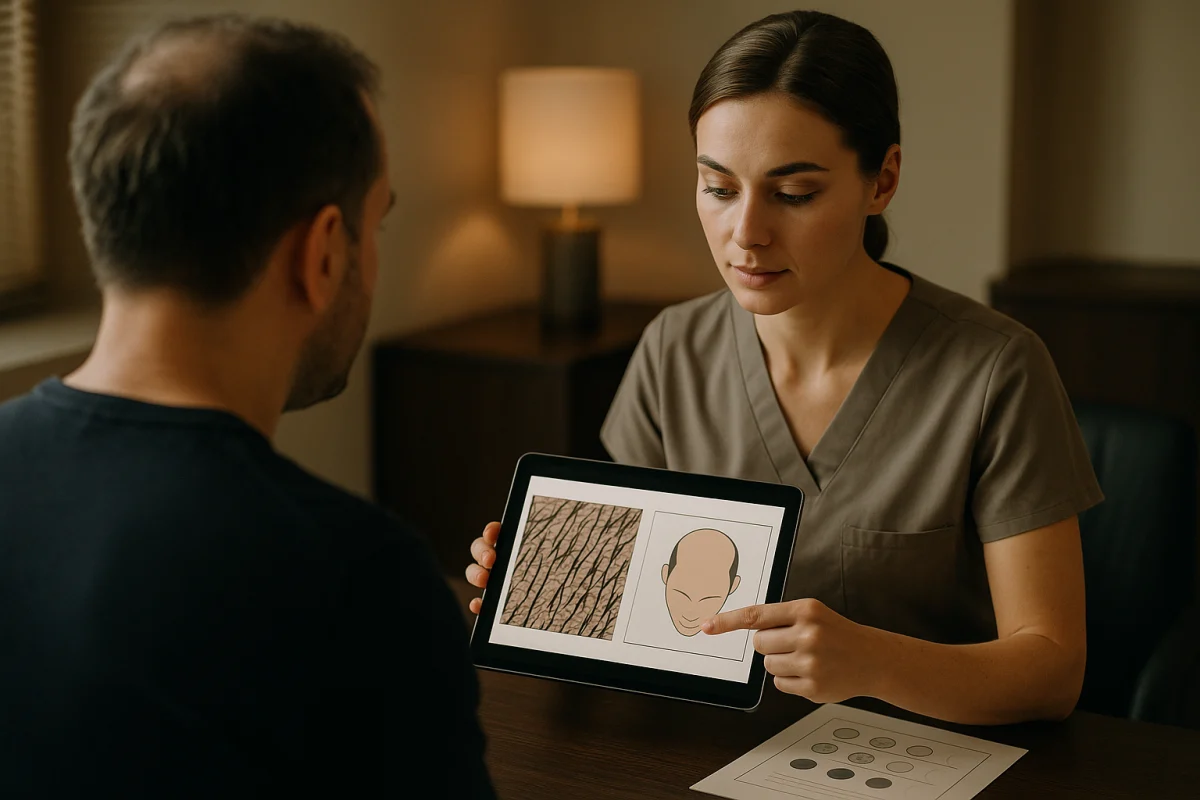
The donor area is one of the most important limits in hair restoration. Donor hair is generally taken from the back and sides of the scalp because these hairs are often more resistant to the hormonal process involved in common pattern hair loss. Even so, donor density and hair quality vary from person to person, and not every patient has enough stable donor hair for the coverage they want.
A proper assessment considers donor density, hair shaft thickness, scalp flexibility, hair texture and the proportion of grafts that may be safely extracted. It also considers whether the donor hair appears stable. These clinical details influence the number of grafts that may be planned, the expected distribution and whether one session or a longer-term approach is more sensible.
Your current stage of hair loss matters as well. If thinning is still progressing, a very dense or low hairline design may not remain balanced with future loss behind it. Doctors usually consider family history, age, the pattern of loss and the condition of existing hair when discussing a plan. This does not predict every future change, but it helps create a more cautious and sustainable strategy.
Some causes of hair shedding need medical evaluation before a transplant is considered. Sudden diffuse shedding, scalp inflammation, scarring conditions, certain medical treatments or untreated nutritional and hormonal issues may affect timing or suitability. An online review can provide an initial opinion, but an in-person medical examination and the doctor’s assessment remain important before treatment is confirmed.
05What Should Be Included When Comparing Hair Transplant Cost
When comparing hair transplant cost, ask what the quote includes from the first consultation through to follow-up. A treatment plan may involve the medical evaluation, procedure, anaesthesia, care instructions, washing guidance, medication advice where clinically appropriate and post-procedure support. If travel is involved, practical arrangements can also affect the overall value and experience.
At Acibadem Hair Transplant Center, all-inclusive packages include VIP transfer, a 4-star hotel, a care kit and 12 months of follow-up. Understanding these inclusions can make it easier to compare plans on a like-for-like basis. Patients should also ask whether the proposed plan clearly states the estimated graft range, technique, number of treatment days and what support is available after returning home.
The clinic is a dedicated hair restoration clinic in Istanbul and is licensed by the Turkish Ministry of Health. It has welcomed patients from 38 countries over 12 years. For international patients, clear communication before travel is especially important, including information about preparation, arrival, the procedure day, recovery guidance and the process for contacting the care team after departure.
It is reasonable to ask for written information and to take time before deciding. A clear plan should not rely on vague promises or pressure to book immediately. Instead, it should explain what can realistically be addressed, what may remain limited by donor supply and what follow-up arrangements are available if you have questions during the healing and growth period.
06Why Hairline Design and Coverage Goals Affect Planning
A natural-looking hairline is designed for more than the present moment. It should fit facial proportions, age, hair characteristics and the likely possibility of future hair loss. For many patients, a conservative, mature hairline can help preserve grafts for areas behind the front while still improving the overall frame of the face.
Patients often arrive with a specific photo or density goal in mind. These images can be useful for explaining preferences, but they cannot replace an individual assessment. The same hairline shape or density may not be suitable for every donor area, and results can vary according to hair calibre, scalp contrast, graft survival and the amount of pre-existing hair retained around the transplant.
The crown is another area where expectations need careful discussion. Because the crown can be large and has a circular growth pattern, it may require many grafts to create a visible density change. When both the hairline and crown are affected, doctors usually need to decide how to distribute a finite donor supply in a way that provides the best overall balance.
This planning discussion is a central part of the hair transplant cost conversation because it explains why an apparently simple request may require a more detailed strategy. It also helps avoid unrealistic expectations, such as expecting full teenage-level density across a large bald area when the donor supply cannot safely support it. Your doctor will explain the expected level of coverage in your specific case.
07Recovery, Follow-Up and How Results Are Assessed
Recovery and follow-up are important parts of treatment planning. After a hair transplant, the scalp usually needs a period of gentle care while the grafts settle. Patients are typically given instructions on washing, sleeping position, sun exposure, exercise and avoiding friction or impact to the recipient area. Your treating team will provide the specific instructions that apply to your procedure.
Transplanted hairs commonly shed during the early weeks after surgery, which can be a normal part of the cycle before new growth begins. Visible growth often develops gradually over several months rather than appearing immediately. The pace varies among patients, and the final maturation of hair texture and density can continue over the first year.
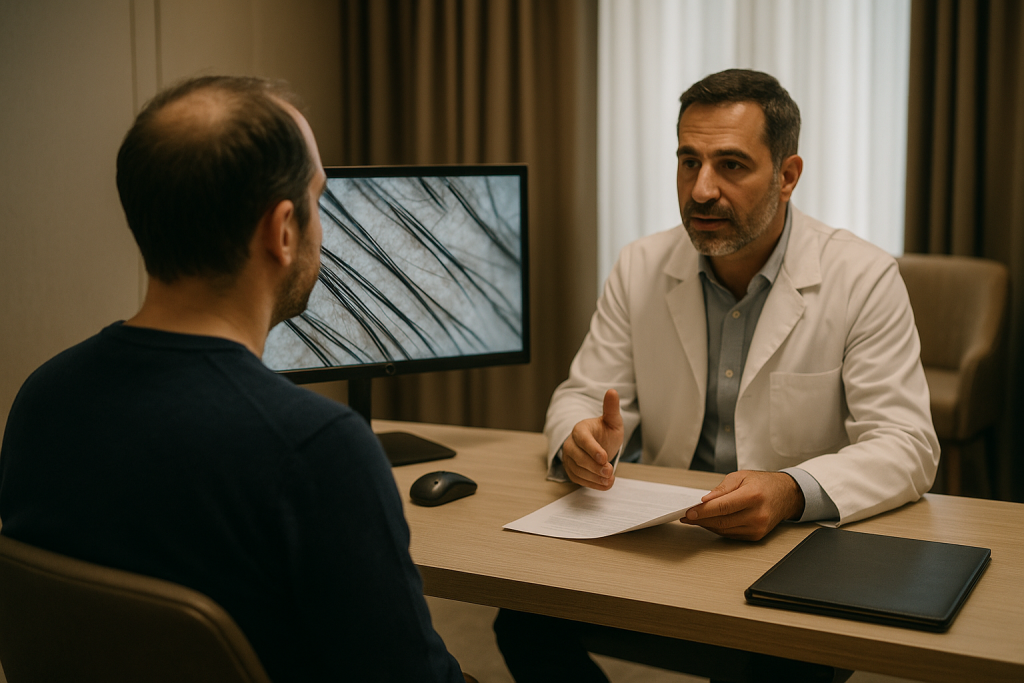
At Acibadem Hair Transplant Center, results are measured through trichoscopic graft survival at month 12. The clinic documents a 98% rate under a written guarantee. This measurement approach helps assess graft survival in a structured way, but individual cosmetic appearance can still vary because it is also influenced by hair thickness, styling, scalp contrast, ongoing native hair loss and the area treated.
Twelve months of follow-up are included in the clinic’s all-inclusive packages. Follow-up gives patients an opportunity to share progress and ask questions during the stages of healing and growth. It is also useful for monitoring whether existing, non-transplanted hair is changing over time and whether further medical discussion may be needed.
08Getting a Personalised Quote Without Guesswork
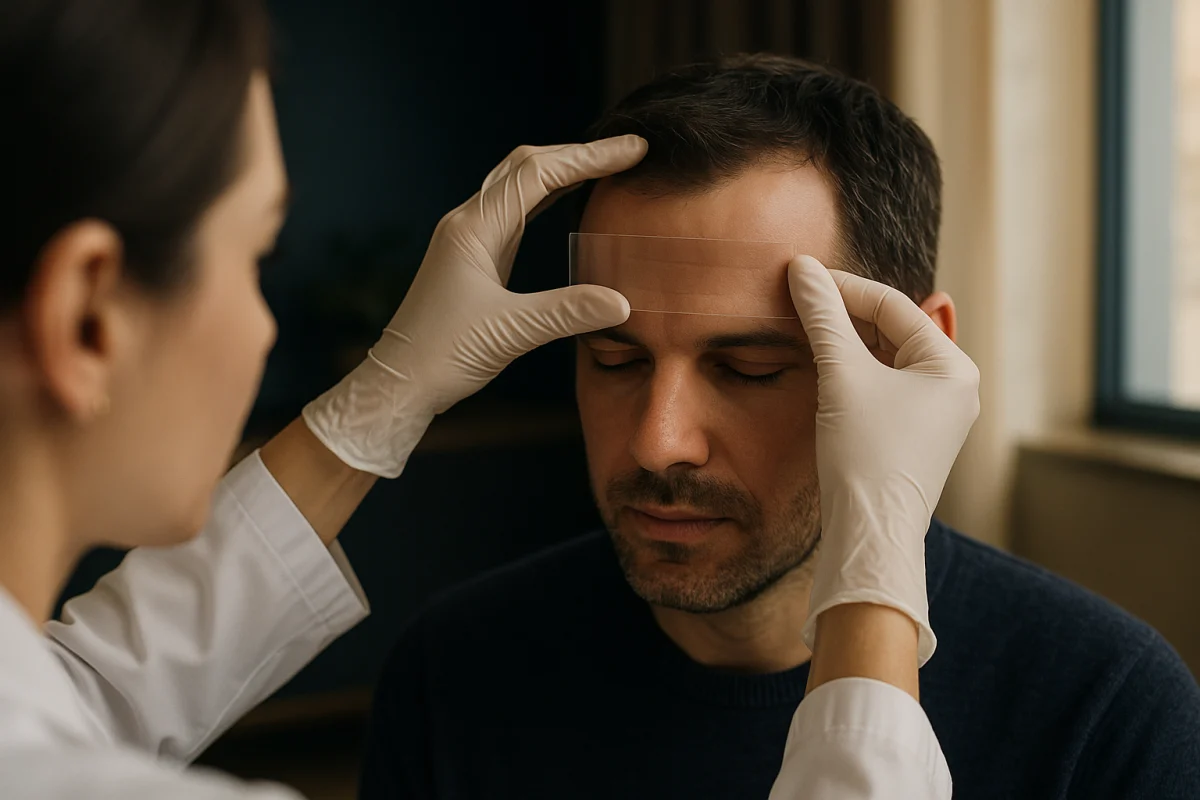
A meaningful quote should follow a review of clear photographs and medical information, not simply a request for a graft number. The assessment should look at the front, top, crown, sides and donor area in good lighting. It should also consider your age, hair-loss history, previous procedures if any, medical background and the goals that matter most to you.
Acibadem Hair Transplant Center offers a free online hair analysis reviewed by doctors, with WhatsApp replies typically within around two hours. This can help international patients receive an initial opinion before arranging travel. The review can indicate whether transplantation may be suitable and what kind of plan may be discussed, while the final clinical decision remains subject to medical assessment.
When you receive a proposed plan, consider asking how many grafts are estimated, which areas will be prioritised, which technique is being considered and why, and what is included in the package. You can also ask how donor preservation is addressed and whether the proposed design considers possible future hair loss. These questions support an informed decision rather than a decision based only on a headline offer.
The right plan is not necessarily the plan with the largest number of grafts or the lowest advertised figure. It is the one that is clinically appropriate, transparent about limits and aligned with a long-term view of your hair restoration. A doctor-led assessment is the safest starting point for understanding the likely scope of treatment and the factors behind the final quote.
09Frequently Asked Questions
What might a 3,000-graft hair transplant cost?
There is no single standard cost for a 3,000-graft procedure because the final plan depends on donor quality, the technique selected, the areas being treated and the services included. In some patients, 3,000 grafts may be used mainly for the hairline and frontal region, while in others they may be distributed across a wider area. A doctor-led assessment is needed to confirm whether this graft number is suitable and to provide an accurate quote.
How long can the results of a hair transplant last?
Transplanted hairs are typically selected from areas that are more resistant to common pattern hair loss, so they can provide long-lasting growth. However, no procedure can stop future thinning in non-transplanted hair. Long-term appearance depends on factors such as ongoing hair loss, age, genetics, medical conditions and appropriate follow-up.
What may happen 10 years after a hair transplant?
Ten years after a transplant, the transplanted hair may still be growing, while surrounding native hair may have continued to thin. This can change the balance between transplanted and non-transplanted areas, especially if hair loss was active at the time of the first procedure. A conservative initial design and donor preservation can help support future options, but your doctor will discuss what is realistic for your pattern of loss.
What might a 5,000-graft hair transplant cost?
A 5,000-graft treatment is a large procedure and should not be planned from a price request alone. Its suitability depends on whether the donor area can safely provide that number of grafts, how broad the recipient area is and whether a single session is clinically appropriate. The quote may also differ according to technique, travel arrangements, aftercare and follow-up included in the plan.
هذا المقال للمعلومات العامة فقط، وهو ليس بديلاً عن الاستشارة الطبية المتخصصة.
 06
06 12
12