في هذا المقال9
- Melatonin and Alopecia: What to Know Before Surgery
- What Melatonin May and May Not Do for Hair Follicles
- Visible Scalp and Very Thin Hair Need a Clear Diagnosis
- DHT, Pattern Hair Loss, and Medical Stabilisation
- Sleep Aids, Supplements, and Hair Transplant Preparation
- How Melatonin Fits Into Recovery After Transplantation
- Choosing Shampoo Without Overpromising Results
- When a Hair Transplant May Be Considered
- Frequently Asked Questions
Melatonin may support sleep and may have possible antioxidant effects in the scalp, but it is not a proven replacement for medical hair-loss treatment or a hair transplant plan. Before surgery, your doctor should review any melatonin product you use, the cause of your hair loss, and your overall health.
- Melatonin is mainly used for sleep, and evidence for its direct role in hair growth remains limited.
- Thinning that makes the scalp visible can have several causes, so a medical scalp and hair assessment is important.
- DHT can contribute to pattern hair loss, but DHT-blocking medicines require medical supervision and are not suitable for everyone.
- Do not start, stop, or change supplements and medicines shortly before a hair transplant without your surgical team's approval.
- A gentle shampoo can support scalp comfort, but shampoo alone does not usually treat the underlying cause of hair loss.
01Melatonin and Alopecia: What to Know Before Surgery
Melatonin and alopecia are often discussed together because sleep, stress, hormones, and scalp health can all matter to people who are losing hair. Melatonin is a hormone produced naturally by the body, mainly to help regulate the sleep-wake cycle. It is also sold as a supplement in many countries. While it may be useful for some sleep concerns under appropriate guidance, it should not be viewed as a stand-alone cure for thinning hair or baldness before transplantation.
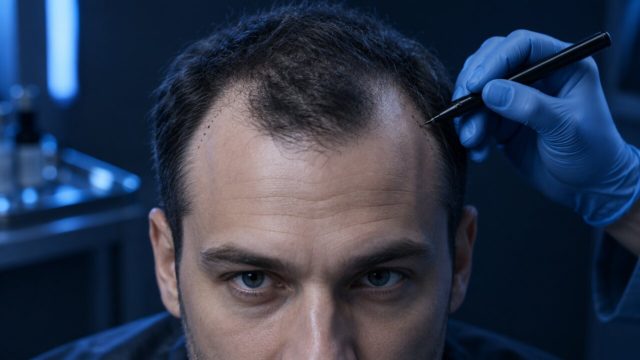
Before a hair transplant, the main priority is to identify the type and pattern of hair loss. Androgenetic alopecia, also called male or female pattern hair loss, is common, but it is not the only cause. Telogen effluvium, nutritional deficiencies, inflammatory scalp conditions, autoimmune hair loss, certain medicines, and recent illness may also affect density. A careful review helps the doctor decide whether surgery is appropriate now or whether the scalp needs treatment and stabilisation first.
It is sensible to tell your doctor about all prescribed medicines, over-the-counter products, vitamins, herbal products, and sleep aids that you use. This includes melatonin in any form, such as tablets, gummies, sprays, or topical products. Your surgical team can explain whether a product should be continued, paused, or adjusted around the procedure based on your medical history and the clinic's protocol.
02What Melatonin May and May Not Do for Hair Follicles
Melatonin has antioxidant and anti-inflammatory properties that researchers have explored in relation to skin and hair follicles. Small studies and laboratory findings have suggested that topical melatonin may have a possible role in supporting the hair growth cycle in some people with pattern hair loss. However, the available evidence is still limited, product formulations differ, and results cannot be expected in every patient. More high-quality clinical research is needed before it can be considered a primary hair-loss treatment.
When people ask about melatonin and alopecia, it is important to separate sleep support from a direct hair-growth effect. Better sleep may support general wellbeing and may help some people manage stress, but improving sleep does not automatically reverse follicle miniaturisation caused by genetic pattern hair loss. Likewise, a supplement that helps a person fall asleep does not necessarily improve transplanted graft survival or create new follicles in areas where follicles are no longer active.
Oral melatonin can cause unwanted effects in some people, including daytime sleepiness, vivid dreams, headache, dizziness, or changes in alertness. It can also interact with certain medicines or be unsuitable in specific health situations. For this reason, a doctor or qualified pharmacist should be involved before starting it, especially if you are preparing for surgery, are pregnant or breastfeeding, have a long-term health condition, or take regular medication.
03Visible Scalp and Very Thin Hair Need a Clear Diagnosis
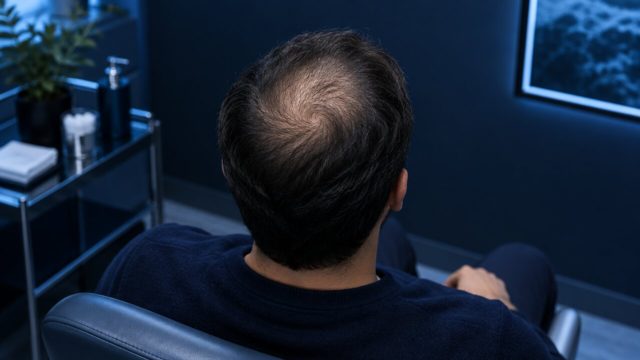
Seeing more scalp through the hair does not always mean that a person is permanently bald. It can happen when individual hairs become finer, when the number of hairs in the growing phase falls, or when a wider parting develops. Bright lighting, wet hair, a recent haircut, hair colour contrast, and styling habits can also make the scalp more noticeable. Even so, a clear change in density deserves professional assessment rather than guesswork.
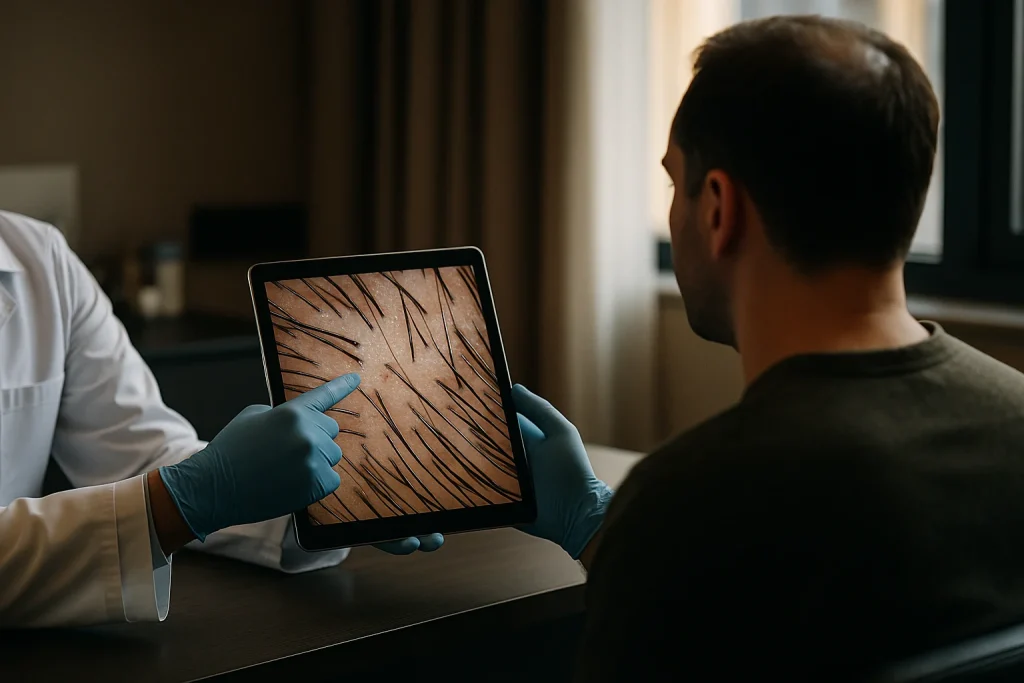
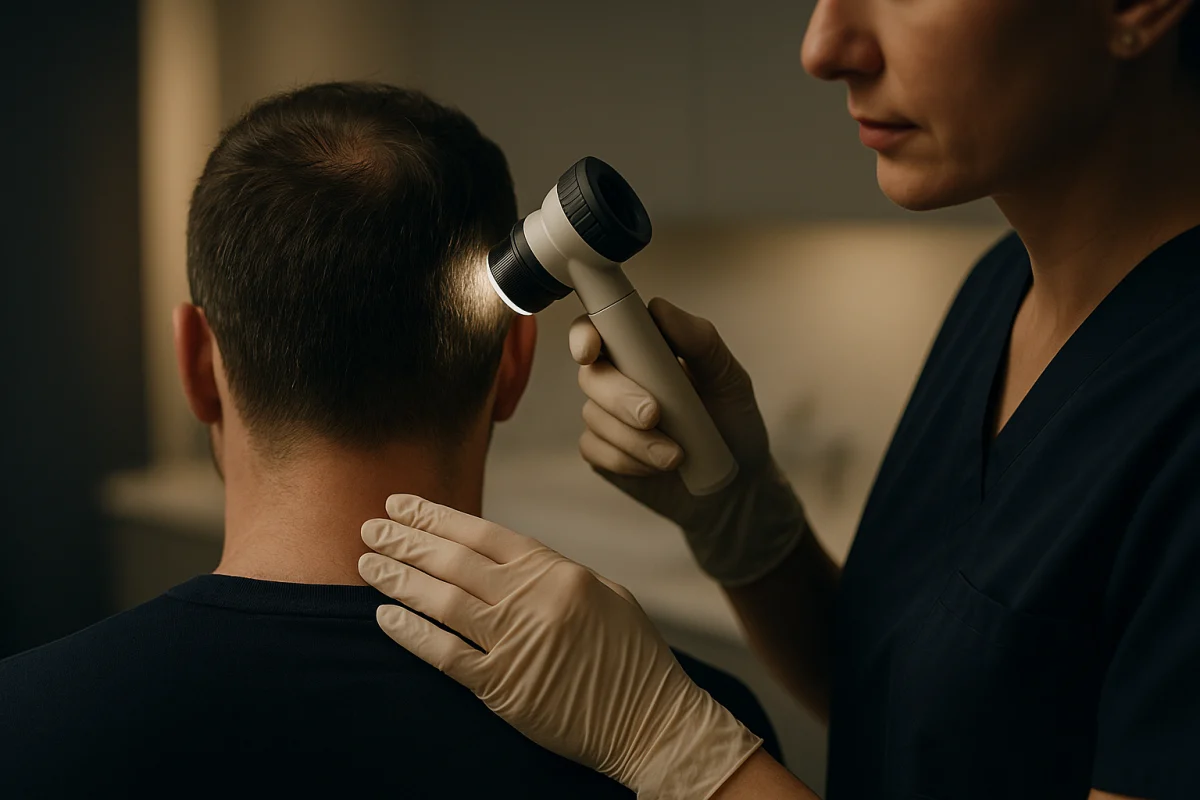
In pattern hair loss, genetically sensitive follicles gradually produce thinner, shorter hairs. This process is called miniaturisation. It often affects the hairline, temples, crown, or central parting, depending on the person. A doctor may examine the scalp, review the history of shedding, and use trichoscopy to look at hair shaft variation and follicle activity. Blood tests or dermatology assessment may sometimes be considered when symptoms suggest another cause.
Rapid shedding, patchy bald areas, itching, pain, scaling, redness, or scarring are signs that should not be ignored. These features may point to a condition that needs medical treatment before any transplant planning. A transplant redistributes healthy donor follicles; it does not correct every underlying scalp disorder. Treating active disease first can help protect both existing hair and the long-term appearance of a future result.
04DHT, Pattern Hair Loss, and Medical Stabilisation
Dihydrotestosterone, usually called DHT, is a hormone made from testosterone. In people with a genetic sensitivity, DHT can contribute to follicle miniaturisation in particular areas of the scalp. This is why DHT is strongly linked with many cases of androgenetic alopecia. However, DHT is not the only reason hair can thin, and its role varies between individuals, age groups, and patterns of hair loss.
Medicines that reduce DHT activity or change how follicles respond to hormones may help slow further loss in some appropriately selected patients. They do not work for everyone, and possible benefits may take months to assess. They can also have side effects and may not be appropriate for people with certain medical histories, pregnancy plans, or other health considerations. Your doctor will confirm whether any medical option is suitable and how it should be monitored.
Blocking DHT does not guarantee that all hair loss will stop. Existing miniaturised follicles may continue to change, and non-hormonal causes of shedding will not necessarily respond to DHT-focused treatment. For transplant candidates, stabilising ongoing pattern hair loss can be an important part of planning because it may help preserve native hair around the transplanted area. This decision should be based on a proper examination, not on online advice alone.
05Sleep Aids, Supplements, and Hair Transplant Preparation
If you use melatonin and alopecia is one of your concerns, do not assume that a sleep supplement is harmless simply because it is available without a prescription in some places. Supplement regulation and doses can vary, and some products contain additional ingredients. The safest approach is to share the exact product name, dose, timing, and reason for use with your doctor during the pre-operative consultation.
Good preparation for hair transplantation usually includes following the clinic's written instructions about medicines, alcohol, smoking, scalp products, meals, and transport. Do not stop prescribed treatment independently. In some cases, the surgical team may ask for a temporary change to products that could affect bleeding, sedation, healing, or alertness, but this depends on the product and the individual. Only the treating team can provide the correct pre-operative instructions for your situation.
Sleep is still important before and after surgery. Aim for a regular sleep routine, adequate hydration, and practical support for the first days of recovery. If anxiety or poor sleep is severe, discuss it with a healthcare professional well before the procedure rather than self-medicating at the last minute. This allows time to choose an approach that is appropriate for your health and compatible with the planned treatment.
06How Melatonin Fits Into Recovery After Transplantation
After a hair transplant, the focus is on protecting the grafts and allowing the scalp to heal. Patients are usually given instructions about sleeping position, washing, activity levels, and avoiding friction or pressure on the recipient area. The first days are particularly important because newly placed grafts need careful handling. Any supplement or sleep aid should only be used as advised by the surgical team.
Temporary shedding of transplanted hairs can occur in the weeks after a procedure. This is often part of the normal hair-cycle response and does not automatically mean that the grafts have failed. New growth typically begins gradually, and visible maturation takes time. Follow-up appointments help the clinical team review healing, answer questions, and identify concerns that may need attention.
A hair transplant can improve density in selected areas, but it does not stop genetic hair loss in untreated native hair. Long-term planning may include medical management where appropriate, healthy scalp care, and realistic design of the hairline and crown. At Acibadem Hair Transplant Center, results are assessed through trichoscopic graft survival at month 12, with a documented 98% rate under written guarantee. Your doctor will explain what monitoring is relevant to your own plan.

07Choosing Shampoo Without Overpromising Results
There is no single shampoo that dermatologists recommend for every type of hair loss. The best choice depends on whether the scalp is oily, dry, flaky, inflamed, sensitive, or affected by a specific condition. In general, a gentle shampoo that cleans the scalp without causing irritation can be a reasonable part of a routine. Shampoo supports scalp hygiene, but it usually cannot reverse genetic miniaturisation by itself.
People with dandruff or seborrhoeic dermatitis may be advised to use a medicated shampoo under medical guidance. These products can help manage flakes, itch, and inflammation when they are used correctly. However, a medicated shampoo is not automatically suitable for every scalp, and frequent use of a harsh product may worsen dryness or irritation in some patients. A dermatologist can identify the cause of scaling before recommending a targeted approach.
Before transplantation, avoid aggressive scratching, very hot water, frequent chemical treatments, or unapproved scalp products that trigger redness or burning. After transplantation, use only the washing method and products recommended by the clinic during the early healing period. Gentle hair care can reduce avoidable breakage and discomfort, but it should be combined with medical assessment when thinning or shedding continues.
08When a Hair Transplant May Be Considered
A hair transplant may be considered when hair loss has been diagnosed, the donor area is adequate, and expectations are realistic. Suitability depends on several factors, including the stability of hair loss, scalp condition, donor density, hair characteristics, age, health history, and the size of the area to be restored. Some people benefit from medical treatment first, while others may not be suitable for surgery at that time.
At Acibadem Hair Transplant Center in Istanbul, patients can request a free online hair analysis that is reviewed by doctors. Replies on WhatsApp are usually provided within around two hours. The clinic is licensed by the Turkish Ministry of Health and offers Sapphire FUE and DHI techniques, with needle-free anaesthesia available. A remote review cannot replace an in-person examination, but it can help begin an informed discussion about options.
International patients may also value practical planning alongside clinical care. The centre provides all-inclusive packages that include VIP transfer, a 4-star hotel, a care kit, and 12 months of follow-up. The team has welcomed patients from 38 countries over 12 years. A consultation should always focus on safe candidacy, a natural long-term plan, and the questions you need answered before deciding whether transplantation is right for you.
09Frequently Asked Questions
Can melatonin help hair growth?
Melatonin may have a possible supportive role in scalp and hair-follicle biology, particularly in topical forms, but evidence remains limited. It is not a proven replacement for established medical treatment or a hair transplant. A doctor can help determine whether it is appropriate for your health and hair-loss diagnosis.
Why is my hair so thin that I can see my scalp?
Visible scalp can result from pattern hair loss, active shedding, naturally fine hair, a wider parting, scalp inflammation, or other medical factors. A clinical assessment can help distinguish between gradual miniaturisation and a temporary shedding problem. Seek medical advice promptly if thinning is sudden, patchy, painful, itchy, or associated with scaling.
Will blocking DHT stop hair loss?
DHT-focused treatment may slow pattern hair loss in some patients with genetic follicle sensitivity, but it does not stop every form of hair loss or guarantee complete prevention. These medicines may have side effects and are not suitable for everyone. Your doctor should assess the cause of hair loss and discuss whether treatment is appropriate.
What shampoo might a dermatologist suggest for hair loss?
A dermatologist may suggest a gentle shampoo for routine scalp care, or a medicated shampoo when dandruff, seborrhoeic dermatitis, or another scalp condition is present. The choice depends on your scalp diagnosis and symptoms. Shampoo can support scalp health, but it does not usually treat the underlying cause of significant hair loss on its own.
هذا المقال للمعلومات العامة فقط، وهو ليس بديلاً عن الاستشارة الطبية المتخصصة.
هذا الدليل للمعلومات العامة ولا يغني عن الاستشارة الطبية. تُتخذ قرارات العلاج بعد تقييم الطبيب حضورياً أو عبر الإنترنت.