في هذا المقال11
- نظرة عامة
- Why medicine and surgery must be planned together
- What emerging medicines may realistically change
- PP405: promise, evidence and current limits
- Clascoterone and the role of scalp-directed treatment
- Choosing the right time for a transplant
- Building a long-term plan beyond an emerging treatment
- What to expect in the first 12 months after a transplant
- Preparing for travel to Istanbul and return-home care
- Candidacy nuances: when more assessment is needed
- Frequently Asked Questions
A new hair restoration drug may eventually give patients more ways to slow hair loss or improve scalp coverage, but it does not replace careful transplant planning. In most patients, a doctor will assess the pattern and stability of hair loss, donor supply, medical options and long-term goals before recommending treatment or surgery.
- Emerging medicines may support native-hair preservation, but their approval status and evidence should be checked carefully.
- A hair transplant redistributes permanent donor follicles and does not stop future loss in untreated areas.
- Medical treatment may be considered before surgery when hair loss is active or the diagnosis is uncertain.
- Early trial results for investigational medicines are not the same as proven, widely available treatment outcomes.
- Long-term planning should combine realistic graft use, scalp monitoring and doctor-guided follow-up.
01New Hair Loss Drugs and Their Role in Transplant Planning
A new hair restoration drug can be important in transplant planning because hair loss is often progressive. A medicine that helps preserve existing follicles may change how many grafts are needed, where they are placed and when surgery should be considered. However, an emerging treatment should not be treated as a replacement for a well-designed transplant plan. Your doctor will first confirm the likely cause of hair loss and assess whether a medicine is appropriate for you.
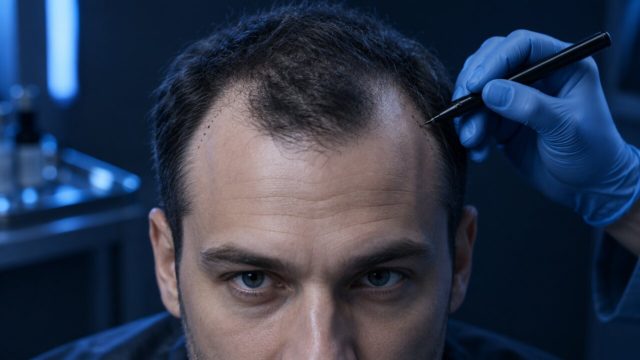
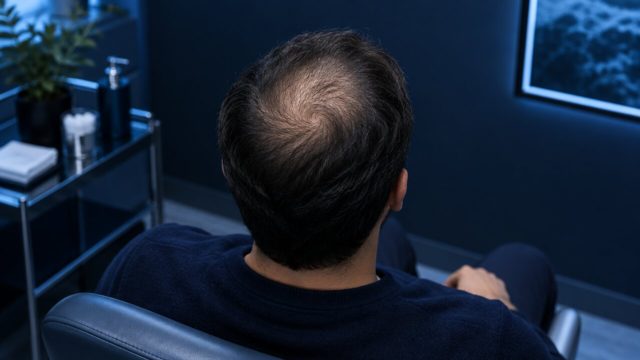
Hair transplantation moves follicles from a donor area, usually at the back and sides of the scalp, to areas with thinning or baldness. It does not create new follicles and it does not automatically protect nearby native hair from future miniaturisation. For this reason, planning must consider not only today’s hairline or crown, but also how your hair pattern may develop over the coming years.
New medicines can be particularly relevant for patients with early thinning, diffuse loss, or a family history of progressive pattern hair loss. In these situations, stabilising loss before surgery may help a surgeon see the true pattern more clearly. It may also reduce the risk of placing grafts around native hairs that could continue to thin later. The best order of treatment is individual and should be decided after medical assessment.
02Why medicine and surgery must be planned together
Hair restoration is usually a long-term process rather than a single decision. Some patients primarily need medical management and monitoring. Others have stable loss and enough donor density for transplantation. Many need a combination approach, where treatment aims to preserve existing hair and a transplant addresses areas where density is already significantly reduced.
The main reason to discuss medication before surgery is that transplanted follicles and native follicles behave differently. Donor follicles selected appropriately for transplantation are generally more resistant to the hormonal process involved in common pattern hair loss. Native hairs around them may still become finer over time. If this possibility is ignored, a previously dense-looking result can appear less balanced as surrounding hair changes.
A doctor may also recommend waiting before surgery if there is sudden shedding, scalp inflammation, an unclear diagnosis or rapidly changing density. The cause may not be typical pattern hair loss. Conditions such as nutritional issues, certain illnesses, medication effects, traction, autoimmune disorders or scarring conditions require different evaluation. A transplant should be planned only when the scalp diagnosis and clinical situation are suitably clear.
03What emerging medicines may realistically change
New treatments in development are exploring several pathways involved in follicle cycling, hormonal signalling and scalp biology. Their aim may be to reactivate follicles, reduce further miniaturisation or improve the visible density of existing hair. These goals are useful, but they are different from creating a completely new supply of donor hair. Even a promising medicine may not regrow hair in every area or work equally for every patient.
When a new hair restoration drug is discussed online, it is easy to assume that it will soon make surgery unnecessary. That conclusion is usually premature. Research findings can be early, small, limited to selected participants or based on short follow-up. A treatment must complete appropriate clinical development and regulatory review before doctors can understand its practical role, safety profile, suitable candidates and expected results in wider patient groups.
If an emerging treatment becomes available, it could help some patients delay surgery while their condition is monitored. It could also support a more conservative transplant design by protecting vulnerable native hairs. For patients with advanced baldness, however, medication alone may not restore the amount of coverage that transplanted grafts can provide. Expectations should remain based on confirmed evidence, not on social media claims or promotional headlines.
04PP405: promise, evidence and current limits
PP405 has attracted attention as an investigational treatment intended to influence a biological pathway linked with dormant hair follicles. Interest in this approach is understandable because waking inactive follicles could potentially improve visible coverage in people who still have viable follicles. At present, however, an investigational medicine should be viewed as a developing option, not as a standard part of transplant care.
Early-stage research can help scientists decide whether a treatment deserves larger and longer studies. It cannot establish that the same result will occur for all hair-loss patterns, all ages or all degrees of baldness. Important questions include how consistently the treatment performs, how long benefits last, whether continued use is needed, how it compares with established care and which side effects may occur over time.
For transplant candidates, PP405 does not currently remove the need for donor-area evaluation. A surgeon must still estimate available graft supply, scalp characteristics, current hair density and likely future loss. Patients should also avoid postponing an appropriate medical consultation solely because they are waiting for a possible future treatment. A doctor can explain the options that are currently available and revisit new evidence as it becomes reliable.
05Clascoterone and the role of scalp-directed treatment
Clascoterone is a topical anti-androgen that has been studied for hair loss because hormonal activity around susceptible follicles is relevant in androgenetic alopecia. A scalp-directed approach may be appealing to people who are concerned about systemic exposure from oral treatments. However, the availability, approved indication, formulation and prescribing requirements can vary by country, and your doctor will confirm what is legally and clinically appropriate where you live.
A new hair restoration drug that targets hormonal signalling may be helpful for preservation rather than for replacing a transplant. In principle, preserving miniaturising native hair can make surgical coverage easier to maintain. In practice, the response to any topical treatment can vary, and it may take months of regular use before a doctor can assess changes in shedding, calibre or density.
It is important not to confuse a medicine being studied for hair loss with a medicine already approved for that exact scalp indication. A formulation used for a different skin condition may not have the same dosage, delivery method or evidence base for hair restoration. Patients should not self-direct hormone-related treatment based on online discussions. A qualified clinician should review medical history, possible contraindications and follow-up needs.
06Choosing the right time for a transplant
The best time for a transplant depends on more than the number of hairs visible today. Doctors typically assess the pattern of loss, rate of change, family history, donor density, hair calibre, scalp condition and personal goals. Younger patients or those with active loss may need a more conservative approach, because future thinning can alter the appearance of a low or densely packed hairline.
Medical treatment may be considered for a period before surgery when the goal is to see whether hair loss stabilises or existing hair improves. This interval can help with planning, but it is not a universal rule. Some patients have long-stable areas of hair loss and may be suitable for transplantation without a lengthy waiting period. Others may benefit from treating a scalp condition first or from further investigation before any grafts are taken.
At Acibadem Hair Transplant Center, a dedicated hair restoration clinic in Istanbul licensed by the Turkish Ministry of Health, doctors review online hair analyses before discussing a treatment pathway. The assessment is intended to clarify whether Sapphire FUE, DHI, medical management, observation or a combination approach may be considered. A remote review is informative, but the final plan should always be confirmed through proper clinical evaluation.
07Building a long-term plan beyond an emerging treatment
A sustainable hair restoration plan protects the donor area as carefully as it improves the recipient area. Donor grafts are limited, so they should be allocated strategically rather than used only to create the strongest possible short-term change. A mature hairline, carefully planned density and sensible distribution between the front, mid-scalp and crown can help preserve options if further treatment is needed later.
After a transplant, follow-up remains important because native hair can continue to change. Doctors may use clinical photographs, examination and, where suitable, trichoscopic assessment to monitor hair calibre and density. Any decision about continued medication, a future procedure or a change in care should be based on documented progress and your overall health, rather than on a fixed schedule advertised online.
For international patients, practical continuity also matters. Acibadem Hair Transplant Center provides all-inclusive packages that include VIP transfer, a 4-star hotel, a care kit and 12 months of follow-up. The clinic offers free online hair analysis reviewed by doctors, with WhatsApp replies typically within around two hours. These services can support communication, but no clinic can promise that an investigational drug, a medical treatment or a transplant will produce identical results for every patient.
08What to expect in the first 12 months after a transplant
Understanding the recovery timeline can help patients avoid judging the result too early. In the first days after a transplant, the recipient area and donor area typically need careful protection. Your clinic will explain how to sleep, when to begin washing and how to use the supplied care products. Patients are usually advised not to rub, scratch or pick at the grafted area, because newly placed follicles need time to settle securely.
During the first few weeks, small crusts commonly form around grafts and then clear with gentle washing as instructed. Temporary shedding of transplanted hairs can occur after the initial growth phase. This is often known as shock shedding and does not necessarily mean that the follicles have been lost. Some surrounding native hairs may also shed temporarily, particularly in areas already affected by miniaturisation. Contact the clinical team if you have increasing pain, marked swelling, discharge, fever or any concern about healing.
Visible new growth usually develops gradually rather than all at once. Early hairs may initially look fine or uneven, then gain calibre and coverage over subsequent months. The crown can appear slower to improve than the frontal scalp because of its growth pattern and the larger area it may need to cover. At Acibadem Hair Transplant Center, graft survival is assessed by trichoscopy at month 12; the clinic documents a 98% graft survival rate under its written guarantee. Individual cosmetic density, native-hair preservation and the final appearance can still vary according to factors such as hair characteristics, scalp condition and ongoing hair loss.
09Preparing for travel to Istanbul and return-home care
International patients should arrange their travel around the procedure and the early recovery period, rather than planning a very active sightseeing schedule immediately afterwards. It is sensible to wear loose, front-opening clothing on the procedure day so that nothing needs to be pulled over the scalp. A soft, adjustable hat may be appropriate only when the clinical team confirms that it is safe to wear. Patients should also check airline baggage rules for liquids if they are carrying aftercare products home.
Before travelling, share an accurate medical history and current medication list with the clinic during the doctor-reviewed online assessment. This includes allergies, previous scalp procedures, long-term health conditions and medicines or supplements that may affect bleeding, healing or anaesthesia. Do not stop prescribed medication independently for a hair procedure; the prescribing doctor and transplant team should advise on any changes. It is also helpful to arrange enough time away from physically demanding work, sport, swimming and direct sun exposure, in line with the aftercare instructions given for your procedure.
For continuity after returning home, take clear baseline and follow-up photographs in similar lighting and from the same angles if the clinic requests them. Keep the clinic’s contact details available and report concerns promptly rather than relying on social media advice. Acibadem Hair Transplant Center’s all-inclusive packages include VIP transfer, a 4-star hotel, a care kit and 12 months of follow-up. The follow-up process can support practical questions after travel, while urgent medical symptoms should always be assessed promptly by an appropriate local healthcare service.
10Candidacy nuances: when more assessment is needed
Not every thinning pattern is suitable for immediate transplantation. Diffuse thinning can be particularly complex because the donor area may also have reduced density or ongoing miniaturisation. In this situation, a doctor needs to distinguish between stable donor follicles and hairs that may become weaker over time. Taking too many grafts from an unstable donor area can compromise its appearance and limit future options.
Hair texture, colour contrast and scalp-to-hair contrast also influence the visual result that can realistically be achieved. Curly or wavy hair may create the impression of more coverage than very straight hair at the same graft number, while fine hair or a strong contrast between hair and scalp may require a more cautious density discussion. These features do not automatically exclude surgery, but they affect hairline design, graft allocation and expectations for the crown.
Patients with a history of patchy loss, scalp discomfort, redness, scaling, scarring, recent rapid shedding or previous cosmetic scalp treatments may require further medical evaluation before planning surgery. The same applies to people whose goals would require more grafts than the donor area can safely provide. A responsible plan may involve monitoring, medical treatment, a conservative first procedure or deciding that transplantation is not suitable at that time. The purpose of assessment is not simply to approve surgery, but to protect long-term scalp health and donor resources.
11Frequently Asked Questions
When might PP405 become available to patients?
There is no confirmed public availability date that patients should rely on. PP405 would need to complete the necessary clinical studies and regulatory review before it could be offered as an approved hair-loss treatment. Development timelines can change, so it is best to discuss currently available options with a qualified doctor rather than delay care based on a predicted launch date.
How did Matthew McConaughey say he regrew his hair?
Matthew McConaughey has publicly attributed changes in his hair to a topical treatment, but there is no independently verified medical record explaining his diagnosis, treatment plan or outcome. Hair appearance can also be affected by styling, length, lighting, medication, health changes and natural variation. His experience should not be used to predict what will work for another person.
When could clascoterone be available specifically for hair loss?
Availability for hair loss depends on the results of clinical research and approval decisions in each country. A medicine or formulation used for another skin indication should not be assumed to be approved or suitable for scalp hair loss. Your doctor can check the current local regulatory status and explain evidence-based alternatives.
Does PP405 really work for hair regrowth?
PP405 is an investigational treatment, so early research interest does not yet prove reliable effectiveness for the general public. Larger studies and longer follow-up are needed to establish who may benefit, how durable any improvement may be and what safety considerations apply. Until then, it should not be regarded as a guaranteed alternative to established medical assessment or transplant planning.
هذا المقال للمعلومات العامة فقط، وهو ليس بديلاً عن الاستشارة الطبية المتخصصة.
هذا الدليل للمعلومات العامة ولا يغني عن الاستشارة الطبية. تُتخذ قرارات العلاج بعد تقييم الطبيب حضورياً أو عبر الإنترنت.