

Aldactone for hair loss is a term often used when discussing spironolactone, a prescription medicine that may help some women with hormone-related pattern hair loss. Before transplant planning, your doctor should confirm the cause and stability of hair loss, review your medical history and decide whether medical treatment should be started, continued or adjusted first.
- Spironolactone may be considered for some women with androgen-related pattern hair loss, but it requires a doctor’s assessment and prescription.
- Hair transplant planning usually begins with diagnosis, donor-area assessment and a review of whether hair loss is still progressing.
- Spironolactone and minoxidil work differently and may sometimes be considered together under medical supervision.
- Potential side effects, pregnancy considerations and potassium-related risks should be discussed before treatment starts.
- A realistic treatment review often takes months because hair growth changes gradually through the hair cycle.
01Spironolactone for Hair Loss Before Transplant Planning
Aldactone for hair loss is commonly searched by people who are exploring spironolactone as part of a wider plan for thinning hair. Spironolactone is a prescription medicine with anti-androgen effects. In appropriate patients, it may reduce the effect of androgens on susceptible hair follicles. It is used more often in women with female pattern hair loss than in men. Before considering a hair transplant, it is important to understand whether medicine could help protect existing hair and whether the hair-loss pattern is stable enough for surgical planning.
A hair transplant moves healthy follicles from a donor area, usually at the back or sides of the scalp, into thinning areas. It does not stop ongoing loss of the non-transplanted hair around those grafts. For this reason, a doctor may discuss medical management before surgery when active thinning is suspected. The goal is not to delay treatment without reason. It is to create a more informed, long-term plan that considers your current density, likely pattern of change, family history and expectations.
Not every person with hair loss is a candidate for spironolactone or for a transplant at the same time. Diffuse shedding, nutritional concerns, thyroid conditions, inflammatory scalp disease, traction-related loss and scarring forms of alopecia need different evaluation and treatment pathways. A clinical consultation may include scalp examination, a review of medicines and health history, and sometimes blood tests or further assessment. Your doctor will confirm which steps are relevant for you.
02How aldactone for hair loss may fit into a treatment plan
Spironolactone may be considered when a woman has a pattern of gradual thinning that appears related to androgen sensitivity. Female pattern hair loss often presents as widening at the central part, reduced volume through the top of the scalp or diffuse thinning while the frontal hairline remains relatively preserved. Some patients also have signs that may support a hormonal review, such as acne or increased facial hair, although these signs are not required for hair loss to occur.
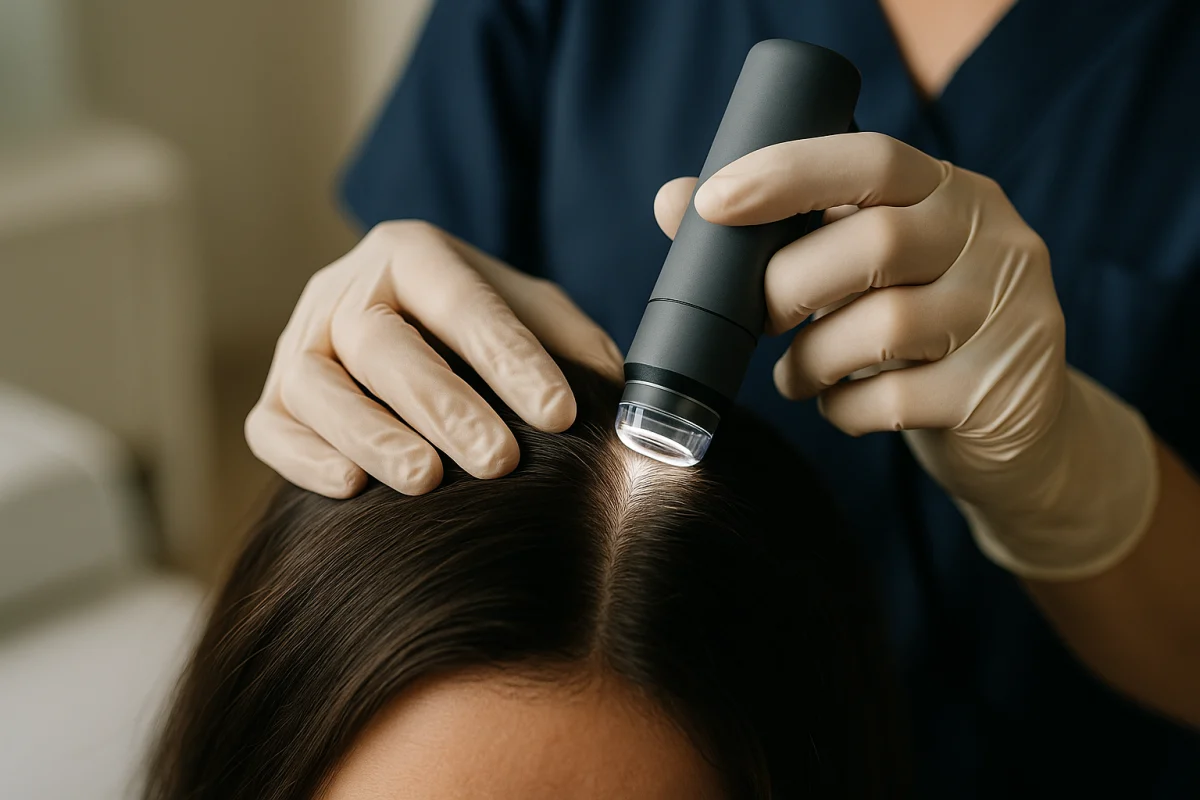
The medicine is not a fast solution because hair follicles respond slowly. A doctor may first establish a baseline with scalp photographs, clinical examination or trichoscopy. This makes it easier to judge whether shedding, density and hair-shaft thickness are changing over time. In many cases, treatment response is assessed over several months rather than weeks. A stable photographic record can also be valuable when discussing the size and design of a possible future transplant.
Spironolactone is not appropriate for everyone. Suitability depends on factors such as blood pressure, kidney function, current medicines, medical conditions and reproductive plans. It can interact with some treatments that affect potassium levels or blood pressure. Your prescribing doctor may recommend baseline or follow-up blood tests when clinically indicated. Do not start, stop or change a prescription medicine solely because of information read online or because of a planned cosmetic procedure.
03Why diagnosis comes before a hair transplant decision
The same visible symptom, thinning hair, can have several causes. Telogen effluvium, for example, is a diffuse shedding pattern that may follow illness, stress, rapid weight change, childbirth or another trigger. It does not necessarily mean that the person has permanent pattern hair loss. A transplant is generally not the first step when shedding is active or when the cause has not been clarified, because the appearance and density of the native hair may change as the underlying issue improves or progresses.
Trichoscopy can help doctors look more closely at hair-shaft variation, follicular units, scalp condition and signs that support a particular diagnosis. The donor area also needs careful assessment. A strong donor area is important, but it is not an unlimited resource. A responsible transplant plan accounts for future hair-loss patterns and aims to preserve donor hair for the long term rather than using more grafts than the situation can support.
During a free online hair analysis at Acibadem Hair Transplant Center, doctors review the information and images you provide to give initial guidance. An online review cannot replace an in-person medical examination or testing where these are needed, but it can help identify the questions that should be addressed before travel or surgery planning. Patients can typically receive a WhatsApp response within about two hours, allowing the process to begin with clear, practical information.
04Safety, common side effects and monitoring considerations
The most commonly reported side effect of spironolactone is increased urination because the medicine has a diuretic effect. Some patients may also experience dizziness, fatigue, breast tenderness, menstrual changes, headaches or stomach upset. Side effects vary in frequency and severity, and not everyone experiences them. Feeling light-headed may be more relevant for people who already have low blood pressure or who take medicines that lower blood pressure, so a full medication review is important.
A clinically important consideration is the potential for raised potassium levels, known as hyperkalaemia. The likelihood depends on individual factors, including kidney function, dose, age, health conditions and other medicines. This is why a clinician may arrange blood tests and follow-up monitoring for some patients. Symptoms alone cannot reliably identify potassium changes. Your doctor will decide whether testing is needed, how often it should be repeated and whether another approach would be safer.
Spironolactone should be discussed carefully by anyone who is pregnant, trying to become pregnant, breastfeeding or may become pregnant. Doctors may recommend reliable contraception and may advise against use in certain situations because of potential effects on fetal development. This conversation should take place before treatment begins and again if reproductive plans change. Tell your medical team about all supplements and prescribed or non-prescribed medicines, including products marketed for hair, skin or hormonal health.
05Spironolactone and minoxidil: understanding different roles
Spironolactone and minoxidil are not direct substitutes because they work in different ways. Spironolactone is used to address androgen-related effects in suitable patients, while minoxidil is used to support the growth phase of follicles. Minoxidil may be topical or oral depending on the setting, local regulations and medical assessment. The best choice depends on the diagnosis, your health profile, possible adverse effects, convenience and the treatment goals agreed with your doctor.
For many women with pattern hair loss, a doctor may discuss topical minoxidil as an option because it can be useful across a range of hair-loss patterns. Spironolactone may be considered when androgen sensitivity is thought to play a meaningful role or when the expected benefit outweighs the potential risks. In some cases, both approaches may be used under supervision. This is not automatically necessary, and combining treatments should not be assumed to be more suitable for every patient.
When people search for aldactone for hair loss, they may be looking for a clear answer about which treatment is “better.” In practice, the more useful question is which approach best matches the diagnosed cause of thinning and the person’s safety profile. A treatment that works well for one patient may be unsuitable for another. It is also important to know that stopping an effective medical treatment can allow underlying pattern hair loss to become more visible again over time.
06Finasteride or spironolactone for female pattern hair loss
Finasteride and spironolactone both relate to androgen pathways, but they are different prescription medicines with different mechanisms, risk considerations and patterns of use. Spironolactone is commonly discussed for women with female pattern hair loss. Finasteride may be considered in selected circumstances by an experienced doctor, but its suitability requires particularly careful discussion, especially for women who could become pregnant. Neither medicine should be selected based on internet comparisons alone.
A doctor may consider age, menopausal status, medical history, blood pressure, laboratory findings, current medication, signs of androgen excess and pregnancy potential when discussing these options. The diagnosis matters as much as the medicine. If a patient has a non-androgen-related reason for shedding, neither option may address the main problem. A scalp review can help separate pattern hair loss from temporary shedding and from conditions that may require dermatological treatment before any restoration procedure.
It is reasonable to ask what benefits are realistic, how long a trial may take, what monitoring is needed and what would lead the doctor to change the plan. Written instructions are helpful, especially if treatment is being coordinated with travel for a procedure. A transplant team should know about all current medicines so that peri-procedure guidance can be coordinated safely with the prescribing doctor. Never discontinue a medicine before surgery unless your own medical team advises it.

07Timing medical treatment before transplant surgery
There is no single waiting period that suits every patient. In many situations, doctors prefer to observe the response to medical treatment and the stability of hair loss before finalising transplant design. This may help avoid placing grafts into an area where nearby native hair is likely to thin further. However, the appropriate timing depends on the pattern, severity, donor supply, age, prior treatment and overall clinical assessment. Your doctor will confirm whether a period of medical management is advisable.
A transplant plan should include more than the hairline seen today. For women, diffuse thinning can make planning especially complex because donor density may also be affected. For men, continued androgenetic hair loss can change the balance between transplanted and native hair. In either case, long-term planning may involve a conservative design, a limited first procedure or a recommendation to postpone surgery while the diagnosis or treatment response becomes clearer.
If spironolactone is part of your treatment plan, share the exact dose, reason for use and prescribing clinician’s details with the surgical team. The team may need to consider hydration, blood pressure and any relevant blood-test results as part of pre-procedure planning. Surgical instructions vary according to the individual and the procedure. Follow the instructions given by your clinic and prescribing doctor rather than relying on general medication-stop lists found online.
08Preparing for an informed consultation in Istanbul
A useful consultation starts with accurate information. Prepare a short history of when thinning began, whether shedding was sudden or gradual, any illnesses or major life events around the time it started, and any previous treatments. Bring a list of medicines, vitamins and supplements, including doses where possible. Older photographs can be helpful because they may show whether the hairline, central part or overall density has changed slowly or more rapidly than expected.
Ask about diagnosis, donor assessment, medical treatment options, likely maintenance needs and the limitations of surgery. It is also sensible to ask how the clinic will evaluate growth and follow your progress after treatment. Acibadem Hair Transplant Center is a dedicated hair restoration clinic in Istanbul licensed by the Turkish Ministry of Health. The clinic offers Sapphire FUE and DHI techniques, with needle-free anaesthesia available for suitable patients after assessment.
International patients may also need a practical plan for travel and aftercare. The clinic’s all-inclusive packages include VIP transfer, a 4-star hotel, a care kit and 12 months of follow-up. These services can support the logistics of treatment, but they do not replace the need for appropriate medical evaluation. A good plan combines diagnosis, realistic expectations, careful donor management and follow-up, whether or not spironolactone becomes part of your long-term hair-loss care.
09Frequently Asked Questions
What side effect is reported most often with Aldactone?
Increased urination is commonly reported because spironolactone has a diuretic effect. Other possible effects include dizziness, fatigue, breast tenderness and menstrual changes. Your doctor can explain which symptoms need prompt medical attention and whether monitoring is appropriate for you.
How long is spironolactone usually used for hair loss?
Spironolactone is often used as a longer-term treatment when it is effective and remains medically appropriate, because pattern hair loss can be ongoing. Doctors commonly assess change over months rather than weeks, then review benefits, side effects and monitoring needs regularly. The duration should be decided with the prescribing doctor and may change with your health or reproductive plans.
Is spironolactone or minoxidil better for thinning hair?
Neither is universally better because they work differently and may be used for different clinical reasons. Minoxidil is often considered for supporting follicle growth, while spironolactone may be considered for suitable women with androgen-related pattern hair loss. Your doctor can recommend an approach after confirming the likely cause of thinning and reviewing safety factors.
For female hair loss, is finasteride or spironolactone the better option?
The better option depends on the diagnosis, medical history, age, pregnancy potential and possible risks. Spironolactone is commonly discussed for female pattern hair loss, while finasteride may be considered only in selected situations under careful medical supervision. A doctor should make this decision after a full assessment rather than a general online comparison.
هذا المقال للمعلومات العامة فقط، وهو ليس بديلاً عن الاستشارة الطبية المتخصصة.
 06
06 12
12