
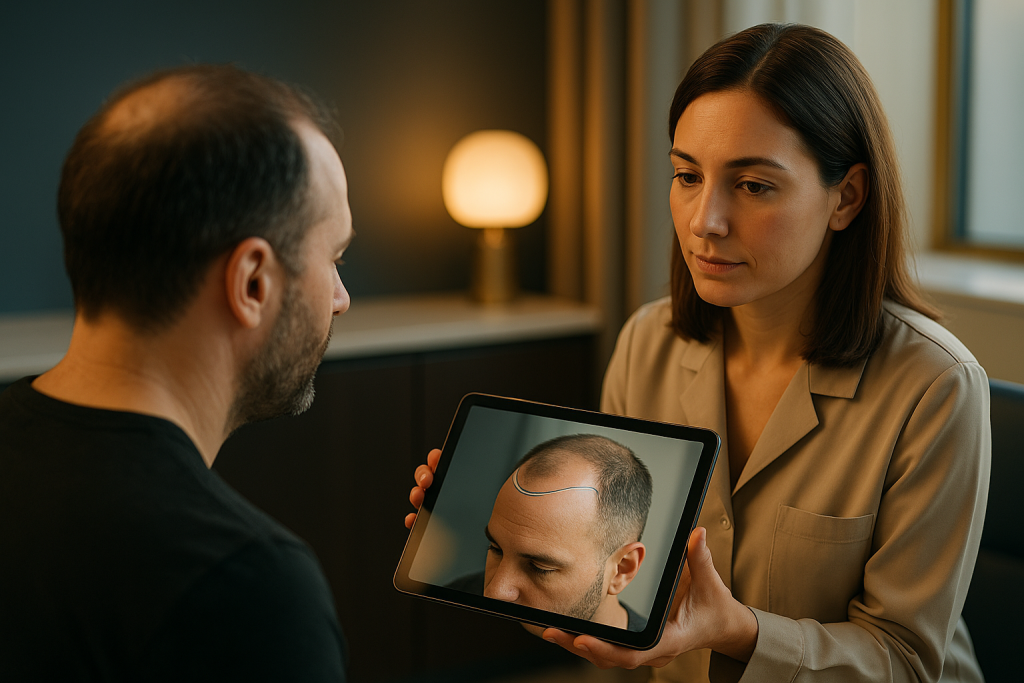
A turkey hairline transplant should be planned around your facial proportions, age, hair-loss pattern and likely future hair loss, rather than a fixed template. A conservative, irregular hairline with carefully selected single-hair grafts can usually look more natural over time; your doctor will confirm whether transplantation is suitable after assessment.
- A natural hairline is usually designed conservatively to remain suitable if hair loss continues.
- Facial proportions, donor hair quality, age and family history all influence the planned hairline.
- Single-hair grafts are typically used at the leading edge to create a softer transition.
- Sapphire FUE and DHI can both be used for hairline work when the plan and graft handling are appropriate.
- Choosing a licensed clinic with clear medical assessment and follow-up is important for patients travelling to Turkey.
01What a turkey hairline transplant involves
The term “turkey hairline transplant” commonly describes a procedure in which healthy hair follicles are moved from a donor area, usually the back or sides of the scalp, to rebuild, lower or refine the front hairline. The aim is not simply to place hair at the forehead. It is to create a transition between the face and scalp that looks believable at close distance, in different lighting and as the patient ages. This requires an individual medical plan rather than a standard hairline shape.
Hairline restoration may be considered by men with frontal recession, women with a naturally high forehead or traction-related thinning, and selected patients with stable hair loss affecting the frontal scalp. However, not everyone is an immediate candidate. Active hair loss, limited donor density, scalp conditions, unrealistic expectations and a very young age may change the plan or mean that treatment should be delayed. A doctor should assess the cause and pattern of hair loss before recommending surgery.
At Acibadem Hair Transplant Center, a dedicated hair restoration clinic in Istanbul licensed by the Turkish Ministry of Health, doctors review the hairline, donor area and available grafts during the assessment process. An online hair analysis can be requested before travel and is reviewed by doctors. It can provide an initial indication of suitability, but the final clinical plan is confirmed following proper medical evaluation.
02Designing a hairline that fits the face
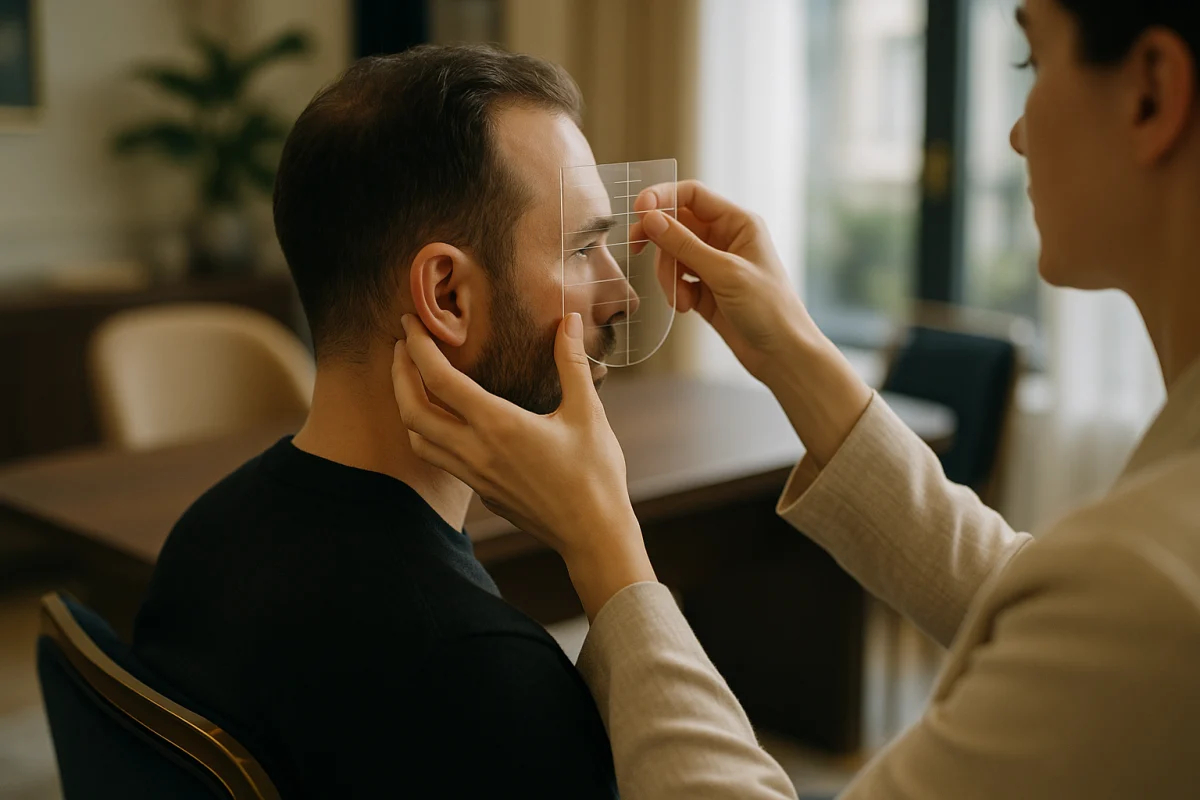
A well-planned hairline follows the individual face rather than copying a celebrity photograph or a trend seen online. Doctors typically consider forehead height, face length, temple shape, eyebrow position and the natural direction of the surrounding hairs. A person with a long or narrow face may need a different design from someone with a broad face, even when both want the same apparent degree of lowering.
The central point of the hairline is only one part of the design. The corners, temple recesses and transition into existing hair are equally important. A perfectly straight line can look artificial because natural hairlines usually have small, uneven changes in density and direction. For this reason, a planned hairline often includes subtle micro-irregularity, while still appearing balanced when viewed from the front.
Hairline height should also be chosen with future change in mind. Lower is not always better. An overly low line may use too many donor grafts, look less natural if the surrounding hair continues to thin, and create a difficult design to revise later. In most patients, a slightly conservative position offers more flexibility and can protect a natural appearance over the long term.
03Why conservative planning matters for future hair loss
Hair transplantation redistributes existing donor follicles; it does not stop genetic hair loss in non-transplanted areas. When the frontal line is designed, doctors therefore consider whether hair behind it may become thinner over the coming years. This is especially relevant for younger patients or those with a strong family history of progressive male or female pattern hair loss. A mature-looking hairline may be more appropriate than a low adolescent-style line.
For people researching a turkey hairline transplant, it is useful to understand that the best-looking early design is not always the most sustainable one. A plan should leave enough donor capacity for possible future work, including reinforcing the mid-scalp, crown or temple areas if clinically appropriate. Your doctor may discuss medical management options, but only after reviewing your health history and hair-loss diagnosis.
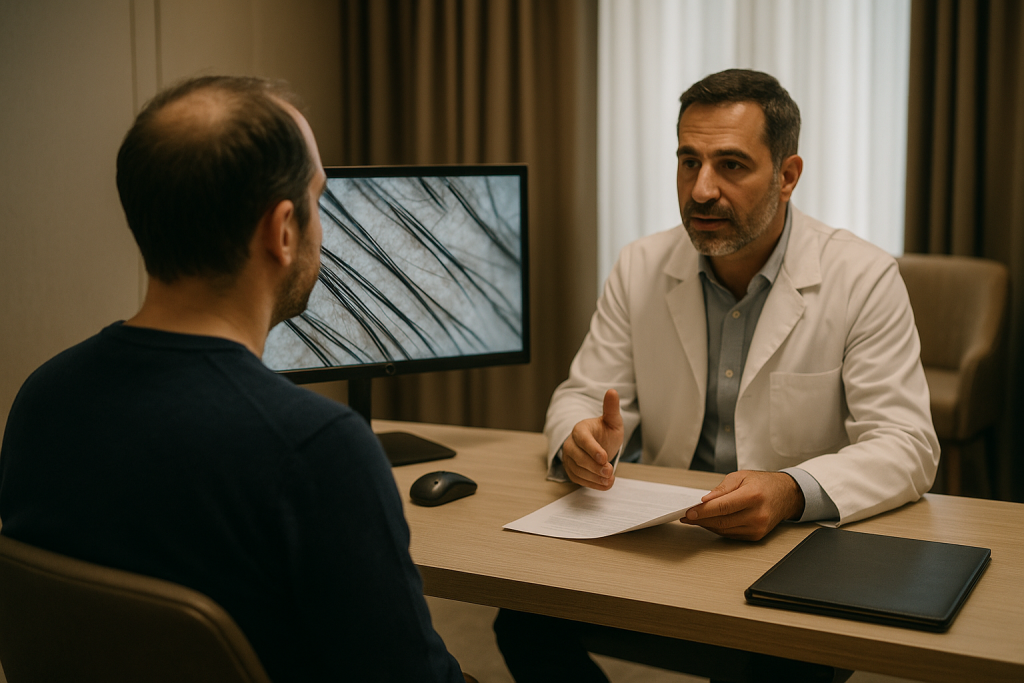
A stable pattern makes surgical planning more predictable, but stability does not mean hair loss can never progress. Photographs, trichoscopic examination and donor-area assessment can help doctors document the current situation and make a cautious recommendation. An ethical consultation should explain the limits of donor supply and avoid promising a density or hairline position that cannot be responsibly maintained.
04Choosing grafts for a soft, realistic front edge
The leading edge of a natural hairline is usually made from fine, single-hair follicular units. These grafts create a gradual visual transition from skin to fuller hair behind the line. Multi-hair grafts can provide useful density further back, but placing them too close to the front may produce a plug-like or harsh appearance. Correct sorting and placement of grafts are therefore central to hairline artistry.
Donor hair characteristics influence what is possible. Fine hair may create a soft edge with fewer grafts but can need more coverage for visual fullness. Coarse or very dark hair against lighter skin can show stronger contrast, so placement may need to be especially careful. Curl pattern, hair colour, shaft thickness and donor density all affect the design. There is no universal graft number that is appropriate for every hairline.
The angle of each implanted graft matters as much as the graft type. Frontal hairs generally emerge at a low angle and follow changing directions around the corners and temples. If grafts are placed too upright or all in the same direction, the result may appear less natural even when the hairline shape is good. Careful recipient-site creation helps guide the growth pattern that becomes visible after healing.
05Sapphire FUE, DHI and the hairline placement process
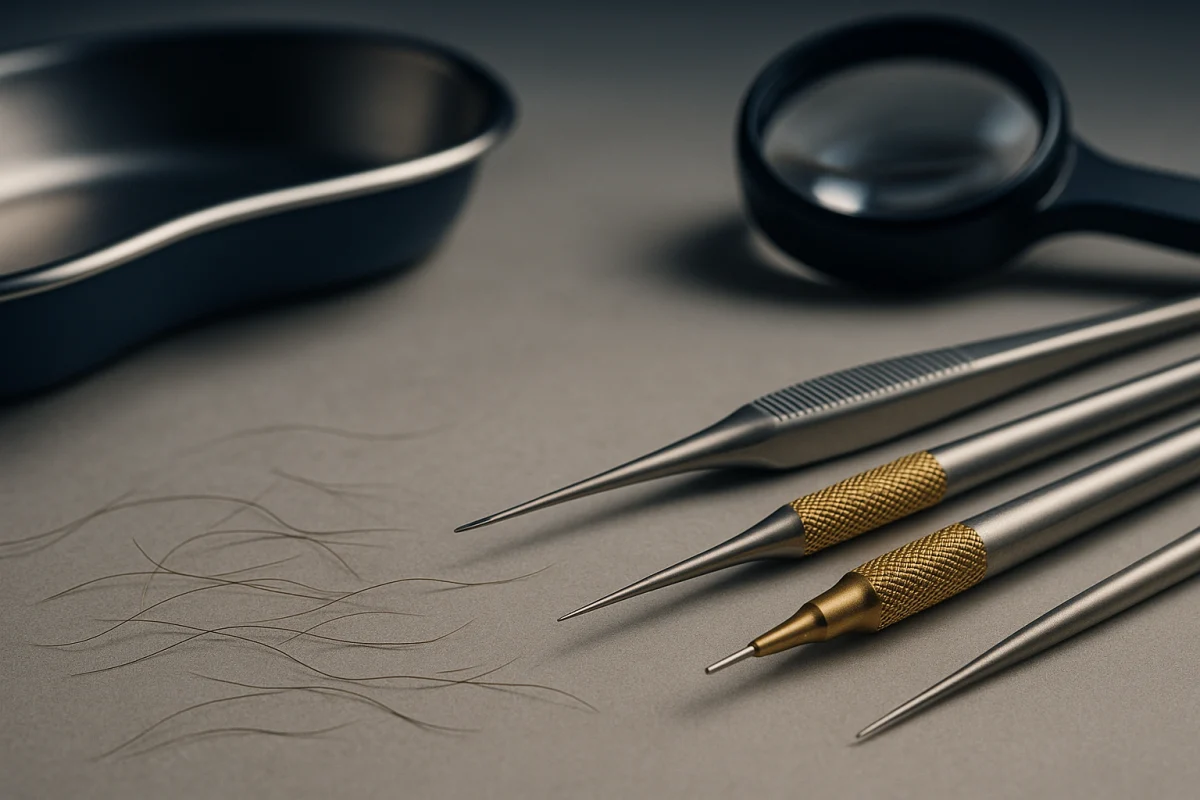
Sapphire FUE and DHI are two techniques that may be used in hair restoration, including hairline procedures. With FUE, follicles are individually extracted from the donor region and then placed into prepared recipient sites. Sapphire instruments may be used to create channels for implantation. With DHI, implanted follicles are placed using a specialised implantation approach. The most suitable option depends on the scalp, hair characteristics, planned area and the medical team’s assessment.
A turkey hairline transplant is not defined by one technique alone. Natural results depend on appropriate candidate selection, a measured hairline design, gentle graft extraction, correct graft sorting and accurate placement. Patients should be cautious of claims that any single method automatically creates a better outcome for every person. Your doctor can explain why a particular approach may be recommended for your hair and scalp.
The procedure is typically performed under local anaesthesia. Needle-free anaesthesia is available at Acibadem Hair Transplant Center for eligible patients who may prefer this option. The clinical team will explain preparation, the expected duration and aftercare instructions before treatment. It is important to disclose medications, allergies, medical conditions and previous scalp procedures so the team can plan safely.
06Healing timeline and when the new hairline becomes visible
In the first days after a hairline transplant, small scabs, redness, swelling or tenderness may occur. These effects are common after a surgical procedure and usually settle during the early recovery period, although the timeline varies. Patients are given washing and care instructions designed to protect the grafts. Avoiding friction, scratching and unapproved topical products is generally important while the recipient area heals.
Transplanted hairs often shed during the first weeks. This phase can feel concerning, but shedding of the visible hair shaft does not necessarily mean the follicle has been lost. New growth typically begins gradually after several months, and the early hairs may initially be fine or uneven. Density, texture and coverage usually develop over time rather than appearing all at once.
A more meaningful view of the result is commonly possible between 9 and 12 months, while some patients may continue to see maturation beyond this period. At Acibadem Hair Transplant Center, results are measured by trichoscopic graft survival at month 12, with a documented 98% rate under a written guarantee. This documented measure does not mean every individual will experience the same cosmetic density or growth pattern, as healing and hair characteristics differ.
07Maintaining a natural appearance after surgery
Long-term appearance depends on both transplanted and existing hair. Transplanted follicles from the typical donor zone are generally more resistant to the hormonal process linked with pattern hair loss, but the surrounding native hair may still thin. This can alter the balance around the new hairline. Ongoing review may be helpful if you notice further shedding, changes in density or a widening gap behind the transplanted zone.
Following aftercare advice supports normal healing. Patients are usually asked to protect the scalp from direct trauma and strong sun exposure during the advised period, follow the washing schedule and attend follow-up reviews where possible. Hair colouring, styling products, exercise and headwear may need temporary adjustment. The exact recommendations vary, so the clinic’s written instructions should take priority over general online advice.
A successful result should allow the hairline to look appropriate in daily life, not only in before-and-after photographs. This means considering hairstyles, hair parting, facial expressions and the way the line looks under daylight. Small asymmetries are often normal in human faces and hairlines. Trying to make every millimetre perfectly symmetrical can sometimes make the result look less authentic.
08How to choose a clinic in Turkey for hairline work
Turkey is a major destination for hair restoration, but clinic standards, medical involvement and follow-up arrangements can vary. Patients considering a turkey hairline transplant should look beyond promotional images and ask who performs the medical assessment, who designs the hairline, what technique is proposed and how the donor area will be protected. A clear answer to these questions can help patients make an informed decision.
Safety should include more than the procedure day. Check that the clinic is properly licensed, that your medical history is reviewed, that risks and limitations are discussed, and that you receive clear aftercare guidance. Travelling patients should also ask about communication before arrival, follow-up after returning home and what support is available if they have a concern. No reputable provider should guarantee a specific cosmetic outcome for every patient.
Acibadem Hair Transplant Center has treated patients from 38 countries over 12 years and offers all-inclusive packages that can include VIP transfer, a 4-star hotel, a care kit and 12 months of follow-up. Patients can request a free online hair analysis, with WhatsApp replies usually available within about two hours. These services can make international planning easier, but a doctor’s assessment remains essential before any treatment decision is made.
09Frequently Asked Questions
How long do hair transplants in Turkey usually last?
Hair follicles transplanted from the usual donor area are typically more resistant to pattern hair loss than follicles in thinning areas. In many patients, these transplanted hairs can continue growing long term, but surrounding non-transplanted hair may still become thinner over time. The durability of the overall appearance depends on donor quality, the original diagnosis, future hair loss and appropriate long-term planning.
Are hair transplants performed in Turkey safe?
A hair transplant can be performed safely in Turkey when it is carried out in a properly licensed medical setting with suitable patient assessment, trained clinical staff and clear hygiene and aftercare standards. However, surgery always carries potential risks, including infection, swelling, poor growth, scarring or an unnatural design. Patients should verify licensing, ask about medical supervision and discuss their own health history before proceeding.
Is Turkey truly the best destination for a hair transplant?
Turkey can be a practical option for international patients because it has established hair restoration services and travel support, but it is not automatically the best choice for every person. The most appropriate clinic depends on medical standards, doctor involvement, communication, technique, follow-up and whether the plan is suitable for your hair loss. It is better to compare the quality and safety of the individual provider than to choose based on country alone.
What are the possible disadvantages of having a hair transplant in Turkey?
Potential disadvantages can include variable clinic quality, limited time for in-person consultation before travel, travel-related stress and the need to manage early aftercare away from home. Some low-quality providers may use rushed planning or unclear staffing arrangements, which can increase the risk of an unsatisfactory result. Choosing a licensed clinic, understanding the full care plan and allowing time for recovery can help reduce these concerns.
هذا المقال للمعلومات العامة فقط، وهو ليس بديلاً عن الاستشارة الطبية المتخصصة.
 06
06 12
12