في هذا المقال9
- نظرة عامة
- When is the right time for hair transplant?
- Confirm the cause and pattern of your hair loss first
- Age, active hair loss, and long-term hairline planning
- Assess donor supply and scalp health before surgery
- Choose a technique only after the treatment plan is clear
- Understand the timeline from surgery to month 12
- Plan for your appearance years after the transplant
- Frequently Asked Questions
When is the right time for hair transplant? It is usually when the cause and pattern of hair loss have been assessed, your donor area is suitable, and there is a realistic long-term plan for future hair changes. A hair transplant can be considered at different ages, but doctors will typically look at hair-loss stability, family history, scalp health, and expectations before recommending surgery.
- A good time for surgery depends on the pattern and likely progression of hair loss, not age alone.
- A doctor should assess donor density and scalp health before planning the number and placement of grafts.
- Younger patients with active hair loss may need time, medical management, or a conservative design before transplantation.
- Hair growth after surgery develops gradually, with the result commonly assessed around month 12.
- A transplant moves permanent donor hairs, but it does not stop untreated native hair from thinning in the future.
01When to Consider a Hair Transplant: Timing and Candidacy
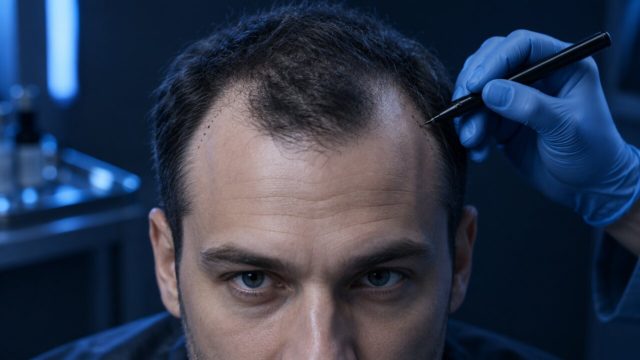
Many people ask when is the right time for hair transplant after noticing a receding hairline, widening part, thinning crown, or bald patches. The short answer is that surgery is usually considered after a proper diagnosis and a forward-looking plan. A transplant may be appropriate when hair loss is causing concern, the donor area has enough suitable hair, and the expected progression of loss has been discussed. It is not simply a decision based on how much hair has already been lost today.
Hair transplantation is a surgical redistribution of your own follicles, usually from the back and sides of the scalp to areas with thinning or baldness. It can create fuller coverage in carefully selected areas, but it cannot create an unlimited supply of hair. For this reason, candidacy includes both the current appearance of the scalp and the amount of donor hair that should be protected for future needs.
A responsible assessment also looks beyond male-pattern or female-pattern thinning. Sudden shedding, patchy loss, scalp inflammation, scarring, nutritional problems, hormonal changes, and some medical conditions may need investigation first. Your doctor will confirm whether a transplant is appropriate or whether another step should come before surgery. A clear diagnosis helps avoid treating the visible symptom without understanding its cause.
02When is the right time for hair transplant?
The right timing is usually when your hair-loss pattern is clear enough to plan safely and conservatively. In many patients, this means the doctor can identify which areas are likely to remain important over time, estimate donor capacity, and design a hairline that will still look balanced if further thinning occurs. A stable pattern can make planning easier, but complete stability is not always required; the decision depends on the individual clinical picture.
It is also important that your expectations match what surgery can realistically achieve. A transplant can improve density and framing, but a limited number of grafts may need to cover a large area. Patients with advanced thinning may need to prioritise the frontal hairline and mid-scalp rather than expect dense coverage throughout the crown. The most suitable plan is often one that uses grafts carefully instead of pursuing maximum density in every area.
Timing can be especially important if shedding has started recently. Temporary shedding after stress, illness, major weight change, childbirth, or medication changes may improve once the trigger is addressed. In these situations, doctors may recommend observation, medical evaluation, or treatment before considering surgery. Proceeding too soon could mean transplanting while the natural hair around the grafts is still changing quickly.
03Confirm the cause and pattern of your hair loss first
Pattern hair loss often follows a recognisable distribution. In men, it may begin with temple recession, frontal thinning, or crown loss. In women, it may present as reduced density along the part line or more diffuse thinning over the top of the scalp. However, visual appearance alone is not enough to make a full diagnosis. A clinical consultation may include questions about your history, examination of the scalp, and close assessment of hair calibre and density.
Trichoscopy can help doctors examine the scalp and follicles at high magnification. It may show variation in hair shaft thickness, miniaturisation, inflammation, or other signs that guide the diagnosis. This type of assessment is useful because it helps distinguish a likely long-term pattern from some causes of shedding that may be temporary or require different care. If there are warning signs, a doctor may advise further medical review before any surgical plan is made.
Family history can provide useful context, although it does not predict every person's hair loss precisely. If close relatives have progressed to more extensive thinning, a conservative approach may be sensible. When is the right time for hair transplant can therefore depend on both your present hairline and the likely changes ahead. Planning for future loss helps preserve donor hair and may reduce the chance that the transplanted area looks isolated later.
04Age, active hair loss, and long-term hairline planning
There is no single age at which everyone becomes suitable for a hair transplant. Some adults develop a well-defined, stable pattern relatively early, while others continue to lose hair for many years. Younger patients often need particularly careful planning because a low or very dense hairline designed for their current appearance may not suit them if the recession progresses. Doctors generally focus on pattern, donor supply, and future risk rather than using age as the only rule.
A conservative hairline is not necessarily an unsatisfactory one. It can be designed to appear natural, age-appropriate, and proportionate to the face while keeping grafts available for other areas. Hairline placement, temple work, crown coverage, and density all compete for the same donor resource. A good plan makes decisions about these priorities openly, including what may or may not be achievable in one session.
If hair loss is visibly progressing, your doctor may discuss options intended to support existing hair before, alongside, or instead of transplantation. This does not mean that surgery is automatically excluded. It means that protecting the non-transplanted hair can be important for a more even-looking result. Any medication or supportive treatment should be discussed with a qualified clinician, who can explain potential benefits, limitations, and suitability.
05Assess donor supply and scalp health before surgery
The donor area is usually located at the back and sides of the scalp, where follicles may be less sensitive to the process that causes pattern hair loss. Doctors assess the density, hair thickness, scalp flexibility, and distribution of this area before recommending a procedure. A strong donor area may support a broader plan, while a lower-density donor area may require more selective use of grafts. Donor assessment is one of the most important parts of candidacy.
Not every visible empty area should automatically receive grafts. The crown can require a high number of grafts because its natural swirl pattern spreads hair in different directions. Large bald areas also need careful prioritisation. A doctor may advise concentrating available grafts where they can make the most visual difference, such as the hairline and frontal third, rather than spreading them too thinly across the entire scalp.
Scalp conditions should be settled as far as possible before surgery. Active infection, marked irritation, uncontrolled dandruff-like scaling, painful inflammation, or scarring can affect the safety of a procedure and the healing process. General health, smoking status, medicines, allergies, and a history of abnormal scarring may also be relevant. Your medical team will review these points and explain any steps needed before treatment.
06Choose a technique only after the treatment plan is clear
The surgical technique should support the treatment plan rather than determine it. Sapphire FUE involves extracting individual follicular units and placing them into small recipient sites created with sapphire blades. DHI also uses individually extracted grafts and can place them with an implantation device. Both approaches may be suitable in selected patients, but the best choice depends on the recipient area, hair characteristics, graft requirements, and the clinical plan.
During a consultation, it is reasonable to ask how the proposed technique relates to your hairline design, graft placement, donor management, and recovery. The important question is not simply which technique has the most familiar name. It is whether the surgeon's plan uses the available grafts efficiently and safely for your own degree of thinning. Your doctor will confirm which method is clinically appropriate for you.
Comfort during the procedure also matters. Some clinics offer needle-free anaesthesia as an available option, but its suitability should be discussed with the medical team. Patients should receive clear pre-procedure instructions about medicines, alcohol, smoking, hair care, and transport. Following these instructions can support a smoother treatment day and help the team identify factors that could affect safety or healing.
07Understand the timeline from surgery to month 12
A hair transplant result develops slowly. In the first days, the recipient area commonly has small scabs and redness, while the donor area may feel tender. The clinic will provide washing and aftercare instructions, and it is important not to rub, pick, or disturb the grafts during early healing. Swelling or visible redness can vary between patients, so recovery should be judged with guidance from your medical team rather than by comparing yourself with photographs online.
Transplanted hairs often shed during the first weeks after surgery. This can be expected and does not necessarily mean the follicles have failed; the follicles remain beneath the scalp while a new growth cycle begins. Early new growth is often fine and uneven. By several months, many patients begin to see a clearer change, but the pace varies according to individual healing, hair characteristics, and the area treated.
Results are commonly evaluated around month 12, when transplanted hairs have had time to mature. At Acibadem Hair Transplant Center, results are measured by trichoscopic graft survival at month 12, with a documented 98% rate under a written guarantee. This measurement relates to graft survival and should not be understood as a promise of identical cosmetic density or appearance for every patient. Natural hair can continue to change, so long-term follow-up and realistic planning remain relevant.
08Plan for your appearance years after the transplant
A successful hair transplant should be planned for the future, not only for the first year after growth appears. Transplanted follicles from a suitable donor zone are typically more resistant to pattern hair loss than vulnerable hairs on the top of the scalp. However, resistance is not the same as a guarantee that every transplanted hair will remain unchanged forever. Ageing, health factors, and individual biology can still influence the overall appearance over time.
The main long-term issue is often progression of native, non-transplanted hair. If hair behind a transplanted hairline continues to thin, the contrast can become more noticeable. This is why doctors may recommend a mature, conservative design and discuss ways to manage existing hair. In some cases, a future procedure may be considered, but it should never be assumed because donor hair remains limited.
If you are exploring when is the right time for hair transplant, a doctor-reviewed online assessment can be a useful first step. Acibadem Hair Transplant Center is a dedicated hair restoration clinic in Istanbul licensed by the Turkish Ministry of Health. Its free online hair analysis is reviewed by doctors, with WhatsApp replies typically within about two hours. This can help you understand the next clinical questions to ask, although an individual recommendation requires a proper medical assessment.
09Frequently Asked Questions
What does 3,000 hair grafts usually cost?
The cost of 3,000 grafts varies widely between clinics and countries, and it should not be judged by graft number alone. The price may depend on the technique, medical team, donor complexity, services included, follow-up arrangements, and whether the stated graft count is clinically appropriate. A reliable quote should follow a medical assessment and clearly explain what is included in the proposed plan.
What can I expect at 7 months after a hair transplant?
At around seven months, many patients can see a meaningful improvement in coverage, although the hairs may still be fine and the density may continue to build. Crown growth can appear slower than frontal growth in some patients. The final result is commonly assessed closer to month 12, so it is usually too early at month seven to make a final judgement.
When is a hair transplant considered too early?
It may be too early when the cause of hair loss has not been confirmed, shedding is recent or rapidly changing, or a young patient's future pattern cannot yet be planned responsibly. Surgery may also be delayed if scalp disease or another health concern needs attention first. A doctor can assess whether observation, treatment, or a conservative transplant plan is more appropriate.
What may happen 20 years after a hair transplant?
Twenty years later, transplanted donor hairs may still provide coverage because they are typically more resistant to pattern hair loss. However, native hair can continue to thin, and the overall appearance may change with ageing and ongoing hair loss. Long-term planning, sensible donor use, and appropriate medical follow-up can help prepare for this possibility, but future outcomes cannot be guaranteed.
هذا المقال للمعلومات العامة فقط، وهو ليس بديلاً عن الاستشارة الطبية المتخصصة.
هذا الدليل للمعلومات العامة ولا يغني عن الاستشارة الطبية. تُتخذ قرارات العلاج بعد تقييم الطبيب حضورياً أو عبر الإنترنت.