
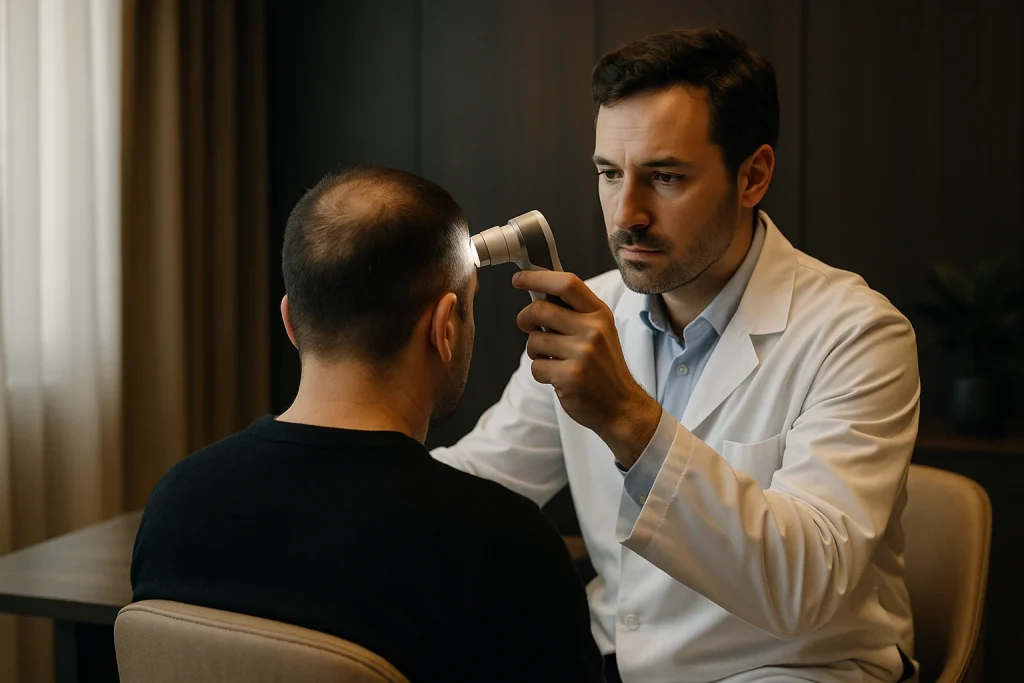
A hair transplant may help people with stable androgenetic hair loss when they have sufficient healthy donor hair and realistic expectations. It redistributes resistant follicles to thinning areas, but it does not stop future hair loss in untreated areas, so a doctor should assess the long-term plan.
- Androgenetic hair loss is a common inherited pattern of gradual scalp hair thinning in men and women.
- A transplant can improve visible density by moving healthy follicles from a donor area to thinning areas.
- The best candidates usually have a stable or well-managed pattern of hair loss and an adequate donor supply.
- Medical treatment may help slow ongoing hair loss, while transplantation addresses areas where density has already been lost.
- A doctor-led hair and scalp assessment is important before deciding whether transplantation is appropriate.
01Androgenetic Hair Loss: When Transplantation May Help
Androgenetic hair loss is a common cause of gradual hair thinning. It is linked to inherited sensitivity of hair follicles to hormones, especially dihydrotestosterone, also called DHT. A hair transplant may be considered when thinning has created visible gaps or recession, the donor area is strong enough, and a doctor believes the pattern can be treated safely and naturally.
Transplantation does not create new hair follicles. Instead, it moves follicles from a part of the scalp that is usually more resistant to thinning, often the back or sides of the head, into areas with lower density. In most suitable patients, these transplanted follicles continue to grow in their new location after the normal healing and growth cycle.
Timing matters. Hair loss can continue after a transplant, particularly when it is active or has not yet reached a predictable pattern. For this reason, doctors usually assess the person’s age, family history, rate of change, scalp condition, donor capacity, and expectations before recommending surgery. Some people may benefit first from medical management or a period of observation.
02Understanding androgenetic hair loss and the hair cycle
Hair normally grows in repeating phases: growth, transition, rest, and shedding. With androgenetic hair loss, susceptible follicles gradually become smaller over multiple cycles. This process is called miniaturisation. The hair produced by these follicles may become finer, shorter, lighter in appearance, and less able to cover the scalp.
In men, the pattern often begins with recession at the temples, thinning around the crown, or both. In women, the pattern more commonly appears as widening of the central part or diffuse thinning across the top of the scalp while the frontal hairline may remain relatively preserved. However, patterns vary, and a professional examination is important because not every form of thinning follows these typical presentations.
The condition is influenced by genetics and hormonal activity, but it is not a sign of poor hygiene. Stress, illness, nutritional deficiencies, inflammatory scalp conditions, medication changes, and other health factors can also affect shedding. These factors may occur alongside inherited pattern thinning, making a careful assessment especially valuable.
03How doctors distinguish pattern thinning from other hair loss
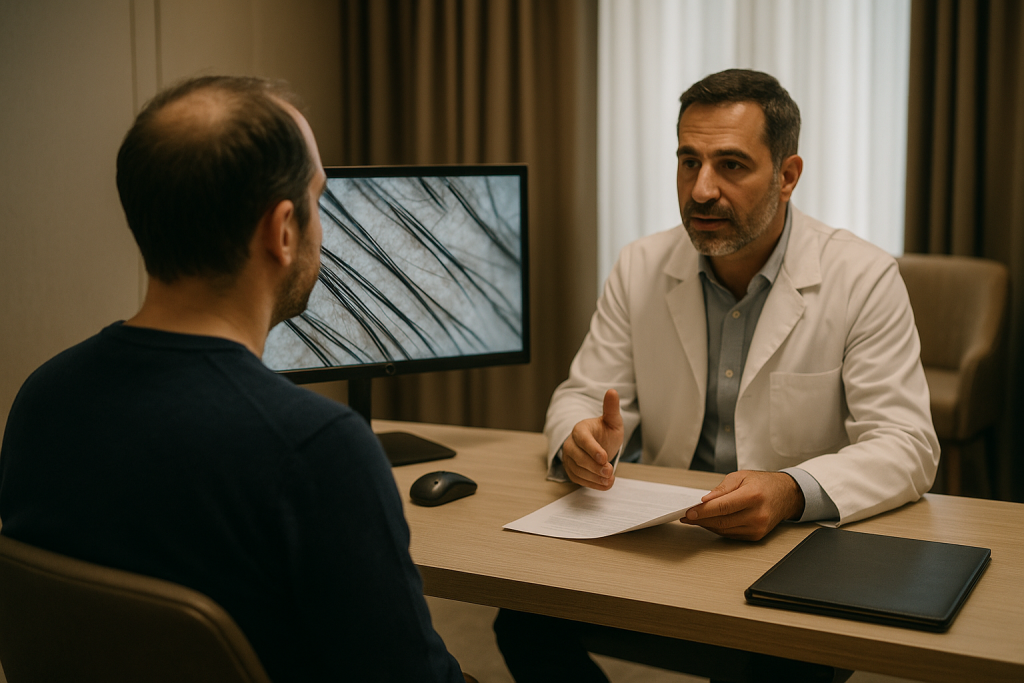
A doctor will usually begin by asking when the hair changes started, how quickly they progressed, whether there is a family history, and whether there have been recent health events or medication changes. They may also ask about itching, pain, scaling, sudden shedding, or patchy areas. These details help identify whether the hair loss is likely to be pattern-related or whether another cause needs attention.
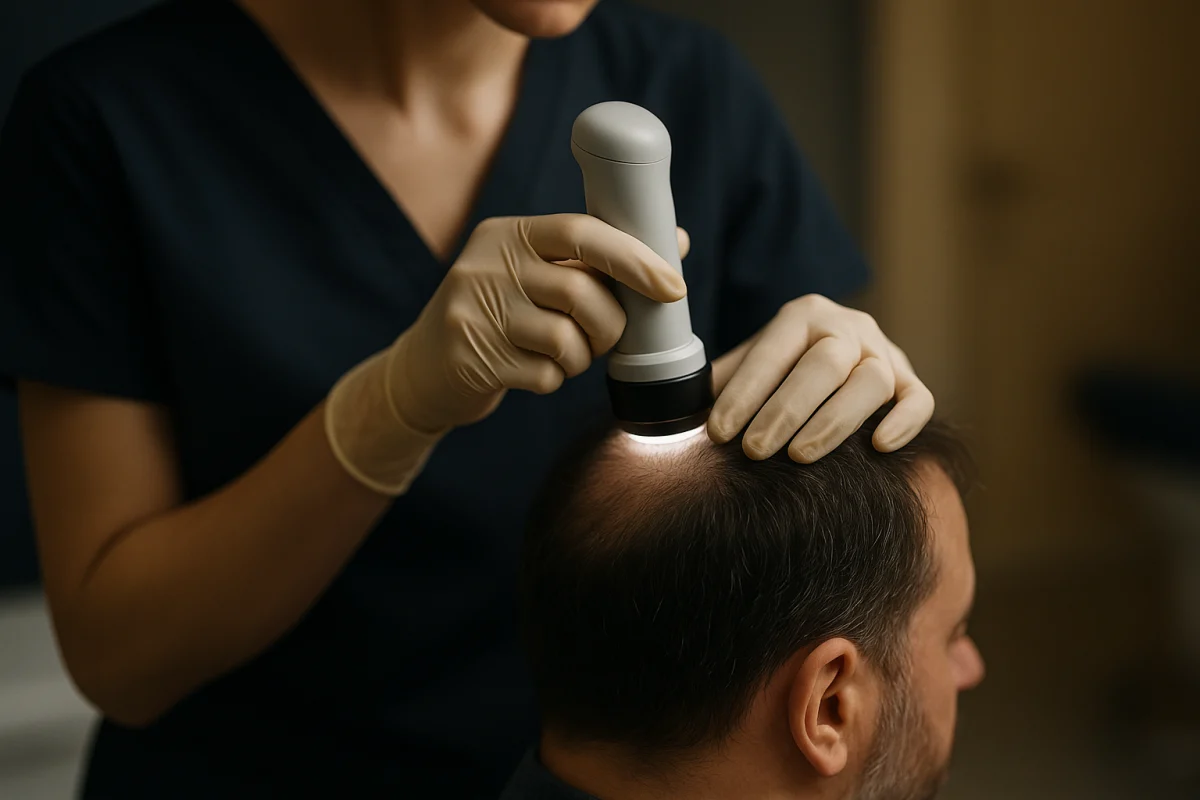
Scalp examination can show whether hairs are becoming progressively finer in specific zones. Trichoscopy, a close examination of the scalp and follicles, may help reveal variation in hair shaft diameter and other signs consistent with follicle miniaturisation. If the presentation is unusual, a doctor may recommend further evaluation before any cosmetic procedure is discussed.
Sudden heavy shedding, sharply defined bald patches, scalp redness, scarring, or pain should not be assumed to be inherited thinning. These signs can be associated with different conditions and may require prompt medical review. A transplant is generally not the first step until the underlying cause is understood and the scalp condition is stable.
04When a hair transplant may be a suitable option
A transplant may be suitable when the hair loss pattern is established, the scalp is healthy, and there is enough reliable donor hair to plan coverage responsibly. The donor area is assessed not only for its current density but also for its likely long-term stability. This is important because removing too many grafts can make the donor region look thin.
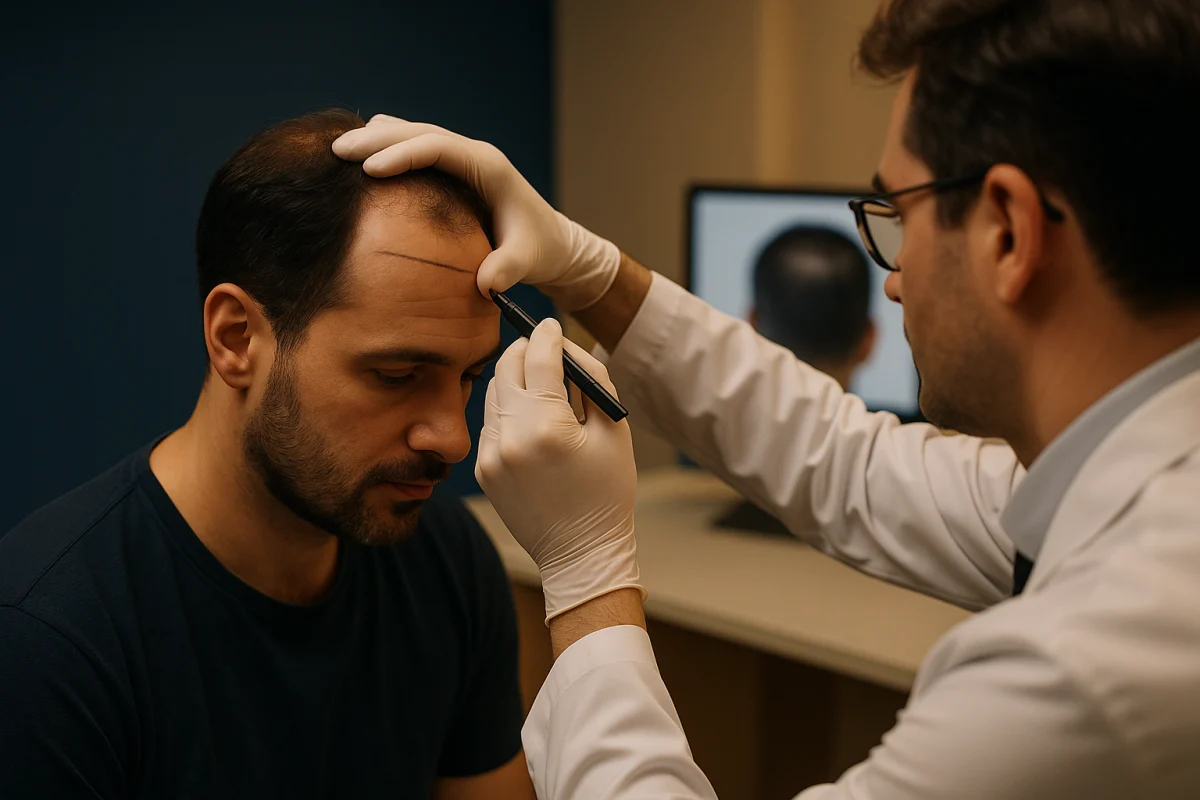
In androgenetic hair loss, a transplant is often used to restore a receding hairline, add coverage to the frontal scalp, strengthen the mid-scalp, or improve crown density. The right priority depends on the individual pattern and available graft supply. Because the frontal area strongly frames the face, surgeons commonly plan it carefully rather than trying to cover every thin area equally in one session.
Good candidates generally understand that surgery has limits. A transplant can improve the appearance of density, but it cannot usually reproduce the density of an unaffected adolescent scalp. It also cannot prevent native, non-transplanted hair from becoming thinner over time. A conservative design and a long-term treatment plan are therefore central to responsible care.
05When it may be better to wait before transplantation
Doctors may advise waiting when hair loss is changing rapidly, when the future pattern is unclear, or when the patient is very young and has only recently noticed recession. In these situations, planning a low, dense hairline too early may not remain appropriate if surrounding native hair continues to thin. Monitoring the pattern can provide more useful information for a future decision.
Waiting may also be appropriate when donor hair is limited, diffuse thinning affects both the top and donor regions, or a scalp disorder is active. Some people have hair characteristics that require particularly careful planning, such as very fine hairs or a large area of loss compared with the available donor supply. Your doctor will explain what can be achieved safely and what may not be realistic.
In some cases, non-surgical measures can be used first to support existing hair and reduce the speed of progression. The choice depends on medical history, examination findings, preferences, and possible side effects. Any medication or scalp treatment should be discussed with a qualified doctor rather than started solely from online advice.
06Planning a natural transplant result
Natural-looking transplantation depends on more than the number of grafts. The surgeon considers facial proportions, the direction and angle of existing hair, curl pattern, hair calibre, contrast between hair and scalp, and the likely future pattern of thinning. The hairline is designed to look appropriate now while also allowing for possible progression later.
Follicular unit extraction techniques, including Sapphire FUE and DHI, can be used depending on the treatment plan and clinical needs. In FUE, individual follicular units are extracted and then placed into prepared recipient sites. DHI involves implanting follicles with a specialised implanter. Your doctor will confirm which approach, if any, is appropriate for your scalp, donor area, and density goals.
At Acibadem Hair Transplant Center, Istanbul, doctor-reviewed planning focuses on donor preservation and a personalised distribution of grafts. Needle-free anaesthesia is available for suitable patients. The clinic is licensed by the Turkish Ministry of Health and provides a free online hair analysis that is reviewed by doctors, with WhatsApp replies typically within about two hours.
07What recovery and growth usually look like
After a transplant, small scabs and temporary redness are common in the treated areas. Patients are given aftercare instructions about washing, sleeping position, exercise, sun exposure, and avoiding pressure or friction. Following these instructions carefully helps protect newly placed grafts during the early healing period.
It is common for transplanted hairs to shed during the first weeks after surgery. This does not necessarily mean the grafts have failed; the follicles usually remain beneath the skin and later begin a new growth cycle. Early new growth may be fine and uneven, while visible improvement typically develops gradually over several months.
Final maturation is often assessed around 12 months, although the exact timeline differs between patients and can be longer in some areas, particularly the crown. At Acibadem Hair Transplant Center, graft survival is measured trichoscopically at month 12, with a documented 98% rate under a written guarantee. Individual cosmetic density and appearance can still vary according to hair characteristics, healing, and the extent of hair loss.
08Combining long-term hair loss management with surgery
For many people, the most durable approach combines surgery, where appropriate, with a plan to protect existing native hair. Since androgenetic hair loss can continue in non-transplanted follicles, ongoing monitoring can help identify changes before they become more noticeable. A doctor may discuss medical or supportive options based on the patient’s health profile and goals.
Managing DHT-related thinning is not only about a single procedure. Evidence-based medical options may be considered by a doctor to help slow miniaturisation in suitable patients, but they are not right for everyone and can have side effects or contraindications. Low-level light approaches, scalp care, and nutrition may also be discussed in some cases, though they should not be presented as substitutes for a medical diagnosis.
International patients may benefit from an organised follow-up process after returning home. Acibadem Hair Transplant Center offers all-inclusive packages with VIP transfer, a 4-star hotel, a care kit, and 12 months of follow-up. The clinic has welcomed patients from 38 countries over 12 years, while treatment decisions remain based on each person’s clinical assessment rather than a standard package.
09Practical aftercare during the first two weeks
The first days after transplantation are mainly about protecting the newly placed grafts while the scalp begins to heal. Patients are usually asked to sleep with the head elevated for the period advised by their clinical team. This can help limit swelling and reduces the chance of rubbing the recipient area against bedding. A travel pillow may make this position more comfortable, but patients should follow the specific sleeping instructions provided after their procedure.
Washing normally starts on the schedule given by the clinic, often with gentle handling rather than direct rubbing. Patients should use the supplied or clinician-recommended products and avoid scratching, picking scabs, or using fingernails on the scalp. Scabs commonly loosen gradually as healing progresses. Trying to remove them early can irritate the skin and may disturb healing grafts.
For the early recovery period, it is generally sensible to avoid activities that cause heavy sweating, friction, or a risk of impact to the head. This may include strenuous gym sessions, contact sports, swimming, and wearing tight headwear. Alcohol, smoking, and medicines or supplements that may affect healing should also be discussed with the doctor before surgery. The exact restrictions and the point at which normal activities can restart differ between patients, so the aftercare plan from your medical team should take priority.
10A more detailed hair growth timeline after transplantation
Hair transplant recovery is gradual, and an early appearance is not a reliable guide to the eventual result. In the first several days, redness, mild swelling, small crusts, and a short stubble-like appearance can be expected. The donor area also needs time to settle. Many patients find that visible scabbing reduces over the following one to two weeks, although healing speed varies with skin type, the size of the procedure, and adherence to aftercare instructions.
From around the first few weeks to the first few months, transplanted hair shafts often shed. This is a recognised part of the cycle after transplantation and can temporarily make the treated area look similar to, or thinner than, its pre-procedure appearance. The important process is beneath the skin, where the transplanted follicles recover and prepare for new growth. Your doctor can review any concerns, especially if there is persistent pain, marked redness, discharge, or other unexpected symptoms.
New hairs commonly begin to become noticeable over the following months, but they may first grow unevenly and with a fine texture. Density, thickness, and blending with native hair usually improve progressively rather than all at once. Frontal areas and crown areas can mature at different speeds. Photographs taken in consistent lighting and at similar angles can be more useful than day-to-day mirror checks when monitoring change. A final clinical assessment is commonly made at approximately month 12, when Acibadem Hair Transplant Center measures graft survival with trichoscopy.
11Planning travel to Istanbul for hair restoration
International patients should plan travel around the need for a calm recovery period rather than treating the procedure as a short sightseeing visit. Before booking flights, confirm the recommended arrival and departure timing with the clinic team. This allows time for the in-person assessment, treatment, immediate post-procedure review, and any washing demonstration or follow-up appointment that forms part of the care plan.
Choose loose, comfortable clothing for the treatment day, ideally with a front opening so it does not need to be pulled over the scalp afterwards. It can also be helpful to pack a neck pillow for the return journey, avoid carrying heavy luggage, and arrange a relaxed travel schedule. Patients should bring a current list of medicines, relevant medical information, and details of any allergies. Any medication should be declared during the medical consultation; do not stop prescribed treatment without advice from the clinician who manages it.
Acibadem Hair Transplant Center is a dedicated hair restoration clinic in Istanbul, licensed by the Turkish Ministry of Health. Its all-inclusive packages include VIP transfer, a 4-star hotel, a care kit, and 12 months of follow-up. Patients can start with a free online hair analysis reviewed by doctors, and WhatsApp replies are typically provided within about two hours. The remote review can support initial planning, but the final suitability decision depends on the doctor’s clinical assessment.
12Frequently Asked Questions
Can androgenetic hair loss grow back on its own?
Androgenetic hair loss does not usually fully grow back on its own because affected follicles tend to become smaller over time. In earlier stages, some treatments prescribed or recommended by a doctor may help maintain existing hair or improve the appearance of miniaturised hairs. A transplant can relocate resistant follicles to thinning areas, but it does not restore every original follicle.
How can I tell whether my hair loss is androgenetic?
Typical signs include gradual temple recession, crown thinning, a widening part, or progressively finer hair in a recognisable pattern. However, shedding from illness, stress, scalp disease, nutritional problems, and other causes can look similar. A doctor can assess the history, scalp, and hair shafts, sometimes using trichoscopy, to confirm the likely cause.
Can androgenetic alopecia be reversed?
There is currently no universal way to permanently reverse inherited follicle sensitivity in every patient. Early management may help slow progression or support existing hair, while transplantation can improve coverage in selected areas. Results and suitability depend on the stage of loss, donor hair availability, medical history, and continued progression of native hair loss.
How can I fight DHT-related hair loss?
DHT-related hair loss should be addressed with a doctor-led plan, especially before using any medication. Depending on the person, a clinician may discuss approved medical treatments, monitoring, and supportive scalp care to help reduce progression. A healthy lifestyle can support general hair health, but it cannot reliably overcome inherited follicle sensitivity on its own.
Dieser Artikel dient nur der allgemeinen Information und ersetzt keine professionelle medizinische Beratung.
 06
06 12
12