
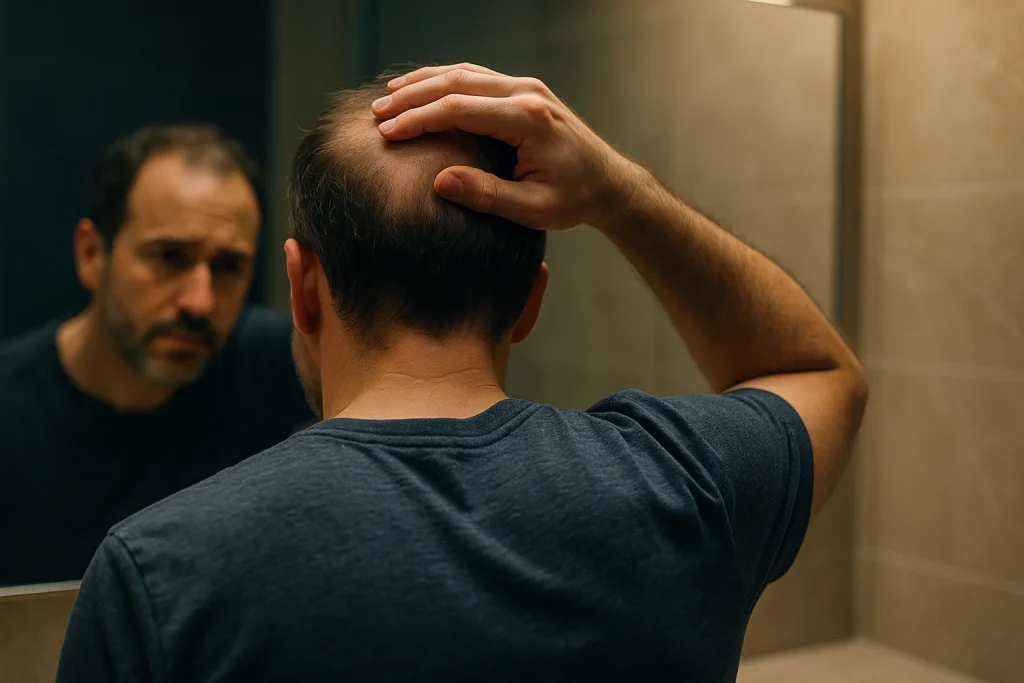
Does finasteride cause shedding? Some people notice increased hair fall after starting treatment, but finasteride is not usually considered a direct cause of a predictable shedding phase. Early shedding may reflect the natural hair cycle, ongoing androgenetic hair loss, or changes occurring as weaker hairs are replaced; your doctor can assess what is most likely in your case.
- An increase in hair fall after starting finasteride can happen, but it does not automatically mean the medicine is causing harm or failing.
- Hair growth changes are slow, so treatment response is usually assessed over months rather than days or weeks.
- Photographs taken in consistent lighting and medical scalp assessment can help distinguish shedding from progressing hair loss.
- Do not stop, restart, or increase finasteride without discussing the change with the prescribing clinician.
- Sudden patchy hair loss, scalp inflammation, or significant side effects should be reviewed by a doctor promptly.
01Can Finasteride Cause Shedding During Hair Loss Treatment?
Finasteride is a prescription medicine commonly used to help slow androgenetic hair loss in suitable patients. It works by reducing the conversion of testosterone into dihydrotestosterone, also called DHT, a hormone that can gradually shrink genetically sensitive hair follicles. Because hair follicles follow long growth and resting cycles, visible changes after beginning treatment may not be straightforward. A person may notice more hairs in the shower or on a brush while also wondering whether the medicine is helping.
Does finasteride cause shedding in every patient? No. Many patients do not report a noticeable increase in shedding. When increased hair fall is seen after treatment begins, it may happen at the same time as normal cycle-related shedding, seasonal variation, stress-related shedding, or the natural progression of hair loss that was already underway. For this reason, a short period of increased hair fall cannot by itself confirm that finasteride is the cause.
It is also important to separate shedding from hair thinning. Shedding describes hairs leaving the scalp, while thinning describes a gradual reduction in hair shaft thickness, density, or coverage. Finasteride is intended to protect vulnerable follicles over time, not to create instant new density. Your prescribing doctor may review your hair-loss pattern, medical history, scalp condition, and treatment timeline before deciding whether a change in shedding is expected, unrelated, or needs further investigation.
02Does finasteride cause shedding? What the evidence means
Finasteride is not generally known for causing a universal, planned shedding phase in the same way that some topical hair-growth treatments may be associated with temporary early shedding. However, hair cycles are not synchronized across the scalp. Hairs naturally move between growing, transitional, resting, and shedding stages, so a change in routine, health, or treatment can make normal loss more noticeable at a particular time.
In some patients, hairs that were already miniaturized may be shed as the follicle continues its cycle. The idea is that healthier-looking hair may later grow from a follicle that remains capable of producing hair. This is a possible explanation rather than a guarantee, and it is not possible to confirm this simply by looking at loose hairs. Results vary according to the degree of follicle miniaturization, age, genetics, duration of hair loss, and consistent use of treatment.
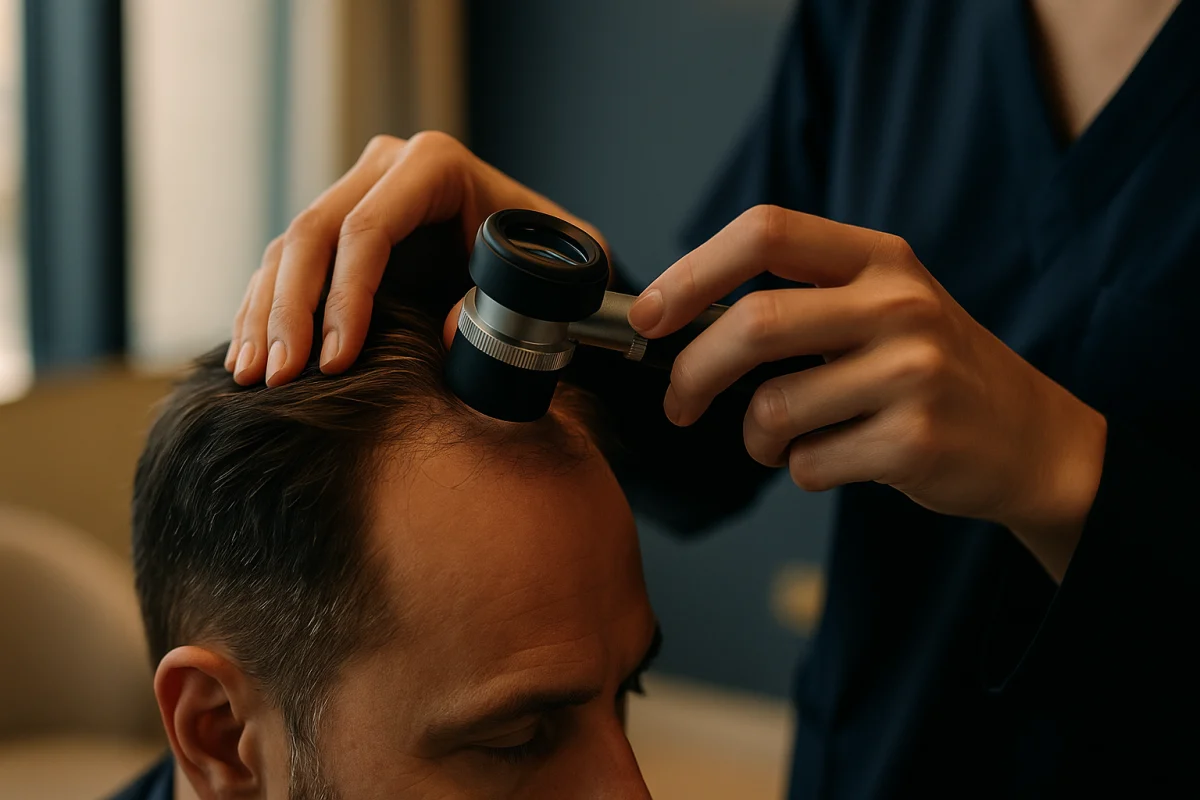
A more reliable way to judge change is to compare the scalp over time rather than count individual hairs each day. Standardized photographs, a clinical examination, and, where available, trichoscopic assessment can show changes in hair shaft diameter and density more clearly. Anxiety about shedding can understandably lead to frequent checking, but daily observation often makes normal variation feel more severe than it is.
03Why early hair fall can happen after starting treatment
Androgenetic hair loss is a long-term process. Before a person starts finasteride, susceptible follicles may already be producing progressively finer and shorter hairs. These hairs can shed as part of their natural cycle regardless of whether treatment has just begun. Starting a medicine during this period may create a strong impression of cause and effect, even when the timing is coincidental.
Other triggers can occur at the same time. Fever, surgery, rapid weight change, low dietary intake, emotional stress, thyroid conditions, iron deficiency, scalp irritation, and certain medicines may contribute to diffuse shedding in some people. A clinician may ask about events from the previous several months because some types of shedding appear after a delay. This broader review is especially relevant when hair fall is sudden, widespread, or unlike the person’s previous pattern.
Hair-care habits can also change what is visible. Longer hair makes shed strands easier to notice, while washing less often may mean more loose hairs appear on wash day. Tight hairstyles, chemical processing, and breakage can add to the concern, although breakage is different from hair leaving the follicle. Looking for a small bulb at one end of a shed hair may sometimes suggest a naturally shed strand, but it is not a diagnostic test on its own.
04How long can a shedding concern last?
There is no single timeline that applies to everyone. If a patient notices increased hair fall around the time they begin finasteride, it may settle over several weeks or a few months, depending on the underlying cause and the individual hair cycle. In most patients, meaningful assessment of finasteride should not be based on the first few weeks. Hair growth is slow, and doctors typically evaluate stability or improvement over a longer period.
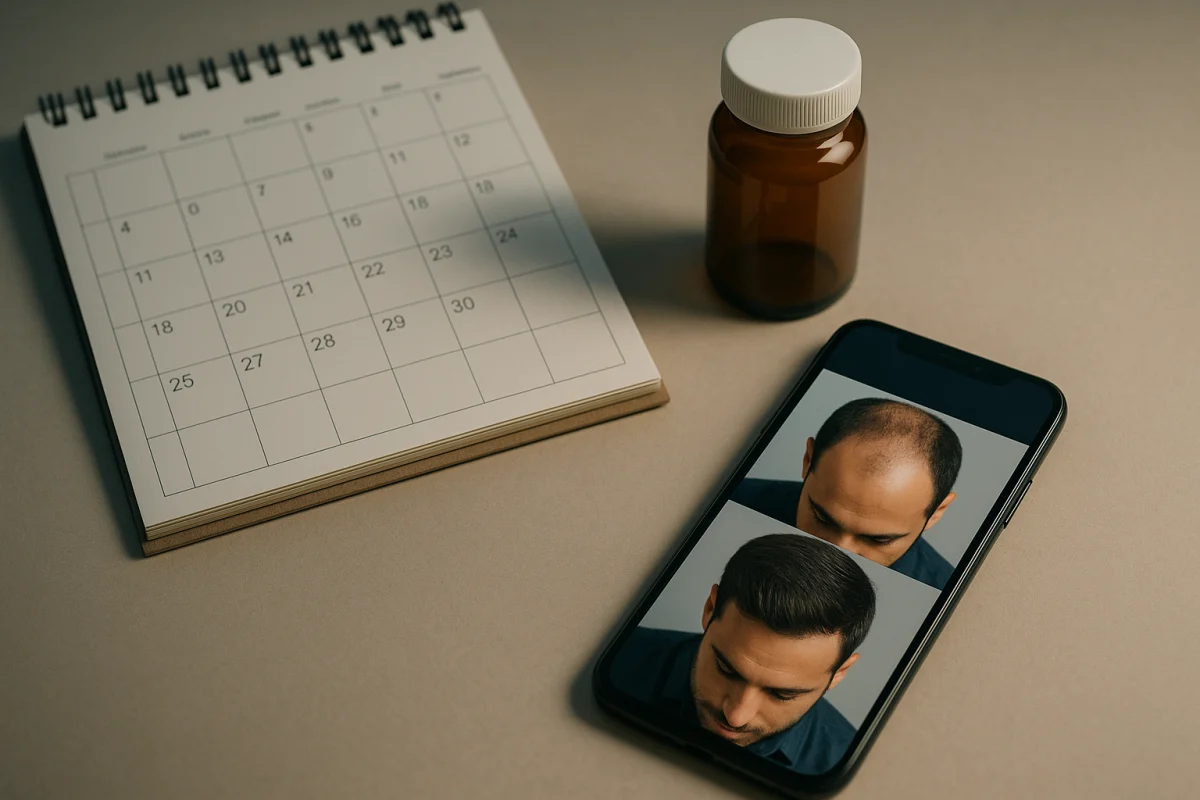
For some people, the main early benefit is less progression rather than obvious regrowth. This can be difficult to recognise without a baseline photograph because maintaining existing hair may still represent a positive treatment response. Your doctor may suggest taking photographs from the same angles, at similar hair length, with the same lighting, every few months. This approach is more useful than comparing one stressful day of shedding with another.
Contact a clinician sooner if shedding remains intense, continues to worsen, or is accompanied by bald patches, scalp pain, scaling, redness, itching, or symptoms elsewhere in the body. These features may point to another scalp or medical condition that requires a different approach. Finasteride is mainly used for androgenetic hair loss; it is not a treatment for every reason a person may lose hair.
05How to monitor finasteride without overinterpreting daily changes
Before treatment, it can be helpful to record the areas that concern you most, such as the hairline, temples, mid-scalp, or crown. Take clear images with dry hair under similar lighting and avoid changing the camera distance. A consistent record gives your doctor a more accurate starting point. It also reduces the tendency to judge progress only by the number of hairs seen in a sink or shower.
Does finasteride cause shedding that means the treatment should be stopped? Not necessarily. Stopping treatment without medical guidance can make it harder to understand what is happening and may allow androgenetic hair loss to continue. If you are worried, document the timing, the amount and pattern of hair fall, any other symptoms, and any changes in health or medication. Share this information with the clinician who prescribed the treatment.
It is best to take finasteride exactly as prescribed. Do not take an extra tablet to make up for a missed dose, and do not change the dose because you have noticed a difficult week of shedding. A clinician can explain whether continued observation, a scalp examination, blood tests, or another plan is appropriate. This is particularly important for people with a history of fertility concerns, sexual side effects, mood changes, or other relevant medical conditions.
06Possible side effects and when to speak with a doctor
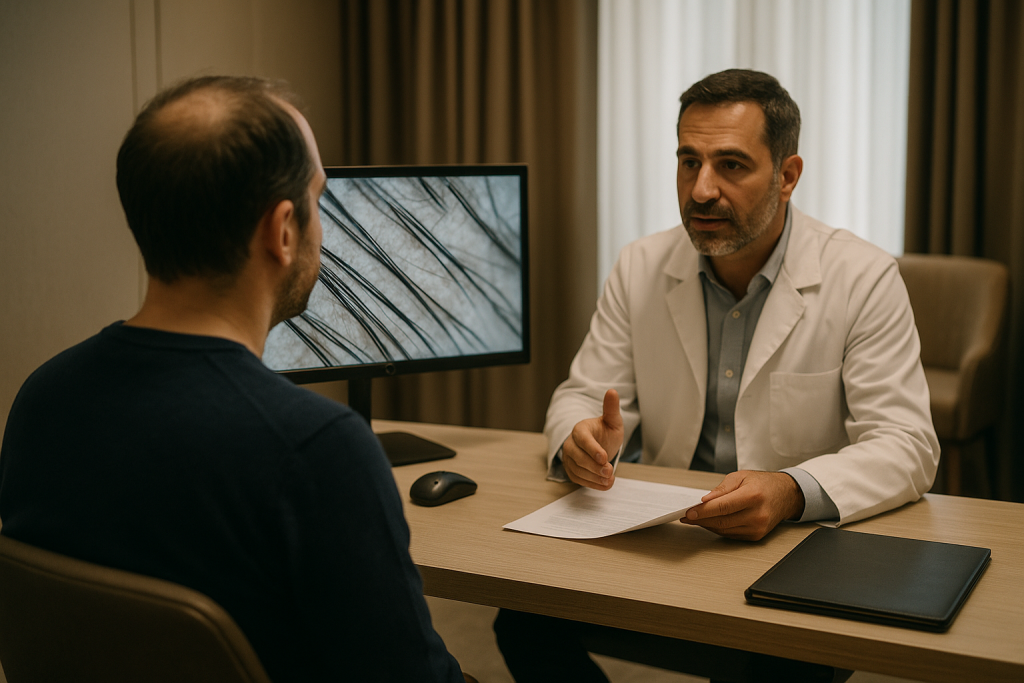
Like all prescription medicines, finasteride can cause side effects, although not everyone experiences them. Reported concerns can include changes in sexual desire, erectile function, ejaculation, mood, or breast tenderness. The likelihood, severity, and duration of side effects differ between individuals. A doctor should discuss the potential benefits and risks before treatment and should be informed promptly if troubling symptoms develop.
A change in hair shedding should also be considered alongside other symptoms. Diffuse hair loss with fatigue, weight change, temperature intolerance, skin changes, or dietary restriction may need a broader medical assessment. Patchy loss, broken hairs, or inflammatory scalp symptoms can suggest conditions other than androgenetic hair loss. A careful diagnosis matters because using the right medicine for the wrong type of hair loss may delay appropriate care.
Finasteride is not suitable for every patient. Your doctor will confirm whether it is appropriate based on your sex, age, medical history, current medicines, family-planning considerations, and the cause of hair loss. Women who are pregnant or may become pregnant should not handle crushed or broken finasteride tablets because of potential risk to a developing male fetus. Follow the instructions provided with the prescribed medicine and ask a healthcare professional if anything is unclear.
07Finasteride, other hair-loss treatments, and hair transplantation
Some patients use finasteride alongside other doctor-recommended approaches for androgenetic hair loss. When more than one treatment is started at once, it can be difficult to know which one is linked to a change in shedding, improvement, or side effects. For this reason, a clinician may advise a clear treatment plan and follow-up schedule. Introducing or stopping several measures at the same time can make assessment less reliable.
For patients considering a hair transplant, medical management may still be part of the discussion. A transplant redistributes donor follicles to areas of thinning; it does not necessarily stop ongoing thinning in non-transplanted native hair. The suitability of finasteride before or after a procedure depends on the individual diagnosis, medical suitability, goals, and the doctor’s advice. It should never be viewed as a substitute for a proper hair-loss assessment.
Acibadem Hair Transplant Center is a dedicated hair restoration clinic in Istanbul, licensed by the Turkish Ministry of Health. Our doctors review free online hair analyses to help patients understand whether their pattern may need medical treatment, transplantation planning, or further evaluation. Where hair transplantation is suitable, Sapphire FUE and DHI techniques are available, but the right approach should always be confirmed after medical assessment rather than chosen from a shedding concern alone.
08Questions to ask before continuing or changing treatment
If you are concerned about hair fall after beginning finasteride, ask your clinician what diagnosis is being treated and what a realistic response timeline looks like for you. It is useful to ask whether your pattern appears consistent with androgenetic hair loss, diffuse shedding, a scalp condition, or more than one issue at the same time. Understanding the diagnosis makes treatment decisions less confusing and helps set appropriate expectations.
You can also ask how your progress will be measured. Clinical photographs, hair-density assessment, and trichoscopy may offer more meaningful information than daily shedding counts. At Acibadem Hair Transplant Center, treatment outcomes for transplantation are measured by trichoscopic graft survival at month 12, with a documented 98% rate under written guarantee. This measurement relates to transplanted graft survival and should not be confused with the response to finasteride.
Finally, discuss any concerns about side effects, missed doses, fertility plans, or the wish to stop treatment. An informed decision should balance the possible benefit of preserving hair with the individual’s medical circumstances and preferences. Patients seeking a general review can send photographs for a free online hair analysis reviewed by doctors; replies on WhatsApp are typically provided within approximately two hours. This does not replace an in-person medical assessment when urgent symptoms or complex health issues are present.
09Frequently Asked Questions
How long can shedding last after starting finasteride?
There is no fixed duration. If increased hair fall occurs around the start of treatment, it may settle within weeks to a few months, but the underlying cause matters. Hair-loss treatment is usually assessed over months, so speak with your prescribing clinician if shedding is severe, persistent, or worsening.
Does Donald Trump use finasteride?
Public reporting has stated that Donald Trump used finasteride in the past. However, medication use is personal and can change over time, so it is not possible to confirm anyone’s current treatment from public information. A public figure’s reported medicine use should not guide your own treatment decision.
Is missing two days of finasteride harmful?
Missing two doses is unlikely to immediately undo treatment results in most patients, because hair changes develop gradually. Do not take extra tablets to compensate. Resume the prescribed schedule unless your clinician or pharmacist gives different advice, and ask them what to do if missed doses become frequent.
What happens to sperm while taking finasteride?
Finasteride may affect semen parameters, such as semen volume or sperm count, in some men. These changes are often reported as reversible after stopping the medicine, but individual responses and recovery times can vary. If you are trying to conceive or have fertility concerns, discuss this with the prescribing clinician before starting or continuing treatment.
Dieser Artikel dient nur der allgemeinen Information und ersetzt keine professionelle medizinische Beratung.
 06
 12