In diesem Artikel9
- Überblick
- How a fue technique fits into a complete treatment plan
- Donor capacity is the foundation of a safe decision
- Sapphire FUE: what the instrument can and cannot change
- DHI implantation and the importance of placement design
- Anaesthesia, graft handling and the team behind the method
- Recovery, visible changes and realistic expectations
- How to compare FUE options before you travel
- Frequently Asked Questions
Choosing a fue technique should involve more than comparing names such as Sapphire FUE or DHI. The right approach typically depends on your donor area, hair loss pattern, hair characteristics, graft needs, medical suitability and the clinic’s planning and follow-up standards.
- FUE is a graft extraction method, but the final plan should be based on your individual hair and scalp assessment.
- Donor capacity is limited, so protecting the donor area is as important as creating coverage in the recipient area.
- Sapphire FUE and DHI can support different surgical steps, but neither name alone determines a better result.
- Natural-looking results depend heavily on hairline design, graft placement angles, density planning and careful aftercare.
- A doctor-led assessment should confirm whether hair transplantation is appropriate and what outcome is realistic for you.
01Choosing a Fue Technique: Factors Beyond the Procedure Name
A fue technique is not simply a label chosen from a treatment menu. It is part of a wider surgical plan that should begin with an assessment of your scalp, existing hair, donor area and expectations. For many people considering a hair transplant abroad, names such as FUE, Sapphire FUE and DHI can appear to describe completely separate treatments. In practice, these terms may refer to different stages or instruments within a hair restoration plan. Your doctor should explain what each term means in your case and why it may or may not be suitable.
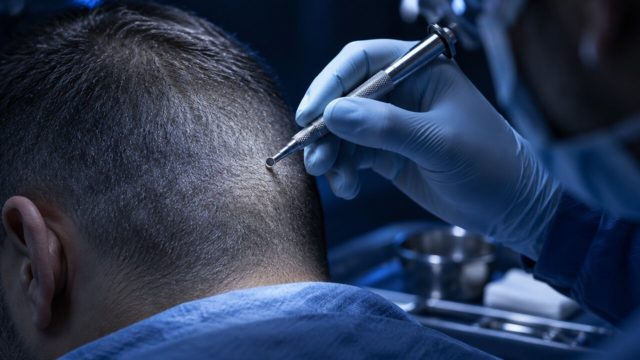
Follicular Unit Extraction, usually called FUE, is a method of removing individual follicular units from the donor area, most often at the back and sides of the scalp. These naturally occurring units can contain one to several hairs. After extraction, the grafts are prepared and placed into thinning or bald areas. The method avoids the long linear scar associated with strip-based surgery, but it still requires precise surgical work and responsible donor management.
The most helpful question is usually not, “Which procedure name is best?” A better question is, “Which plan protects my donor area and gives me the most natural, realistic coverage?” The answer can differ between patients. Hair calibre, curl pattern, contrast between scalp and hair colour, hair loss progression, scalp condition and the number of grafts available can all influence the plan. A careful consultation turns a procedure name into a treatment strategy.
02How a fue technique fits into a complete treatment plan
When people discuss FUE, they often focus only on extraction. However, extraction is only one part of surgery. A complete plan also includes consultation, hairline design, donor preparation, local anaesthesia, recipient-site creation, graft handling, implantation and follow-up. Each step can affect graft wellbeing and the visual appearance of the result. This is why comparing clinics only by the name of an extraction method may not provide enough information.
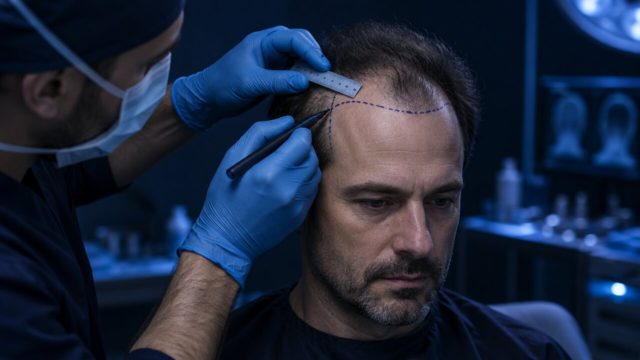
During an assessment, the clinical team typically reviews the pattern and stability of hair loss. If hair loss is still progressing quickly, a conservative design may be more appropriate than a low, dense hairline that could look unnatural later. The team should also assess whether your existing hair needs protection around the transplanted area. Hair transplantation redistributes available follicles; it does not stop future loss in non-transplanted hair.
Planning also considers the order of priorities. Some patients need frontal hairline restoration, while others are more concerned about mid-scalp coverage or the crown. It may not be realistic to achieve high density in every zone in one session, particularly when donor reserves are limited. A responsible plan identifies where grafts will create the strongest visual benefit while keeping options open for the future if needed.
03Donor capacity is the foundation of a safe decision
The donor area is the most important resource in FUE planning. It usually includes the more stable hair around the back and sides of the scalp. Although these hairs may be more resistant to the hormonal process that causes common pattern hair loss, every patient has a finite donor supply. The aim is not to remove the highest possible number of grafts. It is to select grafts evenly and conservatively enough that the donor area continues to look natural after healing.
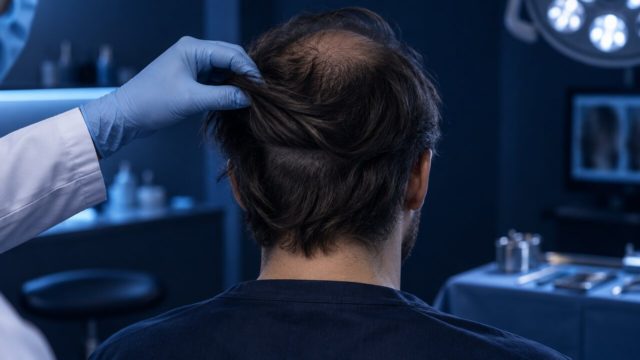
Donor assessment typically looks at density, hair thickness, scalp laxity, hair quality and the size of the stable donor zone. A person with fine hair or lower donor density may need a different distribution plan from someone with thick, wavy hair and stronger donor coverage. Existing scars, inflammatory scalp conditions and previous surgery can also matter. Your doctor will confirm whether the donor area appears suitable after reviewing clear photographs or examining you in person.
Overharvesting is an important concern because it can leave visible thinning or a patchy appearance in the donor zone. It may also reduce the options available for future restoration. For this reason, a high graft number should never be treated as the only sign of quality. Appropriate graft selection, spacing between extraction points and long-term donor preservation are more meaningful measures of careful planning.
04Sapphire FUE: what the instrument can and cannot change
Sapphire FUE generally refers to the use of sapphire blades when preparing recipient channels for graft placement after FUE extraction. These blades can be made in different sizes to support precise channel creation. The channels guide the direction, angle and distribution of transplanted hairs. This stage is especially important in visible areas such as the frontal hairline, where an unnatural direction can be noticeable even if the grafts grow well.
A sapphire blade is an instrument, not a guarantee of a particular outcome. The quality of planning, the condition of grafts, the skill involved in creating recipient sites and the way the grafts are placed remain essential. Channel size and placement need to respect the scalp, the type of graft and the desired density. A plan that is too aggressive can place unnecessary stress on local blood supply, especially in an area with limited existing hair.
For suitable patients, Sapphire FUE may be part of a carefully designed restoration plan. Yet it is not automatically required for every person. The appropriate approach depends on the treatment area, hair characteristics and surgical objectives. During a consultation, ask how the proposed instrument supports your individual plan rather than assuming that one blade material alone will determine your final appearance.
05DHI implantation and the importance of placement design
DHI, or Direct Hair Implantation, is commonly used to describe a graft implantation approach in which a specialised implanter may be used to place follicles into the recipient area. The grafts are still usually obtained from the donor area using an extraction method such as FUE. Therefore, DHI and FUE are not always opposite choices. They can describe different parts of the same overall surgical process.
The potential role of an implanter should be assessed in relation to the recipient area and the desired placement strategy. It may be considered for selected areas where controlled graft placement is planned, including between existing hairs in some patients. However, working around native hair requires care. The team should consider the risk of temporary shedding of fragile existing hairs and should avoid treating density claims as a promise.
Whether grafts are placed with an implanter or another established placement method, the artistic and clinical principles are similar. Single-hair grafts are commonly selected for the leading edge of a natural hairline, while multi-hair grafts can contribute to coverage behind it. Angle, direction and irregularity are planned to resemble natural hair growth. A good result should look appropriate not only immediately after growth but also as the patient ages.
06Anaesthesia, graft handling and the team behind the method
Comfort and safety deserve as much attention as the procedure name. Hair transplantation is typically performed with local anaesthesia. Some patients may be anxious about needles, and needle-free anaesthesia may be available as part of the comfort process at Acibadem Hair Transplant Center. Your medical team will review your health information and confirm which anaesthesia approach is appropriate. You should disclose medications, allergies, previous reactions and relevant medical conditions before treatment.
Grafts are delicate biological tissue. After extraction, they need organised handling, protection from drying and careful preparation before implantation. Long periods outside the body, rough handling or poor coordination can affect graft quality. This is one reason a clinic’s workflow matters. Patients should understand who is involved at each stage, how the plan is supervised and how graft counts are documented.
A fue technique can be performed with modern tools, but tools do not replace clinical judgement. The consistency of the team, clear hygiene protocols and appropriate medical oversight all contribute to a safer patient experience. Ask direct questions about the daily schedule, the number of patients treated, who designs the hairline and who performs or supervises key surgical steps. Clear answers can help you make an informed decision.
07Recovery, visible changes and realistic expectations
Recovery after an FUE hair transplant is gradual. Small crusts and redness are common in the recipient area during the early healing period, and the donor area also needs time to settle. Your clinic should give written washing and aftercare instructions, including guidance about sleeping position, exercise, sun exposure, headwear and when to return to normal activities. Following these instructions carefully can support uncomplicated healing.
It is common for transplanted hairs to shed in the weeks after surgery. This early shedding does not necessarily mean that the follicle has been lost; the follicles remain beneath the scalp and typically enter a new growth cycle. New growth can be gradual and uneven at first. Visual changes often continue over many months, so early photographs do not show the final result. Your doctor can explain the expected review schedule and what is normal at each stage.
Success should be understood in more than one way. Graft survival, growth direction, coverage, donor appearance and the natural integration with existing hair all matter. At Acibadem Hair Transplant Center, results are measured by trichoscopic graft survival at month 12, with a documented 98% rate under a written guarantee. This is a clinic-specific documented measure and should not be interpreted as a universal outcome for every patient or every FUE provider.
08How to compare FUE options before you travel
International patients should compare the details behind a proposed plan, not only package wording. A useful consultation should discuss the estimated donor capacity, the areas planned for treatment, the proposed graft range, the hairline position and the need for future planning. It should also explain what cannot be achieved safely in one session. Be cautious if a proposal offers a very large graft number without reviewing clear donor photographs or discussing your long-term hair loss pattern.
Acibadem Hair Transplant Center is a dedicated hair restoration clinic in Istanbul and is licensed by the Turkish Ministry of Health. The clinic offers Sapphire FUE and DHI techniques, as well as a free online hair analysis reviewed by doctors. International patients can receive WhatsApp replies in approximately two hours. All-inclusive packages can include VIP transfer, a 4-star hotel, a care kit and 12 months of follow-up, helping patients plan the practical side of their treatment journey.
Before deciding, prepare a short list of questions. Ask why a specific method is recommended, how the donor area will be protected, how the hairline will be designed and what follow-up support is included. Share accurate medical information and recent photos taken in good light. Patients from 38 countries have been treated over 12 years at Acibadem Hair Transplant Center, but your own suitability should always be confirmed through an individual medical review rather than comparison with another person’s result.
09Frequently Asked Questions
Is FUE better than FUT for hair transplantation?
Neither method is automatically better for every patient. FUE removes individual grafts and usually leaves small dot-like scars, while FUT removes a strip of donor scalp and leaves a linear scar. The more suitable option depends on donor characteristics, hairstyle preferences, graft requirements, previous procedures and your doctor’s assessment.
Did Elon Musk have an FUE hair transplant?
There is no confirmed public medical information that can establish which hair restoration procedure Elon Musk may or may not have had. It is not appropriate to diagnose or confirm a medical procedure from photographs. If you are comparing results, focus instead on a doctor-reviewed plan based on your own hair and donor area.
What are the possible downsides of FUE hair transplantation?
FUE involves shaving or trimming part of the donor area in many cases, and it can leave small extraction scars that may be visible with very short haircuts. Other possible concerns include temporary swelling, redness, shedding of transplanted hairs, uneven growth, infection, poor graft growth and donor thinning if extraction is not planned carefully. As with any procedure, your doctor should explain the relevant risks and aftercare requirements before treatment.
What is the success rate of FUE?
There is no single success rate that applies to all FUE procedures because clinics may measure success differently, such as graft survival, visible growth, density or patient satisfaction. Results depend on patient suitability, donor quality, surgical planning, graft handling and aftercare. At Acibadem Hair Transplant Center, trichoscopic graft survival is measured at month 12, with a documented 98% rate under a written guarantee; this is a clinic-specific measure rather than a universal FUE rate.
Dieser Artikel dient nur der allgemeinen Information und ersetzt keine professionelle medizinische Beratung.
Dieser Ratgeber dient der allgemeinen Information und ersetzt keine ärztliche Beratung. Behandlungsentscheidungen werden nach einer persönlichen oder Online-Untersuchung durch einen Arzt getroffen.