In diesem Artikel11
- Überblick
- Why the Donor Area Needs a Conservative Plan
- Planning FUE Extraction Without Overharvesting
- Extraction Technique, Punch Selection and Graft Safety
- Even Distribution and the Appearance of the Healed Donor Zone
- Recovery After FUE Extraction and Donor-Area Care
- Long-Term Donor Management and Realistic Expectations
- A Practical Donor-Area Timeline: The First Two Weeks After FUE
- Who May Need Extra Donor-Area Assessment Before FUE
- Planning Your Istanbul Visit Around FUE Recovery
- Frequently Asked Questions
FUE extraction protects donor-area follicles when grafts are selected evenly, removed with suitable instruments and handled gently throughout surgery. The donor area is limited, so safe planning is essential to avoid overharvesting and to maintain a natural-looking density after healing.
- The donor area has a limited supply of permanent follicles, so every extraction plan should be conservative and personalised.
- Even graft distribution is important because removing too many follicles from one zone can make the donor area look thin.
- Punch size, extraction angle and careful graft handling can influence both follicle quality and donor-area healing.
- FUE does not create a linear scar, but it does leave tiny extraction sites that need time to heal.
- A doctor-led assessment helps determine whether the donor supply is suitable for the desired coverage and future hair-loss pattern.
01FUE Extraction: Protecting Donor Area Follicles
FUE extraction is the stage of a follicular unit extraction procedure where individual hair grafts are removed from the donor area, usually at the back and sides of the scalp. Protecting this area matters because donor follicles are a limited resource. When harvesting is planned carefully, the remaining hair can continue to provide good coverage while the collected grafts are prepared for transplantation. A responsible approach focuses on the quality of the donor area, not simply on obtaining the highest possible graft number in one session.
The donor zone is often described as the permanent area because these follicles are generally more resistant to the hormone-related process that causes common pattern hair loss. However, this does not mean that every hair in the back and sides can be safely removed. Donor density, hair calibre, scalp contrast, curl pattern, family history and the likely progression of hair loss all need consideration. Your doctor will assess these factors before recommending a treatment plan.
In most patients, the goal is to take grafts in a spread-out pattern rather than concentrating removals in a small patch. This approach helps maintain visual density between the tiny healing extraction points. It also leaves options for future treatment if hair loss progresses. A transplant should be planned as part of a longer-term hair restoration strategy, especially for patients whose hair loss may continue over time.
02Why the Donor Area Needs a Conservative Plan
A hair graft is not simply a single hair. It is a naturally occurring follicular unit that may contain one, two, three or sometimes more hairs. During planning, the surgical team considers how many usable follicular units are present and how many can be removed without causing an obvious reduction in density. The number that is safe varies significantly from one person to another, which is why a graft target should not be chosen from photographs alone.
Overharvesting occurs when too many grafts are taken from the donor area or when extraction sites are placed too closely together. The result may be a patchy or see-through appearance once the hair is cut short, particularly under strong overhead light. This risk can be greater in people with naturally fine hair, lower donor density, a high contrast between scalp and hair colour, or a very short preferred hairstyle.
Conservative planning also accounts for the recipient area. A large bald area may require prioritisation rather than attempting dense coverage everywhere in one procedure. The frontal hairline and frontal third often have the greatest visual impact, while the mid-scalp and crown may be approached according to available donor supply. A doctor should explain the balance between current goals, donor preservation and possible future needs before surgery.
03Planning FUE Extraction Without Overharvesting
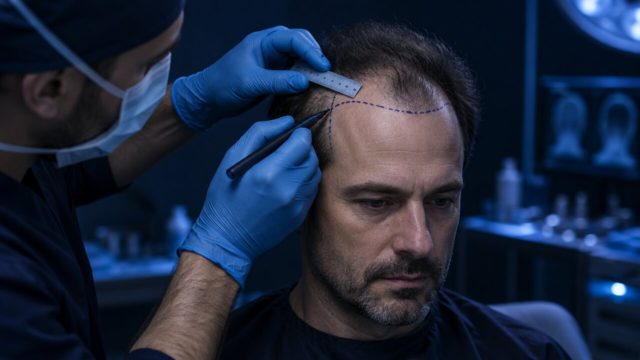
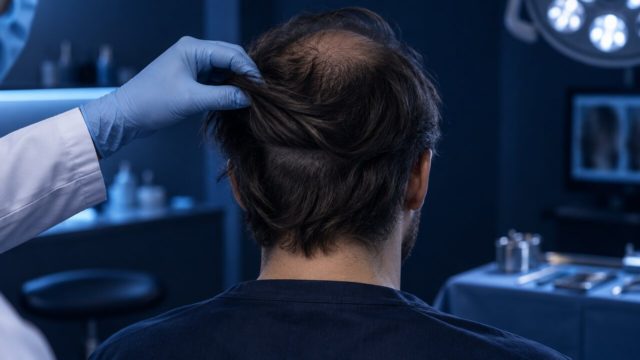
Before FUE extraction begins, the donor scalp is examined to identify areas with stable, healthy-looking hair and suitable density. The team may trim the donor hair to make the direction and grouping of follicular units easier to see. Careful mapping helps the surgeon avoid repeatedly working in the same small region and supports a more even distribution of extraction sites across the selected donor zone.
The direction in which hair exits the scalp is different for each follicular unit. Understanding this angle is important because the follicle continues beneath the skin before it reaches the bulb. The extraction instrument must follow the likely path of the follicle as closely as possible. If the angle is poorly aligned, the graft may be damaged during dissection, reducing its suitability for implantation.
At Acibadem Hair Transplant Center, the pre-treatment process includes a free online hair analysis that is reviewed by doctors. This can provide an initial view of the hair-loss pattern and donor area from the information available. An in-person clinical evaluation remains important before treatment, because scalp condition, density, hair characteristics and medical suitability must be confirmed directly.
04Extraction Technique, Punch Selection and Graft Safety
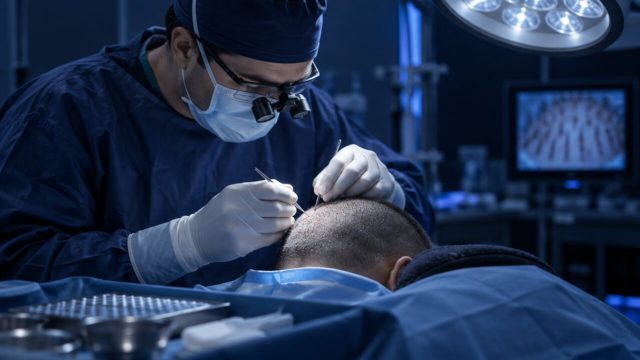
In FUE, a small circular instrument called a punch is used to separate the follicular unit from the surrounding scalp tissue before it is gently removed. Punch choice is not one-size-fits-all. It should be selected in relation to the patient’s hair characteristics, follicular-unit shape and scalp features. The aim is to free the graft with as little surrounding tissue trauma as reasonably possible.
A very large punch may remove more surrounding tissue than necessary, while an unsuitable small punch may increase the chance of damaging follicles if technique and alignment are not precise. The clinical team also needs to control the depth of dissection. Going too deep can affect deeper tissue, while insufficient dissection can make graft removal more difficult. These are technical decisions made by trained professionals during the procedure.
Once removed, grafts should be counted, sorted and kept in an appropriate protected environment until implantation. Excessive drying, rough handling and unnecessary time outside the body may affect graft condition. For this reason, donor protection does not end when the graft leaves the scalp. It includes every step from extraction and storage to placement in the recipient area.
05Even Distribution and the Appearance of the Healed Donor Zone
A well-managed donor area usually heals as many small, scattered extraction points rather than as one long surgical line. This is one reason some patients prefer FUE over strip-based methods. However, the absence of a linear scar does not mean there is no scarring at all. Each extraction site heals individually, and its visibility can depend on skin type, hairstyle length, healing response and the number of grafts removed.
Spacing is one of the main protections against a moth-eaten appearance. By leaving sufficient hair between extraction sites, the remaining follicles can provide camouflage while the skin heals. The pattern should also be varied across suitable areas instead of forming obvious rows. In patients who prefer very short haircuts, donor planning needs particular care because small changes in density may be easier to notice.
Donor-area appearance cannot be judged fully in the first days after treatment. Redness, tiny scabs and temporary changes in how the hair lies are common during early recovery. Most patients see these signs settle gradually as healing progresses. Persistent redness, pain, swelling, discharge or other concerns should be assessed by the clinic or a qualified healthcare professional rather than managed without guidance.
06Recovery After FUE Extraction and Donor-Area Care
After the procedure, the donor area may feel tender or tight for a short period, and small crusts typically form around the extraction sites. The clinic will provide washing instructions designed to protect the healing scalp. Patients are commonly advised to avoid rubbing, scratching or picking at the donor area, as these actions can disturb healing skin and increase irritation.
Physical activity, sun exposure, headwear and return-to-work timing should be discussed with the treating team because recommendations can vary according to the procedure and the individual’s recovery. It is also important to disclose smoking, regular medicines, skin conditions and relevant health issues before treatment. These factors may affect surgical planning or healing and should be reviewed by a doctor.
Acibadem Hair Transplant Center provides a care kit and 12 months of follow-up within its all-inclusive packages, alongside VIP transfer and 4-star hotel accommodation. The clinic is licensed by the Turkish Ministry of Health and performs Sapphire FUE and DHI techniques. Needle-free anaesthesia is also available for suitable patients, although the clinical team will confirm which approach is appropriate.
07Long-Term Donor Management and Realistic Expectations
A successful transplant plan protects options for the future. Hair loss can continue in non-transplanted areas, so a design that looks suitable today should also consider how the scalp may look if thinning progresses. This is particularly relevant for younger patients and for those with a strong family pattern of extensive hair loss. A mature, sustainable hairline and sensible use of grafts may be more valuable than trying to achieve maximum density immediately.
FUE extraction can be used as part of a carefully planned hair restoration journey, but it cannot create an unlimited donor supply. Some people may not have enough stable donor density for the coverage they want, while others may need their goals adjusted to protect the appearance of the donor zone. Honest assessment is a central part of safe practice, and a reputable clinic should discuss limitations clearly.
Results should be evaluated over time rather than in the first weeks or months, when shedding and new growth changes are expected. At Acibadem Hair Transplant Center, results are measured by trichoscopic graft survival at month 12, with a documented 98% rate under written guarantee. Individual appearance still depends on factors such as healing, hair characteristics, graft placement and the progression of existing hair loss, so your doctor will explain what may be realistic in your case.
08A Practical Donor-Area Timeline: The First Two Weeks After FUE
The first two weeks are an important healing period for the donor area. During the first few days, small extraction points may look red and feel sensitive, while minor swelling or tightness can occur. Patients should follow the clinic’s written instructions for sleeping position, washing and any prescribed medicines. The main aim is to keep the area clean without applying friction or pressure to the healing skin.
When washing is permitted by the treating team, use lukewarm water and the recommended products. Let water flow gently over the scalp rather than using strong shower pressure. Apply any instructed foam or lotion with a light touch, and do not use fingernails to remove crusts. Scabs usually loosen naturally as the skin recovers. Picking them early may irritate the donor area and can prolong visible redness.
For the first part of recovery, it is usually sensible to avoid activities that cause heavy sweating, friction from helmets or tight hats, and direct sun exposure to the scalp. Swimming pools, sea water, saunas and steam rooms should only be resumed when the clinic confirms that the extraction sites have healed sufficiently. If a loose, clean hat is needed for travel or daily life, ask the team when it can be worn and which style is suitable.
By the end of the second week, many patients find that the donor area looks more settled, although healing speed differs between individuals. Short hair may not fully conceal the area immediately, particularly after a larger session. Contact the clinic promptly if you notice increasing pain, spreading redness, warmth, significant swelling, discharge, fever or bleeding that does not settle with the instructions you have been given.
09Who May Need Extra Donor-Area Assessment Before FUE
FUE may not be equally suitable for every person with hair loss. A careful donor assessment is especially important for people with diffuse thinning, where hair density appears reduced across both the top and the traditionally stable donor zone. In these cases, removing grafts without confirming donor stability may create a visible reduction in density. A doctor may need to examine the scalp closely and discuss whether surgery, medical management, observation or a different plan is appropriate.
Patients with scalp inflammation, active infection, significant dandruff, scarring conditions or a history of poor wound healing should disclose this before booking treatment. These concerns do not always rule out FUE, but the scalp may need medical assessment or treatment first. Similarly, people who have had previous hair transplant surgery require detailed evaluation because earlier extraction patterns, scar tissue and remaining donor density can affect what is safely possible.
Hair characteristics also influence planning. Fine hair may provide less visual coverage per graft than coarse hair, while highly curled hair can create strong cosmetic coverage but may require particular technical care during extraction. The contrast between hair colour and scalp colour, as well as the patient’s usual haircut length, can affect how noticeable the healed donor area may appear. These factors help determine whether a conservative graft target is appropriate.
Age and the pattern of ongoing hair loss are also relevant. A younger person with early thinning may have many years of future hair-loss progression to consider. In most cases, a doctor will assess the stability of the pattern, family history and expectations before recommending how much donor supply should be used. This helps avoid using too much of a limited resource for a hairline or coverage plan that may not remain suitable over time.
10Planning Your Istanbul Visit Around FUE Recovery
International patients should plan their travel schedule around the procedure and the early recovery period rather than treating FUE as a routine sightseeing appointment. Allow time for the in-person assessment, treatment, first aftercare guidance and any planned post-procedure check before travelling home. Your treating team will confirm the recommended timing for your return flight based on the procedure performed and your individual condition.
Choose comfortable clothing for the journey, preferably tops that fasten at the front so they do not need to be pulled over the scalp. Keep your aftercare products, written instructions and clinic contact details accessible in your hand luggage. During travel, take care not to bump or rub the scalp against headrests, overhead compartments or tight headwear. If you are unsure about any part of the journey, ask the clinic before departure rather than making assumptions.
Acibadem Hair Transplant Center offers all-inclusive packages that include VIP transfer, 4-star hotel accommodation, a care kit and 12 months of follow-up. This can help international patients coordinate practical elements of the visit, but patients should still review their itinerary carefully. Consider flight duration, baggage handling, travel companions, work commitments and the possibility that the donor area may be visibly red or closely trimmed in the first days.
Remote follow-up is useful for sharing recovery updates and asking non-urgent questions after returning home. Acibadem Hair Transplant Center offers a free online hair analysis reviewed by doctors, with WhatsApp replies typically within around two hours. However, urgent symptoms such as breathing difficulty, severe allergic reaction, high fever or rapidly worsening pain require timely local medical attention. Online communication should support, not replace, appropriate in-person care when needed.
11Frequently Asked Questions
What are the possible downsides of an FUE hair transplant?
FUE can leave many tiny circular scars, and removing too many grafts can reduce donor-area density or create a patchy appearance. The procedure also requires careful technique because grafts may be damaged during extraction if they are not aligned and handled correctly. As with any surgical treatment, temporary discomfort, swelling, infection, delayed healing and unsatisfactory cosmetic density are possible risks that should be discussed during consultation.
Has Elon Musk had an FUE hair transplant?
There is no verified public medical record confirming which, if any, hair restoration procedure Elon Musk has had. Changes in a person’s appearance cannot reliably identify a specific surgical technique. It is best not to make medical conclusions about an individual based only on photographs or public appearances.
How painful is an FUE transplant?
FUE is typically performed with local anaesthesia, so patients should not feel sharp pain during graft extraction or implantation. Some people feel brief discomfort during the anaesthesia stage and may experience mild tenderness or tightness in the donor area after treatment. Pain perception varies, and the treating team can explain the available comfort measures, including needle-free anaesthesia for suitable patients.
How long does FUE with 3,000 grafts usually take?
A 3,000-graft FUE procedure commonly takes most of a day, often around 6 to 10 hours including preparation, anaesthesia, extraction, graft sorting, breaks and implantation. The exact duration depends on hair characteristics, the size of the team, graft quality and the complexity of the recipient-area design. Your clinic should give a realistic schedule after assessing your donor area and treatment plan.
Dieser Artikel dient nur der allgemeinen Information und ersetzt keine professionelle medizinische Beratung.
Dieser Ratgeber dient der allgemeinen Information und ersetzt keine ärztliche Beratung. Behandlungsentscheidungen werden nach einer persönlichen oder Online-Untersuchung durch einen Arzt getroffen.