In diesem Artikel8
- What Determines the Total Cost of a Hair Transplant?
- Hair Transplant Cost and Recovery Time: A Practical Timeline
- Why Graft Numbers Change Both Your Budget and Your Schedule
- The First Two Weeks: Washing, Sleeping, and Returning to Daily Life
- From Shedding to New Growth: What to Expect Over 12 Months
- Planning Travel, Work Leave, and the Real Cost Beyond Surgery
- Choosing the Right Time and Protecting Long-Term Results
- Frequently Asked Questions
Hair transplant cost and recovery time depend on the number of grafts, technique, clinic standards, travel needs, and your individual healing pattern. Most patients can plan for visible healing in the first two weeks, a temporary shedding stage in the following weeks, and gradual new growth over several months; your doctor will confirm a suitable plan after assessment.
- The total cost is influenced by graft requirements, surgical technique, clinical standards, and what is included in your treatment plan.
- Most visible redness, scabbing, and swelling improve during the first 10 to 14 days, although recovery continues beneath the surface.
- Temporary shedding of transplanted hairs is expected in many patients and does not usually mean the grafts have failed.
- A safe treatment plan starts with a medical assessment of the donor area, hair-loss pattern, and likely future hair loss.
- Long-term results can look natural when grafts are carefully placed and remaining native hair is monitored over time.
01What Determines the Total Cost of a Hair Transplant?
Hair transplant cost and recovery time are two of the most important points to understand before booking treatment. The price should not be viewed as the procedure alone, because a responsible plan includes medical assessment, surgical team standards, technique selection, aftercare, and follow-up. Recovery planning also affects the overall budget, especially for international patients who may need accommodation, local transport, time away from work, and support during the first days after surgery.
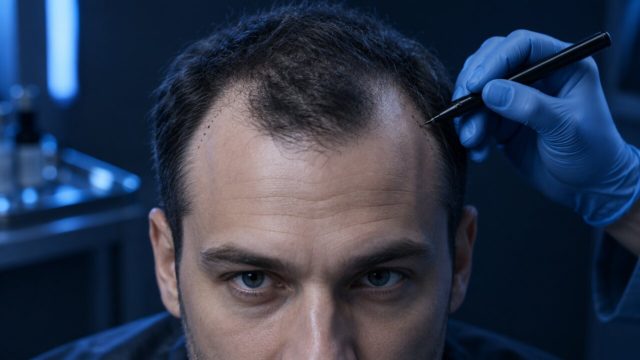
The number of grafts is usually one of the largest cost factors. A graft is a naturally occurring group of one or more hairs taken from the donor area, commonly the back and sides of the scalp. The graft number needed can vary considerably according to the size of the thinning area, the density of the donor hair, hair texture, the desired hairline design, and whether the crown, frontal area, or both require treatment. A doctor should assess these points rather than suggesting a graft number based only on photographs or a standard package.
Technique can also affect the treatment plan. Sapphire FUE involves extracting individual follicular units and creating recipient channels with sapphire blades. DHI also uses individual graft extraction, while implantation is performed with a specialised implanter tool. Neither technique is automatically best for every patient. Your doctor will consider your hair characteristics, scalp condition, area of hair loss, and clinical goals before recommending an approach.
It is also important to ask exactly what is included in a quotation. At Acibadem Hair Transplant Center, all-inclusive packages can include VIP transfer, a 4-star hotel, a care kit, and 12 months of follow-up. A clear written plan helps patients compare the full patient journey rather than comparing a headline procedure price alone. Medical suitability and quality of care should remain central to the decision.
02Hair Transplant Cost and Recovery Time: A Practical Timeline
Hair transplant cost and recovery time should be planned together, because recovery may affect work, travel, exercise, social events, and the practical support you need after surgery. While each patient heals at a different pace, most people can expect the first two weeks to be the most visible part of recovery. This is the period when the recipient area requires careful washing, protection from accidental contact, and close attention to aftercare instructions.
On the treatment day, the scalp is prepared and local anaesthesia is used so that the procedure is generally manageable. Needle-free anaesthesia may be available for suitable patients. After surgery, small crusts around the implanted grafts and some redness are common. Mild swelling can occur, particularly around the forehead and upper face, usually during the first few days. Your clinical team will explain how to sleep, wash the scalp, use prescribed or recommended products, and recognise symptoms that should be reported.
By around days 10 to 14, crusting has usually reduced substantially when washing instructions have been followed. Some patients may feel comfortable returning to office-based work earlier, while others prefer more time before social activities. A job involving physical work, dust, heat, helmets, or a high risk of contact may require additional planning. Your doctor can advise when your normal work routine is appropriate.
The implanted hairs often shed between several weeks and a few months after the procedure. This expected phase is sometimes called shock shedding or shedding of the hair shafts. The follicles remain under the skin and can later begin a new growth cycle. Early new hairs may be fine and uneven, while density and texture typically improve gradually over the following months. Meaningful assessment requires patience, and final maturation is commonly evaluated around month 12.
03Why Graft Numbers Change Both Your Budget and Your Schedule
A graft count is not the same as a hair count. Each follicular unit may contain one, two, three, or occasionally more hairs, so 3,000 grafts can represent a substantial procedure. However, the right number is not simply the highest possible number. The donor area has a limited supply, and an ethical plan aims to use grafts carefully while protecting the appearance of the donor area and keeping options open if hair loss progresses later.
Larger sessions may take longer on the day of treatment and may involve a larger recipient area to protect during early healing. This does not always mean that recovery will be difficult, but it can mean more visible crusting or redness in the first days. Patients treating the hairline and frontal scalp may notice the recovery phase more easily than patients treating a smaller area hidden by existing hair. Hair length, hairstyle, and skin tone can also affect how visible healing appears.
When considering hair transplant cost and recovery time, ask whether the proposed graft count is linked to a realistic long-term design. A very low hairline or an attempt to create very high density across a large bald area can use donor grafts quickly. A medically planned hairline takes account of facial proportions, age, family history, current hair-loss pattern, and the possibility of further thinning. Your doctor should discuss these limits openly.
At Acibadem Hair Transplant Center, a free online hair analysis can be reviewed by doctors before travel planning begins. Clear photographs can help provide initial guidance, but an in-person examination remains important for confirming the donor capacity and surgical plan. Patients usually receive a WhatsApp reply within approximately two hours, helping them begin the conversation without pressure to make an immediate decision.
04The First Two Weeks: Washing, Sleeping, and Returning to Daily Life
The first 48 hours are mainly about protecting the newly implanted grafts. Patients are usually advised to avoid touching, rubbing, or scratching the recipient area. Sleeping with the head elevated may help reduce swelling in the early days. It is also sensible to avoid alcohol, smoking, strenuous activity, and anything that may cause heavy sweating if your clinical team has advised this, as these factors may interfere with comfortable healing.
Scalp washing is an important part of early recovery. The clinic will normally provide specific instructions about when to begin washing, how to apply lotion or foam if supplied, water temperature, and how to rinse without direct pressure. Crusts should not be picked. They generally soften and release gradually with correct washing. Removing them too forcefully may irritate the scalp and could disturb healing grafts in the early stage.
Pain after a hair transplant is often described as mild to moderate discomfort rather than severe pain, but experiences vary. Local anaesthesia reduces discomfort during the procedure, and tenderness, tightness, or sensitivity can occur afterward in the donor and recipient areas. Any medication should be used only as directed by your treating medical team. Increasing pain, significant bleeding, fever, pus, or rapidly worsening swelling should be reported promptly to the clinic or an appropriate medical service.
Many patients feel well enough for gentle daily activities soon after treatment, but recovery is not the time to rush back into every routine. Avoiding direct sun exposure, swimming, saunas, contact sports, and intense gym sessions for the period advised by your doctor can help protect the scalp. If you are travelling internationally, allow enough time to receive post-procedure checks and instructions before your return journey.
05From Shedding to New Growth: What to Expect Over 12 Months
The emotional side of recovery can be challenging because the visual change is not linear. After initial healing, transplanted hairs commonly fall out before new hairs begin to grow. This can make the treated area look similar to, or temporarily thinner than, it did before surgery. In most patients, this shedding is part of the normal cycle of recovery and should not be judged as the final result.
Early growth may begin at different times across the treated area. New hairs can first appear soft, light, or irregular, then become stronger as they mature. The crown may appear to develop more slowly than the frontal hairline because of its natural growth pattern and the way light reflects on the scalp. Photographs taken in consistent lighting and at regular intervals can offer a more balanced view than checking the mirror every day.
Hair transplant cost and recovery time should therefore include a plan for follow-up, not only the operation itself. Acibadem Hair Transplant Center provides 12 months of follow-up in its all-inclusive packages. Results are measured through trichoscopic graft survival at month 12, with a documented 98% rate under a written guarantee. Individual cosmetic appearance can still vary according to healing, hair characteristics, pre-existing hair loss, and adherence to aftercare.
A transplant does not stop hereditary hair loss in untreated areas. Some patients may continue to lose native hair over time, which can change the overall appearance around the transplanted zone. During consultation, a doctor may discuss medical or non-surgical management options where clinically appropriate. These options have possible benefits, limitations, and contraindications, so they should never be started based on general online information alone.
06Planning Travel, Work Leave, and the Real Cost Beyond Surgery
International patients benefit from a simple schedule that leaves room for recovery. It is wise to avoid arranging important meetings, photographs, weddings, or strenuous holidays immediately after treatment. Even when a patient feels physically well, temporary redness, swelling, or visible crusts can make the first days less convenient for public-facing plans. Booking a flexible return journey, where possible, can reduce unnecessary stress.
Work leave depends on the nature of your job and how private you want the healing phase to be. People in remote or desk-based roles may be able to resume work relatively soon, provided they can avoid physical strain and follow washing instructions. Those in jobs requiring hard hats, close physical contact, heavy lifting, frequent sun exposure, or dusty environments should discuss a more cautious timeline with their clinical team.
The practical value of an all-inclusive package is that several travel arrangements are coordinated in advance. Acibadem Hair Transplant Center is a dedicated hair restoration clinic in Istanbul, licensed by the Turkish Ministry of Health. Its all-inclusive packages may combine VIP transfer, 4-star hotel accommodation, a care kit, and follow-up support, allowing patients to focus on recovery rather than local logistics.
When calculating the full investment, include travel, time off work, meals, companion costs if relevant, and the possibility that you may prefer to stay away from social events during the first visible stage. The cheapest initial quote may not represent the most complete or medically appropriate plan. A transparent discussion of inclusions, exclusions, aftercare, and clinical follow-up is more useful than a price comparison without context.
07Choosing the Right Time and Protecting Long-Term Results
There is no single perfect age for a hair transplant. The best timing is usually linked to whether a patient’s hair-loss pattern can be assessed with reasonable confidence, whether the donor area is adequate, and whether expectations are realistic. In younger adults, ongoing hair loss can be harder to predict, so a cautious approach may be particularly important. Your doctor will assess your situation rather than using age alone as a decision rule.
A long-term plan considers more than the current bald or thinning area. It also considers family history, speed of hair loss, hair shaft thickness, scalp contrast, and how much donor hair can be safely harvested. A conservative, natural-looking hairline may be more sustainable than a design that uses a high number of grafts at the front of the scalp. The aim is usually to create a result that can continue to look balanced as you age.
Ten years after a transplant, many grafts can still be growing because transplanted follicles are commonly taken from areas more resistant to pattern hair loss. However, the surrounding native hair may continue to thin, and some people may consider additional treatment or a further procedure if donor capacity allows. Long-term results depend on the original planning, surgical technique, natural progression of hair loss, and ongoing scalp care.
Acibadem Hair Transplant Center has welcomed patients from 38 countries over 12 years. A consultation gives you an opportunity to ask about technique, donor preservation, recovery support, documented outcome measurement, and realistic expectations. The safest decision is an informed one: choose a licensed clinic, share your full medical history, and follow the personalised guidance provided by your doctor.
08Frequently Asked Questions
What can I expect 10 years after a hair transplant?
In many patients, transplanted follicles can continue to grow for many years because they are usually taken from more hair-loss-resistant donor areas. However, a transplant does not prevent further thinning of native hair around the treated area. Your long-term appearance depends on the original plan, donor management, the progression of hair loss, and whether any medically appropriate ongoing care is used.
What does 3,000 hair grafts cost in the USA?
There is no single reliable price for 3,000 grafts in the USA because fees vary widely by city, clinic standards, technique, surgeon involvement, donor complexity, and what aftercare is included. Some clinics charge per graft, while others provide a session-based quotation. Ask for a written estimate that clearly explains the graft plan, clinical services, medication or care-kit costs, and follow-up arrangements.
How painful is the recovery after a hair transplant?
Most patients describe recovery as mild to moderate discomfort, including scalp tenderness, tightness, itching, or sensitivity during the first days. Local anaesthesia is used during the procedure, and your clinical team will explain appropriate pain management after treatment. Severe or worsening pain, fever, unusual discharge, or increasing swelling should be reported promptly.
What is the best age to have a hair transplant?
The best age is not defined by one number. Doctors usually consider whether your hair-loss pattern is stable enough to plan responsibly, whether your donor area is sufficient, your general health, and your long-term expectations. Younger patients may need especially careful assessment because hair loss can continue over time.
Dieser Artikel dient nur der allgemeinen Information und ersetzt keine professionelle medizinische Beratung.
Dieser Ratgeber dient der allgemeinen Information und ersetzt keine ärztliche Beratung. Behandlungsentscheidungen werden nach einer persönlichen oder Online-Untersuchung durch einen Arzt getroffen.