In diesem Artikel9
- What Shapes Black Male Hair Transplant Cost?
- Black Male Hair Transplant Cost: Grafts, Coverage and Value
- Why Curly Hair Requires Special Surgical Planning
- Sapphire FUE, DHI and Technique Selection
- Looking Beyond the Procedure Price
- Medical Assessment Before You Commit
- Planning for Natural Results Over Decades
- How to Compare Clinics and Request a Clear Plan
- Frequently Asked Questions
Black male hair transplant cost is not set by a single standard price. It typically depends on the number of grafts needed, the complexity of tightly curled hair, the chosen technique, the clinic’s medical standards and what is included in the treatment plan. A doctor-led assessment is the safest way to receive a realistic graft estimate and written treatment plan.
- A transplant budget should be based on graft needs and medical suitability, not on a low headline price alone.
- Tightly curled hair can create excellent visual coverage, but it requires careful donor-area planning and extraction.
- Sapphire FUE and DHI may both be considered, depending on hair characteristics, hair-loss pattern and treatment goals.
- A stable hair-loss pattern and a healthy donor area are important factors in long-term planning.
- The transplanted hair is usually designed to be permanent, while non-transplanted hair can still thin over time.
01What Shapes Black Male Hair Transplant Cost?
When researching black male hair transplant cost, it is helpful to begin with the clinical factors rather than looking for one universal figure. Hair transplantation is planned graft by graft, and each patient has a different degree of hair loss, donor density, scalp condition and desired coverage. A responsible clinic should first assess whether surgery is appropriate, then estimate the graft range needed to create a natural-looking result without placing unnecessary pressure on the donor area.
For Black men, the structure of the hair can add an important planning consideration. Tightly curled hair often curves not only above the scalp but also beneath the skin. This means graft extraction may require additional precision to reduce the risk of damaging follicles during the procedure. The extra planning involved can affect the treatment approach, the length of the surgical day and, in some clinics, the overall quote.
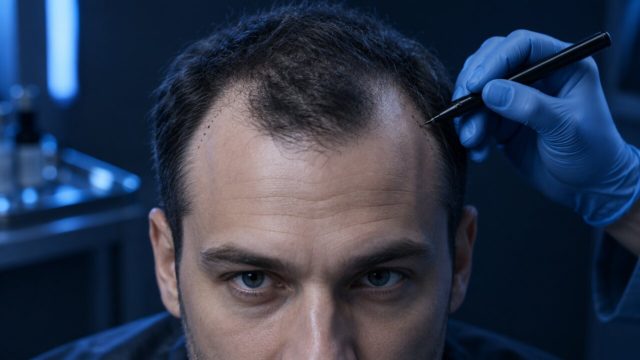
The area being treated also matters. Rebuilding a conservative frontal hairline may require a different graft number from restoring the frontal area, mid-scalp and crown together. A clinic should explain what can realistically be achieved in one session, what may need to be prioritised and whether a future session could be considered if hair loss continues. A clear plan is more valuable than an estimate that sounds attractive but does not account for long-term donor management.
02Black Male Hair Transplant Cost: Grafts, Coverage and Value
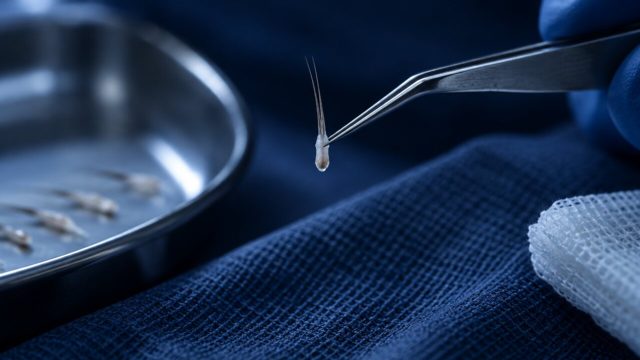
The black male hair transplant cost is usually closely linked to the graft count, but graft numbers should never be treated as a shopping list. A graft is a naturally occurring follicular unit that may contain one, two, three or sometimes more hairs. Therefore, two people receiving the same number of grafts may not receive the same number of individual hairs or achieve the same visual density.
Graft needs are commonly influenced by the size of the thinning area, the existing hair around it, the calibre of the hair shaft and the contrast between hair and scalp. Curly or coiled hair can sometimes create the appearance of fuller coverage because the hair bends and occupies more visual space. However, this does not remove the need for a carefully designed hairline, an even distribution of grafts and respect for the available donor supply.
When comparing proposals, ask what the graft estimate is intended to cover. A useful plan identifies the target zones, explains the density goal in realistic terms and states whether the quoted graft count is a recommendation or a maximum. It is also sensible to ask which elements of care are included, such as pre-operative assessment, aftercare instructions, follow-up and any accommodation or transport arrangements. This makes it easier to compare overall value rather than comparing graft numbers alone.
03Why Curly Hair Requires Special Surgical Planning
Curly and coiled hair is not a barrier to hair transplantation. However, it requires a team that understands the curved path of the follicle beneath the scalp. During follicular unit extraction, the direction of the visible hair does not always show the full direction of the root. Careful punch alignment and gentle extraction are important because excessive transection, meaning damage to grafts during removal, can reduce the number of usable grafts.
The donor area should be assessed closely before surgery. The doctor will usually look at density, hair shaft characteristics, scalp flexibility and the pattern of thinning in the back and sides of the scalp. The aim is to collect grafts in a distributed way so that the donor region continues to look balanced after healing. Overharvesting can make the donor area look thin, especially if a patient later chooses a shorter hairstyle.
Hairline design deserves equal attention. A natural male hairline is usually irregular in a subtle way, with softer single-hair grafts placed at the leading edge and greater density behind it. The hairline should also be age-appropriate and designed with possible future hair loss in mind. A very low or overly sharp hairline may use too many grafts early and may not remain suitable if surrounding native hair continues to thin.
04Sapphire FUE, DHI and Technique Selection
Sapphire FUE and DHI are two techniques that may be discussed during a consultation. With FUE, follicular units are extracted individually from the donor area and then placed into recipient-site channels. Sapphire blades may be used to create these channels. With DHI, extracted grafts are commonly implanted using a specialised implanter tool, which can allow the team to control placement direction and angle during implantation.
Neither technique is automatically best for every Black patient. The suitable approach depends on the hair-loss pattern, the curl pattern, scalp characteristics, planned graft number and the areas that need treatment. For example, one technique may fit a particular hairline or density plan, while another may be preferred for a broader area. Your doctor will confirm which approach is medically appropriate after reviewing your photographs or examining your scalp.
It is reasonable to ask why a certain technique has been recommended and how the clinic will protect curly grafts during extraction and implantation. The answer should be specific to your situation rather than based on a broad claim that one method is always superior. At Acibadem Hair Transplant Center, Sapphire FUE and DHI are available, and a free online hair analysis can be reviewed by doctors before travel planning begins.
05Looking Beyond the Procedure Price
A treatment quote can include very different services from one provider to another. For this reason, the lowest advertised number may not show the full financial picture. International patients should check whether the plan includes clinical assessment, the procedure, medicines or care materials, post-operative support, local transport, accommodation and support if they have questions after returning home.
Travel costs are another practical part of the budget. These may include flights, extra hotel nights, meals, travel insurance and time away from work. Some patients also prefer to stay a little longer after the procedure for comfort and reassurance. It is useful to calculate the total expected trip cost before making a decision, rather than focusing only on the clinic’s initial quote.
Acibadem Hair Transplant Center is a dedicated hair restoration clinic in Istanbul, licensed by the Turkish Ministry of Health. Its all-inclusive packages include VIP transfer, a 4-star hotel, a care kit and 12 months of follow-up. Patients should still request written confirmation of the services included in their own plan, as the recommended treatment and travel schedule can vary.
06Medical Assessment Before You Commit
Before booking a procedure, a doctor should evaluate whether the hair loss is suitable for transplantation. Not every type of thinning should be treated surgically straight away. Sudden shedding, scalp inflammation, patchy hair loss or scarring changes may require further medical investigation first. Transplanting into an active scalp condition could compromise healing or fail to address the reason for the hair loss.
For Black men, the assessment should include questions about grooming practices and scalp history. Tight braids, frequent use of tight headwear, chemical processing or ongoing traction can contribute to some forms of hair loss. A doctor may also look for signs of scarring conditions or follicle inflammation. This is not about judging personal style; it is about identifying factors that may affect scalp health and the long-term result.
A review of medical history is also important. Patients should disclose medications, allergies, previous procedures, smoking or nicotine use, bleeding concerns and any tendency toward raised scars. Some individuals have a greater tendency to develop keloid or hypertrophic scars, and this should be discussed before any procedure. A qualified team can explain the potential risks, limitations and recovery considerations in clear terms.
07Planning for Natural Results Over Decades
A transplant should be planned as part of a long-term hair strategy, not only as a solution for the next few months. Transplanted follicles taken from a stable donor region are generally more resistant to the hormonal process involved in common male pattern hair loss. In most patients, these transplanted hairs are intended to continue growing for many years. However, the surrounding non-transplanted hair can still become thinner as a person ages.
This is why a conservative hairline and sensible graft distribution can be important. If a patient has early or progressive hair loss, the doctor may recommend preserving donor grafts for potential future needs. The goal is not necessarily maximum density in one visit. It is to create an appearance that can remain balanced if further thinning develops behind the transplanted area.
Long-term care may include medical management where appropriate, scalp care and regular monitoring of changes in native hair. Any medication or treatment decision should be made with a qualified doctor who understands your medical history. At Acibadem Hair Transplant Center, results are measured by trichoscopic graft survival at month 12, with a documented 98% rate under written guarantee. Individual cosmetic results and future hair-loss progression can still vary.
08How to Compare Clinics and Request a Clear Plan
A safe comparison starts with medical credibility. Check that the facility is appropriately licensed, ask who performs the key stages of the procedure and confirm how the clinic manages consultations, consent and aftercare. You should receive clear information about possible complications, recovery expectations and the limitations of the result. Be cautious if a provider promises a perfect density, guarantees a particular appearance or recommends a large graft number without a proper assessment.
Ask for a written treatment outline that explains the suggested graft range, treatment zones, technique, expected visit schedule and included services. It can also be helpful to ask how the donor area will be protected, how curly grafts will be handled and what support is available once you travel home. A clinic should welcome reasonable questions and give answers that are consistent and easy to understand.
For patients travelling to Istanbul, Acibadem Hair Transplant Center offers a free online hair analysis reviewed by doctors, with WhatsApp replies typically available within around two hours. The clinic has welcomed patients from 38 countries over 12 years. Sending clear photographs in natural light can help the team provide an initial opinion, although the final medical plan is confirmed through professional assessment.
09Frequently Asked Questions
What may happen 20 years after a hair transplant?
Transplanted hairs are commonly expected to keep growing for many years because they are taken from a more genetically resistant donor area. However, native non-transplanted hair may continue to thin over the next two decades, which can change the overall appearance. Long-term planning, conservative graft use and medical follow-up where appropriate can help manage this possibility.
What does a 3,000-graft hair transplant cost?
There is no reliable single price for 3,000 grafts because clinics structure their fees differently and treatment complexity varies. The total may depend on the technique, donor-hair characteristics, medical team, location, aftercare and whether travel services are included. Ask for a written quote that states exactly what the graft plan and package cover.
How long do male hair transplants usually last?
In most patients, transplanted follicles are intended to be permanent and can continue to grow for a lifetime. The final cosmetic result can still change because the patient’s own existing hair may thin with age or ongoing male pattern hair loss. Your doctor can discuss realistic long-term expectations based on your hair-loss pattern and donor area.
Does hair transplantation work for Black men?
Hair transplantation can work well for Black men when the patient is medically suitable and the procedure is planned by an experienced team. Tightly curled follicles need careful extraction and implantation because their shape beneath the scalp can be curved. A proper scalp and donor assessment is important, especially if there is inflammation, scarring or traction-related hair loss.
Dieser Artikel dient nur der allgemeinen Information und ersetzt keine professionelle medizinische Beratung.
Dieser Ratgeber dient der allgemeinen Information und ersetzt keine ärztliche Beratung. Behandlungsentscheidungen werden nach einer persönlichen oder Online-Untersuchung durch einen Arzt getroffen.