En este artículo9
- Resumen
- Why Alopecia Areata Is Different From Pattern Hair Loss
- Signs That Surgery May Be Considered More Carefully
- When Alopecia Areata Hair Transplant Surgery May Be Considered
- When Hair Transplantation Is Usually Delayed or Avoided
- Medical Treatment and Non-Surgical Options Before Surgery
- Planning a Safe Consultation and Setting Realistic Expectations
- What to Expect After Surgery and Over the Long Term
- Frequently Asked Questions
An alopecia areata hair transplant may be considered only in carefully selected patients whose condition has remained inactive and stable for a long period. Because alopecia areata can return and affect transplanted hair, a dermatologist and hair restoration doctor should first confirm disease control, donor suitability, and realistic expectations.
- Hair transplant surgery is usually not the first treatment for active or recently unstable alopecia areata.
- A sustained period without new patches, inflammation, or progression is an important part of surgical assessment.
- Transplanted follicles may grow normally, but they can still be affected if alopecia areata returns.
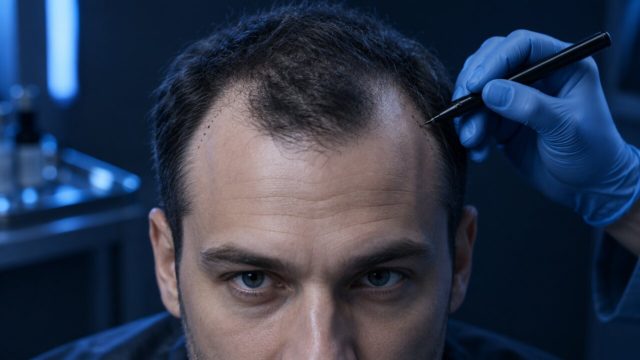
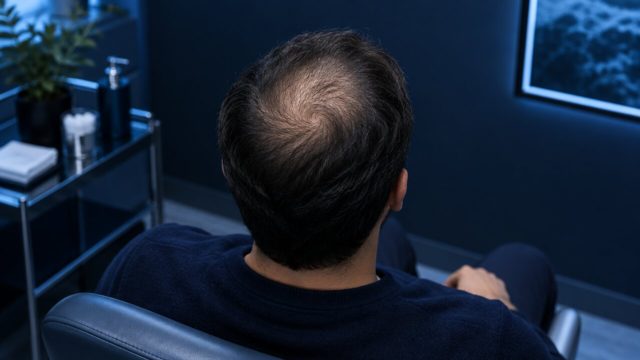
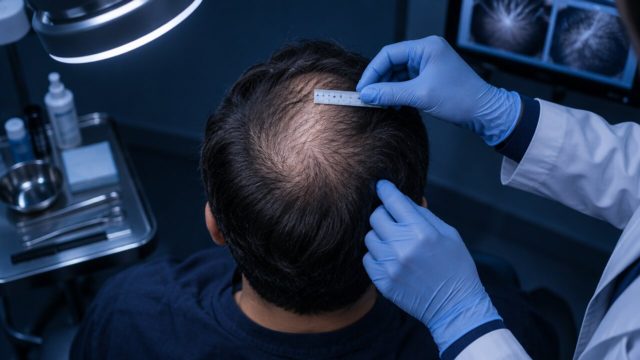
- A detailed scalp examination, medical history, and donor-area review help doctors decide whether surgery is appropriate.
- Non-surgical treatments, camouflage options, and ongoing dermatology care may be more suitable for many patients.
01Alopecia Areata and Hair Transplants: When to Consider Surgery
Alopecia areata hair transplant surgery is not automatically suitable for every person with patchy hair loss. Alopecia areata is an autoimmune condition in which the immune system may target hair follicles, often causing smooth, round areas of hair loss on the scalp, beard, eyebrows, or other body areas. Unlike common pattern hair loss, its course can be unpredictable. Some patients experience one small episode followed by full regrowth, while others have repeated patches or more extensive hair loss over time.
The main question is not simply whether there is an empty area to cover. Doctors need to understand whether the disease is currently active, how long the scalp has been stable, whether hair has regrown before, and whether there are signs of inflammation around existing hairs. Surgery performed while the condition is active may expose transplanted follicles to the same autoimmune process that affected the original hair.
For this reason, hair transplantation is generally viewed as a possible later option rather than a first response to alopecia areata. Medical treatment and observation are often considered first, especially when hair loss is new, changing, or spreading. If the condition becomes reliably quiet and the donor area is healthy, a specialist may discuss whether a cautious surgical plan is reasonable. The final decision should always follow an in-person or doctor-led clinical assessment.
02Why Alopecia Areata Is Different From Pattern Hair Loss
Androgenetic alopecia, often called male or female pattern hair loss, usually follows a recognisable pattern and progresses gradually. In suitable candidates, follicles taken from the donor area at the back and sides of the scalp tend to retain many of their characteristics after relocation. This principle supports the long-term use of hair transplantation for pattern hair loss, although future thinning of non-transplanted hair can still occur.
Alopecia areata has a different biological mechanism. It is linked to immune activity around hair follicles rather than to the hormonal sensitivity that drives most pattern hair loss. A patch may be completely smooth, and then hair may return without surgery. Equally, a previously quiet patch may become active again. This uncertainty makes timing particularly important and means that a successful-looking operation cannot be treated as a cure for the underlying condition.
Doctors may use trichoscopy, a close examination of the scalp and hair shafts, to look for signs that support or question disease stability. They will also ask about the timing of previous episodes, rapid shedding, nail changes, other autoimmune conditions, family history, and medications. This broader picture matters because a scalp that appears calm to the eye may still need more monitoring before any surgical decision is made.
03Signs That Surgery May Be Considered More Carefully
In selected cases, surgery may be discussed when alopecia areata has been inactive for a prolonged period and there have been no new or enlarging patches. Doctors commonly look for stable coverage, no recent sudden shedding, no obvious scalp redness or irritation, and no clinical signs of active disease. The length of stability considered appropriate can vary, so your doctor will confirm what is suitable in your situation rather than relying on one fixed timeline.
A stable, limited area of hair loss may be more straightforward to assess than widespread scalp involvement. For example, a person with one small patch that has remained unchanged after medical review may have a different risk profile from someone with frequent new patches across the scalp. However, even a small and stable area does not remove the possibility of recurrence, and this should be discussed clearly before any procedure.
The donor area must also be evaluated carefully. A transplant moves living follicles from one part of the scalp to another, so the available donor hair should be sufficiently dense and clinically healthy. If there are signs of diffuse shedding, reduced density, scarring, or possible immune involvement in the donor zone, surgery may not be advisable. A conservative plan protects the donor supply and avoids creating unnecessary additional thinning.
04When Alopecia Areata Hair Transplant Surgery May Be Considered
When an alopecia areata hair transplant is considered after a stable period, the consultation should focus on risk management rather than on promising a particular cosmetic outcome. The doctor may discuss the size and location of the patch, the quality of surrounding hair, scalp flexibility, donor density, and whether the recipient skin looks healthy. A carefully designed plan may use a modest number of grafts initially instead of attempting very dense coverage in one session.
Sapphire FUE and DHI are methods that may be used to extract and place follicles in appropriate candidates. The choice of technique does not remove the autoimmune risk of alopecia areata. Rather, the technique is selected according to the scalp area, hair characteristics, desired placement, and the doctor’s clinical judgement. The central issue remains disease stability and whether the individual’s risk-benefit balance supports surgery.
It is important to separate graft survival from protection against future alopecia areata. A graft can heal and grow after transplantation, yet an autoimmune episode may still affect hairs in the treated area later. At Acibadem Hair Transplant Center, graft survival is assessed through trichoscopic measurement at month 12, with a documented 98% rate under written guarantee. This measurement concerns graft survival in the treatment process and should not be understood as a guarantee that alopecia areata will never recur.
05When Hair Transplantation Is Usually Delayed or Avoided
Hair transplantation is usually delayed when alopecia areata is active, rapidly changing, or difficult to control. New patches, expanding borders, sudden increased shedding, itching, burning, redness, or visible inflammation can all suggest that the scalp needs medical attention before surgery is discussed. Operating during an unstable phase may lead to poor cosmetic planning, loss of existing nearby hair, or an unpredictable response in the transplanted area.
Very extensive alopecia areata can also make surgery impractical. The donor area is limited, and a transplant cannot create unlimited density across a large scalp surface. If the donor zone itself is affected or is not dense enough to provide grafts safely, extracting follicles may not be appropriate. Doctors also consider whether the expected visual benefit is likely to justify the use of a finite donor resource.
Other factors can disqualify or postpone a person from hair transplant surgery, regardless of the cause of hair loss. These may include untreated scalp infection, active scarring scalp disease, uncontrolled medical conditions, bleeding risks, certain medications, unrealistic expectations, or an inability to follow aftercare instructions. A clinician may also recommend waiting if the diagnosis has not been confirmed. A clear diagnosis is essential because different causes of hair loss require different management.
06Medical Treatment and Non-Surgical Options Before Surgery
For many patients, the first step is care with a dermatologist who can confirm alopecia areata and discuss medical options. Depending on the extent, location, duration, and individual health factors, management may include monitoring, local treatments, systemic approaches, or other therapies intended to encourage regrowth or control immune activity. Treatment decisions should be made by the treating doctor, as the right option can differ widely between patients.
Some patients regain hair without surgical treatment, particularly when the affected area is small and the episode is recent. This is one reason a careful waiting period can be clinically valuable. It gives the doctor time to observe the pattern, assess treatment response, and avoid placing grafts into an area that may regain its own hair. Photographs and trichoscopic follow-up can help document changes more reliably than memory alone.
If surgery is not suitable, cosmetic strategies may still improve confidence while medical care continues. These can include hairstyle adjustments, hair fibres where appropriate, scalp camouflage, hairpieces, wigs, or eyebrow and beard styling options. A patient may also benefit from emotional support, as visible hair loss can affect social life and self-image. Choosing a non-surgical option is not a failure; it can be the safest and most practical choice at a particular stage.
07Planning a Safe Consultation and Setting Realistic Expectations
A thorough consultation should begin with a detailed history rather than a graft number. The clinician should ask when the hair loss began, whether patches have returned, whether there is a history of spontaneous regrowth, and what treatments have been used. High-quality scalp photographs, trichoscopic assessment, and donor-area examination can help identify concerns that may not be obvious in a short visual review.
During an alopecia areata hair transplant consultation, it is reasonable to ask directly about recurrence risk, the plan if shedding returns, the number of grafts that can be harvested safely, and how the result will be monitored. You should also ask what outcome is realistically possible with your natural donor density. A responsible team will explain limitations in clear language and will not present surgery as a cure for an autoimmune condition.
International patients can begin with a free online hair analysis reviewed by doctors at Acibadem Hair Transplant Center, with WhatsApp replies typically available within around two hours. This initial review can help determine whether travel for an in-person assessment may be worthwhile, but it does not replace a full clinical evaluation. The dedicated hair restoration clinic in Istanbul is licensed by the Turkish Ministry of Health and provides 12 months of follow-up within its all-inclusive packages, alongside VIP transfer, 4-star hotel accommodation, and a care kit.
08What to Expect After Surgery and Over the Long Term
If surgery is approved, the early recovery period usually includes temporary scabbing, redness, and careful washing instructions. Transplanted hairs commonly shed in the weeks after the procedure before new growth begins later. This early shedding is often part of the normal hair growth cycle after transplantation, but patients with alopecia areata should remain in contact with their medical team if they notice new patches, unusual irritation, or changes beyond the expected recovery pattern.
Hair growth from transplanted follicles develops gradually. The final appearance is commonly assessed around 12 months, although individual growth patterns vary and some areas may continue to mature beyond that point. Natural-looking planning depends on angle, direction, distribution, and density, not only on the number of grafts used. Conservative placement can be especially important when future disease activity and donor supply remain uncertain.
Twenty years after a hair transplant, transplanted follicles may still be present, but the appearance can change as a person ages. Non-transplanted hair may thin, hair colour and texture may change, and future alopecia areata episodes may affect any scalp hair, including transplanted hair. Some people may consider additional treatment or surgery later if their donor supply and health allow, while others may prefer medical care or camouflage. Long-term follow-up and realistic expectations remain important throughout the patient journey.
09Frequently Asked Questions
Can a hair transplant work if I have alopecia areata?
It may work in carefully selected patients whose alopecia areata has remained inactive and stable for a sustained period. However, surgery does not cure the autoimmune condition, and transplanted hair may still be affected if the disease returns. A dermatologist and hair restoration doctor should assess stability, donor hair, and overall suitability before surgery is planned.
What is the cost of 3,000 hair grafts?
There is no medically reliable single price for 3,000 grafts because the appropriate graft number, technique, clinical needs, and package details differ between patients. In alopecia areata, 3,000 grafts may not be appropriate at all, especially if the condition is unstable or the treatment area is limited. A doctor-led assessment should come before any quotation or graft plan.
What can make someone ineligible for a hair transplant?
Active or unstable alopecia areata, inadequate donor density, untreated scalp infection, active scarring disease, and unclear diagnosis can make surgery unsuitable or mean it should be postponed. Certain uncontrolled health conditions, bleeding concerns, medications, and unrealistic expectations may also affect eligibility. Your doctor will review these factors as part of a full safety assessment.
What can happen 20 years after a hair transplant?
Many transplanted follicles can continue to grow over the long term, but the overall appearance may change with ageing and future thinning of non-transplanted hair. For patients with alopecia areata, recurrence remains possible even after a technically successful procedure. Long-term planning, conservative donor use, and medical follow-up can help patients prepare for these possibilities.
Este artículo tiene fines exclusivamente informativos y no sustituye el consejo médico profesional.
Esta guía es de carácter informativo y no sustituye una consulta médica. Las decisiones de tratamiento se toman tras una valoración médica presencial u online.