En este artículo9
- Resumen
- Why Older Plug Grafts Can Look Noticeable
- Do Hair Plugs Look Natural After Revision?
- Revision Techniques That May Be Considered
- Planning a Hairline That Ages Well
- The Donor Area Sets Important Limits
- What the Revision Journey and Healing May Involve
- When to Seek a Revision Assessment
- Frequently Asked Questions
Older hair plugs can often be revised to create a softer, more natural-looking hairline, although the right approach depends on the grafts, scalp laxity, donor supply, and current hair loss. If you wonder do hair plugs look natural after revision, careful planning and realistic goals are essential; your doctor will confirm which options may be suitable.
- Older plug grafts may be removed, reduced, redistributed, or camouflaged depending on the individual scalp and donor area.
- A natural revision usually focuses on irregular hairline design, correct graft angles, and appropriate density rather than maximum graft numbers.
- More than one procedure may be considered when plugs are large, numerous, scarred, or placed very low on the forehead.
- Existing and future natural hair loss should be assessed before a revision plan is made.
- A doctor-reviewed hair analysis can help identify whether FUE, DHI, plug reduction, camouflage, or a combined approach may be appropriate.
01Can Older Hair Plugs Be Revised for a Natural Look?
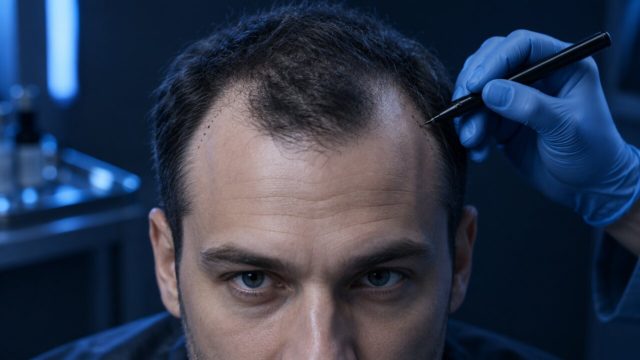
Many people who had a transplant years ago ask, do hair plugs look natural when they are still visible today? Older hair plug procedures often used relatively large round grafts containing multiple hairs. When these grafts were placed in rows, especially along the front hairline, they could create a noticeable pattern sometimes described as a doll-like or pluggy appearance. Modern revision treatment aims to reduce that pattern and create a softer transition between the forehead and the transplanted area.
In suitable candidates, revision may involve reducing or removing some larger grafts, placing finer grafts around them, or using new follicles to camouflage visible spaces and scars. The goal is not simply to add more hair. It is to improve the way the hairline looks at conversational distance, under bright light, and when the hair is wet or styled in different directions. A good plan considers the face, age, hair characteristics, skin tone, and the likely progression of hair loss.
Not every older plug transplant needs revision. Some patients have stable results with grafts that are not very visible, particularly if they wear their hair longer or have naturally thick, wavy hair. Others may feel bothered by a low, straight, uneven, or overly dense hairline. A consultation should establish what is causing the concern, what can realistically change, and whether there is enough donor hair available for a safe improvement.
02Why Older Plug Grafts Can Look Noticeable
The term hair plug usually refers to an earlier transplant method in which larger circular grafts were removed and inserted into the scalp. These grafts could contain many hairs at once. By contrast, modern follicular unit transplantation uses naturally occurring groups of one to four hairs, allowing a more gradual and refined hairline. The difference in graft size is one reason older work may remain visible even when the transplanted hairs continue to grow.
Hairline position and direction also matter. A natural frontal hairline is usually irregular in a controlled way, with single finer hairs at the leading edge and increasing density behind it. Older plug procedures may have placed thicker multi-hair grafts too close to the front, in straight rows, or at an angle that does not follow the patient’s natural hair direction. As surrounding native hair thins over time, these design features may become even more apparent.
Scarring can add another concern. Larger grafts may leave small raised areas, depressions, changes in skin colour, or visible spaces between grafts. The recipient scalp and the donor area should both be evaluated. Your doctor will examine the quality of the scalp tissue, the hair shaft thickness, the condition of any scars, and the amount of usable donor hair before suggesting a revision strategy.
03Do Hair Plugs Look Natural After Revision?
A well-planned revision can make older plug grafts much less noticeable, but the outcome depends on the starting point. When discussing whether do hair plugs look natural after revision, the most useful question is whether the hairline can look softer and more balanced than before. In many patients, this is possible through a combination of graft management and artistic placement of fine follicular units.
Camouflage is often one of the most effective options. Single-hair grafts can be placed in front of and between larger plugs to break up harsh lines. These grafts are positioned at shallow angles and with varied direction to imitate the way natural hair emerges from the scalp. Slight irregularity is planned carefully; it should look natural rather than random. Density is then built gradually behind the hairline instead of creating a dense wall of hair at the front.
Some plugs may be selectively removed or reduced when they are especially prominent. Removed grafts may sometimes be dissected into smaller follicular units and reused, although this is not always possible or appropriate. In other cases, the area is allowed to heal before additional placement is considered. Revision is highly individual, and a responsible team will explain if a less aggressive approach is safer for the scalp and donor supply.
04Revision Techniques That May Be Considered
Modern FUE may be used to extract selected older grafts or to collect new donor follicles for camouflage. Sapphire FUE uses sapphire blades to create recipient channels, which can support precise control of graft angle and direction. DHI may also be considered when the treatment plan requires controlled implantation in selected areas. The best technique is not the same for every patient; it depends on the existing grafts, skin condition, donor characteristics, and desired coverage.
For large, raised, or poorly positioned plugs, a surgeon may discuss graft excision, punch reduction, or partial removal. These techniques aim to reduce the visual impact of the old grafts, but they can involve scars and healing time. In some patients, trying to remove every old plug would create unnecessary risk or use too much donor capacity. A more conservative combination of reduction and camouflage may therefore offer a better balance.
Scar revision can also be part of planning. Depending on the scar’s appearance, follicles may be placed into or around a scar after the doctor confirms that the tissue has adequate blood supply. Scar tissue behaves differently from untreated scalp, so graft survival and density may be less predictable. This is one reason revision procedures require careful assessment rather than a standard package or a one-size-fits-all graft count.
05Planning a Hairline That Ages Well
A successful revision should suit the patient not only now, but also as they age. A very low or perfectly straight hairline can look unnatural later in life and may require a large number of grafts to maintain if hair loss continues behind it. Revision planning commonly favours a mature, age-appropriate hairline with soft corners and a gradual transition from finer to thicker hairs.
The doctor will consider facial proportions, forehead height, temple recession, curl pattern, hair calibre, colour contrast between hair and skin, and hairstyle preferences. Coarse, dark, straight hair can show more contrast against light skin, while curly or wavy hair may create more visual coverage with fewer grafts. These factors affect the visual result, so two patients with the same graft number may not have the same appearance.
When considering do hair plugs look natural in a specific person, it is also important to look beyond the front hairline. If native hair has continued to thin on the mid-scalp or crown, an isolated revised hairline may not look balanced. A long-term plan may include protecting available donor reserves and deciding which areas should receive priority now and which may be addressed later if needed.
06The Donor Area Sets Important Limits
Every revision plan is limited by the available donor area. Older procedures may have already used donor hair, and some may have left linear scars, circular extraction scars, or reduced density at the back and sides of the scalp. Before any further extraction, the donor area needs a detailed clinical evaluation. Taking too many additional grafts can make the donor zone appear thin, which may exchange one cosmetic concern for another.
Hair calibre and follicular unit composition are especially important in plug correction. Fine single-hair grafts are valuable for creating a natural leading edge, while multi-hair grafts may be useful farther behind the hairline for coverage. An experienced treatment plan allocates this limited resource thoughtfully. It may not be possible to achieve both a very low hairline and high density, particularly after significant previous surgery.
At Acibadem Hair Transplant Center in Istanbul, free online hair analysis is reviewed by doctors before a treatment discussion. Clear photographs can help the team make an initial assessment of the hairline, plug pattern, scalp visibility, and donor region. However, photographs cannot replace an in-person examination, and the final suitability of any revision approach is confirmed by the doctor.
07What the Revision Journey and Healing May Involve
Revision treatment is usually planned in stages rather than judged immediately after the procedure. In the early days, mild redness, swelling, scabbing, and temporary changes in appearance can occur. Transplanted hairs commonly shed before new growth begins, which is a normal part of the hair growth cycle. Your medical team will provide aftercare instructions based on the procedure performed and your scalp condition.
Visible improvement develops gradually. Early new growth may be fine and uneven, then mature over the following months. For hair transplant procedures, final evaluation is commonly made around month 12, although individual maturation can vary. Patients considering plug correction should be prepared for a gradual process and should avoid comparing their early appearance with the final intended result.
Acibadem Hair Transplant Center offers Sapphire FUE and DHI techniques, with needle-free anaesthesia available for eligible patients. Its all-inclusive arrangements can include VIP transfer, a 4-star hotel, a care kit, and 12 months of follow-up. The clinic is licensed by the Turkish Ministry of Health, and its documented trichoscopic graft survival rate at month 12 is 98% under written guarantee; this measurement does not mean that every individual will achieve the same cosmetic outcome.
08When to Seek a Revision Assessment
A revision assessment may be helpful if old plugs look round, raised, widely spaced, overly dark at the hairline, or disconnected from thinning hair behind them. It may also be appropriate if a previous transplant left an unnaturally low hairline, visible scars, or an uneven direction of growth. The purpose of the assessment is to identify the main cause of the concern before selecting a technique.
Bring as much information as possible about previous procedures, including when they were performed, any operative records, the number of sessions if known, and whether you have had scalp treatments or scar procedures. The doctor may ask about family hair loss patterns, medications, general health, and changes in hair thinning since the original transplant. This information supports safer planning and helps set realistic expectations.
A good consultation should include an honest discussion of limits. Some patients may benefit most from a modest softening of the existing hairline rather than complete removal of every plug. Others may need to stabilise ongoing hair loss before considering surgery. The most natural-looking result is usually achieved when safety, donor preservation, scalp health, and an age-appropriate design are given equal importance.
09Frequently Asked Questions
Do older hair plugs always produce a successful result?
No. Older plug procedures may grow hair, but growth alone does not always create a natural appearance. Results can be affected by graft size, placement, scarring, future native hair loss, and the individual healing response. A revision consultation can clarify whether improvement may be possible.
Did Elon Musk have an FUE hair transplant?
There is no confirmed medical information available that allows us to identify any specific person’s hair restoration procedure. Photos and public appearances cannot reliably determine whether someone had FUE, another technique, medication, styling changes, or no treatment. It is best to avoid drawing medical conclusions from images alone.
Can people usually tell that someone has had a hair transplant?
Not necessarily. A carefully designed modern transplant may be difficult to notice once it has healed and grown, especially when the hairline, direction, and density are appropriate. However, visible scars, unnatural graft patterns, ongoing hair loss, or very dense frontal placement can make a transplant more apparent.
What may happen 20 years after a hair transplant?
Transplanted donor follicles are generally expected to retain their characteristics, but the patient’s existing non-transplanted hair may continue to thin over time. This can change the overall balance and may lead some patients to consider medical management, styling changes, or an additional procedure if donor supply allows. Long-term planning is important from the first treatment.
Este artículo tiene fines exclusivamente informativos y no sustituye el consejo médico profesional.
Esta guía es de carácter informativo y no sustituye una consulta médica. Las decisiones de tratamiento se toman tras una valoración médica presencial u online.