En este artículo9
- Resumen
- How Robotic DHI May Fit Into a Treatment Plan
- What DHI Involves Beyond the Implanting Tool
- Potential Benefits and Practical Limits of Automation
- Comparing DHI, Sapphire FUE, and Technology-Assisted Extraction
- Safety, Anaesthesia, and Graft Protection During Treatment
- Recovery and Results: What Technology Cannot Accelerate
- Questions to Ask Before Choosing a Robotic Hair Transplant
- Frequently Asked Questions
Robotic dhi may describe a treatment plan where technology supports selected steps, most often donor-area assessment, graft selection, or extraction. However, robotic tools do not usually replace the clinician-led DHI implantation process, where graft angle, direction, depth, and placement require ongoing professional judgement.
- Robotic technology may assist with donor-area mapping and, in some settings, follicular unit extraction.
- DHI is defined by direct implantation with a specialised implanting instrument, not by the use of a robot.
- A qualified medical team must remain responsible for hairline design, graft handling, implantation planning, and patient safety.
- The right technique depends on hair loss pattern, donor supply, hair characteristics, scalp condition, and medical assessment.
- Hair transplant outcomes can improve appearance significantly, but no technique can guarantee complete or identical results for every patient.
01Can Robotic Tools Be Used in Dhi Hair Transplantation?
Robotic dhi can be discussed as a combination of technology-assisted hair restoration steps and Direct Hair Implantation, or DHI. In practical terms, a robotic device may potentially help with tasks such as analysing the donor area, identifying follicular units, or supporting graft extraction in selected clinical settings. It does not usually mean that a robot independently performs a complete DHI hair transplant from beginning to end. A doctor and trained clinical team remain responsible for assessing suitability, planning the procedure, protecting grafts, and making the detailed placement decisions that shape the final result.
DHI is a hair transplant implantation approach in which extracted follicular units are placed using a fine implanting tool. This can allow the team to control the angle, direction, and depth of each graft during placement. These details are especially important around the frontal hairline, temples, and crown, where natural growth patterns can vary. Although digital tools can support consistency and planning, the implantation stage requires close attention to the individual scalp and the changing conditions during surgery.
For international patients, it is useful to separate the words “robotic” and “DHI” rather than assuming they describe one standard treatment. Different clinics may use technology in different ways and may use broad marketing terms. A clear consultation should explain which steps are technology-assisted, which steps are manual, who performs each part of the procedure, and why that approach is being recommended for your specific hair and scalp characteristics.
02How Robotic DHI May Fit Into a Treatment Plan
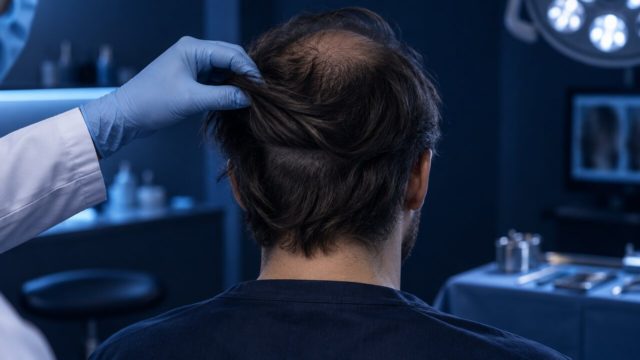
When robotic dhi tools are available, their most relevant role may be in the harvesting phase rather than in direct implantation. Follicular Unit Extraction, commonly called FUE, involves removing naturally occurring groups of hairs from the donor area, usually at the back and sides of the scalp. Technology may help identify hair angles or assist with repetitive extraction movements. Even then, the team needs to adjust the plan according to follicle direction, skin firmness, donor density, curl pattern, and the quality of the individual grafts.
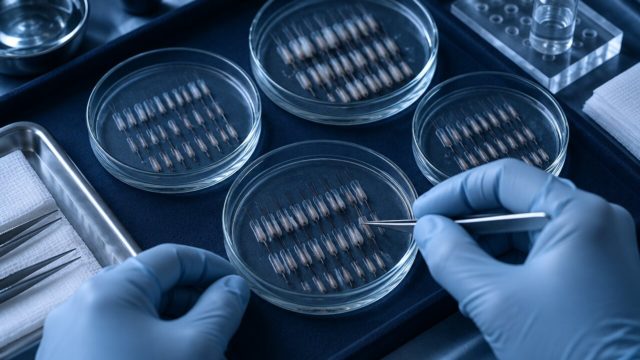
After extraction, grafts need careful sorting, hydration, and handling before placement. This is a sensitive stage because follicular units are living tissue. A device cannot remove the need for controlled clinical processes, suitable storage conditions, and experienced staff who can inspect graft quality. The medical team also needs to decide whether a graft is suitable for a particular zone, such as a soft hairline, an area requiring density, or an existing-hair region where placement needs added care.
During DHI placement, a clinician or trained implantation team uses an implanter to place prepared grafts into the recipient area. The desired density and distribution must be balanced with the scalp’s blood supply, available graft numbers, and the patient’s likely future hair loss pattern. Technology can provide useful visual information or support documentation, but it cannot fully standardise aesthetic judgement. A natural-looking plan should be individual, rather than based on a pre-set pattern or a machine-generated hairline alone.
03What DHI Involves Beyond the Implanting Tool
A DHI procedure begins well before any graft is placed. The first stage is an assessment of the hair loss pattern, scalp health, donor area, hair calibre, hair colour contrast, and personal expectations. Your doctor will also review relevant medical information and confirm whether surgery is appropriate. For some people, stabilising hair loss, treating an underlying scalp concern, or choosing a different technique may be more suitable than proceeding immediately with transplantation.
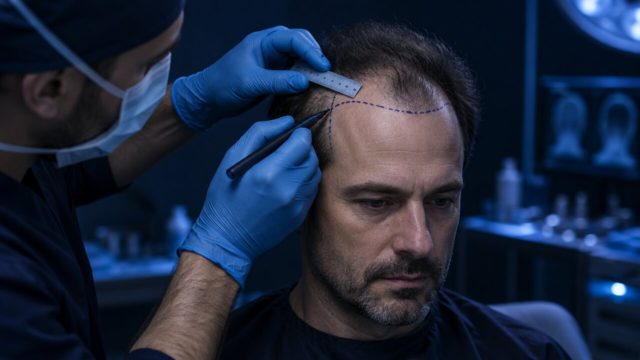
Hairline planning is one of the most important clinical and aesthetic decisions. A lower or denser hairline is not automatically better, particularly when donor hair is limited or future loss may continue. The team typically considers facial proportions, age, family pattern of hair loss, existing native hair, and the number of grafts that can be harvested safely. A conservative, carefully designed hairline may help preserve donor resources for future needs.
At Acibadem Hair Transplant Center, a dedicated hair restoration clinic in Istanbul licensed by the Turkish Ministry of Health, Sapphire FUE and DHI are available following medical assessment. A free online hair analysis can be reviewed by doctors before travel planning. This initial review cannot replace an in-person clinical examination, but it can help patients understand the likely next steps and prepare questions about technique, donor capacity, recovery, and long-term planning.
04Potential Benefits and Practical Limits of Automation
One potential advantage of technology-assisted extraction is improved visual support when identifying follicular units in the donor area. This may be helpful where hairs grow at different angles or where consistent documentation is needed. Digital imaging and magnification can also support treatment planning. However, usefulness depends on the equipment, the protocol, the operator’s training, and the patient’s individual anatomy. Technology should be viewed as an aid to a clinical process, not as proof that an outcome will be better.
Robotic systems also have practical limits. The scalp is not uniform, and hair follicles do not all sit at the same depth or angle. Curly hair, very fine hair, previous surgery, scarring, or variations in skin tension can make the extraction process more complex. If a system is not adjusted appropriately, there may be a risk of damage to follicles or unnecessary stress on the donor area. Experienced supervision is therefore important at every stage.
Another limitation is that an automated process cannot decide what is aesthetically appropriate for an individual person without professional input. It cannot reliably predict how future thinning will develop, how a patient will heal, or whether a certain density is realistic with the available donor supply. These decisions require a discussion of benefits, limitations, and possible future requirements. In most patients, a well-planned conservative approach is more valuable than simply using the newest available device.
05Comparing DHI, Sapphire FUE, and Technology-Assisted Extraction
DHI and Sapphire FUE are often presented as separate choices, but they describe different parts of a broader hair transplantation process. FUE refers mainly to how follicular units are extracted from the donor area. Sapphire FUE may use blades made from sapphire for creating recipient-site channels before graft placement. DHI refers to an implantation method using a specialised implanter, which can create the placement opening and insert the graft in a closely controlled sequence.
In some treatment plans, follicular units may be extracted with an FUE-based method and then implanted using DHI instruments. In others, channels may be created first and grafts may be placed afterwards. Neither route is automatically best for every patient. The appropriate technique depends on factors such as the size of the recipient area, the desired distribution, existing hair between thinning zones, scalp characteristics, and the number and type of available grafts.
Robotic dhi should therefore not be understood as a separate universal technique that replaces Sapphire FUE or conventional DHI. It is more accurate to ask where a particular tool is used within the procedure and what clinical reason supports its use. During a consultation, patients can ask whether the device assists extraction, imaging, planning, or another stage, and how the medical team protects graft quality and donor-area appearance throughout the process.
06Safety, Anaesthesia, and Graft Protection During Treatment
Hair transplantation is a medical procedure, so safety planning should come before any discussion of devices. A suitable clinic should assess medical history, medications, allergies, scalp condition, and any factors that may affect healing. The procedure should be carried out under proper clinical protocols, with clear information about what happens on the day, what sensations may occur, and when patients should contact the team after returning home.
Local anaesthesia is commonly used for hair transplant surgery. Some patients are concerned about the injections used at the beginning of treatment. Needle-free anaesthesia is available at Acibadem Hair Transplant Center for appropriate patients, although your doctor will confirm whether it is suitable for you. Comfort measures can support the overall experience, but they do not remove the need for careful medical monitoring and a properly planned procedure.
Graft survival is influenced by many linked factors, including extraction technique, handling, storage, placement, scalp condition, and post-procedure care. At Acibadem Hair Transplant Center, results are measured by trichoscopic graft survival at month 12, with a documented 98% rate under written guarantee. This measurement describes the clinic’s documented protocol and should not be interpreted as a guarantee of a particular cosmetic result, density level, or future hair-loss pattern for every individual patient.
07Recovery and Results: What Technology Cannot Accelerate
Whether a procedure includes robotic support or not, recovery follows the normal biological process of healing and hair growth. In the early days, patients are typically asked to protect the transplanted area, follow washing instructions, and avoid activities that could disturb the grafts. Temporary redness, swelling, scabbing, or shedding can occur. Your clinical team should provide written aftercare guidance and explain which symptoms are expected and which need medical review.
Transplanted hairs commonly shed before new growth becomes visible, which can be worrying if patients are not prepared. Growth timing differs between individuals, and the appearance changes gradually over several months. Final maturation is generally assessed much later than the first visible growth. No robot, implanting tool, or extraction method can make follicles grow instantly or guarantee that every area will look the same at every stage of recovery.
Long-term planning remains important because a transplant redistributes existing donor hair; it does not stop ongoing thinning in non-transplanted hair. Some patients may need a medical management discussion or may consider further restoration later, depending on their hair loss progression and donor availability. All-inclusive packages at Acibadem Hair Transplant Center include VIP transfer, a 4-star hotel, a care kit, and 12 months of follow-up, helping international patients remain connected to the care team during the important recovery period.
08Questions to Ask Before Choosing a Robotic Hair Transplant
Before selecting a clinic or technique, ask for a clear explanation of the proposed procedure in plain language. Useful questions include: Which steps are performed with technology? Who performs the extraction and implantation? Why is DHI, Sapphire FUE, or another approach recommended? How will the hairline be designed? How many grafts may be safely available? A responsible provider should answer openly and avoid presenting a device as a substitute for medical expertise.
It is also reasonable to ask how graft survival and results are assessed, what follow-up is included, and how concerns are managed after you return home. Before-and-after photographs can be informative when they are consistent and properly documented, but they cannot predict your outcome. Patients have different donor hair, hair loss patterns, scalp features, healing responses, and goals. The most useful plan is based on your own assessment rather than another person’s result.
Acibadem Hair Transplant Center has welcomed patients from 38 countries over 12 years. Patients considering a visit to Istanbul can start with a free online hair analysis reviewed by doctors, with WhatsApp replies typically available within around two hours. This is an opportunity to ask whether robotic assistance is relevant to your case, understand the available DHI and Sapphire FUE options, and receive guidance on the information needed for a safe, realistic consultation.
09Frequently Asked Questions
Is DHI a good option for a hair transplant?
DHI can be a suitable hair transplant method for selected patients because it allows controlled placement of follicular units with an implanting instrument. Whether it is the best option depends on your donor area, hair loss pattern, scalp condition, desired coverage, and treatment goals. Your doctor will confirm which approach is clinically appropriate after assessment.
How much does a robotic hair transplant cost?
The cost of a robotic hair transplant can vary widely according to the country, clinic standards, graft requirements, the technology used, and what is included in the treatment plan. It is important to ask whether the quoted service includes medical assessment, surgery, accommodation, transfers, aftercare, and follow-up. A clinic should provide a clear personalised quotation after reviewing your case rather than offering a one-size-fits-all price.
What did Elon Musk use to regrow his hair?
There is no confirmed public medical record explaining which treatment, if any, Elon Musk used for changes in his hair appearance. It is not medically reliable to identify a procedure from photographs, as styling, lighting, medication, hair fibres, and transplantation can all affect appearance. A personal consultation is the appropriate way to discuss evidence-based options for your own hair loss.
Do hair transplants work 100% of the time?
No hair transplant technique can promise a 100% result for every patient. Outcomes depend on donor quality, graft handling, surgical planning, healing, existing hair loss, aftercare, and other individual factors. A careful assessment and realistic treatment plan can help improve the likelihood of a satisfactory result, but complete certainty is not possible.
Este artículo tiene fines exclusivamente informativos y no sustituye el consejo médico profesional.
Esta guía es de carácter informativo y no sustituye una consulta médica. Las decisiones de tratamiento se toman tras una valoración médica presencial u online.