En este artículo8
- Can women take finasteride for hair loss before a hair transplant?
- Why hair-loss diagnosis should come before treatment or surgery
- When clinicians may consider finasteride for women
- Pregnancy, contraception and important finasteride safety issues
- Timing finasteride around hair transplant surgery
- How female hair transplant planning differs from a simple graft count
- Preparing for a doctor-reviewed hair restoration consultation
- Frequently Asked Questions
Some women may be prescribed finasteride for hair loss before a hair transplant, but it is not suitable for everyone. In particular, it is generally avoided during pregnancy and in women who may become pregnant; your doctor must assess the cause of hair loss, medical history and surgical plan before recommending it. If you are asking, “can women take finasteride for hair loss,” the answer depends on individual clinical factors rather than the transplant procedure alone.
- Finasteride may be considered for selected women with androgen-related hair loss, often as an off-label prescription depending on local regulations.
- Women who are pregnant, trying to conceive or could become pregnant need particularly careful medical guidance because finasteride may harm a developing male fetus.
- A hair transplant consultation should confirm the diagnosis, donor-area quality and whether medical treatment may help protect existing hair.
- Finasteride is a prescription medicine and should not be started, stopped or shared without a clinician’s advice.
- Hair-transplant planning usually focuses on stabilising hair loss and setting realistic long-term goals, rather than relying on one medicine alone.
01Can women take finasteride for hair loss before a hair transplant?
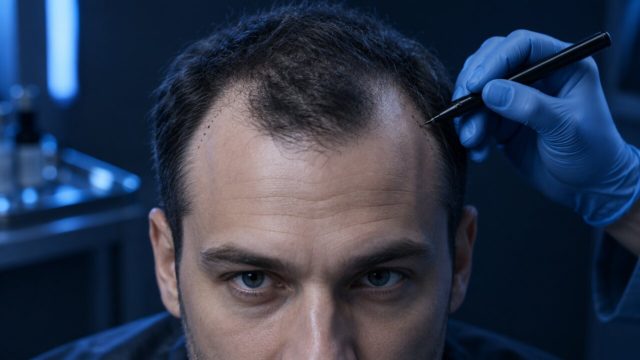
Can women take finasteride for hair loss before a hair transplant? In selected cases, a doctor may consider it, especially when the pattern of thinning appears to be influenced by androgens. However, finasteride is not a routine pre-transplant treatment for every woman. The main decision is based on why hair is thinning, whether the condition is active, the patient’s age and reproductive status, other health conditions, and the potential benefits and risks. A transplant surgeon and the doctor managing hair loss should make this assessment before surgery is scheduled.
Finasteride works by reducing the conversion of testosterone into dihydrotestosterone, often called DHT. DHT can contribute to miniaturisation of genetically sensitive hair follicles in androgenetic alopecia. In some patients, reducing this hormonal effect may help slow further thinning or support the preservation of existing, non-transplanted hairs. It does not create new follicles in an area where follicles have been permanently lost. Its role, when prescribed, is usually part of a longer-term hair management plan rather than a short preparation step for surgery.
For women considering a transplant, medical treatment can be important because surgery redistributes follicles from the donor area; it does not stop future thinning in untreated areas. If progressive hair loss continues after surgery, the contrast between transplanted and native hair may become more noticeable over time. That said, some women are not appropriate candidates for finasteride and may be assessed for different approaches. A proper diagnosis and an individual surgical plan are more important than assuming that every patient needs the same medication.
02Why hair-loss diagnosis should come before treatment or surgery
Female hair loss has several possible causes, and these causes can look similar without a careful assessment. Female pattern hair loss may present as widening along the central part, diffuse reduction in density over the top of the scalp, or thinning around the frontal area while the hairline is relatively preserved. Other conditions, including telogen effluvium, traction-related loss, autoimmune alopecia, scalp inflammation, nutritional issues and thyroid-related changes, may require a different medical pathway. Finasteride is not a universal treatment for all forms of hair shedding.
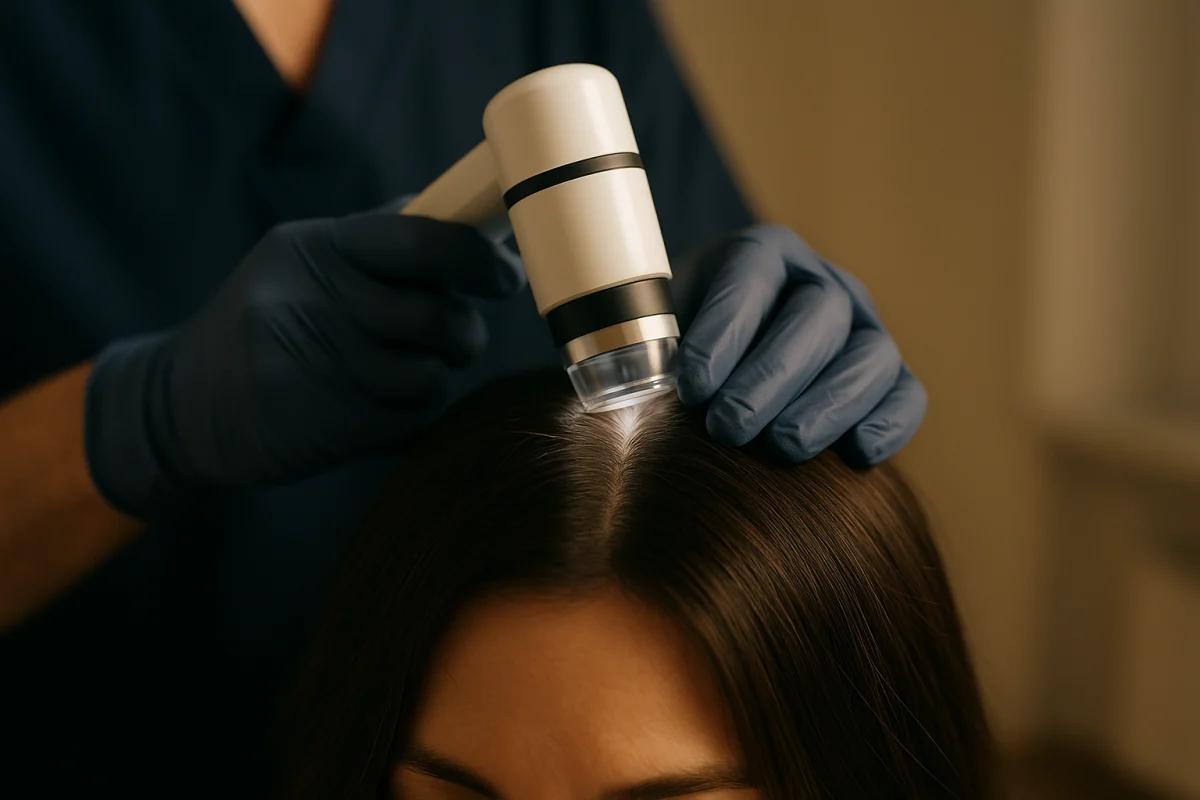
Before discussing a transplant, a clinician will typically ask about the timing of shedding, family history, menstrual and reproductive history where relevant, recent illness or stress, medication use, diet, styling practices and scalp symptoms. Examination may include close assessment of hair calibre, follicle distribution and the donor area. Trichoscopy can help identify signs of follicle miniaturisation and assess variation in hair shaft thickness. Depending on the history, a doctor may also decide that further medical investigation is appropriate before surgical planning continues.
A transplant is generally most useful when hair loss is sufficiently understood and the donor area contains stable follicles that can be safely harvested. Diffuse thinning across both the recipient and donor zones can make planning more complex. In these circumstances, clinicians may first focus on identifying the cause, addressing reversible contributors where possible, and monitoring the pattern. This can help avoid placing grafts into a situation where future loss may affect the cosmetic balance of the result.
03When clinicians may consider finasteride for women
Clinicians may consider finasteride for certain women with confirmed androgenetic alopecia when other suitable measures have been discussed and when the potential benefit appears to outweigh the risk. Its use for women may be off-label, meaning that the doctor is prescribing it based on clinical judgement rather than a specific local product authorisation for female hair loss. Rules and approved indications differ between countries. Your prescribing doctor will explain why a particular treatment is or is not appropriate in your situation.
Evidence and clinical response may differ between patient groups. Factors such as menopausal status, the degree and distribution of miniaturisation, hormonal history, concurrent conditions and previous treatment response can influence the discussion. This is one reason a medication that may be considered for one woman cannot automatically be assumed to be suitable for another. When patients ask can women take finasteride for hair loss, it is helpful to understand that the question is not only about sex; it is also about diagnosis, reproductive safety and ongoing medical supervision.
Finasteride is not expected to provide an immediate visible change. Hair growth follows a slow biological cycle, and any medical response is normally evaluated over months rather than days or weeks. A doctor may use clinical photographs, scalp examination or trichoscopic assessment to follow changes in density and miniaturisation. If treatment is prescribed before a transplant, the aim may be to support stability of existing hair while the wider plan is reviewed. It should not be viewed as a replacement for an appropriate donor assessment.
04Pregnancy, contraception and important finasteride safety issues
Pregnancy safety is the most important issue in discussions of finasteride for women. Finasteride may cause abnormalities in the external genital development of a male fetus. For this reason, it is generally contraindicated during pregnancy. Women who are pregnant, planning pregnancy or who may become pregnant should tell their doctor before any prescription is considered. The doctor will discuss whether the medicine should be avoided and what precautions are required based on the patient’s circumstances and local prescribing guidance.
Patients should also disclose breastfeeding status, liver conditions, hormone-related symptoms, all current medicines, supplements and known allergies. A clinician may discuss possible adverse effects, which can vary from person to person. Reported concerns can include headache, breast tenderness, changes in mood, changes in sexual function and skin reactions, among others. Not everyone experiences side effects, but informed consent matters. New, severe or worrying symptoms should be discussed promptly with the prescribing clinician rather than ignored or managed by changing the dose independently.
Finasteride tablets should only be handled and taken as directed by a healthcare professional. Women who are pregnant or may be pregnant are generally advised not to handle crushed or broken tablets because of possible absorption through the skin. Intact coated tablets are designed to limit contact, but patients should follow the advice provided with the medicine and by their clinician. A transplant clinic can coordinate with the patient’s medical team, but it should not replace the prescribing doctor’s safety assessment.
05Timing finasteride around hair transplant surgery
There is no one universal rule that every woman must start, continue or stop finasteride at the same point before a hair transplant. The timing depends on the reason it was prescribed, the patient’s safety profile and the surgical team’s assessment. In some cases, doctors may prefer to observe whether hair loss is stabilising before finalising graft placement. In others, surgery may be considered without finasteride if it is not clinically suitable or if the pattern of loss is already stable.
A patient should never stop a prescribed medicine simply because surgery is approaching without asking the prescribing doctor and surgical team. Any change may affect the condition being treated, and the right approach can vary according to the medication plan and overall health. During a pre-operative review, patients should provide a complete and current list of medicines and supplements. This allows the team to identify items that may need discussion in relation to anaesthesia, bleeding risk, healing or post-operative care.
For women researching can women take finasteride for hair loss in connection with a transplant, it is useful to separate medication decisions from procedure marketing. A good plan should explain what the medicine may and may not do, why it is being considered, what monitoring is appropriate and how it fits with future hair-loss management. A treatment can be medically reasonable without being necessary for every transplant candidate. Your doctor will confirm the safest timeline for your own circumstances.
06How female hair transplant planning differs from a simple graft count
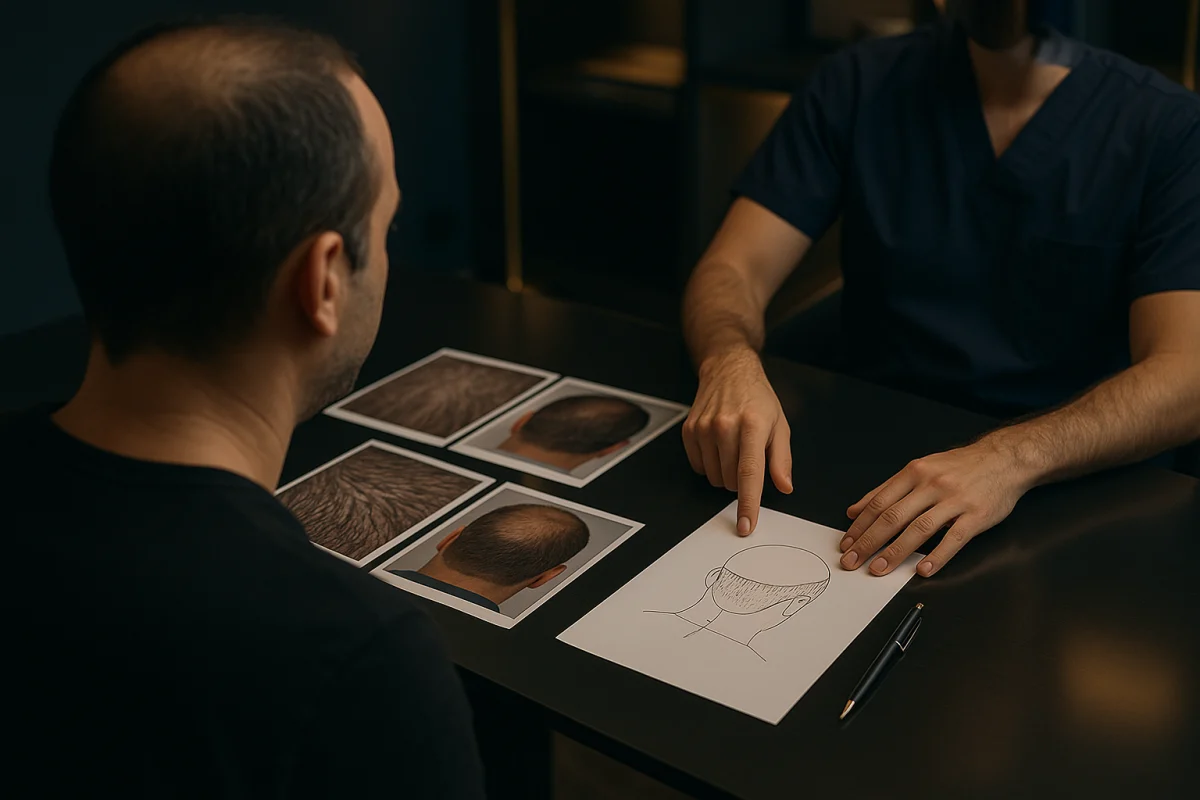
Hair transplant planning for women often requires particular attention to diffuse thinning and to the protection of existing hairs. The surgeon assesses the density, calibre and stability of the donor zone, as well as the pattern in the recipient area. A high graft number alone does not define a good plan. The goal is normally to use donor resources carefully, create natural-looking coverage where it is most needed and consider how the hair may change in the future.
At Acibadem Hair Transplant Center, a dedicated hair restoration clinic in Istanbul licensed by the Turkish Ministry of Health, doctors review hair-loss patterns before recommending a procedure. Sapphire FUE and DHI techniques may be discussed where clinically suitable, but no technique removes the need for accurate diagnosis and realistic planning. The most appropriate method depends on the scalp, the donor area, hair characteristics and the areas that need coverage. Your medical team can explain the practical differences and expected recovery steps.
Hair transplantation can improve visible density in selected areas, but it cannot restore the original density of every lost follicle. Native hair may continue to change with age or with the underlying condition. For this reason, long-term planning may include medical follow-up, gentle hair-care guidance and review of any clinically appropriate treatment prescribed by the patient’s own doctor. Setting realistic expectations before surgery is an essential part of informed consent, particularly when loss is diffuse or still progressing.
07Preparing for a doctor-reviewed hair restoration consultation
A useful consultation begins with clear information. Patients can prepare by noting when thinning started, whether it was sudden or gradual, which areas changed first, and whether close relatives have experienced similar loss. It is also helpful to list previous treatments, current medicines, allergies, medical conditions and any past scalp procedures. Good-quality photographs taken in even light can support an initial remote review, although they do not replace a clinical examination when one is needed.
International patients may start with a free online hair analysis reviewed by doctors at Acibadem Hair Transplant Center. Replies on WhatsApp are typically provided within around two hours. This early review can help identify questions for a fuller consultation, including whether the distribution of thinning appears potentially suitable for transplantation and whether further medical evaluation should be considered first. A remote assessment cannot diagnose every scalp condition, and the final plan is always subject to medical evaluation.
For patients who are found to be appropriate candidates, all-inclusive packages can include VIP transfer, a 4-star hotel, a care kit and 12 months of follow-up. These practical services are designed to support the treatment journey, while medical suitability remains the first priority. Ask direct questions about diagnosis, donor-area assessment, medication safety, expected timeline and follow-up. A clear answer to each point helps you make an informed choice about whether to proceed, postpone surgery or seek further medical assessment.
08Frequently Asked Questions
Why might a woman be prescribed finasteride for hair loss?
A doctor may consider finasteride for selected women with androgen-related hair thinning, particularly when the clinical assessment suggests that DHT-related follicle miniaturisation is contributing to the problem. The medicine may help support existing hair in some patients, but response varies and it is not suitable for every type of alopecia. Pregnancy potential and other medical factors must be assessed carefully.
Is alopecia genetic?
Some forms of alopecia have a genetic component. Androgenetic alopecia, often called female pattern hair loss in women, can run in families, but genes are not the only influence on how and when thinning appears. Other forms of hair loss may be caused by autoimmune conditions, physical traction, illness, hormonal changes or other factors, so a diagnosis is important.
Can finasteride cause a rash?
A rash is a possible skin reaction to finasteride, although it is not experienced by every patient. Any new rash should be reported to the prescribing clinician, especially if it is widespread, persistent or accompanied by swelling, breathing difficulty, blistering or other signs of a serious allergic reaction. Urgent medical attention is needed for severe allergic symptoms.
Do women need a prescription for finasteride?
Yes. Finasteride is a prescription medicine and should only be used under the supervision of a qualified clinician. The prescriber needs to assess the cause of hair loss, possible contraindications, pregnancy-related safety and potential interactions before deciding whether it is appropriate.
Este artículo tiene fines exclusivamente informativos y no sustituye el consejo médico profesional.
Esta guía es de carácter informativo y no sustituye una consulta médica. Las decisiones de tratamiento se toman tras una valoración médica presencial u online.