En este artículo12
- When a bad hairline transplant needs correction
- Why transplanted hairlines can look unnatural
- A realistic assessment before any repair procedure
- Correction options for a bad hairline transplant
- Designing a mature, natural-looking frontal hairline
- What happens during recovery and when results appear
- How to protect the corrected result over time
- A practical aftercare schedule after corrective hairline treatment
- A month-by-month timeline for corrective hairline results
- When a second procedure may not be the safest first step
- Travel planning for international hairline repair patients in Istanbul
- Frequently Asked Questions
A bad hairline transplant can often be improved with a carefully planned corrective procedure, graft redistribution, removal in selected cases, or a combination of approaches. The right option depends on the existing grafts, scalp condition, donor supply, hair loss pattern and your goals, so a doctor should assess these factors first.
- An unnatural hairline may result from an overly low position, a straight design, poor graft placement or an unsuitable graft type at the front.
- Correction usually begins with a detailed assessment of the hairline, donor area, scalp health and future hair loss risk.
- A natural-looking repair generally uses an age-appropriate, irregular hairline and fine single-hair grafts at the leading edge.
- Some patients may need graft removal, camouflage, redistribution or more than one stage to reach a balanced result.
- Long-term planning matters because ongoing native hair loss can change how a corrected hairline looks over time.
01When a bad hairline transplant needs correction
A bad hairline transplant does not always mean that the procedure has failed completely, but it can mean that the front of the scalp looks too noticeable, too dense in the wrong area, too low, too straight or inconsistent with the person’s age and facial proportions. Because the hairline frames the face, even a small design issue may feel significant. In many cases, correction is possible, but it requires a conservative plan based on what has already been transplanted and what donor hair remains available.
The first priority is to identify the exact concern rather than assuming that more grafts are the answer. For example, an overly straight line may need softening with carefully placed single-hair grafts, while an unnaturally low hairline may require selective graft removal or camouflage above the existing line. A sparse front may need added density, but only if the donor area can support it and the design remains appropriate for future hair loss.
It is also important to allow adequate time for the original result to mature before judging the final appearance. Transplanted hair commonly sheds after surgery before new growth begins, and visible development takes place gradually over several months. Your doctor will confirm when the result can be assessed properly. If there is scarring, inflammation, unusual redness or discomfort, clinical review should take place sooner.
02Why transplanted hairlines can look unnatural
A natural hairline is rarely perfectly even. It has subtle variation in height, direction, density and the position of individual hairs. It also includes a softer transition from the forehead to denser hair behind it. When a transplanted hairline is drawn as a hard, straight border, it may look artificial, especially in bright light, when the hair is wet or when the hairstyle is short.
Graft selection has an important role. The finest single-hair follicular units are typically placed at the front edge because they can create a gradual, feathered appearance. Multi-hair grafts usually belong farther behind the hairline, where they can build density without producing a coarse leading border. If thicker grafts are placed too far forward, the hairline may appear plug-like or abrupt even when the overall graft survival is good.
Hair direction and angle are equally relevant. Frontal hairs should emerge at a low, natural angle and follow a pattern that works with the patient’s hair characteristics and styling habits. Hair growing sharply upward, crossing in different directions or sitting at an unnatural angle can draw attention to the transplant. Curly, very straight, light or dark hair may each create different visual challenges, which is why the plan should be tailored rather than copied from another person’s hairline.
03A realistic assessment before any repair procedure
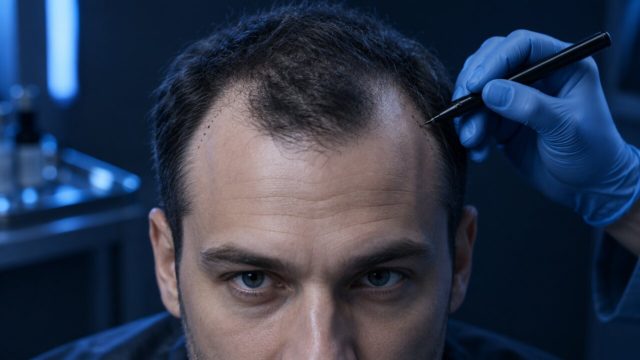
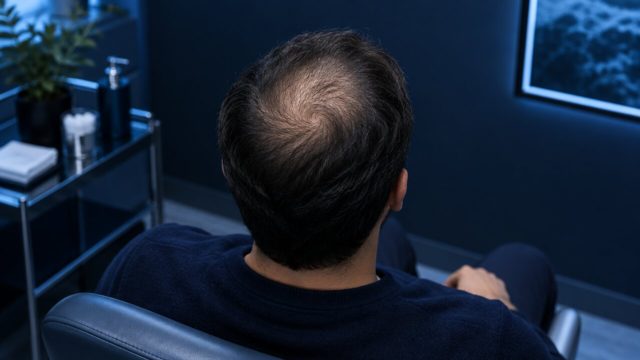
Before correcting a bad hairline transplant, a doctor will usually examine the scalp, the implanted area, the donor zone and the ongoing pattern of hair thinning. This helps determine whether the concern is mainly design, density, graft direction, scarring or continuing hair loss behind the transplanted line. A close examination may also show whether the existing grafts are stable and whether there are areas where additional placement can blend the result.
Donor management is central to safe planning. Hair in the donor area is limited, and it may be needed later if hair loss progresses. For this reason, a repair should not simply aim for the lowest or densest possible hairline. A well-planned correction typically preserves donor resources and creates a result that can continue to look balanced as the patient ages. Your doctor may recommend a more conservative design than the patient originally expected.
Photographs taken from the front, temples, above and donor area can support a remote initial discussion, but they do not replace a clinical examination. At Acibadem Hair Transplant Center, a free online hair analysis is reviewed by doctors, and patients generally receive a WhatsApp response within around two hours. This preliminary review can help clarify whether an in-person assessment and corrective planning may be appropriate.
04Correction options for a bad hairline transplant
A bad hairline transplant may be corrected by adding carefully selected grafts around and just behind the existing hairline. This option is often used when the line is too straight, the front lacks softness or there is insufficient density in specific areas. Fine single-hair grafts can help break up a harsh edge, while grafts placed behind them can improve the transition into thicker native or transplanted hair.
In some situations, selective removal of poorly positioned grafts may be considered before, during or separately from a new transplant session. This can be relevant when the hairline sits unusually low or when coarse grafts are highly visible at the front. The suitability of removal depends on the number, location and characteristics of the grafts, as well as the condition of the scalp. It should be discussed carefully because every intervention may involve healing time and possible scarring considerations.
Another approach is redistribution or camouflage. A surgeon may reduce visual contrast by adding a softer transition zone, adjusting density around the temples or designing a mature-looking frontal contour above an existing line. This can be a useful option when complete removal is not necessary or not advisable. In more complex cases, correction may be staged so that the scalp has time to heal and each step can be reviewed before further grafts are used.
05Designing a mature, natural-looking frontal hairline
The most convincing corrective designs are usually age-appropriate rather than excessively low. A teenage-style hairline may not remain natural-looking as a person moves through adulthood, particularly if thinning continues behind it. A slightly higher and more mature contour can protect donor supply and create a better relationship between the forehead, temples and central frontal area. The aim is generally harmony, not a perfectly symmetrical line.
During planning, the doctor may consider facial proportions, ethnicity, hair calibre, curl pattern, skin-to-hair colour contrast, hairstyle and the likely direction of future loss. Temple points and temporal recessions need particular care because they influence whether a hairline appears naturally framed or artificially drawn. Small, controlled irregularities are often included to avoid a ruler-straight look, while maintaining an overall shape that remains visually balanced.
Correcting a bad hairline transplant is therefore more than filling an empty area. It is a reconstructive design task that combines surgical technique with long-term judgement. Sapphire FUE and DHI are available at Acibadem Hair Transplant Center, and the technique selected should depend on the treatment plan rather than on a one-size-fits-all preference. Your doctor will explain which approach may be suitable after reviewing the scalp, available donor hair and repair goals.
06What happens during recovery and when results appear
Recovery after a corrective hair transplant is broadly similar to recovery after an initial procedure, although individual instructions may differ depending on graft removal, scar treatment or the extent of the repair. Mild swelling, redness, scabbing and temporary sensitivity can occur in the treated areas. Patients are usually advised not to pick at scabs and to follow the washing, sleeping, activity and sun-protection guidance given by their medical team.
Many transplanted hairs enter a temporary shedding phase in the weeks after treatment. This can be worrying, but it is commonly part of the normal hair-growth cycle after transplantation. New growth generally develops gradually rather than all at once, and the final visual balance of a hairline needs time to emerge. Your doctor can explain the expected follow-up schedule and assess whether healing and growth are progressing as anticipated.
For international patients, practical aftercare can make the recovery period easier to manage. Acibadem Hair Transplant Center provides all-inclusive packages that include VIP transfer, a 4-star hotel, a care kit and 12 months of follow-up. The center is licensed by the Turkish Ministry of Health. At month 12, results are measured by trichoscopic graft survival, with a documented 98% rate under a written guarantee; individual cosmetic results can still vary according to clinical and personal factors.
07How to protect the corrected result over time
A corrected hairline should be planned as part of a longer hair-loss strategy, not as an isolated cosmetic change. Native hair behind a transplant can continue to thin in people with pattern hair loss, potentially leaving a visible gap if this risk was not considered. A doctor may discuss monitoring, medical options where clinically appropriate and future planning, but treatment choices should always be based on an individual medical evaluation.
It is helpful to keep realistic expectations about density and perfection. Even an expertly planned transplant cannot recreate the exact distribution, angle and density of untouched adolescent hair. The goal is typically to make the hairline look softer, more proportionate and less detectable in everyday situations. Good communication about what concerns the patient most, such as an overly low line, visible plugs, temple shape or sparse density, supports a more precise plan.
Choose a clinic that is prepared to review the previous procedure carefully rather than offering an instant promise. Bring details of prior surgery if available, including the date, number of grafts, technique and any complications. Clear photographs over time can also help show how the result has evolved. A thoughtful assessment may lead to treatment, a staged plan or a recommendation to wait, depending on the health of the scalp and the stability of the hair-loss pattern.
08A practical aftercare schedule after corrective hairline treatment
Your own instructions take priority, especially if your correction included graft removal, scar work or a staged procedure. In the first 24 to 48 hours, the main aim is usually to protect the implanted area from rubbing, pressure and accidental contact. Patients are commonly asked to sleep with the head elevated, avoid touching the grafts except as instructed, and use the prescribed spray or care products according to their medical team’s schedule.
During the first 7 to 10 days, small scabs may form around newly placed grafts. These should not be scratched, picked or removed with a comb. The clinic will explain when and how to begin gentle washing, including water temperature, shampoo use and drying. Strenuous exercise, swimming, saunas and heavy sweating are commonly restricted during early healing because they may irritate the scalp or increase the risk of disturbing healing tissue.
Redness can remain visible for longer in some patients, particularly after repair work in an already treated area. Avoiding direct sun exposure and following advice about hats is important; tight or rough headwear should not contact fresh grafts. Contact your medical team promptly if you develop increasing pain, spreading redness, discharge, fever, marked swelling or any concern about wound healing.
09A month-by-month timeline for corrective hairline results
The appearance of a repaired hairline changes gradually. In the first two weeks, the focus is healing rather than cosmetic appearance. Scabs typically clear as directed by the medical team, while temporary redness or sensitivity may remain. If grafts were removed as part of the correction, the treated sites may also need time to settle before the final contour can be judged.
From approximately weeks 2 to 8, many newly transplanted hairs may shed. This phase is often expected and does not necessarily mean that the follicles have failed. The scalp can temporarily look similar to, or thinner than, its early post-treatment appearance. Patients should avoid judging density at this stage and should continue with planned follow-up rather than making changes based only on short-term appearance.
Early new growth often begins over the following months, but it may initially be fine, uneven or lighter in density. Between months 6 and 9, the hairline commonly starts to look more established as hairs gain length and calibre. A fuller assessment is usually made around month 12, when the visual blend, direction and density can be reviewed more reliably. At Acibadem Hair Transplant Center, graft survival is measured trichoscopically at month 12 under the written guarantee. Individual growth patterns and cosmetic appearance can vary.
10When a second procedure may not be the safest first step
Not every concern after a previous hair transplant should be treated immediately with more grafts. A doctor may advise waiting when the original procedure is still maturing, when ongoing hair loss has not stabilised, or when there is active scalp irritation. Adding density too early can make it difficult to understand the true issue and may use donor hair that could be needed for a more carefully planned correction later.
Patients with very limited donor supply may need a particularly conservative strategy. This can apply when many grafts were used in a previous procedure, when donor density is low, or when future thinning may require coverage beyond the hairline. In these situations, a doctor may discuss whether selective softening, limited camouflage or observation is more appropriate than attempting a major redesign.
Scarring, persistent bumps, inflammation or an unusual change in scalp skin should be assessed before another cosmetic procedure is considered. These findings may affect the timing, technique and predictability of further treatment. A responsible repair plan may therefore include a period of monitoring or medical evaluation before surgical correction. This is not a refusal of treatment; it is part of protecting scalp health and preserving options for the future.
11Travel planning for international hairline repair patients in Istanbul
Corrective hairline treatment requires practical planning because the scalp should be protected in the first days after the procedure. International patients should allow enough time in Istanbul for the planned treatment, post-procedure check and the medical team’s travel guidance. It is helpful to arrange a return journey that avoids unnecessary rushing, heavy luggage handling and situations where the fresh grafts could be bumped or rubbed.
Bring loose, front-opening clothing for the treatment day and early recovery period. This can reduce the need to pull garments over the scalp. Before travelling, patients should also share relevant previous procedure details, current medicines, allergies and any history of scalp reactions with the clinic. Copies of prior surgery records and clear before-and-after photographs can be useful when available, although they may not always be obtainable.
Acibadem Hair Transplant Center is a dedicated hair restoration clinic in Istanbul, licensed by the Turkish Ministry of Health. Its all-inclusive packages include VIP transfer, a 4-star hotel, a care kit and 12 months of follow-up. Before departure, patients should make sure they understand the washing plan, follow-up contact route and signs that require medical advice. This preparation can make it easier to continue aftercare safely once home.
12Frequently Asked Questions
Can a hair transplant correct a bad hairline?
In many patients, a hair transplant can improve an unnatural hairline by softening the edge, adding density in selected areas or redesigning the frontal transition. Some cases may also require selective graft removal or camouflage rather than additional grafts alone. A doctor needs to assess donor availability, scalp condition and future hair loss before recommending an option.
How can I regrow hair at the frontal hairline?
The best approach depends on why the frontal hairline has thinned, such as pattern hair loss, traction, inflammation, a previous transplant or another medical cause. A clinical assessment can identify whether medical management, a hair transplant, or another approach may be appropriate. If the area has scarring or sudden hair loss, seek medical evaluation before considering a cosmetic procedure.
Is a hair transplant painful?
Hair transplant procedures are typically performed with local anaesthesia, so patients should not feel sharp pain during graft extraction or placement. You may notice pressure, movement or mild discomfort, and tenderness can occur during the early recovery period. Needle-free anaesthesia is available at Acibadem Hair Transplant Center for eligible patients, and your medical team will explain pain-management options.
Is a receding hairline normal at age 20?
A receding hairline can occur at age 20 and may reflect early androgenetic hair loss, a naturally maturing hairline or another cause. It is not possible to diagnose the reason from age alone. A doctor can assess the pattern, family history, scalp findings and rate of change before advising whether monitoring or treatment is appropriate.
Este artículo tiene fines exclusivamente informativos y no sustituye el consejo médico profesional.
Esta guía es de carácter informativo y no sustituye una consulta médica. Las decisiones de tratamiento se toman tras una valoración médica presencial u online.