En este artículo9
- Why travel-based aftercare matters after FUE
- Planning a FUE Transplant Turkey Journey: A Practical Timeline
- The journey home: protecting your scalp in transit
- The first 14 days at home: the graft-settling period
- Remote follow-up after you return from Istanbul
- Normal recovery changes versus signs that need review
- Returning to work, exercise, weather, and everyday appearance
- Long-term expectations and documenting your result
- Frequently Asked Questions
After a fue transplant turkey procedure, aftercare starts before you fly home and continues for many months. Most patients can travel after the clinic confirms they are medically fit, but protecting the recipient area, following washing instructions, and keeping in contact with the care team are essential for a smooth recovery.
- Travel home should be planned around your clinic’s discharge advice, your flight comfort, and protection of the newly placed grafts.
- The first 10 to 14 days are especially important because grafts need time to settle securely in the recipient area.
- Remote follow-up can support recovery after you return home, but urgent symptoms should also be assessed locally when needed.
- Temporary shedding after FUE is common and does not usually indicate that the transplant has failed.
- A written treatment plan, clear medication instructions, and realistic expectations make travel-based aftercare easier to manage.
01Why travel-based aftercare matters after FUE
A fue transplant turkey journey does not end when you leave the clinic. FUE, or follicular unit extraction, involves removing individual follicular units from the donor area and placing them into carefully prepared recipient sites. The newly transplanted grafts are delicate during the early healing phase, especially in the first days after surgery. For international patients, the practical challenge is to protect these areas while travelling, settling back into a different routine, and communicating with a care team from another country.
Travel-based aftercare is a structured plan for the period after treatment when the patient is no longer in Istanbul. It usually includes discharge guidance, medication information where clinically appropriate, instructions for sleeping and washing, advice on physical activity, and scheduled remote check-ins. The purpose is not to make recovery complicated. It is to help patients understand what is expected, what should be avoided, and when they should ask for medical support.
In most patients, early recovery can be managed safely at home when instructions are followed carefully. However, every person’s medical history, scalp condition, graft number, travel schedule, and healing pattern are different. Your doctor will confirm when you can travel, how to care for your scalp, and whether any extra precautions are appropriate for you. A reliable clinic should provide clear contact details and a simple way to share questions or progress photographs after you return.
02Planning a FUE Transplant Turkey Journey: A Practical Timeline
Good aftercare begins before your arrival. When arranging a FUE Transplant Turkey journey, allow enough time for your consultation, procedure, first review, and the journey home without unnecessary pressure. International patients should avoid booking a very tight schedule that leaves no room for a delayed flight, a longer-than-expected clinic visit, or a period of rest. Your treatment coordinator and doctor can explain the expected timing for your individual treatment plan.
Before travelling, prepare loose, front-opening clothing such as a button-up shirt or zip-up top. Pulling a tight garment over the head can create avoidable contact with the recipient area. It is also useful to pack a clean travel pillow, any medicines you normally take, copies of relevant medical information, and a way to keep your phone charged. If you have allergies, chronic conditions, or use blood-thinning medication, you should disclose this during the medical assessment rather than making changes yourself.
At Acibadem Hair Transplant Center, international patients can request a free online hair analysis reviewed by doctors before they travel. This helps the team discuss suitability, likely planning considerations, and the information needed for a safer visit. The dedicated hair restoration clinic in Istanbul is licensed by the Turkish Ministry of Health, and its team supports patients from 38 countries over 12 years. A pre-travel discussion cannot replace an in-person medical assessment, but it can make your travel and recovery plan more organised.
03The journey home: protecting your scalp in transit
Your doctor will confirm whether you are ready to fly or take another form of transport. In many cases, patients can travel after their post-procedure assessment, but the exact timing depends on the procedure and clinical review. The main aim during the journey is to avoid rubbing, pressure, impact, overheating, and accidental touching of the recipient area. Follow the position recommended by your clinical team, particularly if you have been advised to keep your head elevated.
Air travel itself does not normally dislodge grafts, but the airport and cabin environment can present practical risks. Busy queues, overhead luggage compartments, narrow seats, and fatigue can increase the chance of an accidental knock. Move slowly, ask for help with bags if possible, and keep hand luggage light. Do not rest your head against a surface if this could compress the implanted area. A neck pillow may be useful for some patients, but only use it as directed by your care team.
Cabin air can feel dry, and travel days can be tiring. Drink water regularly unless your doctor has given a reason to limit fluids, eat sensible meals, and avoid alcohol if this is part of your post-procedure guidance. Smoking and nicotine exposure may affect wound healing and blood flow, so patients are commonly advised to avoid them. Do not use an unfamiliar scalp product, hair fibre, styling spray, or hat simply for the journey unless your clinic has confirmed that it is suitable.
04The first 14 days at home: the graft-settling period
The first one to two weeks are the period when careful routine matters most. Small scabs, mild swelling, redness, itching, and tenderness can occur after FUE. These effects often improve gradually, but your individual recovery may differ. The recipient area should not be scratched, rubbed, picked, or exposed to pressure. Even when itching is frustrating, touching the scalp can disturb healing skin and may increase the risk of irritation or infection.
Sleeping instructions are usually designed to reduce swelling and prevent contact with the grafts. Patients may be advised to sleep with the head elevated for a short period and to use clean bedding. Your doctor will tell you how long this is necessary. Try to avoid sleeping positions that place the recipient area against a pillow, and consider how you will manage this before returning to work or sharing a bed. This small amount of preparation can make the first nights less stressful.
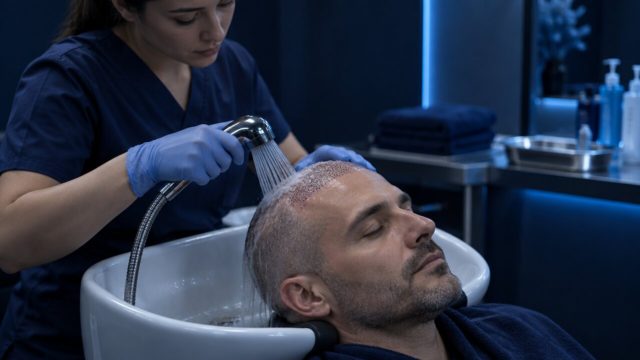
Washing should follow the technique and timetable provided by the clinic, not a generic internet schedule. Commonly, patients receive guidance on using gentle products, applying lotion or foam without rubbing, rinsing carefully, and allowing scabs to soften naturally. Water temperature, pressure, and hand movement matter. Do not use nails to remove crusting. If you are unsure whether a product or washing method is safe, ask the aftercare team before trying it.
Exercise, heavy lifting, sauna use, swimming, sun exposure, and activities that cause substantial sweating are often restricted for a period after treatment. These restrictions are intended to reduce friction, contamination, swelling, and strain during early healing. The correct timeframe varies, so your own discharge plan takes priority. Patients who travel for treatment should also consider the practical demands of their job, commute, childcare, and sports schedule when choosing the date of their procedure.
05Remote follow-up after you return from Istanbul
Remote follow-up is a central part of travel-based aftercare. It allows the clinical team to review healing updates, answer routine questions, and explain normal changes that may otherwise feel worrying. Clear photographs taken in good light, from consistent angles, can be helpful when the team asks for them. They should be sent through the clinic’s approved contact route, with attention to privacy and the instructions provided at discharge.
Acibadem Hair Transplant Center offers all-inclusive packages that include VIP transfer, a 4-star hotel, a care kit, and 12 months of follow-up. Patients can also contact the team on WhatsApp, with replies typically provided within around two hours. This support is designed to make communication easier across borders, but it does not replace emergency care in your own country. If you have severe or rapidly worsening symptoms, seek prompt local medical assessment and inform your clinic.
A useful follow-up plan records key dates: your procedure date, first wash, return to work, permitted activity stages, and requested photo reviews. Keep your discharge notes and care kit instructions in one place. It is also sensible to identify a local doctor or urgent care service before you need one, particularly if you have significant health conditions or live far from medical facilities. Your treating team can advise on the symptoms that require direct contact.
06Normal recovery changes versus signs that need review
Understanding the usual recovery sequence can prevent unnecessary alarm. In the early period, the scalp may look red or uneven, and small scabs may be visible around transplanted hairs. Swelling can sometimes move down the forehead or around the eyes before settling. The donor area may feel tight or sensitive. These changes can be expected in many patients, but they should be monitored in line with your doctor’s instructions rather than ignored.
Hair shedding in the weeks after a fue transplant turkey procedure is also commonly discussed during aftercare. The transplanted hair shafts may shed while the follicles enter a resting phase. This is often called shock shedding or temporary shedding. It can be emotionally difficult because the scalp may appear thinner before new growth becomes visible. In most cases, it is a recognised part of the growth cycle, but your doctor should assess any concern about unusual or persistent changes.
Contact your clinic promptly if you notice increasing pain, spreading redness, marked warmth, discharge, fever, a strong unpleasant smell, or swelling that is worsening rather than improving. These symptoms do not automatically mean there is a serious problem, but they warrant professional assessment. Severe symptoms, breathing difficulty, chest pain, fainting, or signs of an allergic reaction require urgent local medical help. Do not wait for a remote reply when emergency care may be needed.
07Returning to work, exercise, weather, and everyday appearance
The timing for returning to work depends on the nature of your job and how comfortable you feel with visible redness or scabbing. Desk-based work may be easier to resume earlier than physically demanding work, but this is not a fixed rule. People who work outdoors, wear safety headgear, lift heavy items, or have a long commute may need additional planning. Your doctor will confirm the activity limits appropriate for your case.
Patients often ask when they can wear a cap. Headwear can create friction, retain heat, or touch the grafts if used too soon or if it is tight. For this reason, only wear a hat after your clinic has approved the timing and type. Avoid choosing a cap because it hides the procedure if it conflicts with aftercare advice. Protecting the grafts in the first days is more important than covering temporary visible signs of healing.
Sun, heat, rain, dust, and polluted city environments can all make scalp care more difficult. Avoid direct sunlight until your doctor says it is safe, and do not apply sunscreen to healing recipient sites without clinical advice. Swimming pools, sea water, and hot tubs may carry irritation or infection risks while the skin is still healing. Plan holidays, beach visits, gym sessions, and outdoor work around the recovery guidance, rather than trying to fit recovery around them.
08Long-term expectations and documenting your result
FUE recovery is gradual. Early healing is measured in days and weeks, while visible hair growth develops over months. New hairs may initially look fine, uneven, or different in texture before maturing. The rate and appearance of growth can vary according to factors such as hair characteristics, scalp health, the size of the procedure, ongoing hair loss, and individual biology. A trustworthy treatment plan should discuss these limits before surgery rather than suggesting an instant transformation.
Consistent photographs can help you and your clinical team see progress more objectively. Take images under similar lighting, at similar distances, with dry hair and without styling products that could make density appear different. Avoid judging the result every day. Monthly comparisons are generally more useful than daily mirror checks, because the changes are gradual. Continue any doctor-recommended plan for protecting existing non-transplanted hair, and do not start or stop medical treatments without medical guidance.
At Acibadem Hair Transplant Center, results are measured by trichoscopic graft survival at month 12, with a documented 98% rate under written guarantee. This is a clinic-specific documented measure and should not be read as a promise of the same outcome for every individual. Hair restoration results depend on clinical suitability and adherence to care instructions, among other factors. The 12-month follow-up period gives patients a structured opportunity to discuss their recovery and result with the care team.
09Frequently Asked Questions
What should I expect to pay for a FUE hair transplant in Turkey?
There is no single standard price for a FUE hair transplant in Turkey. The total may depend on the treatment plan, graft requirement, technique, medical assessment, included services, and the clinic’s follow-up model. Ask for a written quotation that clearly explains what is included and whether aftercare, transfers, accommodation, and follow-up are part of the plan.
What treatment did Elon Musk use to regrow his hair?
There is no confirmed public medical record that explains which treatment, if any, Elon Musk used for hair restoration. Online claims about a public figure’s health or cosmetic treatment are speculation unless verified by that person or their medical team. A doctor can assess the options that may be appropriate for your own pattern of hair loss.
How much does a 3,000-graft hair transplant cost in Turkey?
A 3,000-graft procedure does not have one fixed price because graft count is only one part of a treatment plan. The cost can vary with the technique selected, donor-area assessment, complexity of placement, package services, and medical follow-up. A clinic should confirm whether 3,000 grafts are clinically suitable before providing a final quotation.
What is the price of 5,000 grafts in Turkey?
The price for 5,000 grafts varies between treatment plans and should not be assumed from graft count alone. A larger session may not be appropriate for every patient, as donor capacity, scalp condition, medical history, and safe planning must be assessed first. Request a doctor-reviewed plan and a written breakdown of the services included.
Este artículo tiene fines exclusivamente informativos y no sustituye el consejo médico profesional.
Esta guía es de carácter informativo y no sustituye una consulta médica. Las decisiones de tratamiento se toman tras una valoración médica presencial u online.