En este artículo9
- Hair Implants How It Works: The Treatment Journey Explained
- Step One: Medical Assessment, Donor Review, and Expectations
- Creating a Natural Hairline and Graft Distribution Plan
- Graft Extraction: Collecting Follicles From the Donor Area
- Recipient Channels and Implantation With Sapphire FUE or DHI
- The First Two Weeks: Healing, Washing, and Early Care
- Shedding and New Growth: What the Timeline Usually Looks Like
- Planning for Long-Term Hair Health After a Transplant
- Frequently Asked Questions
Hair implants how it works begins with a medical assessment of your hair loss, donor area, and treatment goals. During the procedure, healthy follicular grafts are moved from a donor area to thinning or bald areas, then allowed to heal and grow over time. Your doctor will confirm whether a transplant is suitable and which technique may be appropriate.
- A hair implant procedure redistributes your own healthy hair follicles rather than creating new follicles.
- A doctor-led assessment is important for checking donor supply, hair-loss stability, scalp health, and realistic expectations.
- Sapphire FUE and DHI are established implantation approaches that may be selected according to the individual treatment plan.
- Temporary shedding after surgery is common, while visible new growth usually develops gradually over several months.
- Long-term success depends on graft healing, aftercare, future hair-loss management, and the quality of the donor area.
01Hair Implants How It Works: The Treatment Journey Explained
Hair implants how it works can be understood as a careful process of moving healthy, living hair follicles from a fuller part of the scalp to an area with reduced density. The follicles are usually taken from the back or sides of the head, often called the donor area, because hair there is commonly more resistant to pattern hair loss. Each graft may contain one, two, three, or sometimes more hairs. The goal is to place these grafts at angles and directions that support a natural-looking result.
Despite the name, a hair implant is not usually an artificial hair fibre placed into the scalp. Modern surgical hair restoration generally uses your own follicular units. Because the transferred follicles are biological tissue, they need gentle handling, good blood supply in the recipient area, and an appropriate healing environment. The procedure is therefore planned around both the number of available grafts and the long-term appearance of the hairline and surrounding density.
A transplant can be considered by adults with suitable donor hair and a diagnosis that supports surgery. However, it is not the right solution for every form of hair loss. Diffuse shedding, active scalp inflammation, certain medical conditions, and unstable hair loss may require further evaluation or non-surgical management first. A qualified doctor should review your history and scalp before any procedure is arranged.
02Step One: Medical Assessment, Donor Review, and Expectations
The assessment is the foundation of a safe and well-designed hair restoration plan. Your doctor typically reviews the pattern, duration, and possible causes of hair loss, as well as your medical history and current medicines. They may also examine the scalp for signs of irritation, scarring, infection, or conditions that could affect healing. This evaluation helps distinguish whether surgical restoration is appropriate or whether another approach should be considered first.
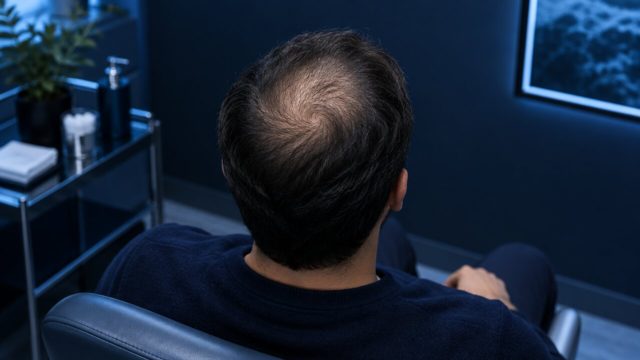
The donor area is assessed for hair density, hair thickness, curl pattern, colour contrast, and the likely number of grafts that can be taken without visibly over-thinning the area. A large bald area does not always mean that a very high graft number is safe or possible. Donor hair is a limited resource, so responsible planning considers present needs and possible future hair loss. Your doctor will discuss what level of coverage may be realistic.
At Acibadem Hair Transplant Center, patients can begin with a free online hair analysis reviewed by doctors. Clear photographs and health information help the team provide an initial opinion, although an in-person examination remains important before treatment. The clinic is a dedicated hair restoration clinic in Istanbul and is licensed by the Turkish Ministry of Health. Messages on WhatsApp typically receive a reply within approximately two hours.
03Creating a Natural Hairline and Graft Distribution Plan
A successful plan is not based only on filling an empty area. It should consider facial proportions, age, existing hair, likely future thinning, and the way hair naturally grows. Hairlines are especially important because they are highly visible. A very low or overly straight hairline may not remain appropriate if hair loss continues, so doctors usually aim for a design that can look balanced over the long term.
When discussing hair implants how it works at the design stage, it is useful to think of grafts as a limited supply that must be allocated carefully. Single-hair grafts are often selected for the leading edge of a hairline to create softness. Grafts containing multiple hairs may be used behind this zone to build density. The crown can require a different strategy because its hairs grow in a circular pattern and the area may need many grafts for visible coverage.
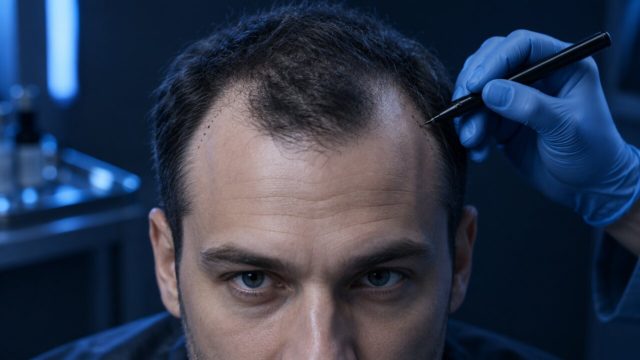
Before surgery, the recipient area is marked and the plan is reviewed with the patient. This is the time to clarify priorities, such as frontal framing, mid-scalp coverage, or crown improvement. The final plan may differ from an early estimate if the donor examination shows a different graft capacity or if the scalp condition needs attention. Careful communication supports informed consent and more realistic expectations.
04Graft Extraction: Collecting Follicles From the Donor Area
On procedure day, the donor area is prepared and the hair may be trimmed to allow the team to identify and remove follicular units precisely. Local anaesthesia is typically used to make the surgical area comfortable. Needle-free anaesthesia is available at Acibadem Hair Transplant Center for suitable patients. Your clinical team will explain the anaesthesia plan, relevant precautions, and what you may feel during the different stages of the day.
With Follicular Unit Extraction, often called FUE, individual follicular units are removed one by one using a fine instrument. Sapphire FUE uses sapphire blades for creating recipient channels, while the extraction stage still focuses on safely retrieving grafts from the donor area. The team aims to avoid unnecessary trauma to the follicles and to distribute extraction points so the donor area can heal with a natural appearance.
After extraction, grafts are inspected, sorted, and kept in controlled conditions before implantation. This handling stage is important because follicles are delicate and should not be exposed unnecessarily. The surgical team counts and categorises the grafts so they can be placed according to the agreed design. The actual number of grafts used is confirmed during the procedure, rather than assumed from a preliminary estimate alone.
05Recipient Channels and Implantation With Sapphire FUE or DHI
The recipient area is where the new hairs will grow, so the angle, depth, and direction of each placement matter. In Sapphire FUE, the doctor creates fine channels in the scalp before grafts are placed. These channels guide the position of the follicles and help shape the overall growth pattern. The approach may be suitable for patients who need a planned distribution over a larger thinning area.
DHI is another implantation technique offered at the clinic. With this approach, grafts are placed using a specialised implantation tool that can support controlled placement in selected cases. Neither technique is automatically best for every person. The choice between Sapphire FUE and DHI depends on factors such as the treatment area, existing hair, scalp characteristics, graft plan, and the doctor’s clinical assessment.
For patients researching hair implants how it works during implantation, the central point is that grafts are placed one by one with careful attention to orientation. A hair that points sharply upward, crosses surrounding hairs, or is placed at an unsuitable depth may not blend naturally. The surgical team works gradually across the recipient area, while protecting existing native hair as much as possible. Procedure length varies according to the planned graft number and individual case.
06The First Two Weeks: Healing, Washing, and Early Care
The scalp usually needs gentle care immediately after surgery. Small crusts, mild swelling, redness, tenderness, and temporary numbness can occur in many patients. These effects commonly improve during the early healing period, but each person recovers differently. Your clinic should give written aftercare instructions explaining washing, sleeping position, activity limits, and when to contact the medical team about any concern.
Newly placed grafts should not be rubbed, scratched, or exposed to pressure during the first days. Patients are commonly advised to avoid strenuous exercise, swimming, direct sun exposure, and activities that increase the risk of sweating or trauma for a period recommended by their doctor. It is also important to follow advice about alcohol, smoking, and prescribed medicines, as these factors can affect recovery and scalp healing.
Acibadem Hair Transplant Center provides a care kit and 12 months of follow-up as part of its all-inclusive packages, which also include VIP transfer and a 4-star hotel stay. Follow-up gives patients a structured opportunity to ask about normal healing changes and progress. However, urgent symptoms such as increasing pain, spreading redness, fever, pus-like discharge, or unexpected bleeding should be discussed with a medical professional promptly.
07Shedding and New Growth: What the Timeline Usually Looks Like
It is common for transplanted hairs to shed in the weeks after the procedure. This phase can feel worrying, but it does not automatically mean the grafts have failed. The follicles remain beneath the scalp and enter a resting stage before producing new hairs. Existing, non-transplanted hair can also appear temporarily thinner after surgery in some patients, especially where it was already fragile.
When patients ask about hair implants how it works after surgery, the answer is that growth follows a biological cycle rather than an instant cosmetic change. Early new hairs may begin to appear after several months, often growing fine at first. Over subsequent months, the hairs typically become longer and may gain thickness and texture. The rate of change varies between patients, so photographs taken at regular intervals can provide a clearer view than day-to-day observation.
A final assessment is commonly considered around month 12, although some areas and individual cases may continue to mature beyond this point. At Acibadem Hair Transplant Center, results are measured by trichoscopic graft survival at month 12, with a documented 98% rate under written guarantee. This documented clinical measure should not be interpreted as a guarantee of identical cosmetic density or appearance for every patient, because individual hair characteristics and healing remain relevant.
08Planning for Long-Term Hair Health After a Transplant
Transplanted follicles from a stable donor area often retain many of their original characteristics after relocation, which is why they may offer lasting coverage. However, a transplant does not stop ongoing hair loss in untreated areas. Native hair around the transplanted zone may continue to thin over time, particularly in people with progressive pattern hair loss. Long-term planning can help avoid an uneven appearance as hair loss changes.
Your doctor may discuss ways to monitor ongoing hair loss and protect existing hair where clinically appropriate. This discussion should take account of your health history, diagnosis, personal preferences, and any possible risks or side effects. It is not advisable to start or stop medical treatments based only on online information. A doctor can explain which options may be suitable and whether they are compatible with a surgical plan.
There are also practical limitations to understand before proceeding. Donor supply is finite, density may not match the fullness of natural childhood hair, and some people may need more than one session to address a large area or later progression. Choosing a carefully planned, conservative approach can be more valuable than pursuing an unrealistic graft number. The most appropriate outcome is one that balances appearance, donor protection, and future hair needs.
09Frequently Asked Questions
How long does a hair implant last?
Transplanted hair from a stable donor area is generally intended to provide long-lasting growth because it often keeps its resistance to pattern hair loss after relocation. However, results vary, and your existing non-transplanted hair can continue to thin over time. Long-term appearance depends on graft survival, donor quality, future hair loss, health factors, and appropriate follow-up.
How painful is a hair implant procedure?
Most patients describe pressure, pulling, or brief discomfort rather than significant pain once the local anaesthesia is working. The anaesthesia injections can be uncomfortable, and mild scalp tenderness may continue during the first days of healing. Needle-free anaesthesia is available at Acibadem Hair Transplant Center for suitable patients, and your doctor will explain the expected comfort measures.
How much do 3,000 hair grafts cost?
The cost of 3,000 grafts cannot be confirmed safely without an individual assessment, because a graft plan depends on the donor area, technique, treatment complexity, and required clinical care. A preliminary graft estimate from photographs may change after an in-person examination. Acibadem Hair Transplant Center offers all-inclusive packages with VIP transfer, 4-star hotel accommodation, a care kit, and 12 months of follow-up; the team can provide current package information after doctor review.
What are the downsides of getting a hair transplant?
Possible downsides include a recovery period, temporary scabbing and shedding, discomfort, visible redness, and the need to wait months for growth. Surgical risks can include infection, bleeding, swelling, poor growth, scarring, changes in sensation, or an unnatural-looking result if planning or placement is unsuitable. Donor hair is limited, and a transplant does not prevent future thinning of existing hair, so a doctor-led assessment and realistic expectations are essential.
Este artículo tiene fines exclusivamente informativos y no sustituye el consejo médico profesional.
Esta guía es de carácter informativo y no sustituye una consulta médica. Las decisiones de tratamiento se toman tras una valoración médica presencial u online.