

When searching for a hair transplant near me, look beyond distance and compare medical licensing, doctor involvement, graft planning, safety standards, realistic result discussions and long-term follow-up. A reliable clinic should review your hair loss, donor area and health history before confirming whether treatment is suitable.
- Choose a licensed medical clinic that provides clear information about who performs each stage of the procedure.
- Ask how the doctor assesses your donor area, hair loss pattern, medical history and realistic graft requirements.
- Compare the full treatment pathway, including anaesthesia, recovery guidance, follow-up and what is included in the quote.
- Be cautious if a clinic promises a guaranteed cosmetic result, recommends a fixed graft number without assessment or pressures you to book quickly.
- For international treatment, consider travel planning, communication, aftercare access and documented clinical outcome monitoring.
01Hair Transplant Near Me: Start With Medical Safety, Not Distance
Finding a hair transplant near me may feel like the simplest way to begin, especially when you want convenient consultations and recovery support. However, location alone does not show whether a clinic is appropriate for your needs. Hair transplantation is a medical procedure involving local anaesthesia, donor-area management and the careful placement of follicles. The clinic you choose should therefore be assessed for clinical standards, qualified medical oversight and a planning process that is based on your individual hair characteristics.
Start by confirming that the facility is properly licensed to provide medical care in its country or region. Ask whether a doctor reviews your case, completes the clinical assessment and remains responsible for the treatment plan. It is also reasonable to ask who performs key steps such as donor extraction, recipient-site creation and graft implantation. Clear, direct answers help you understand the level of medical supervision rather than relying only on marketing language or online ratings.
A nearby clinic can be a good choice when it offers appropriate medical care and accessible follow-up. At the same time, some patients choose to travel because they want a clinic with a particular technique, a structured package or a longer track record in hair restoration. The most suitable option is usually the one that combines safety, transparent planning, realistic communication and practical aftercare arrangements for you.
02Confirm Licensing, Doctor Oversight and Clinical Responsibility
Licensing is one of the first points to check when evaluating a clinic. A reputable provider should be able to explain its legal status and the medical regulations it follows. For example, Acibadem Hair Transplant Center is a dedicated hair restoration clinic in Istanbul licensed by the Turkish Ministry of Health. This type of information should be easy to verify, rather than vague or hidden behind sales messages.
Doctor involvement matters because a hair transplant plan should not be based on photographs alone or on a standard package. Your doctor typically needs to consider the cause and stability of hair loss, the quality and density of the donor area, scalp condition, hair calibre, curl pattern and your expectations. They may also need information about medications, previous procedures and relevant health conditions. An assessment does not automatically mean that surgery is suitable, but it supports safer decision-making.
Ask the clinic how medical responsibility is organised on the day of treatment. It is helpful to know who gives clinical consent information, who decides the final hairline and graft distribution, who monitors anaesthesia and who is available if there is a concern after the procedure. A professional clinic should welcome these questions and give answers that are specific to its clinical workflow.
03Look for an Individual Donor and Hairline Assessment
The donor area, usually at the back and sides of the scalp, is a limited resource. Each person has a different available donor supply, and removing too many follicles can reduce density in this area. A careful clinic will assess whether extraction can be performed conservatively while protecting the appearance of both the donor and recipient areas. This is especially important for younger patients or people whose hair loss may continue over time.
A good hairline is not simply low or dense. It should usually reflect your facial proportions, age, likely future hair loss pattern and available graft supply. During a consultation, ask how the clinic designs the hairline and how it plans to preserve grafts for future needs. If a provider immediately agrees to a very low hairline without discussing long-term planning, it may be sensible to seek another opinion.
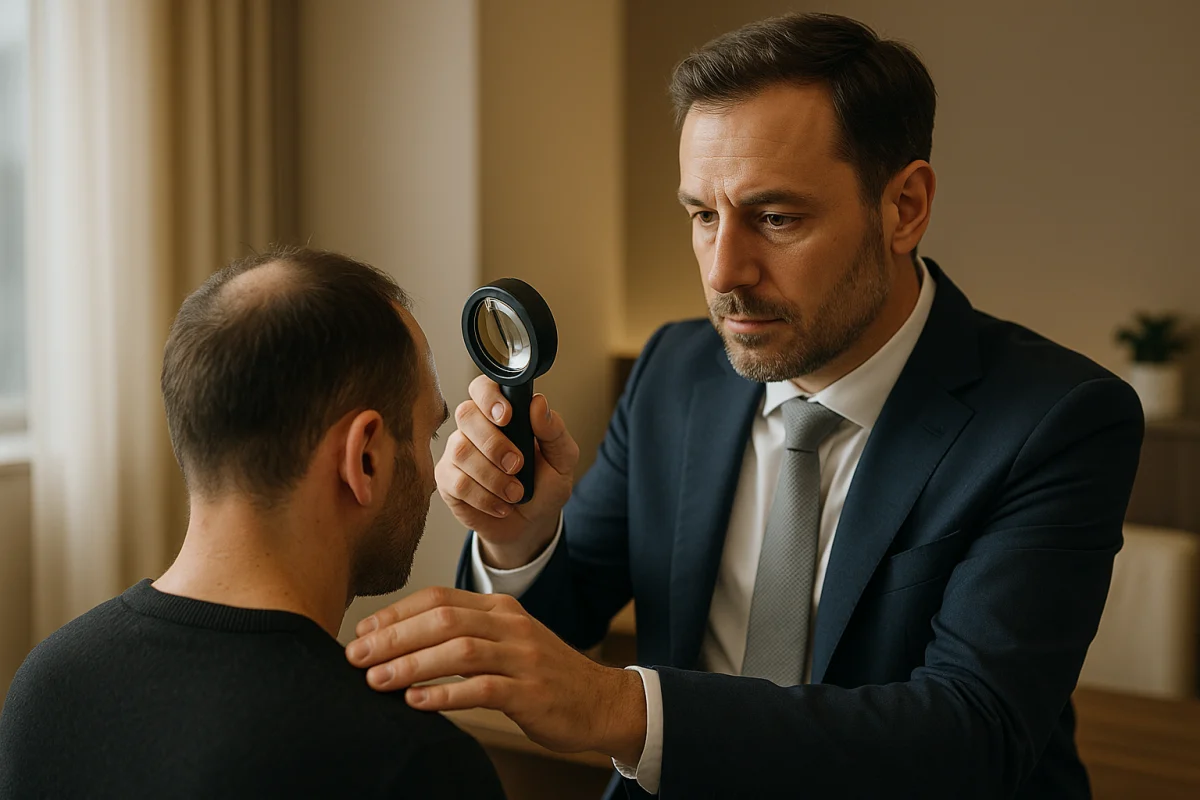
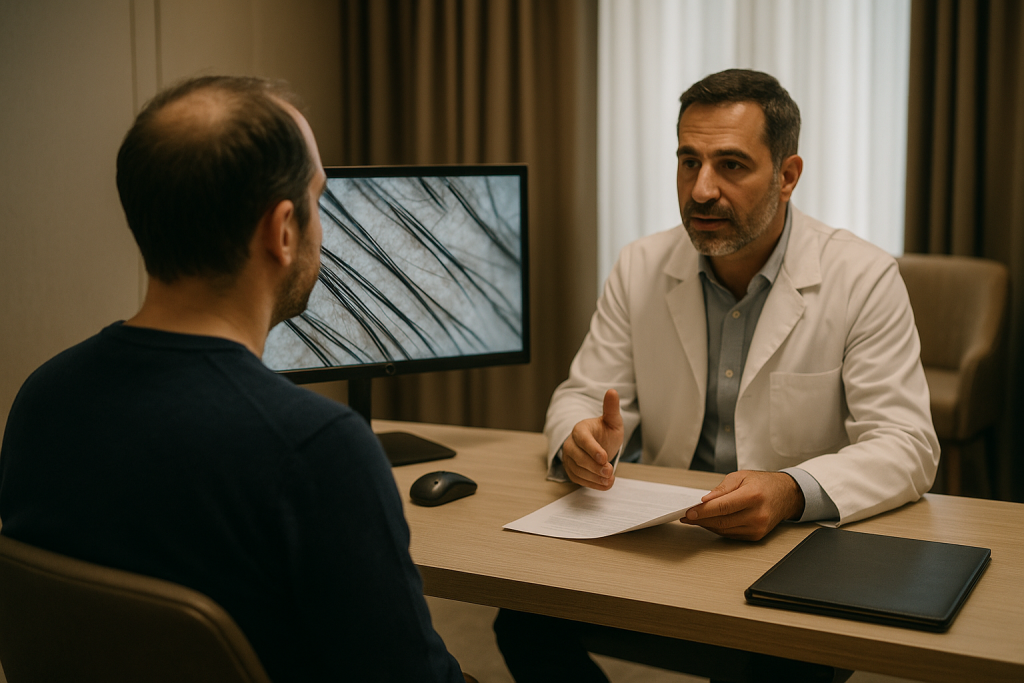
Trichoscopy can support a closer review of hair and scalp characteristics. It may help the medical team examine follicle density, hair shaft features and signs that could require further assessment. At Acibadem Hair Transplant Center, results are measured through trichoscopic graft survival at month 12, with a documented 98% rate under a written guarantee. Your doctor will still explain that visible density and cosmetic appearance can vary between patients because healing, hair characteristics and ongoing hair loss differ.
04Understand the Technique Before You Compare Clinics
Technique names can be useful, but they should not be the only reason to choose a clinic. Sapphire FUE and DHI are both commonly discussed approaches, yet suitability depends on the individual plan. In FUE, follicular units are extracted one by one from the donor area and then placed into prepared recipient sites. Sapphire FUE refers to the use of sapphire blades for creating recipient channels. DHI generally involves implanting extracted grafts with a specialised implantation tool.
Your doctor may recommend one approach based on the area being treated, existing hair, desired density, graft characteristics and scalp condition. For example, preserving existing hairs in an area with thinning may require careful planning, while a larger bald area may have different needs. No technique can create unlimited density or stop the biological process causing hair loss. A trustworthy consultation explains both the potential benefits and the limitations in plain language.
Ask whether the clinic offers more than one method and why it would recommend a particular option for you. Acibadem Hair Transplant Center provides Sapphire FUE and DHI techniques, and needle-free anaesthesia is available for eligible patients. Availability of an option does not mean it is necessary for every patient, so the final decision should follow a medical assessment and informed consent discussion.
05Compare Graft Numbers, Quotes and Included Care Carefully
When evaluating a hair transplant near me, avoid choosing based only on a low price per graft or a headline graft number. A graft may contain one, two, three or more hairs, so graft count does not directly equal visible density. The number of grafts that may be appropriate depends on your donor capacity, the size of the treatment area, hair texture, contrast between hair and scalp, future hair loss risk and the density goal considered medically realistic.
Request a written quote that explains what is included. Useful items to clarify include the consultation, blood tests if required, anaesthesia, procedure-day care, medications or care products where appropriate, follow-up appointments and any additional fees. If you are travelling, ask separately about accommodation, airport transport, local transfers and how the clinic supports patients once they return home. A transparent quote should make comparison easier without hiding essential parts of care.
Be careful with offers that advertise an unusually high graft number before a proper review of your scalp. Overharvesting can affect the donor area, while placing too many grafts into a limited recipient area may not deliver the appearance a patient imagines. The goal is typically a balanced, sustainable plan rather than the highest possible number. Ask the clinic to explain why it recommends its graft range and how it protects the donor area.
06Review Before-and-After Results With a Critical Eye
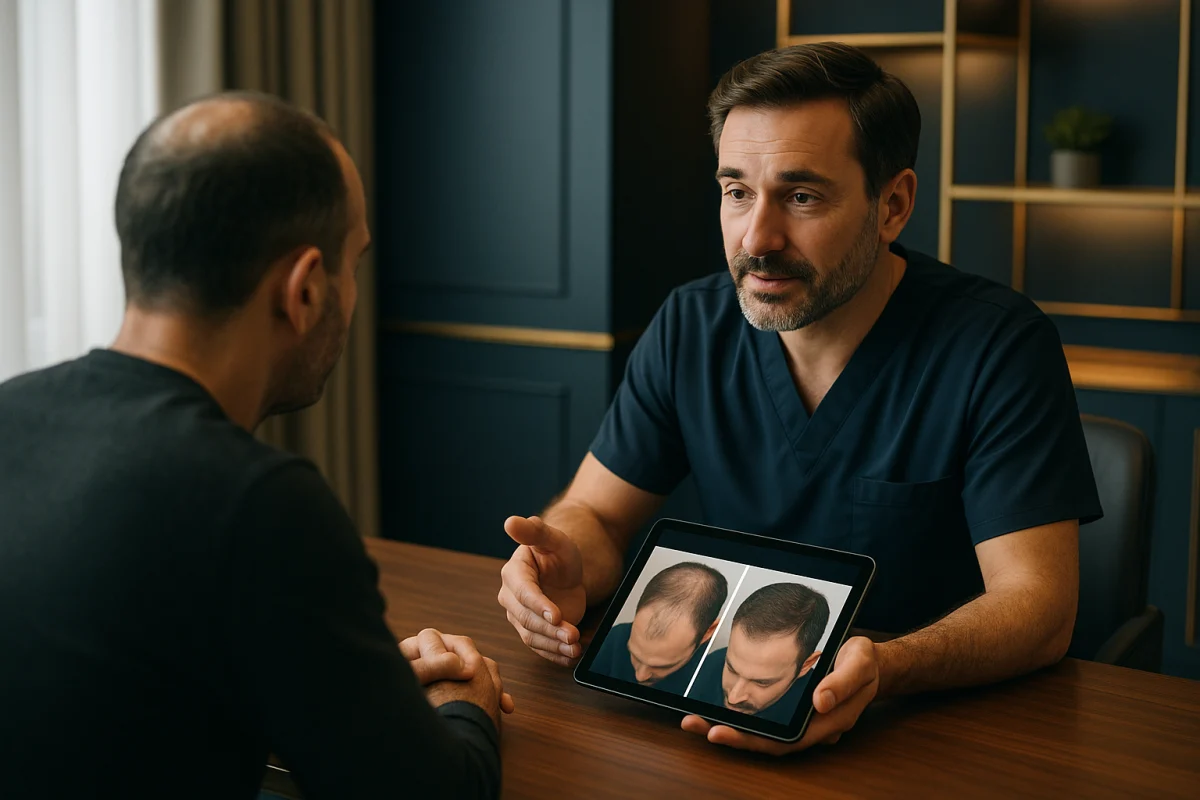
Before-and-after photographs can be helpful, but they need careful interpretation. Look for images with similar lighting, angle, hair length and styling. A clinic should be able to show results from different stages of hair loss, not only the most dramatic transformations. It is also useful to see results at later stages, because transplanted hair normally needs time to grow and mature.
Ask when the photographs were taken after surgery. In many patients, newly transplanted hairs shed during an early phase before regrowth begins. Noticeable growth often develops gradually over several months, while the outcome is commonly assessed around 12 months and may continue to mature after that. Individual timelines vary, and your medical team should explain what recovery and growth stages may be expected in general terms.
Testimonials may describe a patient experience, but they are not a substitute for medical information. Read reviews for practical details such as communication, cleanliness, organisation and follow-up, while remembering that online comments can be selective. A clinic that communicates honestly about limitations, possible complications and the need for patience is generally more informative than one that presents every result as identical.
07Ask About Recovery, Follow-Up and Long-Distance Support
Aftercare is part of the treatment, not an optional extra. You should receive clear written instructions about sleeping position, washing, activity, sun exposure, headwear and when to contact the clinic. The exact guidance may vary according to the procedure and your doctor’s instructions. It is important to follow the plan given to you rather than relying on general advice from social media or another patient’s experience.
Ask how the clinic handles questions after you leave. Find out whether you will have scheduled reviews, whether you can send photographs, how quickly the team normally responds and what to do if you notice pain, swelling, bleeding, signs of infection or another concern. A responsible provider should explain when remote support is appropriate and when you may need urgent local medical evaluation.
International patients should also consider how travel fits around the procedure and early recovery period. Acibadem Hair Transplant Center welcomes patients from 38 countries and has 12 years of experience in hair restoration. Its all-inclusive packages can include VIP transfer, a 4-star hotel, a care kit and 12 months of follow-up. Patients can begin with a free online hair analysis reviewed by doctors, with WhatsApp replies typically available within about two hours.
08Know When a Clinic Should Recommend Waiting or Further Assessment
A reliable clinic will not treat every enquiry as an immediate surgical case. Some people may need further medical evaluation if hair loss is sudden, patchy, associated with scalp inflammation or caused by a condition that has not been diagnosed. Others may benefit from waiting if hair loss is rapidly progressing, if the donor area is insufficient or if expectations are beyond what can be safely achieved with the available grafts.
Health factors can also affect suitability and timing. Certain uncontrolled medical conditions, active scalp infections, bleeding concerns, some medications, smoking habits and poor wound-healing risk may need medical review before surgery. This does not mean that every person with a health condition is automatically ineligible. Your doctor will assess the relevant details and may recommend treatment, postponement, medical clearance or an alternative approach.
If you are still comparing options after searching for a hair transplant near me, use the consultation to judge the clinic’s standards. A careful provider may say no, suggest waiting or recommend a conservative plan when that is clinically appropriate. This can be a positive sign of patient-centred care. The best choice is not necessarily the fastest appointment, but the clinic that gives you enough information to make an informed decision.
09Frequently Asked Questions
What might 3,000 hair grafts cost?
The cost of 3,000 grafts can vary considerably by country, clinic licensing, medical team involvement, technique, included services and aftercare. A graft count alone is not enough to compare quotes because clinics may define packages differently and not every patient is suitable for the same number of grafts. Ask for a written, itemised estimate after a medical assessment.
What is the typical cost of a hair transplant?
Hair transplant costs vary widely, so there is no single typical price that applies to every patient. The final quote usually depends on the treatment area, donor availability, procedure method, clinical team, travel needs and follow-up plan. A reputable clinic should explain what is included and should not confirm a final graft plan before reviewing your case.
What can make someone unsuitable for a hair transplant?
Possible reasons to delay or avoid a hair transplant include an insufficient donor area, unstable or unexplained hair loss, active scalp disease, unrealistic expectations or health factors that need medical management first. Some medications and uncontrolled conditions may also require review. Only a doctor who has assessed your medical history and scalp can confirm whether treatment is suitable.
Where can I get a hair transplant in Fayetteville, North Carolina?
In Fayetteville, you can begin by looking for licensed medical providers that offer hair restoration consultations, such as qualified dermatology, plastic surgery or dedicated hair restoration practices. Confirm the provider’s licensing, doctor involvement, procedure location and aftercare before booking. If you are considering treatment abroad, Acibadem Hair Transplant Center in Istanbul offers doctor-reviewed online hair analysis for international patients, but suitability should always be confirmed through clinical assessment.
Este artículo tiene fines exclusivamente informativos y no sustituye el consejo médico profesional.
 06
06 12
12