

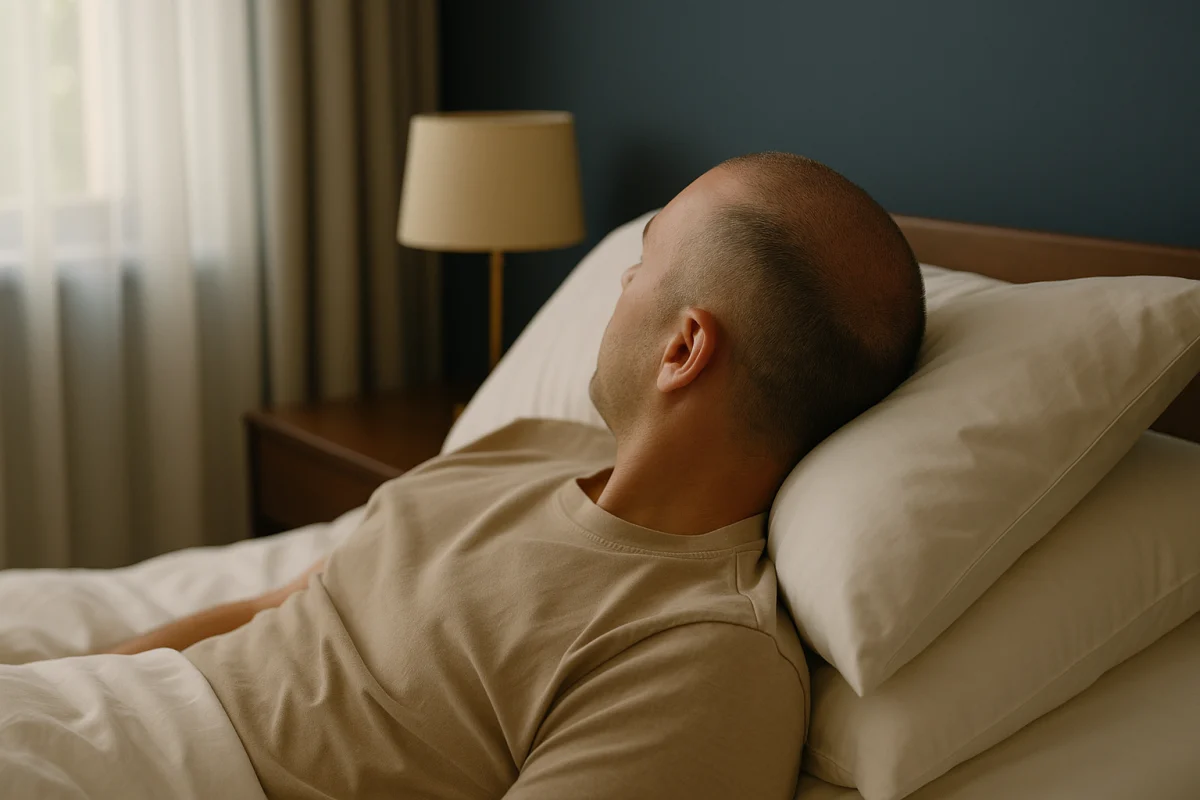
After a hair transplant, most patients should sleep on their back with their head elevated for the first several nights, often for around 7 to 10 days depending on the doctor’s instructions. This position helps avoid rubbing or pressure on newly placed grafts and may reduce facial swelling. Your surgical team will confirm when it is safe to return to your preferred sleep position.
- Sleep on your back with your head elevated to help protect grafts and limit swelling during the early recovery period.
- Avoid sleeping on the transplanted area, using heavy bedding, or allowing pillows to rub against grafts.
- A travel pillow, extra clean pillows, and a calm bedtime routine can make back sleeping more comfortable.
- Mild swelling, tightness, and temporary sleep disruption can happen after surgery, but worsening symptoms should be reviewed by your clinic.
- Follow your own post-operative instructions because the correct timeline can vary with the treatment plan and healing progress.
01Hair Transplant Sleep Positions: The First Nights Matter
A hair transplant recovery period begins as soon as the procedure is complete, and the way you sleep is an important part of protecting the treated area. Newly placed grafts need time to settle into the scalp and establish their blood supply. During the first nights, pressure, friction, or accidental rubbing can disturb the healing skin. For this reason, clinics commonly advise patients to sleep on their back rather than on their side or stomach.
In most patients, the safest position is lying on the back with the upper body and head slightly elevated. You may use two or three pillows, or sleep in a reclining position if this is comfortable and approved by your doctor. Elevation can help reduce the amount of fluid moving toward the forehead and eyelids, which may make early swelling less noticeable. It also helps keep the recipient area away from the pillow.
The first few nights can feel unfamiliar, especially if you normally sleep on your side or front. It is helpful to prepare before surgery by arranging pillows, clean bed linen, water, prescribed medicines, and anything else you may need close to the bed. A simple plan reduces the need to move around during the night and can make recovery feel more manageable.
02Why Back Sleeping and Head Elevation Help Protect Grafts
Back sleeping is recommended mainly because it reduces direct contact between your scalp and the pillow. A pillow can create friction when you turn your head, and this may irritate the small healing sites. The goal is not to remain completely still all night, which is unrealistic, but to create a sleep setup that makes accidental contact less likely.
Keeping your head elevated may also support comfort during the early days. Some swelling around the forehead or upper face can occur after a procedure, depending on the treatment approach and individual healing response. Sleeping with the head raised can encourage fluid to move away from the face. Your doctor may also give specific instructions about medications, cool compresses away from grafts, or other measures if needed.
A recliner can be useful for people who find it difficult to stay on their back in bed. Another option is to place pillows on each side of the body to reduce rolling. A neck or travel pillow may gently support the head, but it should not press against the grafted area. Make sure any item touching your skin is clean, soft, and used only as instructed by your care team.
03How Long Should You Avoid Side and Stomach Sleeping?
Many patients are advised to avoid side and stomach sleeping for approximately 7 to 10 days, although the exact period can differ. The first week is generally the most sensitive time because the grafts and surrounding scalp are still healing. Your surgeon will confirm the appropriate timeline based on the placement area, the condition of your scalp, and your post-operative review.
After this initial period, grafts are usually more secure, but the scalp may still be tender, scabbed, or itchy. Some clinics may advise continued caution until scabs have naturally softened and come away during the recommended washing routine. Do not pick at scabs or test whether grafts are secure by touching them. Gentle care is safer than trying to speed up the process.
When you return to side sleeping, try to avoid putting direct pressure on the recipient area. If grafts were placed along the hairline, crown, or top of the scalp, the best position may depend on where they are located. If you had grafts taken from the back or sides of the head, those donor areas can also feel sensitive. A gradual return to normal sleep is usually more comfortable than changing position suddenly.
04A Practical Bed Setup for the First Week
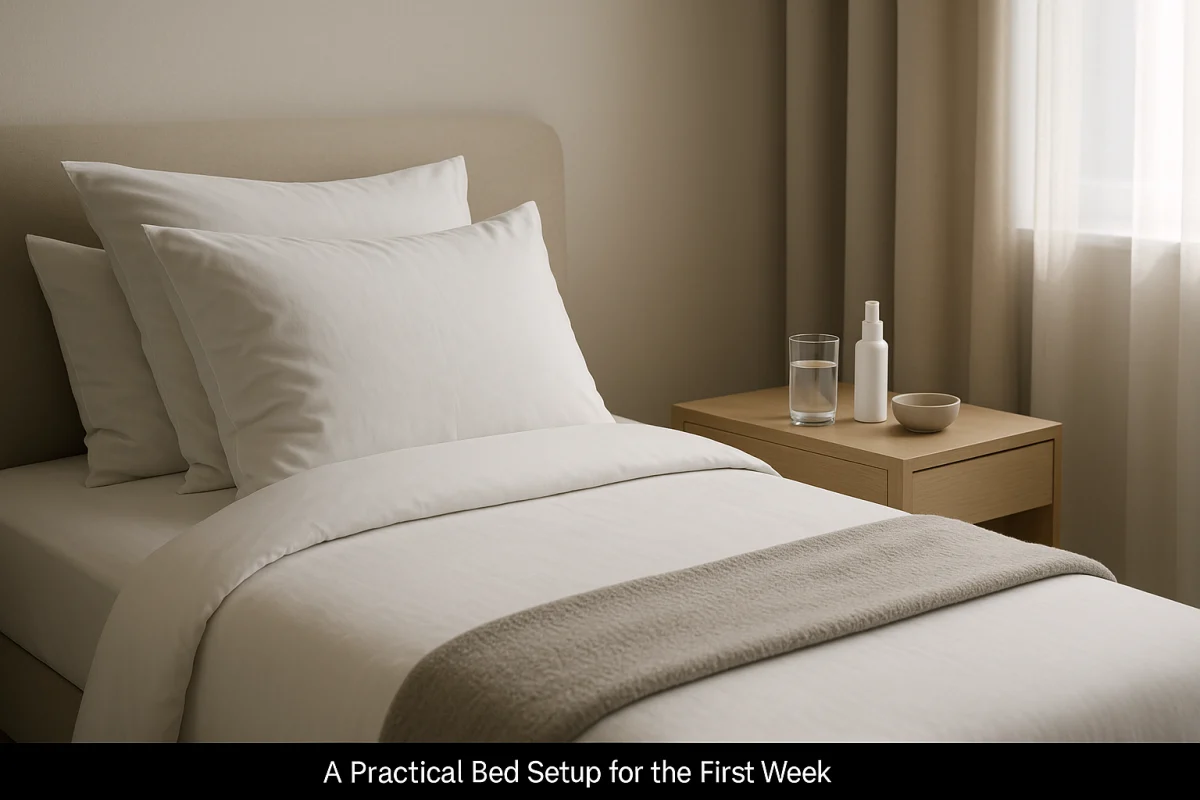
Preparing your bed before the procedure can reduce stress when you are tired after travel or surgery. Use fresh, smooth pillowcases and avoid rough fabrics that could catch on the scalp. Some patients place a clean towel or protective cover over the pillow as an extra layer, particularly if there is slight oozing from the donor area during the first night. Follow the clinic’s instructions about any dressing or head covering.
Build a supportive pillow arrangement rather than relying on one high pillow under the neck. A wedge pillow or several pillows behind the shoulders can raise the upper body more evenly. Place one pillow on each side of your torso to make rolling less likely. If you are using a travel pillow, position it so that it supports the neck without rubbing against areas where grafts have been placed.
Keep the bedroom comfortably cool and avoid very heavy blankets that may make you restless. Wear a loose, front-opening top when possible, so you do not have to pull clothing over your head. If you share a bed with a partner, pet, or child, consider creating a little extra space for the first few nights. An unexpected hand, elbow, or movement near the scalp could be uncomfortable and may disrupt your sleep.
05Managing Swelling, Itching, and Night-Time Discomfort
Mild tightness, tenderness, itching, and disturbed sleep can occur during hair transplant recovery. These symptoms are often temporary, but they should still be managed carefully. Take any medicines exactly as prescribed, and do not add over-the-counter medicines, supplements, or topical products without checking with your clinic. Some products can increase bleeding risk or irritate the healing scalp.
If swelling appears, remain calm and continue the elevation advice you were given. Your clinic may recommend a cold compress for the forehead or face, but it should never be placed directly on newly implanted grafts unless your doctor specifically tells you otherwise. Avoid massaging the scalp. Applying pressure or rubbing because the area feels itchy can dislodge healing tissue or cause unnecessary irritation.
Itching may become more noticeable as the scalp heals. This does not mean you should scratch, even lightly. Instead, follow the approved washing and moisturising instructions from your team. If itching becomes intense, spreads beyond the expected area, or occurs with increasing redness, pain, discharge, fever, or a strong unpleasant smell, contact your clinic promptly. These symptoms need professional assessment rather than home treatment.
06What to Do If You Turn Over While Asleep
It is common to worry about moving during sleep. If you wake up and notice that you have turned onto your side, do not panic. Slowly return to the recommended position without touching or rubbing the scalp. One brief change in position does not automatically mean that grafts have been harmed, especially if there was no significant pressure, bleeding, or direct scraping against the pillow.
Check the pillowcase only if your clinic has advised you to monitor for bleeding or graft loss. Do not inspect the recipient area repeatedly or pull at anything that looks like a small crust. If you see active bleeding, experience sudden severe pain, or believe that you have directly injured the grafted area, contact your surgical team for guidance. A photo may be requested so that the team can assess the situation.
To reduce turning, make the back-sleeping arrangement more secure before you go to bed. Side pillows, a recliner, and a travel pillow can all help some patients. Avoid alcohol, recreational drugs, or sedating products that have not been approved by your doctor, as they may affect sleep movement, recovery, or medication safety. A predictable evening routine often makes the temporary sleeping position easier to maintain.
07Sleep, Washing, and Daily Recovery Milestones
Sleep protection works alongside other early recovery habits. Your clinic will explain when and how to wash the scalp, when to begin gentle rinsing, and how to dry the area without rubbing. These steps are important because dried blood, oil, and scabs should be managed according to the post-operative plan. Do not use hot water, strong shower pressure, or vigorous towel drying during the early healing stage.
Physical activity can also affect your comfort at night. Strenuous exercise, heavy lifting, bending for long periods, and activities that cause heavy sweating are commonly restricted at first. These activities may increase swelling, sweating, or irritation and can make it harder to sleep comfortably. Your doctor will advise when it is appropriate to return to walking, gym activity, swimming, and other routines.
A hair transplant does not show its final cosmetic result during the first weeks. Transplanted hairs may shed as part of the normal early cycle, while the follicles remain under the skin and continue their recovery. New growth typically takes time, and the speed of visible change differs between patients. Attending scheduled reviews and following care instructions gives your team the best opportunity to monitor healing and answer concerns.
08Planning Recovery Support With Acibadem Hair Transplant Center
For international patients, knowing what to expect after treatment can make the recovery period feel less overwhelming. Acibadem Hair Transplant Center is a dedicated hair restoration clinic in Istanbul, licensed by the Turkish Ministry of Health. Our doctors review free online hair analyses, and the team generally replies through WhatsApp within around two hours to help patients understand the next steps before travel.
Our clinic provides Sapphire FUE and DHI techniques, with needle-free anaesthesia available for suitable patients. The most appropriate technique, graft plan, and recovery instructions are confirmed after medical assessment. Patients receive individual post-operative guidance, including how to sleep, wash, protect the scalp, and recognise symptoms that require contact with the clinic.
All-inclusive packages can include VIP transfer, a 4-star hotel, a care kit, and 12 months of follow-up. Our clinic has welcomed patients from 38 countries over 12 years. Results are measured using trichoscopic graft survival at month 12, with a documented 98% rate under a written guarantee. However, each patient’s healing, hair characteristics, and visible outcome can differ, and your doctor will explain realistic expectations for your situation.
09Frequently Asked Questions
How long can transplanted hair usually last?
Transplanted follicles are generally selected from areas that are more resistant to pattern hair loss, so they can continue growing for many years and often long term. However, this does not mean all surrounding non-transplanted hair will remain unchanged. Natural hair loss may continue, and your doctor can discuss whether ongoing medical management or future planning is appropriate.
What does 3,000 grafts cost in the United States?
There is no single reliable price for 3,000 grafts in the USA because costs vary widely by city, clinic, technique, surgical complexity, included services, and the experience of the medical team. A written quote should clearly explain what is included, such as consultation, procedure fees, medication, aftercare, and follow-up. It is sensible to prioritise medical licensing, clear planning, and safety standards rather than comparing graft numbers alone.
How risky is a hair transplant?
A hair transplant is a medical procedure and carries risks, although serious complications are uncommon when patients are properly assessed and treated by qualified professionals in an appropriate clinical setting. Possible concerns include swelling, bleeding, infection, scarring, numbness, poor growth, shock loss, or an unnatural-looking result if planning is unsuitable. Following aftercare instructions and contacting the clinic promptly about concerning symptoms can help support safe recovery.
What may make someone unsuitable for a hair transplant?
A person may be unsuitable or may need to delay treatment if they have insufficient donor hair, unstable hair loss, an untreated scalp condition, certain medical conditions, active infection, or expectations that cannot be met safely. Some medicines, smoking habits, and previous procedures may also affect eligibility or planning. A doctor should review your medical history, scalp condition, donor area, and goals before confirming whether surgery is appropriate.
Este artículo tiene fines exclusivamente informativos y no sustituye el consejo médico profesional.
 06
06 12
12