En este artículo12
- Resumen
- How robotic systems may support FUE extraction
- Where robot fue may fit in a treatment plan
- Clinical tasks that still require human judgement
- Important limitations of robotic extraction
- Comparing robotic, manual, and motorised FUE methods
- Results, recovery, and realistic expectations
- Questions to ask before choosing technology
- Practical aftercare after FUE: protecting grafts and the donor area
- A realistic month-by-month FUE growth timeline
- Travel planning for international hair transplant patients
- Frequently Asked Questions
Robot fue systems may assist with identifying and extracting follicular units during an FUE procedure, but they do not replace medical diagnosis, hairline design, graft placement, or clinical judgement. In most patients, the quality of planning, donor-area management, and the experience of the medical team remain more important than automation alone.
- Robotic technology can support selected steps of FUE, particularly follicular unit identification and extraction.
- A robot cannot independently decide whether a person is a suitable candidate for hair transplantation.
- Natural-looking outcomes depend on doctor-led planning, donor preservation, graft handling, and implantation technique.
- Robotic treatment costs vary widely by country, clinic, graft requirements, and what is included in care.
- FUE can be effective for suitable candidates, but results develop gradually and are never identical for every patient.
01Robotic Assistance in Fue: Potential Roles and Limitations
Robot fue refers to the use of computer-guided equipment to support parts of follicular unit extraction, commonly called FUE. The technology is mainly designed to help identify hair angles and assist with the removal of individual follicular units from the donor area. It can be a useful tool in selected cases, but it is not an independent treatment and does not replace the clinical team.
FUE is a method of harvesting naturally occurring follicular units, usually from the back and sides of the scalp, where hair is often more resistant to androgen-related thinning. These grafts are then prepared and implanted into areas of hair loss. Whether extraction is performed manually, with a motorised device, or with robotic support, careful technique is needed to protect both the grafts and the donor area.
The most important question is not simply whether a clinic uses advanced equipment. Patients should ask how their candidacy is assessed, who creates the hairline plan, who oversees extraction and implantation, and how graft survival and donor healing are monitored. Technology can support consistency, while medical judgement remains central throughout the procedure.
02How robotic systems may support FUE extraction
Robotic platforms typically use imaging and software to map hairs within a selected donor-area zone. The system may estimate the direction, angle, and position of individual follicular units before a punch separates them from the surrounding skin. This can assist the operator when working through a large number of grafts or when hair direction is difficult to assess visually.
Some systems are designed to make rapid, repeated movements with a controlled punch depth and angle. In theory, this may reduce variation during one part of extraction. However, scalp skin thickness, curl pattern, follicle depth, previous procedures, and local tissue tension can change across the donor area. These changing features still require close human supervision and adjustments.
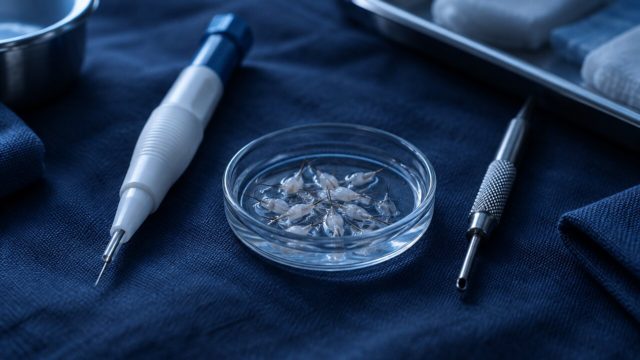
After grafts are separated, trained staff must safely remove, sort, hydrate, inspect, and prepare them for implantation. The recipient area must also be planned with attention to facial proportions, existing hair direction, future hair loss, and the available donor supply. These important stages are not solved by extraction automation.
03Where robot fue may fit in a treatment plan
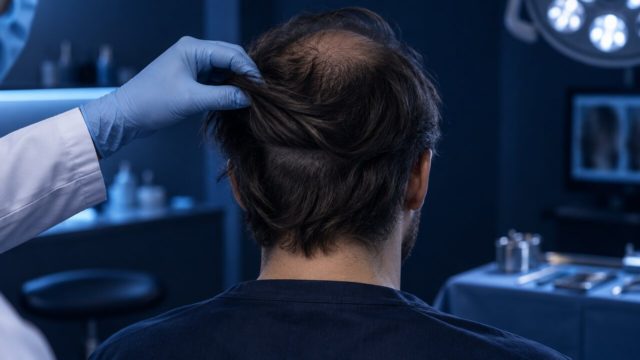
Robot fue may be considered by clinics as one possible extraction approach for patients with suitable donor hair characteristics. Straight or moderately wavy donor hair may be easier for image-guided systems to identify than tightly curled hair, although suitability depends on more than hair shape. A doctor should examine the scalp directly or through a detailed remote assessment before recommending any method.
For some patients, robotic assistance may help organise donor-area work and support a methodical extraction pattern. A well-spaced pattern is important because taking too many grafts from one area can make the donor zone appear thinner. The goal is usually to preserve a natural overall density rather than to focus only on obtaining the highest possible graft number.
It may also be relevant in procedures requiring a substantial number of grafts, but the number of grafts alone should never determine the technique. Hair loss pattern, scalp laxity, donor density, hair calibre, medical history, and expectations all matter. In some cases, a manual or other assisted FUE approach may be more appropriate.
04Clinical tasks that still require human judgement
A hair transplant starts long before extraction. The doctor needs to confirm the likely cause of hair loss and consider whether it appears stable enough for surgery. Sudden shedding, scalp inflammation, nutritional concerns, hormonal factors, or certain medical conditions may require further evaluation before a transplant is considered.
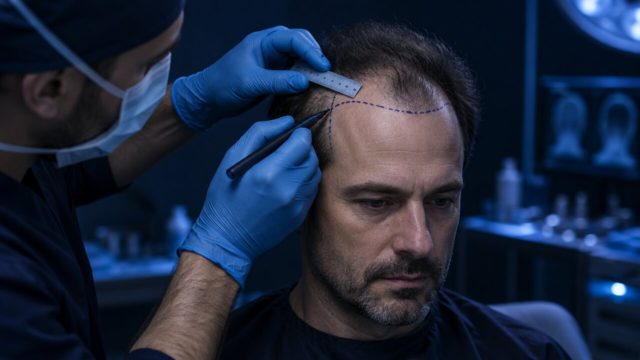
Hairline design is also a clinical and aesthetic decision. A very low or overly dense hairline may look unnatural over time and can use donor grafts that may be needed later. A responsible plan usually considers age, facial balance, ethnicity, current hair pattern, and the possibility that native hair may continue to thin.
Recipient-site creation and graft placement strongly influence the final appearance. The angle, direction, spacing, and distribution of grafts affect how naturally the new hair blends with existing hair. Fine single-hair grafts are often placed in the frontal hairline, while multi-hair follicular units may be used behind it to build visual density. These choices require careful clinical planning rather than a standard automated pattern.
05Important limitations of robotic extraction
Robotic assistance has practical limitations. It may be less suitable for certain hair characteristics, including very curly follicles that follow a curved path beneath the skin. If the punch does not follow the follicle accurately, the graft can be damaged. This is known as transection, and reducing this risk is an important part of FUE extraction.
The equipment also works within a defined treatment field and may require positioning, calibration, and repeated checking. Patient movement, variable scalp contour, or changes in hair direction can affect performance. A skilled team must be ready to intervene, change settings, or use another extraction method when needed.
No device can create more donor hair than a patient naturally has. It cannot stop future genetic hair loss, guarantee a particular density, or ensure that every graft grows. Patients should be cautious of marketing that presents a robotic platform as a shortcut to unlimited grafts or a guaranteed result.
06Comparing robotic, manual, and motorised FUE methods
Manual FUE uses hand-controlled punches, while motorised FUE uses a powered punch operated by an experienced practitioner. Robotic systems add image analysis and computer-guided movement to selected stages. All three approaches share the same broad principle: individual follicular units are harvested and then implanted into thinning or bald areas.
There is no single extraction method that is automatically best for every person. The right approach depends on donor quality, hair and skin characteristics, the size of the treatment area, the team’s experience, and the clinic’s safety protocols. Your doctor will confirm which technique is clinically suitable after assessing your individual situation.
At Acibadem Hair Transplant Center, a dedicated hair restoration clinic in Istanbul licensed by the Turkish Ministry of Health, treatment planning focuses on doctor-reviewed assessment and appropriate technique selection. Sapphire FUE and DHI are available techniques. Needle-free anaesthesia may also be available for suitable patients, subject to clinical assessment and discussion with the care team.
07Results, recovery, and realistic expectations
FUE recovery usually includes small extraction marks and temporary redness or crusting in the recipient area. Early shedding of implanted hairs is commonly expected before new growth begins. Visible growth develops gradually, and final maturation is often assessed over many months rather than days or weeks.
A successful outcome is not measured only by the number of grafts extracted. It also involves donor-area preservation, graft handling, growth, hairline quality, and how well the result fits the patient’s existing and future hair pattern. Good aftercare and attendance at follow-up reviews can help the clinic monitor healing and answer questions during recovery.
Acibadem Hair Transplant Center documents trichoscopic graft survival at month 12, with a documented 98% rate under its written guarantee. This documented clinic measure should not be understood as a promise that every individual will have the same cosmetic result. Growth, density perception, native-hair changes, and healing can differ between patients.
08Questions to ask before choosing technology
Before selecting a clinic, ask who performs each stage of the procedure and who has medical responsibility for your care. It is reasonable to ask how donor capacity is measured, how the hairline is designed, what happens if the planned extraction method is not suitable on the day, and how the team manages potential complications.
You can also ask what follow-up is included and how results are assessed. Acibadem Hair Transplant Center offers a free online hair analysis reviewed by doctors, with WhatsApp replies typically within around two hours. Its all-inclusive packages include VIP transfer, a 4-star hotel, a care kit, and 12 months of follow-up, although the exact treatment plan should always be confirmed individually.
Robotic assistance may be valuable when it is used thoughtfully within a doctor-led process, rather than presented as the whole solution. Patients from 38 countries have attended Acibadem Hair Transplant Center over 12 years. The most appropriate treatment should be based on careful assessment, transparent discussion, and realistic long-term planning.
09Practical aftercare after FUE: protecting grafts and the donor area
After an FUE procedure, the first days are focused on protecting the implanted grafts and allowing both treatment areas to settle. Your clinic should provide written instructions tailored to the technique used, the extent of treatment, and your medical history. Follow these instructions carefully, as general online advice cannot replace the plan given by your treating team.
In the early recovery period, patients are typically asked to avoid rubbing, scratching, or pressing on the recipient area. Grafts are delicate during initial healing, and unnecessary contact may disturb crusts or irritate the skin. It is also usually important to follow the recommended sleeping position, use the approved washing method, and avoid direct water pressure on the scalp until the care team confirms that normal washing can resume.
Physical activity, heavy lifting, swimming, sauna use, and prolonged sun exposure are commonly restricted for a period after surgery because sweating, friction, heat, and infection exposure may affect comfort and healing. The appropriate timing for returning to these activities varies. Your doctor will confirm when it is reasonable to restart exercise, wear headwear, travel by air, or return to work.
Temporary swelling, redness, itching, and small crusts can occur after FUE. These changes are often part of normal healing, but patients should know how to contact the clinic if symptoms become concerning. Increasing pain, spreading redness, unusual discharge, fever, significant bleeding, or an allergic-type reaction should be reported promptly to the treating team or a local medical service. A responsible clinic should provide clear contact information and follow-up guidance rather than leaving patients to manage concerns alone.
10A realistic month-by-month FUE growth timeline
Hair transplant results develop in stages, including a recovery phase that can be emotionally challenging if it is not expected. Immediately after treatment, the implanted hairs are visible, while the scalp may show redness, small crusts, or mild swelling. The donor area also needs time to heal. The appearance in the first week does not indicate the final result.
During the following weeks, many implanted hair shafts shed. This is commonly known as shedding or shock loss of the transplanted hairs. The follicles remain beneath the skin, but the visible hair can fall out before new growth starts. Some patients may also notice temporary shedding of nearby existing hair. This can happen after scalp procedures and should be discussed with the medical team if it seems extensive or worrying.
New hairs often begin to emerge gradually over the following months, but early growth may be fine, uneven, or slower in some parts of the recipient area. Density usually builds progressively rather than appearing all at once. Curl, texture, direction, and thickness can also change as the transplanted hair matures. Comparisons with another patient’s timeline can be misleading because healing, hair cycle, graft characteristics, and the extent of existing hair loss differ.
Clinics commonly review progress across the first year, with photographs and scalp assessment used to monitor development. At Acibadem Hair Transplant Center, follow-up is included for 12 months in its all-inclusive packages, and trichoscopic graft survival is documented at month 12. Patients should continue to protect the scalp and attend requested reviews even if early growth appears satisfactory, because the final cosmetic appearance depends on gradual maturation and on changes in surrounding native hair.
11Travel planning for international hair transplant patients
International patients should plan their trip around more than the procedure day. Allow enough time for the initial consultation, treatment, the first aftercare review if advised, and comfortable travel home. It is helpful to confirm the itinerary in writing before booking flights, especially if your arrival time, medical history, or planned treatment requires additional assessment.
Before travelling, prepare clear photographs and accurate health information for the online review. This may include images of the hairline, top of the scalp, donor area, and any areas of previous surgery or scarring. You should also disclose medications, allergies, smoking or nicotine use, previous hair restoration, scalp conditions, and relevant medical diagnoses. A remote review can help with preliminary planning, but it does not remove the need for clinical confirmation before treatment.
Pack loose, comfortable clothing that does not need to be pulled over the head after the procedure. Patients may also find it useful to arrange a quiet schedule for the first days rather than planning sightseeing, strenuous activities, or crowded events. Bring any regular medicines in their original packaging and keep copies of relevant prescriptions or medical documents. Do not stop prescribed medication unless the clinician responsible for that medication advises you to do so.
Acibadem Hair Transplant Center is a dedicated hair restoration clinic in Istanbul, licensed by the Turkish Ministry of Health. Its all-inclusive packages include VIP transfer, a 4-star hotel, a care kit, and 12 months of follow-up. The clinic also offers a free online hair analysis reviewed by doctors, with WhatsApp replies typically within around two hours. Package details, travel timing, and clinical suitability should always be confirmed individually before making final arrangements.
12Frequently Asked Questions
Is there evidence that Elon Musk had an FUE hair transplant?
There is no confirmed public medical statement establishing which hair restoration procedure Elon Musk may or may not have had. Changes in a public figure’s appearance cannot reliably identify a specific treatment. Only the person and their treating medical team could confirm that information.
How much does a robotic hair transplant cost?
The cost of a robotic hair transplant varies considerably according to the country, clinic, number of grafts, the patient’s needs, the medical team involved, and included services. A higher price does not by itself confirm better planning or better outcomes. Ask for a written, personalised treatment plan that clearly explains what is included.
Does FUE actually work for hair restoration?
FUE can work well for appropriately selected patients when healthy grafts are harvested, handled carefully, and implanted in a well-planned recipient area. Results vary according to donor quality, the cause and progression of hair loss, healing, and aftercare. A medical assessment is needed to determine whether FUE is suitable for you.
What is the price of a robotic hair transplant?
There is no single standard price for a robotic hair transplant. Quotes may differ because of graft requirements, treatment complexity, location, accommodation or transfer services, follow-up arrangements, and the clinic’s model of care. It is best to compare written plans rather than choosing based on a headline price alone.
Este artículo tiene fines exclusivamente informativos y no sustituye el consejo médico profesional.
Esta guía es de carácter informativo y no sustituye una consulta médica. Las decisiones de tratamiento se toman tras una valoración médica presencial u online.