
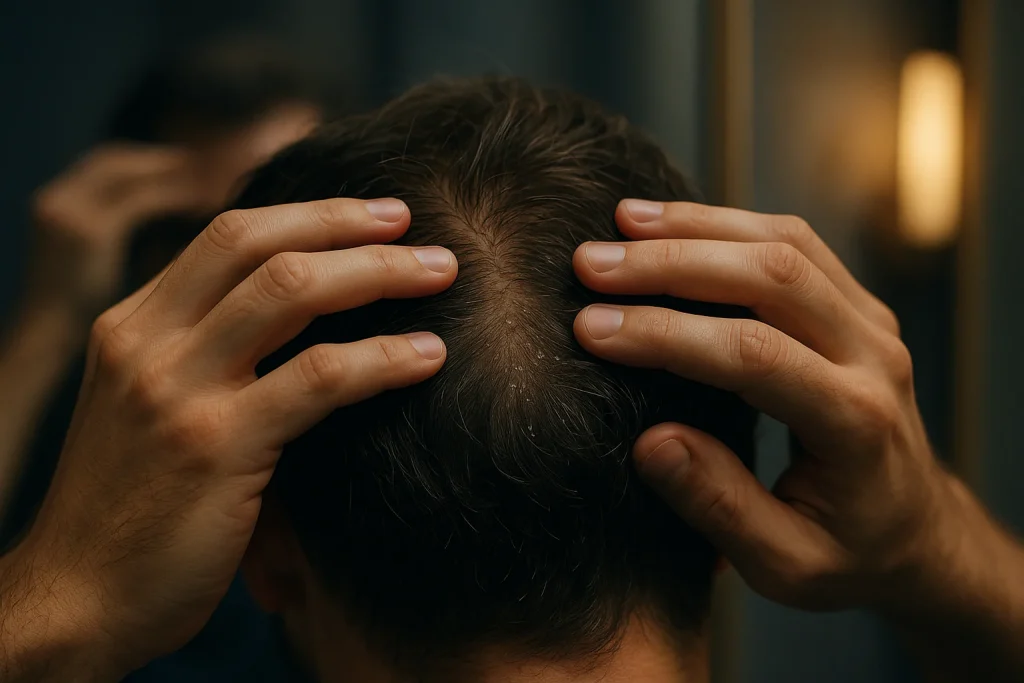
Scratching can loosen hairs that were already in the shedding phase, while repeated rubbing may also break fragile hair shafts and irritate the scalp. Scratching scalp and hair loss often occur together because of an underlying scalp condition, such as dandruff, dermatitis, infection, or inflammation, rather than scratching alone. A medical assessment is important if itching, redness, scaling, pain, or noticeable shedding persists.
- Scratching does not usually cause permanent hair loss by itself, but repeated trauma can worsen breakage and inflammation.
- An itchy scalp may be linked to dandruff, dermatitis, product irritation, fungal infection, psoriasis, or less commonly an autoimmune condition.
- Hair that appears in the hand after scratching may already have been in its natural shedding stage.
- Persistent itch with scaling, pain, pustules, patchy loss, or scarring needs timely medical evaluation.
- A calm, healthy scalp should be assessed and treated before planning a hair transplant.
01Scratching Scalp and Hair Loss: What Is the Link?
Many people notice hairs on their fingers, pillow, or shower floor after rubbing an itchy area and immediately worry that scratching scalp and hair loss are directly linked. In most cases, the hairs released during scratching were already loose and close to the end of their natural growth cycle. The scratching action makes them easier to see. However, this does not mean scalp itching should be ignored, especially when shedding is new, heavy, or accompanied by visible scalp changes.
Hair grows in repeating phases. During the resting and shedding phase, known as telogen, an older hair separates from its follicle so a new one can eventually grow. A light scratch can dislodge a hair that has already detached. This is different from pulling out a firmly growing hair. If many hairs are coming away at once, the more useful question is often why the scalp is itchy or why more follicles may have entered the shedding phase.
Repeated vigorous scratching can still be harmful. Fingernails may damage the outer hair shaft, causing breakage that can look like hair loss. They may also create tiny breaks in the skin, increase redness, and make an existing inflammatory condition worse. Severe or long-lasting inflammation around follicles can affect the quality of hair growth, so early assessment is sensible when the problem does not settle.
02Why an Itchy Scalp Can Shed or Break Hair
Itching and shedding can share the same underlying trigger. For example, dandruff and seborrhoeic dermatitis may cause flaking, oiliness, redness, and itch. The inflammation and frequent rubbing can make normal shedding more noticeable. Contact dermatitis from a hair dye, styling product, fragrance, or other cosmetic ingredient may also create itch, burning, and temporary shedding in some people.
There is an important difference between hair shedding and hair breakage. Shedding means a complete hair leaves the follicle, often with a small pale bulb at one end. Breakage means the hair shaft snaps somewhere along its length, leaving shorter uneven hairs. Scratching with nails, brushing aggressively, chemical processing, heat styling, and tight hairstyles can all contribute to breakage without necessarily changing the number of living follicles.
When scratching scalp and hair loss are discussed together, it is also important to consider stress-related shedding, illness, rapid changes in nutrition, hormonal changes, and hereditary hair thinning. These issues may occur at the same time as a scalp condition. An examination can help distinguish diffuse shedding from a scalp problem, patterned thinning, or a more localised cause of hair loss.
03Common Scalp Conditions Behind Persistent Itching
Dandruff is one of the most common reasons for an itchy, flaky scalp. It may produce fine white flakes or thicker greasy scale, and symptoms can come and go. Seborrhoeic dermatitis is a more inflamed form that can affect the scalp, hairline, eyebrows, and areas around the nose. It is usually manageable, but persistent symptoms should be reviewed so the diagnosis and care plan are appropriate.
Psoriasis can also affect the scalp. It may cause well-defined, thicker scale and can extend beyond the hairline. Scratching plaques can lead to bleeding, soreness, and temporary hair shedding. Hair commonly regrows once inflammation is controlled, but it is important not to assume that every flaky scalp is psoriasis. Several conditions can look similar without a clinical assessment.
Fungal infections, including scalp ringworm, can cause itching, scaling, broken hairs, swelling, and patchy hair loss. They require medical diagnosis and appropriate treatment rather than only cosmetic scalp products. Bacterial folliculitis may cause tender bumps or pustules around follicles. Because infections and inflammatory disorders can sometimes affect follicles more deeply, prompt care is especially important when there is pain, discharge, crusting, or rapidly expanding bald patches.
04When Hair Loss and Itching Need Medical Attention
Arrange a medical review if scalp itch continues for several weeks, keeps returning, disrupts sleep, or does not improve with gentle scalp care. You should also seek assessment for sudden heavy shedding, circular bald patches, broken hairs in one area, scaling that is thick or widespread, bleeding, swelling, or tenderness. These signs do not confirm a serious condition, but they help a clinician decide whether tests, scalp examination, or treatment may be needed.
Scarring hair loss deserves particular attention. In these conditions, inflammation can damage follicles and replace them with scar tissue, which may limit future regrowth in the affected area. Warning signs can include burning, pain, shiny areas with fewer visible follicle openings, pustules, or progressively widening patches. Early specialist assessment is important because a diagnosis cannot be made reliably from symptoms alone.
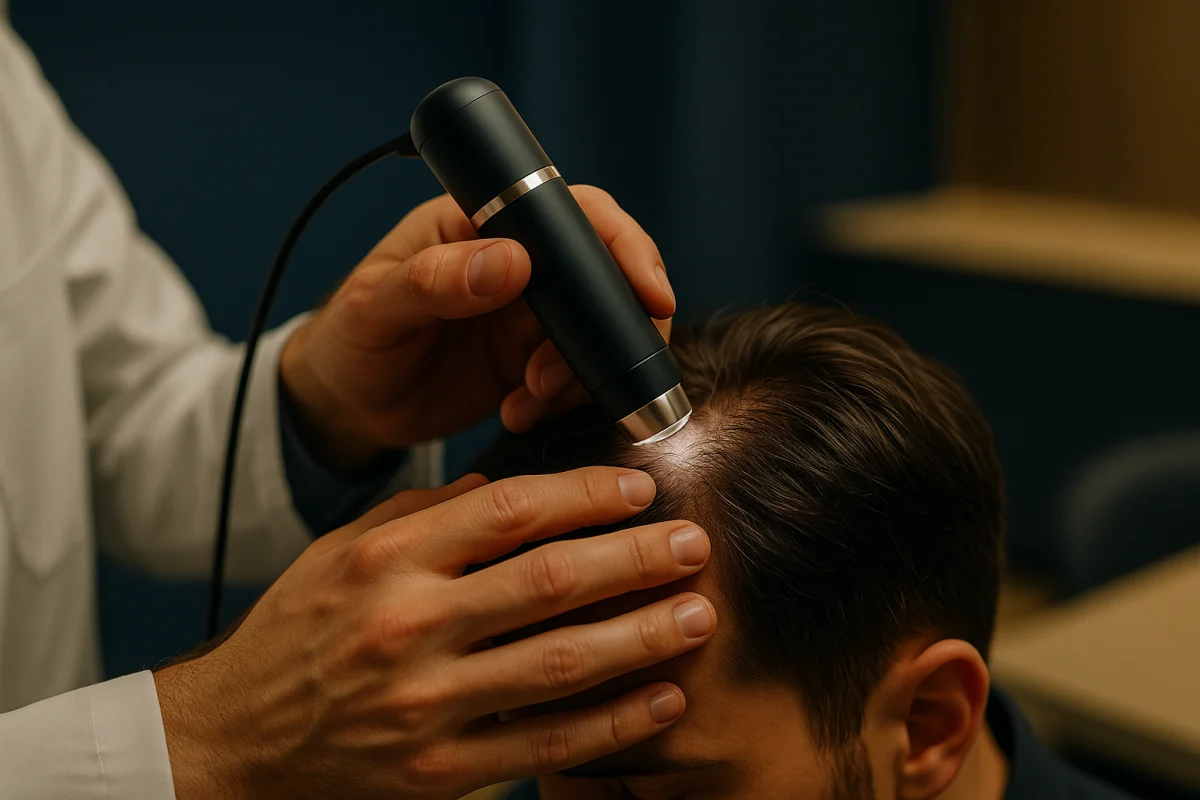
A clinician may ask about the timing of hair loss, recent illness, medications, family history, hair practices, diet, stress, and new products. They may inspect the scalp with magnification and, when clinically indicated, request blood tests or other investigations. This approach helps avoid treating an assumed vitamin issue or dandruff problem when another cause is present.
05Nutrition, Vitamins, and the Itchy Scalp Question
There is no single vitamin deficiency that reliably explains an itchy scalp. Dryness, scale, inflammation, allergy, infection, and hair product irritation are more common explanations. Nutritional deficiencies may contribute to diffuse shedding or poor hair quality in some people, but itching by itself is not a dependable sign of one specific vitamin problem. Taking high-dose supplements without confirmation can be unnecessary and may sometimes cause harm.
Iron deficiency, low zinc, low vitamin D, inadequate protein intake, and certain other nutritional issues may be considered when a doctor evaluates diffuse hair shedding. The relevance of each factor depends on symptoms, medical history, diet, and laboratory findings. A balanced diet supports general hair health, but it cannot replace diagnosis and treatment of a scalp disorder such as dermatitis, psoriasis, or infection.
If your diet is restricted, you have digestive symptoms, very heavy menstrual bleeding, recent weight loss, or ongoing fatigue alongside hair shedding, tell your doctor. These details can guide an appropriate evaluation. In most patients, correcting a confirmed deficiency is only one part of care; reducing scalp inflammation and avoiding physical trauma are equally important for a more comfortable scalp environment.
06Gentle Steps to Stop the Scratch Cycle
The first goal is to reduce injury from the itch-scratch cycle. Try to avoid using fingernails, as nails can cut the scalp and break hairs. Keeping nails short and clean may reduce accidental trauma. When an urge to scratch is strong, gentle pressure with the flat pads of the fingers may be less damaging than scratching, but persistent itch should still be investigated rather than managed through repeated rubbing.
Use hair and scalp products carefully. Fragranced sprays, strong styling products, frequent bleaching, and newly introduced dyes can irritate sensitive skin in some people. Stop using a product if it clearly causes burning, marked redness, or a rash, and seek medical advice if symptoms are significant. Gentle washing suited to your scalp type can remove oil and scale, but excessive washing or harsh scrubbing may worsen dryness and irritation.
Avoid picking flakes or scabs. Although it can feel relieving briefly, picking prolongs inflammation and can introduce bacteria through damaged skin. If the scalp is sore, avoid tight hairstyles and heavy extensions that add traction. For scratching scalp and hair loss that continues despite these changes, a doctor or dermatologist can identify whether medicated treatment or further investigation is appropriate.
07Preparing an Irritated Scalp for Hair Transplant Surgery
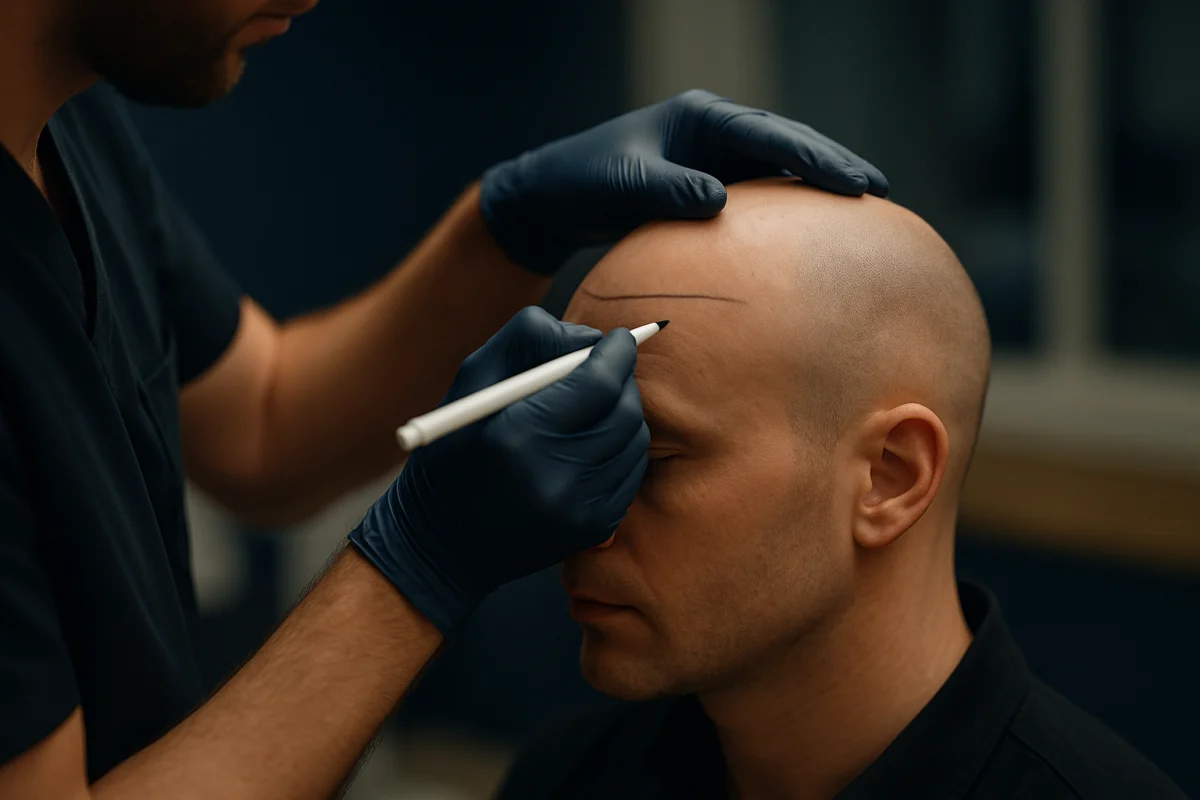
A hair transplant should be planned only when the scalp condition is stable and the reason for hair loss has been properly assessed. Active dermatitis, infection, folliculitis, psoriasis flare, open scratches, or unexplained inflammation may need treatment before surgery. This is important for comfort, healing, and the ability to place grafts carefully in healthy recipient skin. Your surgeon will confirm whether your scalp is ready for a procedure.
Hair transplantation redistributes follicles; it does not treat the underlying cause of itch or stop ongoing inflammatory hair loss. People with hereditary thinning may still be suitable after assessment, while people with uncontrolled scarring hair loss or active autoimmune inflammation may need specialist management first. The treatment plan should reflect the pattern, stability, donor area, scalp health, and realistic density goals rather than only the number of hairs seen falling out.
Before a procedure, be open about scalp symptoms, medical conditions, regular medications, allergies, supplements, and previous reactions to hair products. Do not hide intermittent itching simply because it has improved on the consultation day. At Acibadem Hair Transplant Center, a dedicated hair restoration clinic in Istanbul licensed by the Turkish Ministry of Health, doctors review a free online hair analysis before confirming suitability. This review can help identify whether an in-person scalp assessment is needed before planning Sapphire FUE or DHI treatment.
08Aftercare, Monitoring, and Long-Term Scalp Health
After a hair transplant, it is normal to receive detailed instructions about washing, touching the graft area, sleeping position, and returning to regular activities. The early healing period is not the time to scratch or pick at crusts. Friction can disturb healing skin and may affect recently placed grafts. If itch occurs after surgery, contact the clinical team for guidance rather than applying unapproved products or scratching the area.
Some temporary itching can occur as the skin heals, but increasing redness, pain, swelling, discharge, fever, or persistent pustules should be reported promptly. These symptoms need professional review because they can have different causes. Follow-up allows the team to monitor healing and address concerns early. It also gives patients a chance to discuss longer-term care for dandruff, sensitivity, or continuing non-transplanted hair thinning.
Acibadem Hair Transplant Center provides all-inclusive packages that can include VIP transfer, a 4-star hotel, a care kit, and 12 months of follow-up. Needle-free anaesthesia is available for suitable patients. The clinic documents graft survival by trichoscopic assessment at month 12, with a documented 98% rate under its written guarantee. Individual healing, density, and cosmetic outcomes can still vary, so your doctor will explain what is clinically realistic for your own scalp and hair characteristics.
09Frequently Asked Questions
Why do hairs come out when I scratch my head?
Scratching often releases hairs that were already in the normal shedding phase and ready to fall. Strong or frequent scratching can also break fragile hairs and irritate the scalp. If you are seeing substantial shedding, patches of hair loss, or scalp redness and scale, a clinician should assess the underlying cause.
What vitamin deficiency can make the scalp itch?
An itchy scalp is not a reliable sign of one specific vitamin deficiency. Conditions such as dandruff, dermatitis, psoriasis, allergy, and infection are more common causes. A doctor may consider iron, zinc, vitamin D, protein intake, and other factors if you also have diffuse shedding or symptoms that suggest a nutritional concern.
Why do I have both heavy hair shedding and an itchy scalp?
Hair shedding and itch can occur together because of scalp inflammation, dandruff, contact irritation, infection, stress-related shedding, or another hair condition. Sometimes two separate issues are present at the same time, such as hereditary thinning plus dermatitis. An examination is the safest way to distinguish shedding, breakage, and follicle-related hair loss.
Which autoimmune conditions may cause an itchy scalp and hair loss?
Discoid lupus erythematosus is one autoimmune condition that can affect the scalp and may cause inflammation, scaling, and scarring hair loss. Alopecia areata and psoriasis, which is immune-mediated, can also be associated with scalp symptoms, although itch varies between individuals. Because these conditions can resemble other scalp disorders, diagnosis should be made by a qualified clinician.
Este artículo tiene fines exclusivamente informativos y no sustituye el consejo médico profesional.
 06
06 12
12