
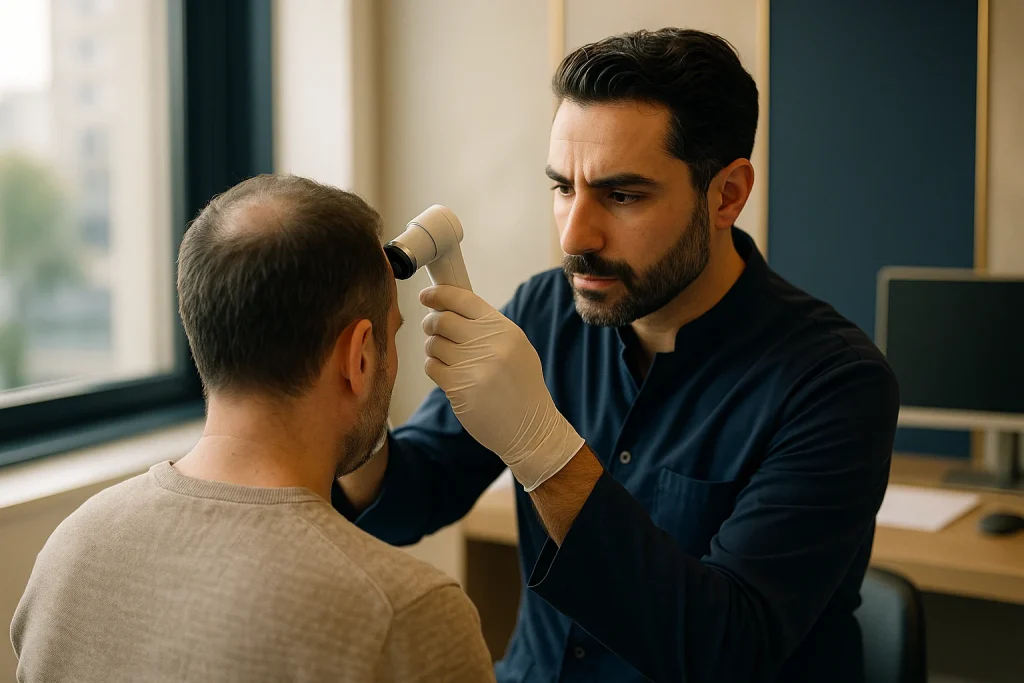
What is vertex baldness? It is hair thinning or hair loss at the crown, the circular area at the top-back of the scalp where hairs naturally grow in a spiral pattern. Before a hair transplant, a doctor should assess whether the loss is stable, how much donor hair is available, and whether medical treatment may help protect existing hair.
- Vertex baldness affects the crown and can look different because of the natural hair whorl in this area.
- Crown thinning is commonly linked to androgenetic hair loss, but a clinical assessment is important to rule out other causes.
- Early or active vertex loss may be managed with medical treatment, lifestyle support and monitoring before surgery is considered.
- A vertex hair transplant requires careful graft placement because the crown has a circular growth direction and can require significant graft coverage.
- A long-term plan should protect existing hair as well as restore visible thinning with realistic expectations.
01Understanding Vertex Baldness Before a Hair Transplant
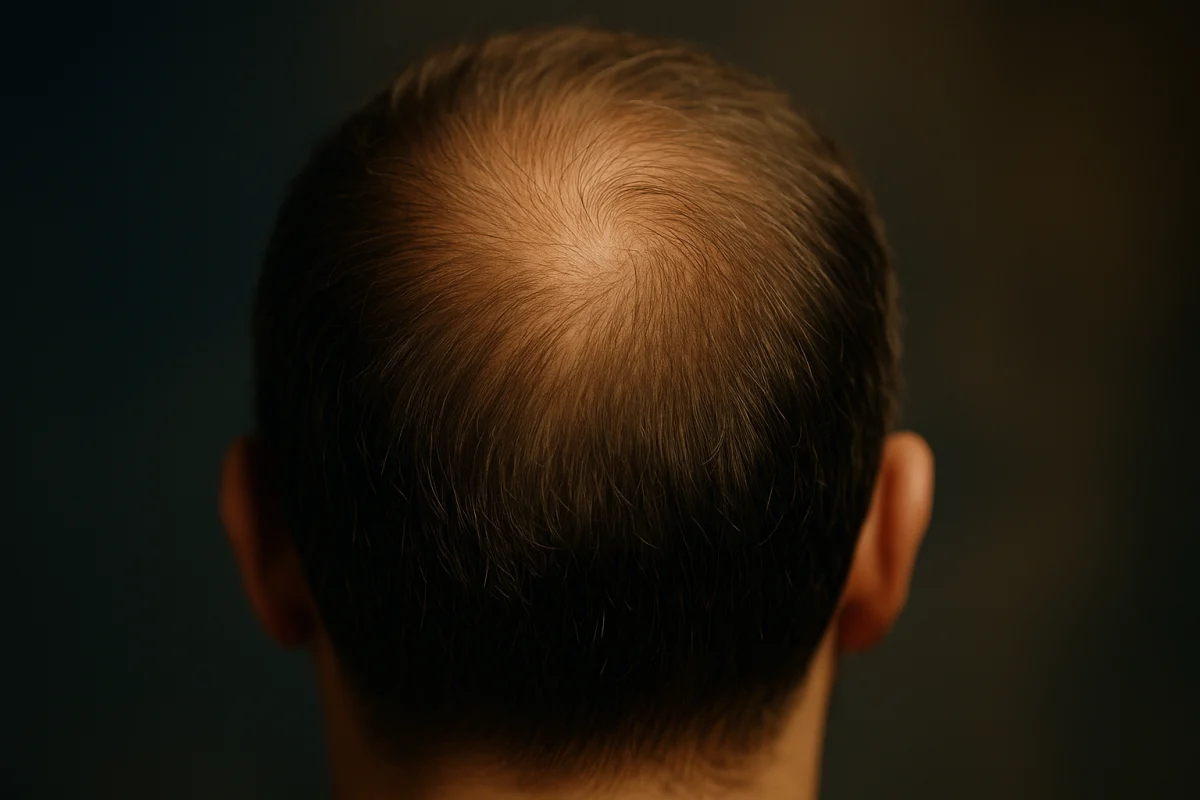
What is vertex baldness? It is a pattern of thinning that develops at the crown, also called the vertex, which is the upper-back part of the scalp. Many people first notice a small area of scalp showing through around the natural hair whorl. Because the hairs in this area grow in several directions, mild thinning can become visible under bright light, when the hair is wet, or in photographs taken from above.
Vertex thinning is often part of androgenetic alopecia, commonly known as male or female pattern hair loss. In many men, it may progress alongside temple recession or thinning through the mid-scalp. In women, crown changes can appear as widening density loss over the top of the scalp rather than a clearly defined bald circle. However, the appearance alone cannot confirm the cause, so a doctor’s assessment remains important.
A hair transplant may be an appropriate option for selected patients with established crown hair loss, good donor density and realistic expectations. It is not always the first step. If hair loss is still progressing quickly, placing grafts into the vertex without a wider long-term plan may leave surrounding native hairs vulnerable to future thinning. Careful planning helps create a result that continues to look balanced over time.
02What is vertex baldness and why does the crown need special planning?
The vertex is different from the frontal hairline because it contains a natural spiral called a hair whorl. Hair emerges from the centre of this whorl and changes direction as it moves outward. This pattern can make the scalp more visible even when there are still many hairs present. It also means that transplanted grafts must be placed at precise angles and directions to blend naturally with the patient’s existing hair.
Crown coverage can require more grafts than patients expect. The area is broad, and density needs may increase when the existing hair is fine, light in colour, curly, or continuing to miniaturise. A surgeon usually considers the diameter of the thinning area, hair shaft characteristics, scalp contrast, donor capacity and the likelihood of future loss before recommending a graft range. The goal is typically visual improvement and natural coverage, not an unrealistic recreation of youthful density.
The crown is also a region where light plays an important role. Direct overhead lighting may reveal scalp between hairs, while normal indoor lighting may make the same area appear much fuller. During a consultation, clear photographs and trichoscopic examination can help distinguish between reduced density, miniaturised hairs and a fully bald area. This information supports a safer decision about whether treatment, observation or surgery is most suitable.
03How crown thinning usually develops over time
In androgenetic hair loss, genetically sensitive follicles gradually become smaller under the influence of hormones and inherited factors. The growing phase may shorten, and each new hair can become finer, shorter and less pigmented. At the vertex, this often starts as diffuse see-through density around the whorl. Over time, the affected area may expand towards the mid-scalp or connect with frontal and temple recession.
When patients ask what is vertex baldness, they are often trying to understand whether a small crown spot will become larger. The answer varies between individuals. Some people experience slow, limited progression for years, while others develop broader loss. Family history can offer clues, but it cannot accurately predict an individual pattern. A doctor can compare your current distribution, donor area and miniaturisation pattern to discuss likely risks in cautious terms.
Not all crown hair loss is genetic. Sudden shedding, scaling, itching, painful inflammation, patchy hair loss, recent illness, nutritional problems, medication changes or scarring can suggest another cause. These situations may need medical investigation before any transplant is considered. Transplanting into an untreated inflammatory or unstable condition may not be advisable, because the underlying process could affect both native and transplanted hair.
04How doctors assess whether you are ready for a vertex transplant
A suitable assessment begins with a medical history and a close review of the scalp. The doctor may ask when thinning started, whether shedding has changed recently, what treatments you have used, and whether close relatives have a similar pattern. They will also examine the hairline, mid-scalp, crown and donor zone because a crown transplant should never be planned as an isolated area without considering the whole scalp.
Trichoscopy can provide a closer view of hair shaft thickness, follicle groupings and signs of miniaturisation. This can help identify whether apparently dense areas are likely to remain stable or may thin later. The donor region at the sides and back of the scalp also needs careful evaluation. Donor hair is limited, and preserving it for possible future needs is a central principle of responsible hair restoration planning.
Age can be relevant, but it is not the only factor. A younger patient with rapidly changing hair loss may need a more conservative approach, while an older patient with a stable pattern may be ready for surgical restoration. Your doctor will also consider general health, scalp condition, expectations and the ability to follow aftercare guidance. An online hair analysis can be a useful first screening step, but it does not replace an in-person clinical evaluation.
05Medical and non-surgical options for crown thinning
For some patients, non-surgical treatment may help slow further loss or improve the appearance of miniaturised hairs at the vertex. Common options may include topical minoxidil and prescription medicines that affect hormonal pathways, where clinically appropriate. Suitability, expected benefits, possible side effects, pregnancy considerations and interactions should always be discussed with a qualified doctor rather than decided from online advice alone.
Minoxidil is not limited to the vertex, although early research and product instructions have often focused on crown thinning. It may be used on other areas of the scalp when a clinician considers it appropriate, but response can vary by person and by location. It usually requires consistent long-term use, and temporary shedding may occur at the beginning in some users. Stopping treatment can allow supported hairs to return gradually to their previous cycle.
Some patients may also benefit from addressing correctable factors that affect hair quality, such as iron deficiency or thyroid disease when identified through medical assessment. Gentle hair care, adequate nutrition and avoiding traction or harsh chemical damage can support scalp and hair health, but they do not replace treatment for genetic hair loss. A doctor can help separate supportive measures from treatments with a clearer clinical role.
06Planning a natural-looking hair transplant for the vertex
A transplant plan for what is vertex baldness should account for both today’s visible thinning and the possibility of future expansion. The surgeon usually avoids exhausting the donor area simply to fill a large crown at very high density. Instead, they may prioritise a natural spiral pattern, appropriate coverage and a graft allocation that keeps options available if the mid-scalp or frontal area needs attention later.
Sapphire FUE and DHI are techniques that may be used within an individual treatment plan. In Sapphire FUE, follicular units are extracted and then placed into carefully created recipient sites. With DHI, extracted grafts are implanted using a specialised implanter approach. Neither technique is automatically best for every patient; the recommended method should depend on the scalp, hair characteristics, graft requirements and the surgeon’s clinical judgement.
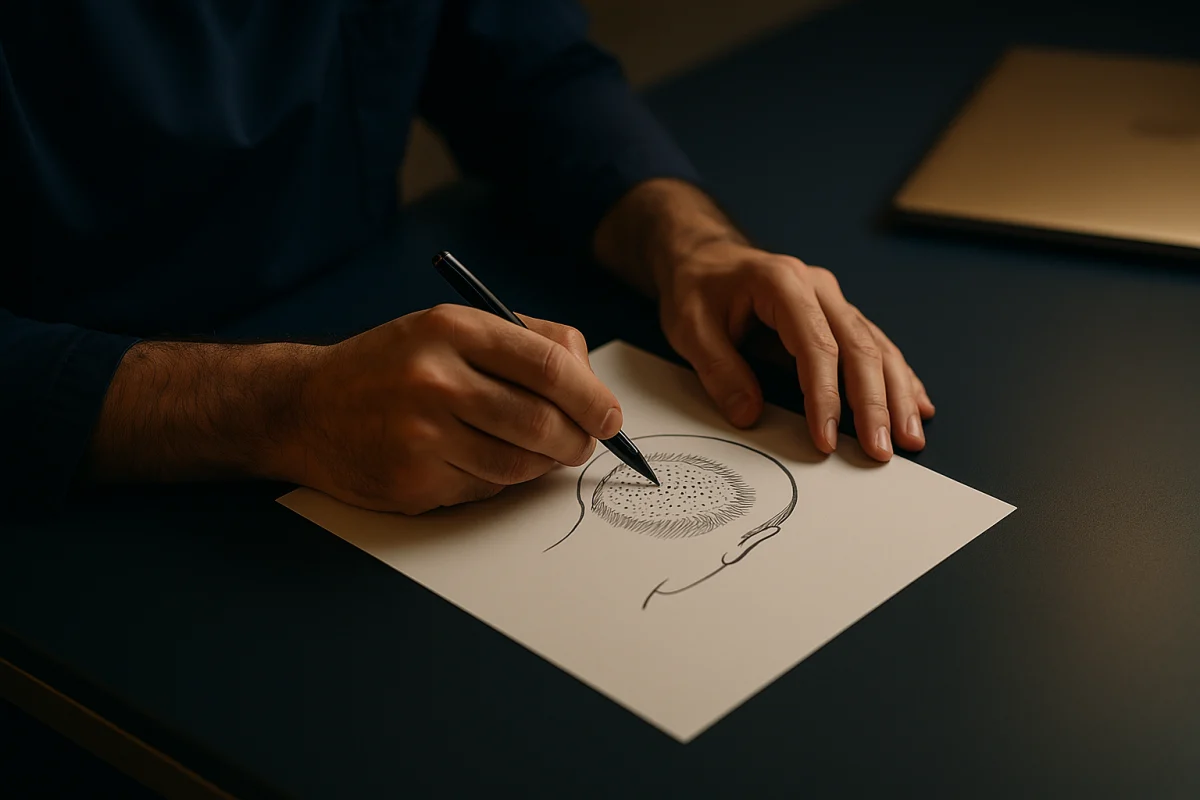
The direction of placement is especially important at the crown. Grafts are arranged to follow and rebuild the natural rotational flow of the hair whorl, using angles that lie close to the scalp. If grafts are placed in an unnatural direction or at an unsuitable angle, the result may look less harmonious even if growth occurs. For this reason, vertex surgery requires detailed design rather than simply adding a high number of grafts.
07Recovery, visible growth and long-term crown care
After a hair transplant, small crusts and redness are common during the early healing period. Your clinical team will provide washing instructions and advise when normal activities can be resumed. It is important not to rub, scratch or dislodge grafts during the initial recovery phase. Swelling and temporary changes in the appearance of the transplanted area can occur, and the exact experience differs between patients.
Transplanted hairs commonly shed in the first weeks before new growth begins. This can be worrying, but it is generally part of the normal hair cycle after transplantation. Early growth may be fine and uneven, while the crown can take time to mature because of its growth direction and broad surface area. Doctors typically assess progress over several months, with a fuller view of graft survival and cosmetic development around month 12.
Long-term care often includes monitoring the native hair around the transplant. A successful procedure does not stop genetic hair loss in non-transplanted follicles. Depending on the patient’s medical profile, a doctor may discuss ongoing treatment to help preserve these hairs. At Acibadem Hair Transplant Center in Istanbul, patients can begin with a free online hair analysis reviewed by doctors, with WhatsApp replies typically within around two hours, followed by a treatment discussion based on individual findings.
08Vertex transplant aftercare: practical steps during the first two weeks
The first 10 to 14 days are important because the newly placed grafts need protection while the scalp heals. Follow the washing, sleeping and activity instructions given by your clinical team, as these may be adjusted for your procedure and skin condition. In general, patients are asked to avoid touching the recipient area except when washing as instructed, and to avoid rubbing the crown with towels, clothing, hats or bedding.
Sleeping with the head elevated may be recommended for the first few nights to limit swelling. Choose loose, front-opening clothing where possible, so you do not need to pull a shirt across the scalp. Avoid strenuous exercise, heavy sweating, swimming, saunas and direct sun exposure until your team confirms that these activities can be resumed. These precautions help reduce irritation and lower the chance of disturbing healing grafts.
Small scabs usually form around the grafts and should be allowed to soften and come away naturally during the instructed wash routine. Do not pick them, even if the crown feels itchy. If you notice increasing pain, spreading redness, discharge, fever, unexpected bleeding or another concerning change, contact your clinical team promptly. Your doctor will explain what is expected in your own recovery and when an in-person review may be needed.
09A realistic month-by-month timeline for vertex hair transplant growth
In the first month, the transplanted crown can look different from day to day as redness settles, scabs clear and the short implanted hairs shed. This shedding phase is common after transplantation and does not usually mean that the follicle has been lost. The recipient area may temporarily look similar to, or thinner than, it did before treatment, particularly because the vertex is visible from above.
Between approximately months three and six, early new hairs may start to emerge. They can be fine, lighter in texture or uneven at first. Crown growth can appear slower than patients expect because the area is wide and the hair must develop enough length to overlap and create coverage around the whorl. Comparing photographs taken in the same lighting and angle can be more helpful than judging daily changes in a mirror.
From around months six to nine, many patients see more noticeable coverage and improved hair calibre, although development continues. A more meaningful assessment is usually made around month 12, when the result has had time to mature. At Acibadem Hair Transplant Center, graft survival is measured trichoscopically at month 12; the clinic documents a 98% rate under its written guarantee. Individual cosmetic density and the appearance of native hair can still vary according to hair characteristics, the original degree of loss and ongoing hair loss outside the transplanted area.
10Travelling to Istanbul for a crown transplant: planning your visit
International patients should plan enough time in Istanbul for the procedure, immediate post-treatment review and travel instructions. It is sensible to confirm your travel dates only after the clinic has reviewed your online assessment and explained the proposed schedule. Before travelling, share relevant medical history, current medicines, allergies and previous scalp procedures accurately, so the doctors can identify issues that may require further evaluation.
For the journey home, pack loose front-opening clothes, avoid carrying heavy luggage if this is not comfortable after treatment, and keep your post-procedure care items accessible rather than placing them in checked baggage. Long flights do not replace the need for the early recovery precautions provided by your team. If you have questions about flying, headwear, washing arrangements at your hotel or a planned onward journey, ask before leaving the clinic so you receive guidance that matches your treatment plan.
Acibadem Hair Transplant Center is a dedicated hair restoration clinic in Istanbul, licensed by the Turkish Ministry of Health. Its all-inclusive packages include VIP transfer, a 4-star hotel, a care kit and 12 months of follow-up. Patients can submit photographs for a free online hair analysis reviewed by doctors, and WhatsApp replies are typically provided within around two hours. This early review can help you understand whether travelling for a vertex transplant may be appropriate before making detailed arrangements.
11Frequently Asked Questions
What treatment did Elon Musk use for his hair regrowth?
Elon Musk has not publicly confirmed a specific hair restoration treatment, so it would not be reliable to state what he used. Changes in public appearance can have several explanations, including styling, medication, hair fibres or hair transplantation. A consultation should focus on your own pattern of hair loss, donor area and medical suitability rather than a celebrity comparison.
Can vertex baldness be reversed?
Whether vertex thinning can improve depends on its cause and how advanced it is. In some patients with early androgenetic hair loss, medical treatment may help maintain hair and improve the appearance of miniaturised follicles. When follicles have been lost for a long time, a hair transplant may be considered to restore coverage if donor hair and scalp health are suitable.
Does minoxidil work only on the vertex?
No. Minoxidil is not restricted to the vertex, although crown thinning has been a common area of study and use. It may help some people with thinning in other scalp areas, but results vary and consistent use is usually needed. A doctor or pharmacist can advise whether it is appropriate for your situation and how to use it safely.
Which ethnic group experiences the least baldness?
There is no single ethnic or racial group that can be described as universally the least affected by baldness. Population studies have reported different average patterns of androgenetic hair loss among ancestry groups, with some East Asian populations often showing lower observed rates than some European populations. Individual genetics, age, hormones, health and family history are much more useful than race for understanding one person’s risk.
Este artículo tiene fines exclusivamente informativos y no sustituye el consejo médico profesional.
 06
06 12
12