En este artículo9
- When to ask what type of doctor treats hair loss
- Why a dermatologist is often the first specialist
- When other medical specialists may be involved
- When a hair restoration surgeon may be appropriate
- What happens during a hair loss assessment
- How doctors tell temporary shedding from progressive loss
- Practical steps that may support healthier hair
- Choosing a safe pathway for diagnosis and restoration
- Frequently Asked Questions
A dermatologist is typically the first specialist to assess hair loss because they diagnose conditions affecting the scalp, hair follicles, and skin. Depending on the suspected cause, what type of doctor treats hair loss may also include a primary care doctor, endocrinologist, gynaecologist, or a qualified hair restoration surgeon.
- A dermatologist is usually the most appropriate first specialist for unexplained, sudden, patchy, or progressive hair loss.
- Hair shedding can be linked to genetics, hormones, illness, stress, nutrition, medication, scalp disease, or hair-care practices.
- Blood tests and scalp examination may help a doctor identify treatable medical causes before considering a hair transplant.
- Temporary shedding often begins after a trigger and may improve as the trigger resolves, while genetic thinning usually progresses gradually.
- A hair transplant consultation should include a medical assessment of the diagnosis, donor area, and long-term treatment plan.
01When to ask what type of doctor treats hair loss
If you are wondering what type of doctor treats hair loss, a dermatologist is generally the best starting point. Dermatologists are trained to examine the scalp, hair follicles, and skin, and to distinguish common patterns of shedding from inflammatory, autoimmune, infectious, or scarring conditions. They can also decide whether another medical specialist should be involved. Seeking assessment early can be especially helpful if the hair loss is sudden, patchy, painful, associated with scalp changes, or causing significant concern.
Hair loss is not one single diagnosis. Some people notice increased hair in the shower after fever, surgery, childbirth, a stressful period, or rapid weight change. Others see a slowly widening part, receding hairline, thinning crown, or a reduction in overall density over several years. The appearance, timing, family history, medical history, and scalp findings all provide useful clues. A professional evaluation focuses on finding the likely cause rather than assuming that every form of hair loss has the same solution.
It is normal to shed some hairs each day as part of the hair growth cycle. A concern arises when shedding becomes noticeably greater than usual, the scalp becomes more visible, bald patches appear, or the hairline and density continue to change. Taking clear photographs in similar lighting over several months can help document change, but photos do not replace clinical assessment. Your doctor can advise whether observation, treatment, testing, or referral is appropriate.
02Why a dermatologist is often the first specialist
A dermatologist can assess both the hair and the scalp in detail. During the appointment, they may ask when the problem began, whether there was a triggering event, which medicines or supplements you use, and whether close relatives have similar hair changes. They may look for scale, redness, itching, broken hairs, follicle changes, or the distribution of thinning. These details can help separate common pattern hair loss from conditions that need prompt medical treatment.
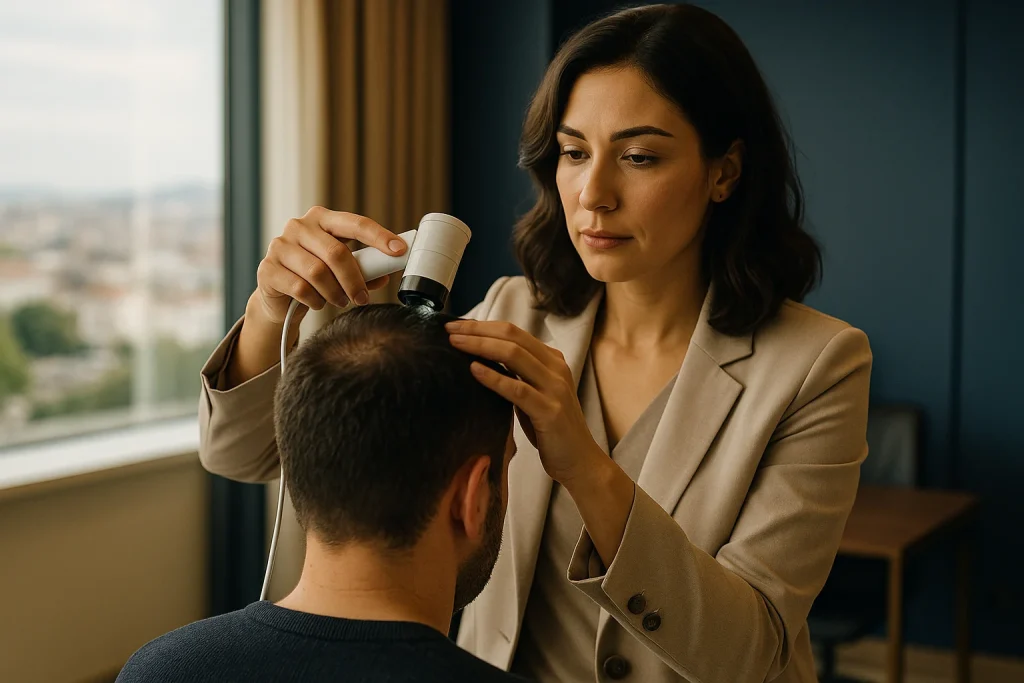
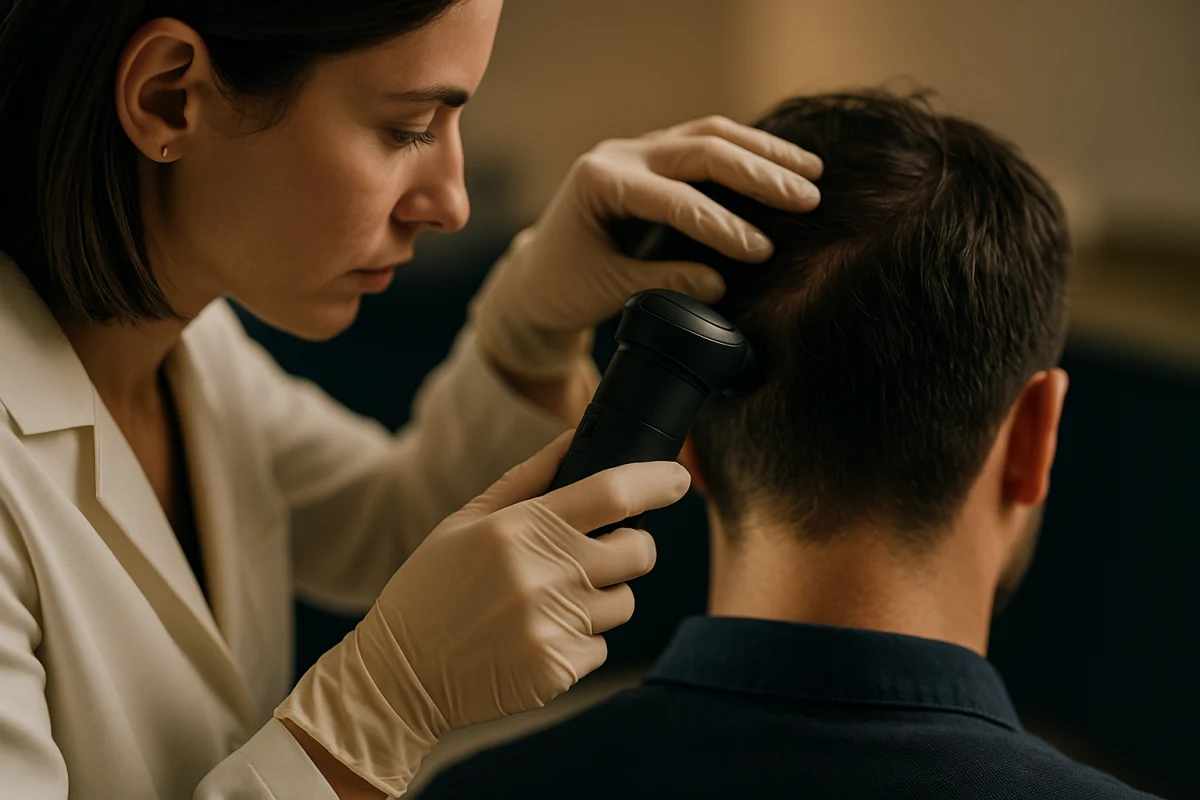
For most people asking what type of doctor treats hair loss, the dermatologist’s role is valuable because hair loss may be connected to dermatology, internal medicine, hormones, or nutrition. A dermatologist may use close scalp examination or trichoscopy, a magnified assessment of the scalp and hair shafts. In selected cases, they may recommend blood tests, take a small scalp biopsy, prescribe treatment, or refer you to another specialist. The exact investigation depends on your symptoms and medical background.
Prompt dermatology review is particularly important when there are smooth round patches, scalp pain, burning, pus, thick scale, shiny areas without visible follicle openings, eyebrow or body-hair loss, or rapid shedding. These signs do not confirm a particular condition on their own, but they may indicate an issue that should not be managed only with cosmetic products. Early diagnosis can help protect remaining hair in conditions where inflammation damages follicles.
03When other medical specialists may be involved
A primary care doctor can be an important first contact, especially when hair shedding occurs alongside fatigue, unexplained weight change, menstrual changes, recent illness, digestive symptoms, or a new medication. They can review your general health, medical history, and current treatments, and arrange initial tests when clinically indicated. They may then refer you to a dermatologist or another specialist based on the findings.
An endocrinologist may be involved if there is a concern about thyroid disease, insulin-related hormonal changes, adrenal conditions, or other endocrine disorders. In women, a gynaecologist may also be part of the care pathway when menstrual irregularity, acne, excess facial hair, fertility concerns, pregnancy, postpartum changes, or menopause suggest a hormonal factor. These specialists work to identify and manage the underlying medical issue; they do not assume that hormone changes are the cause without assessment.
A registered dietitian may be helpful when restrictive eating, significant weight loss, low protein intake, digestive disease, or a highly limited diet could be affecting nutrition. Hair is not a reliable indicator of one specific nutrient deficiency, and self-prescribing high-dose supplements can be unhelpful or unsafe. A doctor can determine whether testing is needed and whether nutrition support should form part of a broader treatment plan.
04When a hair restoration surgeon may be appropriate
A qualified hair restoration surgeon can assess whether a hair transplant may be suitable after the cause and pattern of hair loss have been evaluated. Transplant surgery is most often considered for stable or gradually progressive pattern hair loss when the donor area has adequate density. It is not usually the first answer for sudden shedding, active scalp inflammation, or hair loss that may improve after an underlying trigger is addressed.
When considering what type of doctor treats hair loss in the context of surgery, it is important to distinguish diagnosis from a purely cosmetic consultation. A responsible surgical assessment reviews the hairline, degree of thinning, family history, donor hair quality, scalp health, and the likelihood of future loss. Your clinician should discuss realistic density, the possibility of further treatment, and whether waiting or medical management is more appropriate before surgery.
At Acibadem Hair Transplant Center, a dedicated hair restoration clinic in Istanbul licensed by the Turkish Ministry of Health, patients can request a free online hair analysis that is reviewed by doctors. The initial review can help clarify whether an in-person consultation may be appropriate, but it does not replace examination or diagnosis by your doctor. The centre offers Sapphire FUE and DHI techniques, with the final technique decision based on clinical assessment and individual planning.
05What happens during a hair loss assessment
A careful assessment usually starts with your story. The clinician may ask about the speed of hair loss, recent physical or emotional stress, fever, surgery, childbirth, dietary changes, chronic illnesses, medications, family history, and hair styling practices. It can be useful to prepare a timeline before the visit. Bring a list of prescription medicines, over-the-counter products, and supplements, as some may affect shedding or test results.
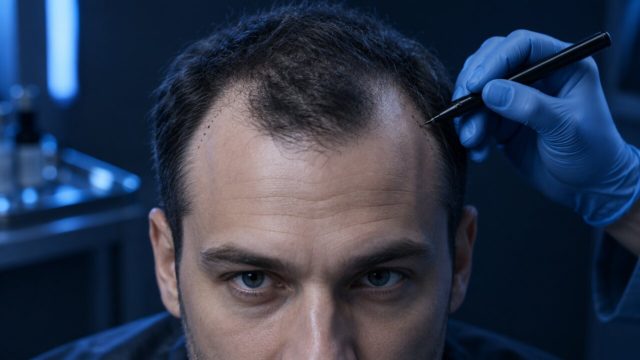
The physical examination may include checking the scalp for inflammation, scaling, scarring, tenderness, and changes in follicle openings. The clinician will also consider the pattern of loss, such as a widening central part, temple recession, crown thinning, diffuse shedding, or isolated patches. Trichoscopy can give a closer view of hairs and follicles. This method may support the diagnosis, although results are interpreted together with your history and examination.
Blood tests are not needed for every patient, but they may be considered when symptoms or history suggest a possible medical cause. Depending on the clinical situation, tests may assess iron stores, thyroid function, blood count, vitamin levels, hormones, or other factors. A scalp biopsy is reserved for selected cases, especially where scarring hair loss or another unclear scalp disorder is suspected. Your doctor will explain which tests are relevant and what the results mean.
06How doctors tell temporary shedding from progressive loss
Temporary shedding, often called telogen effluvium, commonly becomes noticeable a few months after a trigger such as a significant illness, high fever, surgery, major stress, childbirth, or marked dietary change. It often causes increased shedding from across the scalp rather than a single bald area. In many patients, shedding settles gradually after the trigger has resolved, although recovery of visible fullness can take time because hair grows slowly.
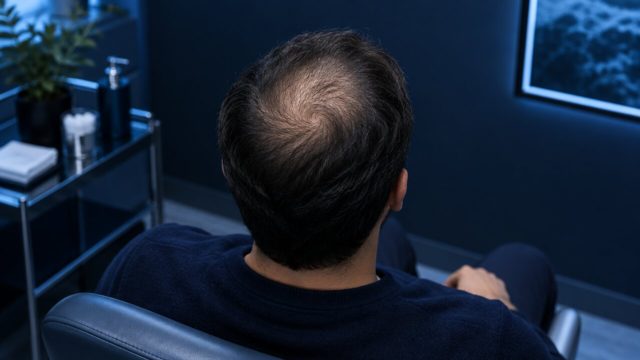
Progressive pattern hair loss usually develops more gradually. In men, it may begin with recession at the temples or thinning at the crown. In women, it may present as a wider part or reduced density over the top of the scalp while the frontal hairline is often preserved. Genetics and sensitivity of hair follicles to hormones can play a role. Pattern hair loss can also occur alongside temporary shedding, which is why an assessment is useful.
Scarring forms of hair loss require special attention because follicles may be permanently damaged if inflammation continues. Warning signs may include discomfort, itching, burning, redness, scaling, pustules, or smooth shiny skin in affected areas. These features do not always mean scarring is present, but they should be assessed by a dermatologist without delay. Only a medical examination, and sometimes additional testing, can establish the likely diagnosis.
07Practical steps that may support healthier hair
Good hair care can reduce avoidable breakage, although it cannot fully prevent genetic or medical hair loss. Avoid frequent tight hairstyles that pull at the roots, harsh chemical processing, and repeated high heat when possible. Use gentle handling when hair is wet, and seek advice if you have scalp irritation after using a product. Breakage affects the hair shaft, while follicle-related hair loss begins at the scalp, so the two issues may look similar but need different approaches.
A balanced diet with adequate energy, protein, and essential nutrients supports normal hair growth. However, no single food, vitamin, or supplement is proven to solve every type of hair loss. Taking supplements without a confirmed need may delay proper diagnosis and, in some cases, cause side effects or interfere with other treatments. If you suspect a nutritional issue, discuss it with a doctor or registered dietitian before starting high-dose products.
Managing stress, sleeping well, treating chronic health conditions, and attending follow-up appointments can support general wellbeing and hair health. These measures are not a substitute for medical treatment when a scalp disease or progressive condition is present. If a clinician prescribes treatment, use it exactly as directed and discuss any side effects rather than stopping or changing the plan on your own. Hair response is usually assessed over months, not days.
08Choosing a safe pathway for diagnosis and restoration
Choose a clinic or specialist that treats hair loss as a medical concern as well as an aesthetic one. You should feel able to ask about the suspected diagnosis, alternatives to surgery, expected timeline, possible risks, and the long-term plan if hair loss progresses. Be cautious of claims that promise a universal cure, instant density, or a guaranteed individual result. A trustworthy consultation makes room for uncertainty and explains what can realistically be assessed.
For people who are suitable candidates for transplantation, planning matters as much as the procedure itself. The donor area is limited, and grafts should be used with consideration for existing hair and possible future thinning. Acibadem Hair Transplant Center provides all-inclusive packages that include VIP transfer, a 4-star hotel, a care kit, and 12 months of follow-up. Needle-free anaesthesia is also available for eligible patients, subject to clinical evaluation.
The centre documents trichoscopic graft survival at month 12 and reports a 98% rate under its written guarantee. This measure refers to documented graft survival within the guarantee terms and should not be interpreted as a promise of the same cosmetic outcome for every individual. Final appearance can be influenced by the original condition, donor characteristics, healing, future hair loss, and adherence to aftercare. An online review can be requested before travel, with WhatsApp replies typically provided within around two hours.
09Frequently Asked Questions
Why are many Gen Z adults noticing hair loss?
Gen Z adults may notice hair loss for many of the same reasons as other age groups, including inherited pattern hair loss, stress, illness, restrictive dieting, hormonal changes, scalp conditions, and certain medicines. Greater awareness through photos, social media, and hair-care routines may also make early changes more noticeable. A dermatologist can help identify whether the change is normal shedding, temporary shedding, or a progressive condition.
Which vitamin deficiency can cause hair to fall out?
Hair shedding can be associated with nutritional deficiencies, but no single vitamin explains every case. Iron deficiency, low vitamin D, low vitamin B12, inadequate protein intake, and other nutritional issues may be considered when symptoms and history suggest them. Your doctor can decide whether blood testing is appropriate, as taking supplements without confirmed need is not always helpful.
What can I do to help prevent hair loss?
You may reduce avoidable breakage by using gentle hair care, avoiding persistent traction from tight styles, and limiting harsh heat or chemical treatments. A balanced diet, management of underlying medical conditions, and early assessment of new shedding can also be helpful. Genetic hair loss cannot always be prevented, but timely medical advice may help you understand available management options.
How can I tell whether my hair loss is temporary or permanent?
Temporary shedding often follows a trigger such as illness, major stress, childbirth, surgery, or rapid dietary change and may affect the scalp more diffusely. Progressive pattern loss usually develops slowly in a recognisable distribution, while scarring hair loss may involve scalp symptoms such as redness, pain, or shiny areas. Only a qualified clinician can confirm the likely cause and outlook after examining your scalp and history.
Este artículo tiene fines exclusivamente informativos y no sustituye el consejo médico profesional.
Esta guía es de carácter informativo y no sustituye una consulta médica. Las decisiones de tratamiento se toman tras una valoración médica presencial u online.