
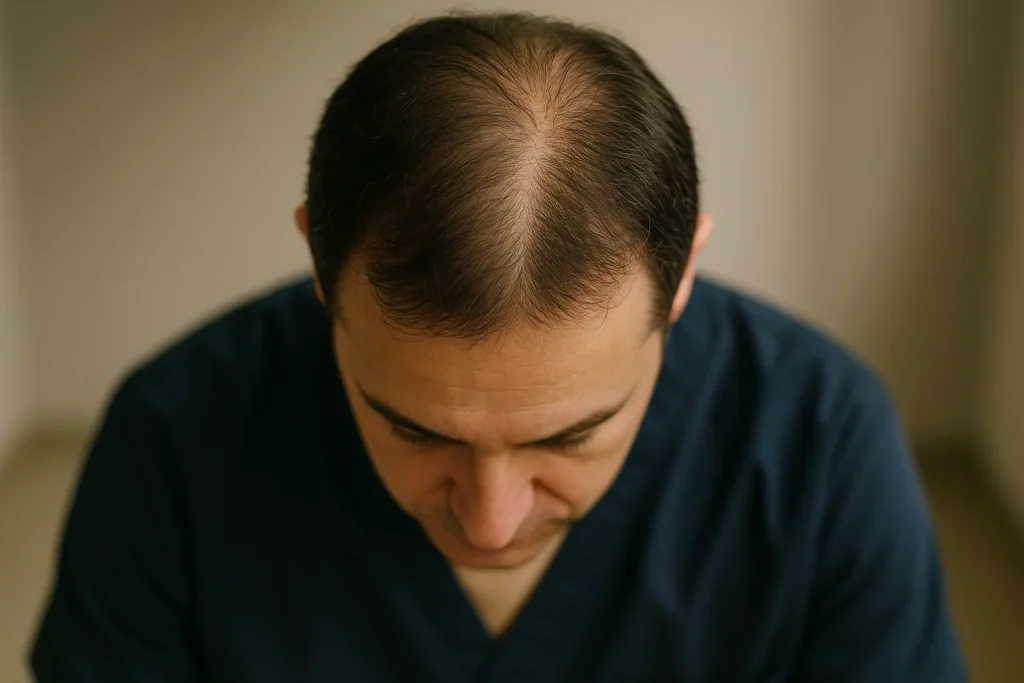
A bald spot where hair parts can be caused by gradual pattern hair loss, temporary shedding, hair breakage, traction, scalp inflammation, or less commonly, a scarring condition. The best next step is a medical assessment to identify whether follicles are still active and whether treatment, monitoring, or hair transplantation may be appropriate.
- A widening part can be an early sign of hair thinning, but it does not always mean permanent hair loss.
- The appearance of a bald area may result from shedding, breakage, scalp disease, or progressive follicle miniaturisation.
- Early assessment is important when the scalp is painful, itchy, red, scaly, shiny, or when hair loss develops quickly.
- Some forms of hair loss can improve when the underlying cause is treated, while stable permanent loss may be considered for transplantation.
- Hair transplantation is usually evaluated only after the cause, pattern, donor area, and future risk of further thinning have been reviewed.
01Understanding a Bald Spot Where Hair Parts
Many people notice a bald spot where hair parts before they see obvious thinning elsewhere. The part may look wider in photographs, under bright overhead light, after washing, or when the hair is pulled into a style. This can feel worrying, but a visible scalp line is not automatically a sign that a large number of follicles have been lost. Hair density, strand thickness, curl pattern, natural hair colour, and the contrast between hair and scalp can all change how noticeable the part appears.
A normal part line is usually narrow and relatively even. When it becomes broader, irregular, or more visible from the front toward the crown, it may suggest reduced density around the part. In some patients, the change is gradual over months or years. In others, increased shedding makes the scalp show through more quickly. Looking at the timeline, whether shedding is active, and whether there are scalp symptoms helps a doctor narrow down the possible causes.
Before considering a hair transplant, it is important to understand why the area looks sparse. A transplant moves follicles from a donor area to a thinning area, but it does not treat every cause of hair loss. If the loss is temporary, inflammatory, or still rapidly progressing, the first priority is usually diagnosis and appropriate medical management. Your doctor can assess whether the hairs in the part are becoming finer, whether follicles are absent, and whether the pattern appears stable enough for future planning.
02Common Reasons the Part Line Starts to Look Wider
Gradual pattern hair loss is one of the most common reasons for a widening part. In this process, susceptible follicles gradually produce shorter, finer, and less pigmented hairs. The number of hairs may not suddenly disappear at first, but their reduced thickness allows more scalp to become visible. This pattern can affect women and men, although the distribution often differs. In many women, diffuse thinning over the top of the scalp and a widening central part are early visible changes.
Temporary shedding can also make a part look unexpectedly broad. A physical illness, high fever, major emotional stress, surgery, rapid weight change, childbirth, restrictive eating, or some medicines can shift more hairs than usual into the shedding phase. This type of shedding often becomes noticeable several weeks or months after the trigger. Because the remaining hair is less dense for a period, the part may reveal more scalp, even though follicles may still be capable of producing new growth.
Repeated pulling, tight styling, extensions, and frequent tension on the same area may contribute to traction-related hair loss. Chemical processing, heat damage, and rough brushing can also cause breakage, which may mimic thinning near the part. In addition, scalp conditions such as dandruff-like scaling, psoriasis, fungal infection, or inflammatory disease can affect comfort and hair appearance. These causes need different approaches, which is why self-diagnosis from a photograph alone is not reliable.
03A Bald Spot Where Hair Parts Can Signal Different Patterns
The location and shape of the visible area matter. A broad central line running from the hairline toward the crown is often associated with diffuse pattern thinning, especially when nearby hairs appear finer than those at the sides or back. A round or oval patch with a clearer border may have a different cause. Patchy loss may occur in autoimmune hair loss, infection, traction, or scarring conditions, and it should be assessed rather than assumed to be routine pattern loss.
Some people notice a triangular or widened area close to the front of the part, while others first see reduced density at the crown. Hair styling can exaggerate both patterns. A strict middle part may expose the scalp more than a softer or changed parting, but changing the part does not itself restore follicle density. It may provide a useful temporary cosmetic adjustment while the underlying reason for the change is being investigated.
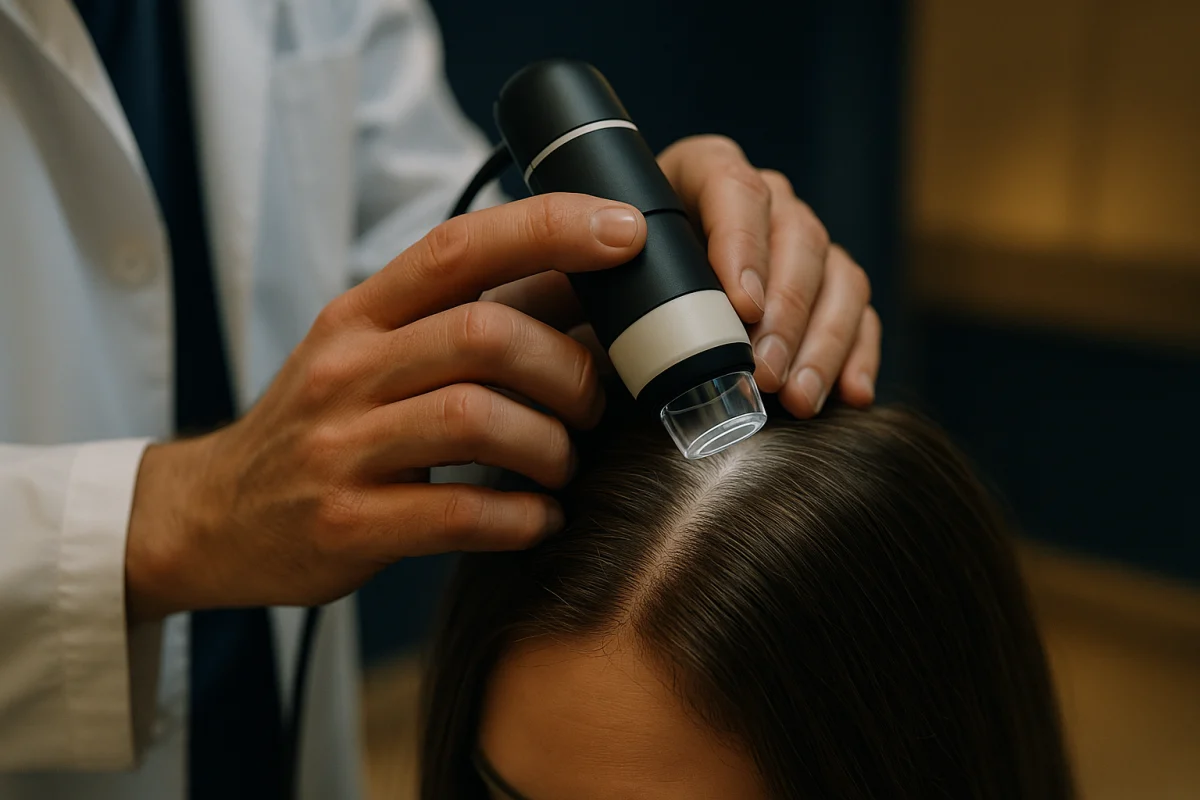
It is also possible for a part to look wider because the hair shafts are breaking rather than falling from the root. Broken hairs often create uneven lengths, frizz, and a less smooth surface around the part. By contrast, active shedding may leave full-length hairs on a pillow, in the shower, or on a brush. These clues can be helpful, but only scalp examination and, where appropriate, trichoscopic assessment can distinguish miniaturisation, breakage, and other changes with greater confidence.
04When Part-Line Thinning Needs Prompt Medical Review
A gradual change without discomfort is often less urgent than hair loss that is sudden, patchy, or accompanied by scalp symptoms. You should arrange medical review promptly if the scalp is painful, burning, very itchy, red, swollen, crusted, or heavily scaly. A smooth, shiny area with little or no visible follicle opening also needs timely assessment. These signs can sometimes occur with conditions that may permanently damage follicles if inflammation continues untreated.
Rapid shedding, a sharply defined bald patch, eyebrow or body-hair changes, and loss after starting a new medicine are further reasons to speak with a qualified clinician. Your medical history is important. A doctor may ask about recent illness, stress, menstrual or hormonal changes, nutrition, family pattern of hair loss, hairstyling habits, and skin symptoms. Depending on the situation, they may also consider whether blood tests or referral to a dermatologist are appropriate.
Do not assume that a larger part is only cosmetic if it continues to widen. Early evaluation may help identify potentially reversible contributors and establish a useful baseline. Standardised photographs and trichoscopy can document density, shaft diameter variation, scalp condition, and the presence of new short hairs. This information is also valuable if hair transplantation is discussed later, because it helps determine whether the recipient area is stable and whether existing hair needs protection.
05How Doctors Assess the Cause Before Hair Transplantation
A responsible pre-transplant assessment begins with diagnosis, not graft numbers. The clinician will usually review the history of change, family history, general health, medication use, hair care routine, and expectations. They then examine the pattern of loss across the hairline, part, crown, sides, and donor area. The donor area is important because a transplant depends on follicles that are likely to remain resistant to future thinning after they are moved.
Trichoscopy is a close examination of the scalp and hair shafts using magnification. It can help reveal differences in hair diameter, reduced density, broken hairs, inflammation, scaling, and signs that follicles may be scarred. At Acibadem Hair Transplant Center, results are measured by trichoscopic graft survival at month 12, with a documented 98% rate under written guarantee. This type of follow-up measurement relates to transplanted graft survival, not a promise that every patient will achieve the same cosmetic density or overall appearance.
A doctor may decide that transplantation should be delayed if active shedding is significant, if the diagnosis is unclear, if scalp inflammation needs treatment, or if future loss is likely to change the overall pattern. This is not a setback; it can protect a patient from an unnatural-looking result as surrounding native hair continues to thin. A long-term plan may include monitoring, medical treatment where suitable, and later consideration of Sapphire FUE or DHI when the hair loss pattern is sufficiently stable.
06Can Hair Grow Back in a Thin or Bald Part?
Whether hair can grow back depends on the cause and on the condition of the follicles. When follicles are still present but temporarily resting, weakened by a correctable trigger, or affected by inflammation that is treated early, regrowth may be possible. New hair often grows slowly, so improvement may take months to become visible. The speed and amount of recovery vary, and your doctor will confirm what is realistic after assessing the scalp.
In early pattern hair loss, the follicles may still produce hair, but the hairs become progressively finer. Medical treatment can sometimes help maintain or improve existing hair in suitable patients, but it needs professional review because treatments have different indications, risks, and suitability considerations. Nutritional correction may be relevant if a proven deficiency is contributing. Taking supplements without identifying a need is not a substitute for medical assessment and may not address the actual cause.
If follicles have been permanently destroyed by a scarring process, spontaneous regrowth is less likely. Similarly, an area that has been smooth and bare for a long period may have limited potential for natural recovery. A hair transplant may be considered in selected cases only after the condition is inactive and a specialist believes the scalp is suitable. Even then, careful counselling is needed because the future behaviour of the condition can affect planning and outcomes.
07Managing a Thinning Part Before Considering Surgery
The first goal is to protect existing hair and address any identified cause. This may include treatment prescribed by a doctor, management of a scalp condition, gentler hair practices, or correction of a confirmed health factor. Avoid tight hairstyles that create discomfort or repeated tension at the same part. Reduce unnecessary heat and chemical stress where possible, and handle wet hair gently because it is more prone to breakage. These measures support hair care but do not replace medical evaluation.
Cosmetic options can make a thinning part less noticeable while a treatment plan is being reviewed. A change in part direction, a softer zigzag part, a layered haircut, or professional styling may reduce scalp contrast. Some patients use scalp camouflage products, but these should be selected carefully if there is active irritation or scaling. The aim is not to hide important symptoms; it is to improve confidence while the cause is being managed or monitored.
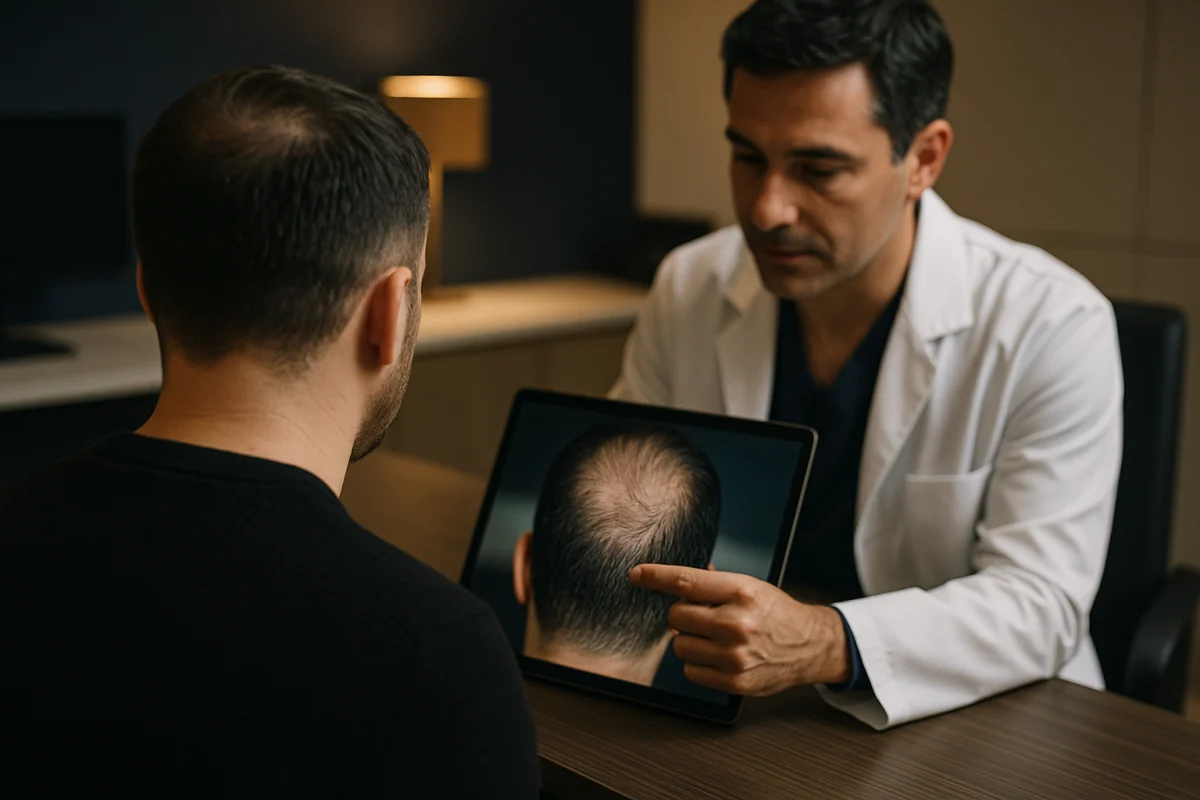
Progress photographs can be useful when taken under similar lighting, angle, hair condition, and part position. This provides a more meaningful comparison than checking the mirror every day, when lighting can be misleading. If you are considering a procedure, clear photographs also help the medical team understand the distribution of thinning. Acibadem Hair Transplant Center offers a free online hair analysis reviewed by doctors, with WhatsApp replies typically within around two hours, although an online review cannot replace an in-person clinical examination when scalp disease is suspected.
08When a Hair Transplant May Be Appropriate for the Part
Hair transplantation may be an option when hair loss is stable, the diagnosis is clear, the scalp is healthy, and the donor area has adequate density. For a thinning part, the goal is usually to add carefully placed grafts between existing hairs without damaging them. This requires thoughtful angle, direction, spacing, and density planning. A transplant can improve coverage, but it cannot create unlimited density, and the final plan must respect the available donor supply.
Both Sapphire FUE and DHI can be used in appropriate candidates, but no technique is automatically best for every person. The choice depends on the hair characteristics, area to be treated, existing native hair, donor assessment, and the doctor’s surgical plan. Needle-free anaesthesia is also available at the clinic for suitable patients. Your doctor will explain the procedure, preparation, healing period, and the realistic timeline for visible growth if transplantation is recommended.
Patients should understand that transplanted hair and native hair are different parts of the long-term picture. Existing hairs around the part may continue to thin if the underlying pattern hair loss progresses. For this reason, doctors may discuss medical management and future planning alongside surgery. Acibadem Hair Transplant Center is a dedicated hair restoration clinic in Istanbul, licensed by the Turkish Ministry of Health, and provides all-inclusive packages that can include VIP transfer, a 4-star hotel, a care kit, and 12 months of follow-up.
09Questions to Ask at a Hair Loss Consultation
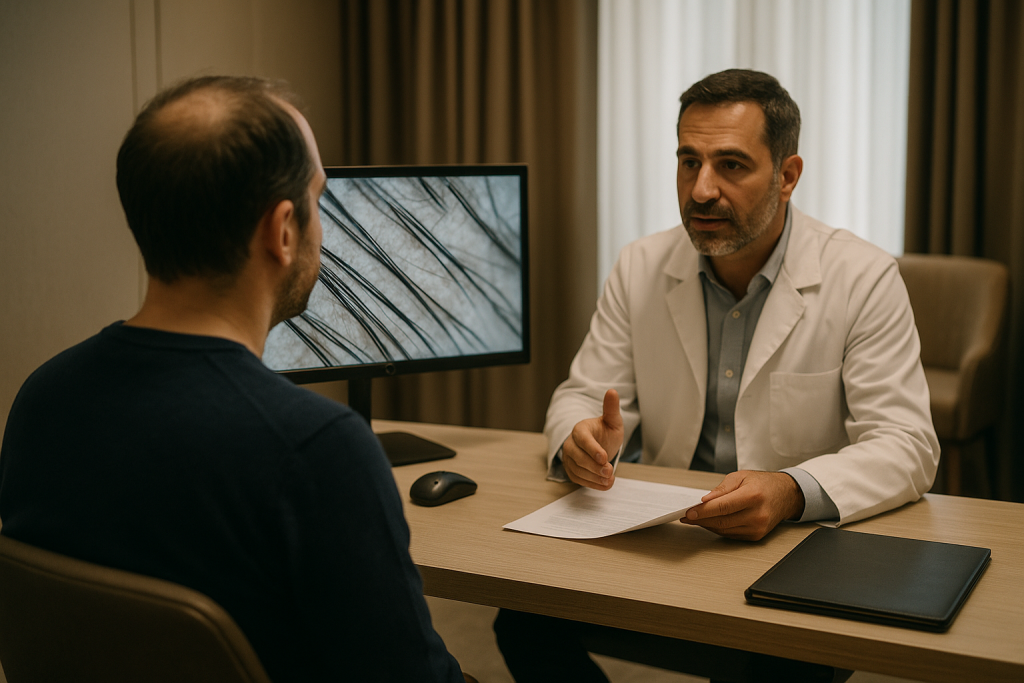
A good consultation should leave you with a clear explanation of the likely cause of the visible part-line change. Ask whether the pattern appears temporary, progressive, inflammatory, or scar-related, and whether further testing or dermatology review is needed. You can also ask how the doctor assesses donor capacity, whether your native hair is likely to change further, and what steps may help preserve it. Clear answers support informed decisions and realistic expectations.
It is reasonable to ask how a proposed transplant plan will look if future thinning occurs. In part-line work, overly dense placement in one small area can look unbalanced if the surrounding hair becomes sparser later. The doctor should discuss graft distribution rather than focusing only on a single number. They should also explain that healing, hair growth cycles, scalp characteristics, and the progression of native hair loss can influence the visible result.
International patients may also want to ask how follow-up will be organised after returning home. Acibadem Hair Transplant Center has treated patients from 38 countries over 12 years and includes 12 months of follow-up within its all-inclusive packages. However, if you develop new pain, swelling, redness, rapid shedding, or other scalp symptoms at any stage, you should seek timely medical advice locally rather than relying only on remote communication.
10Frequently Asked Questions
Why is there a bald spot where I usually part my hair?
A visible area along the part may be caused by gradual pattern hair loss, temporary shedding, hair breakage, traction from styling, or a scalp condition. The shape, speed of change, hair shaft thickness, and scalp symptoms help distinguish these possibilities. A clinician can examine the scalp and confirm the most likely cause.
Can hair grow back in a bald spot?
Hair may regrow when follicles are still present and the cause is temporary or treatable, such as certain shedding patterns, breakage, or inflammation treated early. Regrowth is less likely where follicles have been permanently destroyed or where long-standing loss has left the scalp smooth and scarred. A doctor can assess follicle activity and discuss realistic options.
What does stage 1 alopecia mean?
Stage 1 alopecia is not one universal medical diagnosis because different hair loss grading systems use different stages. It often refers informally to an early or mild degree of thinning, but the meaning depends on the type of alopecia and the scale being used. Ask the clinician which classification they mean and what it indicates for your particular pattern.
How can a thinning bald spot be improved?
The right approach depends on the cause. It may involve treating an underlying scalp or health issue, reviewing suitable medical options with a doctor, reducing traction and breakage, and monitoring changes over time. If the loss is stable and permanent, a hair transplant may be considered after donor and scalp assessment.
Cet article est fourni à titre d’information générale uniquement et ne remplace pas un avis médical professionnel.
 06
 12