Dans cet article9
- Vue d’ensemble
- What is the meaning of fue in hair transplantation?
- The meaning of follicular units and grafts
- How FUE graft harvesting is typically performed
- FUE, sapphire FUE, and DHI: terms that describe different stages
- Is FUE worthwhile? Looking beyond the acronym
- Recovery vocabulary and the timeline after FUE
- Questions to ask when FUE is mentioned in a consultation
- Frequently Asked Questions
The answer to what is the meaning of fue is follicular unit extraction, a hair restoration method in which naturally occurring follicular units are collected from a donor area. These grafts are then prepared and implanted into areas of thinning or hair loss; your doctor will confirm whether this approach is suitable for you.
- FUE usually means follicular unit extraction, referring to the way grafts are collected from the donor area.
- A follicular unit is a small natural grouping of one or more hairs that can be transplanted as a graft.
- FUE describes graft harvesting, while terms such as DHI and sapphire may describe other parts of the procedure.
- Suitability, graft planning, and expected density depend on donor hair, hair-loss pattern, health history, and clinical assessment.
- FUE results develop gradually, with the final outcome commonly assessed around 12 months after treatment.
01Fue Terminology: What the Acronym Refers To
When people first research surgical hair restoration, they often see FUE in clinic information, treatment plans, and online discussions. If you are asking what is the meaning of fue, it usually refers to follicular unit extraction. This is a method of collecting individual hair-bearing units from a donor area, most often at the back and sides of the scalp, before placing them in areas affected by hair thinning or loss.
The acronym can sound technical, but the principle is straightforward. Hair does not grow from the scalp one strand at a time in every case. It commonly grows in small natural groups called follicular units. During an FUE procedure, these units are carefully removed with a small instrument, checked, and later implanted according to a treatment plan designed to create a natural-looking direction and distribution.
It is helpful to separate the acronym from the full transplant journey. FUE does not automatically describe the consultation, hairline design, anaesthesia, graft preparation, implantation method, recovery plan, or eventual cosmetic result. Those stages are all important. A clear understanding of the terminology can help patients ask better questions and compare treatment information more confidently.
02What is the meaning of fue in hair transplantation?
In hair transplantation, what is the meaning of fue is most commonly answered as follicular unit extraction. “Follicular” relates to the hair follicle, “unit” refers to the natural group of hairs growing together, and “extraction” describes the harvesting of that group from the donor scalp. The collected unit is often called a graft, although the two words are not always used in exactly the same way in clinical conversations.
Some medical professionals also use the phrase follicular unit excision. This wording highlights the precise removal step made around a follicular unit before it is lifted from the skin. For patients, both expressions are generally used in relation to the same individual-graft harvesting approach. Your clinic should explain the terms it uses and the technique planned for your procedure in plain language.
FUE is not a diagnosis and it is not a product. It is a surgical harvesting technique used for scalp hair restoration and, in selected cases, may also be discussed for other hair-bearing areas. Whether it is appropriate depends on factors such as the stability of hair loss, the available donor supply, scalp characteristics, and your treatment goals. A doctor-led evaluation is needed before a recommendation can be made.
03The meaning of follicular units and grafts
A follicular unit is a naturally occurring bundle of hairs emerging close together from the scalp. One unit may contain a single hair, while another may contain more than one. It also includes surrounding tissue that supports the hair follicles. Preserving these natural groups is an important principle in modern hair transplantation because it can support a soft and realistic-looking pattern when grafts are placed correctly.
A graft is the term often used for the tissue moved during transplantation. In an FUE procedure, a graft may contain one follicular unit. The number of hairs and the number of grafts are therefore different measurements. For example, a plan based only on hair count may not explain how coverage, hairline refinement, or visual density will be approached. Your medical team should clarify which measurement is being discussed.
Graft quality matters as much as graft quantity. Careful harvesting, hydration, sorting, and placement are intended to protect the follicles during the procedure. However, no clinic can responsibly promise that every graft will grow in the same way. Healing, biological variation, donor characteristics, and adherence to aftercare can all influence the final development of transplanted hair.
04How FUE graft harvesting is typically performed
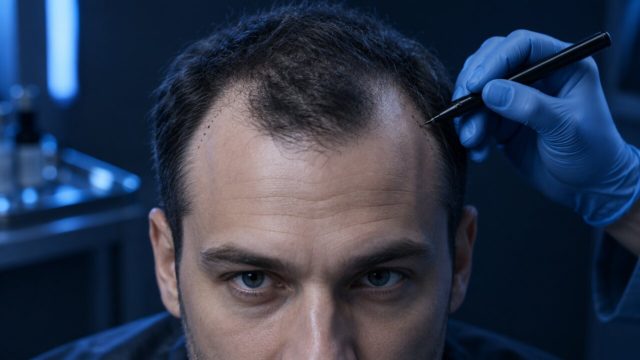
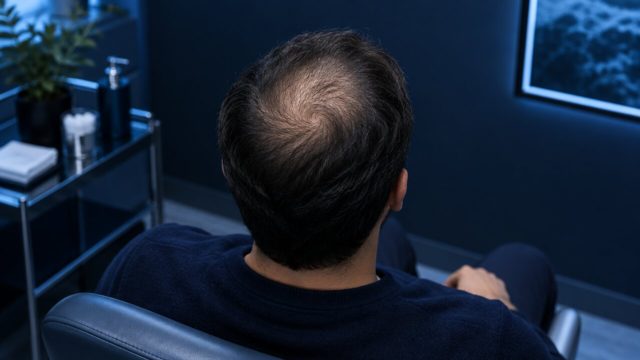
FUE usually begins with a clinical examination and a plan for the donor and recipient areas. The donor zone is the area where grafts are collected, often because the hair there is more resistant to the pattern of thinning seen elsewhere on the scalp. The recipient zone is the area where grafts will be implanted. Planning aims to use the donor supply carefully rather than simply remove the highest possible number of grafts.
On the day of treatment, the donor hair is normally trimmed so the team can see the direction in which each unit grows. Local anaesthesia is commonly used to make the surgical stages more comfortable. At Acibadem Hair Transplant Center, needle-free anaesthesia is available for eligible patients. Your doctor will confirm the most appropriate anaesthesia approach after reviewing your medical history and treatment plan.
A small punch instrument is used to separate each selected follicular unit from nearby tissue, and the graft is then removed with care. The grafts are examined and kept under controlled conditions before implantation. Although the collection points are small, FUE remains a medical procedure. Good technique includes protecting the donor area, avoiding excessive harvesting, and respecting the direction and depth of the follicles.
05FUE, sapphire FUE, and DHI: terms that describe different stages
Patients may hear several names during the same consultation, which can make hair transplant terminology seem confusing. FUE primarily describes how grafts are harvested. It does not by itself explain how recipient channels are created or how grafts are placed. For this reason, it is useful to ask which term refers to harvesting, which refers to implantation, and which refers to the surgical instrument used.
Sapphire FUE is a term commonly used when sapphire blades are used to create recipient channels after FUE graft collection. These channels help guide the angle, direction, and distribution of the transplanted hairs. The suitability of this method depends on the treatment plan and the clinical assessment, rather than on the name alone. Acibadem Hair Transplant Center offers Sapphire FUE as one of its hair restoration techniques.
DHI, or direct hair implantation, is generally used to describe a graft placement approach using a specialised implantation tool. Grafts may still be collected with an FUE-based method before this stage. Therefore, FUE and DHI are not always opposite choices. They can describe different parts of the same wider procedure. A meaningful comparison should focus on your donor area, recipient needs, and the surgeon’s recommended plan.
06Is FUE worthwhile? Looking beyond the acronym
Whether FUE is worthwhile is a personal and clinical question, not one that can be answered by the acronym alone. In appropriately selected patients, it may offer a way to redistribute permanent donor hair to areas of concern without removing a strip of scalp tissue. However, the value of any transplant depends on realistic goals, safe donor management, a suitable hair-loss pattern, and an understanding that transplanted hair needs time to grow.
For many people, what is the meaning of fue becomes more relevant once they understand what the technique can and cannot do. FUE does not create new hair follicles or stop all future thinning in non-transplanted hair. It aims to move available donor follicles. If hair loss continues, some patients may need a long-term medical management discussion or may require future planning, depending on their individual situation.
A responsible consultation should explore donor density, hair calibre, scalp condition, family history of hair loss, current medication, and general health. It should also discuss the proposed hairline and the likely coverage that can be achieved with the available graft supply. People with limited donor hair, unstable hair loss, certain scalp conditions, or relevant health concerns may be advised to delay surgery or consider another approach.
07Recovery vocabulary and the timeline after FUE
Knowing common recovery terms can make the period after an FUE transplant less confusing. “Recipient area” describes the transplanted zone, while “donor area” describes where grafts were collected. Small crusts can form around the implanted grafts during the early healing period. Clinics usually provide washing instructions to help patients care for these areas gently and avoid disturbing the grafts.
“Shock loss” is another term patients may encounter. It describes temporary shedding that can occur in transplanted hairs and sometimes nearby existing hairs after a procedure. This does not automatically mean the transplant has failed. Hair growth follows a biological cycle, and newly transplanted follicles commonly enter a resting phase before visible new growth begins. Your medical team can explain what is typical for your recovery.
Early changes should not be treated as the final result. New growth generally develops gradually over several months, while the appearance, thickness, and maturation of the transplanted hair continue to improve with time. Final results are commonly assessed around month 12. At Acibadem Hair Transplant Center, results are measured through trichoscopic graft survival at month 12, with a documented 98% rate under a written guarantee.
08Questions to ask when FUE is mentioned in a consultation
When FUE is included in a proposed treatment plan, ask what it means in your specific case. Useful questions include where the donor grafts would be taken from, how the donor area will be protected, how many grafts may be appropriate, and how the team will plan a natural hairline. It is also reasonable to ask who performs each stage and how your progress will be followed after you return home.
International patients may benefit from starting with a clear remote assessment. Acibadem Hair Transplant Center is a dedicated hair restoration clinic in Istanbul, licensed by the Turkish Ministry of Health. A free online hair analysis is reviewed by doctors, and WhatsApp replies are typically provided within around two hours. This initial review does not replace an in-person medical examination, but it can help clarify the next steps.
A complete care plan should be as important as the technique name. The centre provides all-inclusive packages that include VIP transfer, a 4-star hotel, a care kit, and 12 months of follow-up. During more than 12 years, the clinic has welcomed patients from 38 countries. Before travelling, patients should still review the written plan, eligibility requirements, aftercare arrangements, and any questions they have with the clinical team.
09Frequently Asked Questions
What is the full meaning of FUE?
FUE most commonly stands for follicular unit extraction. It refers to collecting naturally occurring hair groups, known as follicular units, one by one from a donor area for transplantation. Some clinicians use the related term follicular unit excision to describe the removal step more precisely.
What does FUE mean in English?
In English, FUE means follicular unit extraction. “Follicular” refers to hair follicles, “unit” means a natural group of hairs, and “extraction” describes collecting that group from the donor area. The acronym refers to harvesting and does not describe every stage of a hair transplant.
Is an FUE hair transplant worth considering?
FUE may be worth considering for patients with suitable donor hair, stable enough hair loss, and realistic expectations. Its potential value depends on a safe graft plan, the quality of surgical care, and how well the approach fits your long-term hair goals. A doctor should assess your situation before confirming whether it is appropriate.
What does a FUE mean when a clinic recommends it?
When a clinic recommends FUE, it usually means the team plans to harvest individual follicular units rather than remove a strip of donor scalp. You can ask how the grafts will be implanted, how the donor area will be managed, and what outcome may be realistic for your available donor supply. A clear treatment plan should explain these points before you decide.
Cet article est fourni à titre d’information générale uniquement et ne remplace pas un avis médical professionnel.
Ce guide est fourni à titre d’information générale et ne remplace pas une consultation médicale. Les décisions de traitement sont prises après une évaluation par un médecin, en personne ou en ligne.