Dans cet article9
- Why FUT donor scars can become noticeable
- A detailed assessment comes before scar treatment
- FUT scar revision: surgical options for a wider line
- Hair grafting and camouflage for stable scars
- When raised, thick or uncomfortable scars need special care
- What happens during treatment and early recovery
- How long healing and visible improvement may take
- Setting realistic expectations and planning safely
- Frequently Asked Questions
Fut scar revision can often improve the appearance of a donor-area scar after strip hair transplantation, although it cannot usually remove a scar completely. Depending on the scar type, options may include surgical scar excision, a refined closure, grafting hair into the scar, or camouflage treatments. A doctor should assess scalp laxity, scar tissue and donor hair availability before recommending an approach.
- A donor scar can often be made narrower, flatter, less visible or better covered, but complete scar removal is not usually realistic.
- The most suitable treatment depends on whether the scar is wide, raised, pale, dark, uneven, numb or lacking hair coverage.
- Surgical revision may involve removing the old scar and closing the area again with careful tension management.
- FUE grafting into a stable scar can help create hair coverage, while selected camouflage treatments may help in some cases.
- Healing is gradual, and the final appearance of a revised scar is typically assessed over several months to one year.
01Why FUT donor scars can become noticeable
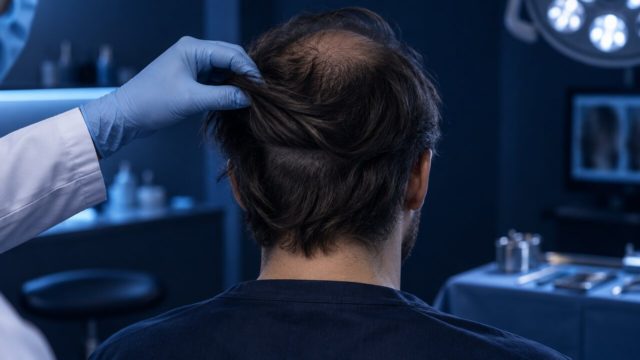
Fut scar revision is considered when the linear donor scar left after follicular unit transplantation, also called strip harvesting, is more visible than expected. During FUT, a narrow strip of scalp is removed from the back or sides of the head, and the skin edges are closed. The resulting line is usually concealed by surrounding hair. However, some patients later notice that the line looks wider, lighter, raised, uneven or visible when they wear their hair short.
Scar appearance can be influenced by several factors. These include the width of the original strip, the tension placed on the wound during closure, individual skin healing, scalp flexibility, infection, repeated surgery and the way the area was cared for during early recovery. Some people naturally form more prominent scars than others. This does not necessarily mean that the original procedure was performed incorrectly, but it should be evaluated carefully before further treatment is planned.
A visible donor scar may also become more apparent when hair thinning continues around it. For example, progressive thinning in the crown or lower donor area can reduce the hair coverage that previously hid the scar. Before treating the line itself, a doctor will usually examine the whole donor zone and discuss whether future hair loss may affect the long-term cosmetic result.
02A detailed assessment comes before scar treatment
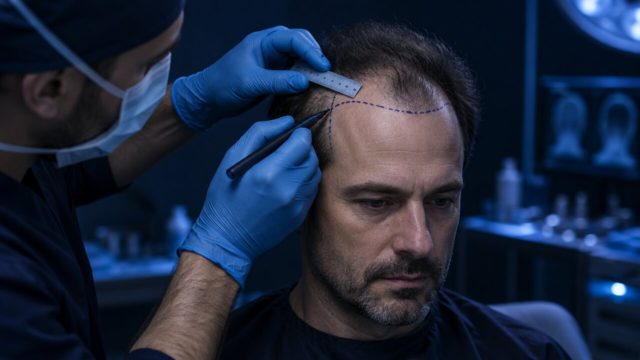
A proper consultation is the first step in improving a FUT scar. The doctor will assess the scar’s width, length, colour, texture, height and flexibility. They will also look for signs of reduced blood supply, active inflammation, previous infection, itching, tenderness or an abnormal scar response. These details help distinguish a simple widened linear scar from a raised hypertrophic scar, a depressed scar or a scar with limited tissue mobility.
Scalp laxity is especially important if surgical revision is being considered. Laxity describes how freely the scalp skin can move. If there is not enough flexibility, removing an old scar and closing the area again may create excessive tension. In that situation, another approach, such as hair grafting into the scar or a camouflage method, may be more appropriate. Your doctor will confirm whether a revision procedure is medically and cosmetically suitable.
The donor area should also be examined for hair density and hair characteristics. Curly, wavy or coarse hair may provide more coverage than straight, fine hair, while low donor density can limit the number of grafts available for scar camouflage. A trichoscopic examination can support this assessment by helping the clinical team review hair and scalp characteristics in detail. Photographs taken under consistent lighting are also useful for planning and later comparison.
03FUT scar revision: surgical options for a wider line
Surgical fut scar revision commonly involves excising, or removing, the old scar and carefully closing the area again. This may be considered for a widened scar that has enough surrounding scalp flexibility. The goal is not to create scar-free skin, because every incision heals with some degree of scar formation. Instead, the aim is typically to create a narrower, smoother and better-positioned line that is easier to conceal with hair.
During a revision, the surgeon may use a closure design intended to support hair growth through or close to the scar line. One technique may create an irregular edge rather than a sharply defined straight line, which can help soften the visual contrast between scar tissue and normal scalp. The precise method depends on the scar, skin quality and local blood supply. It should be selected only after an in-person examination or a suitably detailed medical assessment.
For some patients, a staged plan is safer than trying to achieve every goal in one procedure. For example, a doctor may first improve the width and tension of the scar, then assess healing before considering additional hair grafting. This approach can allow the tissue to settle and can help the team judge how much improvement has been achieved. It may also be recommended when the scar is extensive or when donor reserves need to be protected for future restoration needs.
04Hair grafting and camouflage for stable scars
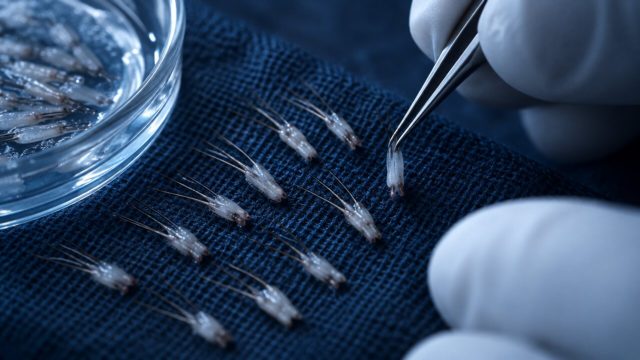
FUE grafting into a stable donor scar is another commonly discussed option. Individual follicular units are extracted from the donor zone and placed into small recipient sites within the scar. The purpose is to add visible hair coverage and reduce the contrast between the scar and the surrounding scalp. This can be helpful when a scar is not very wide but appears noticeable because it contains little or no hair.
Scar tissue may have a different blood supply and texture from healthy scalp skin. For this reason, graft survival in scar tissue can be less predictable than graft survival in non-scarred scalp. The doctor will determine whether the scar has healed and matured sufficiently for grafting, and how densely grafts can be placed without compromising the area. In some cases, a conservative first session followed by reassessment may be preferable to dense implantation in one sitting.
Non-surgical camouflage may also be considered for selected patients. Scalp micropigmentation can reduce the colour contrast of a pale linear scar by creating the appearance of closely cropped hair follicles. Some patients may also discuss medical treatments for symptoms such as persistent redness, itching or raised tissue, depending on the cause. These options do not replace a surgical repair when tension or scar width is the main concern, but they can be part of a broader plan.
05When raised, thick or uncomfortable scars need special care
Not every donor scar should be treated in the same way. A scar that is raised, thick, itchy, painful or growing beyond the original incision area may need a different medical approach from a flat, mature widened scar. Hypertrophic scars remain within the boundaries of the wound but can become elevated and firm. Keloid-type scarring may extend beyond the original wound edge and requires particularly careful specialist assessment.
If there is a history of unusual scarring, the doctor may recommend delaying elective revision or using measures designed to reduce the risk of recurrence. The decision can depend on personal and family history, skin type, previous scars and the current condition of the donor area. Surgical intervention in an active or unstable scar can sometimes worsen the appearance, which is why timing matters.
Numbness or altered sensation around an FUT line can also occur after strip surgery. In many patients, sensation gradually improves as tissues recover, but the timeline varies. Scar revision is not automatically a treatment for altered sensation, and it may not restore normal feeling. Any continuing pain, discharge, marked redness or rapid change in the scar should be assessed by a qualified doctor rather than managed with cosmetic camouflage alone.
06What happens during treatment and early recovery
The details of a scar revision procedure depend on the planned technique. A surgical revision is usually performed with local anaesthesia, and needle-free anaesthesia may be available for suitable patients at Acibadem Hair Transplant Center. The clinical team prepares the donor area, removes or adjusts scar tissue when appropriate, and closes the incision using the method selected for the individual scalp. If grafts are placed into the scar, they are handled as carefully as other transplanted follicles.
Early recovery generally involves protecting the treated area from friction, scratching and unnecessary tension. Your medical team will provide personalised aftercare instructions, including guidance about washing, sleeping, physical activity and when to return for a review. It is normal to expect some temporary redness, swelling, tightness or mild discomfort after a procedure. These symptoms should gradually settle, but patients should contact their clinic if they have concerns about worsening pain, bleeding, fever or signs of infection.
Stitches or staples, if used, are removed according to the surgeon’s protocol. The surface wound often heals within the first weeks, while deeper scar maturation takes much longer. A revised line can initially look pink or more visible before it fades. If hair grafting has been performed, transplanted hairs may shed before new growth begins, which is a typical part of the transplant growth cycle and should be explained clearly during consultation.
07How long healing and visible improvement may take
Healing after a donor scar procedure happens in stages. The skin usually closes first, followed by a longer period in which collagen reorganises and the scar gradually softens. In many patients, the early healing phase takes around one to two weeks, but the scar’s colour, firmness and final width can continue to change for several months. A more mature assessment is often made between six and 12 months after surgery.
When FUE grafts are used to camouflage a scar, visible growth takes additional time. Newly placed hairs commonly enter a temporary shedding phase before growth resumes. Early new growth may be fine and uneven, then gradually gain length and coverage over subsequent months. The exact timeline varies with the patient’s healing, the stability of the scar and the characteristics of the transplanted hair.
Patience is important because judging a scar too early can lead to unnecessary concern or premature additional treatment. Follow-up appointments allow the medical team to monitor healing, identify any unusual changes and discuss whether further coverage is likely to be useful. At Acibadem Hair Transplant Center, patients receive 12 months of follow-up as part of all-inclusive packages, supporting continued review throughout the main recovery period.
08Setting realistic expectations and planning safely
The best outcome from a scar revision is usually an improvement rather than complete disappearance. A scar may become narrower, flatter, softer in colour or easier to hide with a chosen hairstyle. However, scar tissue remains different from uninjured skin, and its final appearance is influenced by biology as well as technique. A responsible consultation should include a clear discussion of what may be improved and what cannot be predicted with certainty.
Possible risks should also be discussed before treatment. These can include persistent width, recurrent thickening, changes in sensation, infection, delayed healing, uneven hair growth in a grafted scar and the need for more than one procedure. Smoking, uncontrolled medical conditions, scalp inflammation and certain medications may affect healing. Your doctor will review your medical history and advise whether any factors need attention before a procedure is considered.
International patients can begin with a free online hair analysis reviewed by doctors at Acibadem Hair Transplant Center, a dedicated hair restoration clinic in Istanbul licensed by the Turkish Ministry of Health. Clear photographs of the donor area can support an initial discussion, although an in-person assessment may still be needed before confirming treatment. The clinic offers Sapphire FUE and DHI techniques, and its care pathway includes VIP transfer, a 4-star hotel, a care kit and 12 months of follow-up in all-inclusive packages.
09Frequently Asked Questions
Can scar revision genuinely improve a FUT donor scar?
Scar revision can often improve the width, texture, colour contrast or hair coverage of a FUT donor scar. The degree of improvement depends on the type of scar, scalp laxity, healing tendency and donor hair availability. It is important to understand that treatment generally improves a scar rather than removing it completely.
What determines the cost of FUT scar revision?
The cost depends on the technique recommended, the scar’s size and condition, whether hair grafting is needed, and whether treatment is performed in one or more stages. A surgical revision, grafting session and camouflage procedure involve different clinical planning and resources. A clinic should provide an individual quotation after medical assessment rather than offering a universal price.
What are the main ways to fix a FUT scar?
A FUT scar may be improved with surgical excision and re-closure, FUE grafting into a mature scar, scalp micropigmentation, or a combination of these options. Raised or symptomatic scars may need a different medical treatment plan before cosmetic coverage is considered. The most suitable approach should be chosen after assessing scar stability, scalp mobility and donor capacity.
How long does a revised donor scar take to heal?
The surface of a revised scar often heals during the first one to two weeks, while redness, firmness and scar maturation may continue for several months. A more meaningful evaluation is usually made at six to 12 months. If hair grafts are placed into the scar, the visible growth process also develops gradually over several months.
Cet article est fourni à titre d’information générale uniquement et ne remplace pas un avis médical professionnel.
Ce guide est fourni à titre d’information générale et ne remplace pas une consultation médicale. Les décisions de traitement sont prises après une évaluation par un médecin, en personne ou en ligne.