
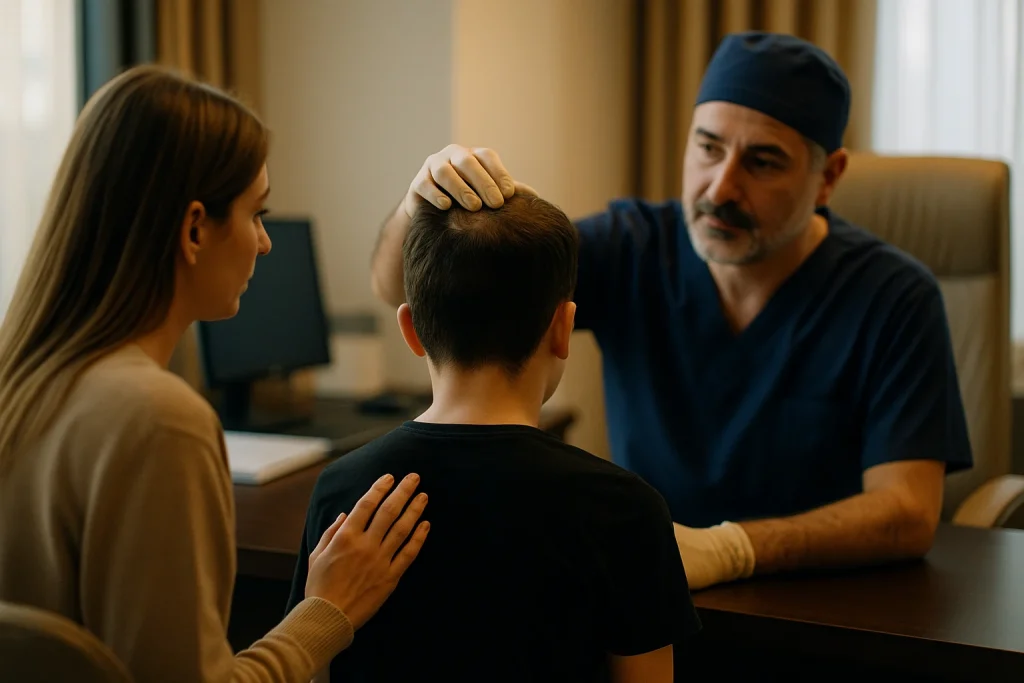
Hair loss in adolescence should usually be assessed medically before a hair transplant is considered. Because hair loss patterns and hormone-related changes may still be evolving, doctors typically focus first on finding the cause, monitoring stability, and discussing suitable non-surgical options.
- A sudden or noticeable change in a teenager’s hair should be assessed to identify the underlying cause.
- A hair transplant is usually postponed while the hair loss pattern is still changing.
- Conditions such as nutritional deficiency, scalp inflammation, stress, or autoimmune disease may need medical treatment first.
- A doctor may consider future transplantation only after careful assessment of hair-loss stability and donor-area health.
- Photographs and regular follow-up can help doctors monitor changes without rushing into a permanent procedure.
01Hair Loss in Adolescence: When Is a Transplant Appropriate?
Hair loss in adolescence can feel upsetting, especially when appearance, confidence, school life, and social relationships are changing quickly. However, visible shedding or thinning does not automatically mean a young person has permanent baldness or needs surgery. In many cases, the first and most important step is a medical assessment to understand why the change is happening and whether it may improve with time or treatment.
A hair transplant is a permanent surgical procedure that moves follicles from a donor area, usually at the back or sides of the scalp, to an area with reduced density. It does not stop an active hair-loss condition, create unlimited donor hair, or guarantee that future thinning will not occur around the transplanted area. For these reasons, doctors generally take a cautious approach when a patient is still in the teenage years.
The appropriate timing depends on more than age alone. A doctor will consider the pattern of loss, how long it has been present, whether it is progressing, family history, scalp health, general health, and the quality of the donor area. The goal is to make a plan that protects long-term options rather than trying to solve a short-term concern with an irreversible procedure.
02Why teenage hair shedding needs a proper diagnosis
Hair shedding is not one single diagnosis. Some people notice increased hair in the shower, on a pillow, or in a brush, while others see widening part lines, thinner temples, round patches, or a receding hairline. Each pattern can point to a different cause, so it is important not to assume that all shedding is inherited hair loss.
Temporary shedding can occur after a fever, infection, surgery, major stress, rapid weight change, restrictive eating, or another physical change. These events can shift more hairs into a resting phase, after which shedding may become noticeable weeks or months later. This type of shedding can often improve once the triggering factor has settled, although the timeline varies from person to person.
Other possible causes include low iron stores or other nutritional issues, thyroid-related conditions, scalp irritation, fungal infection, traction from tight hairstyles, and some medications. A clinician may ask about recent illness, periods, diet, skin symptoms, hair-care practices, and family history. When appropriate, they may recommend examination of the scalp or medical tests to investigate contributing factors.
Patchy hair loss deserves particular attention. Smooth round areas, broken hairs, scaling, redness, pain, or itching can suggest conditions that need prompt medical review. A transplant would not usually be the first response in these situations, because the priority is diagnosing and controlling the underlying process.
03Common patterns doctors look for in younger patients
Androgenetic hair loss, often called pattern hair loss, can begin after puberty in some people. In males, it may first appear as temple recession, a changing frontal hairline, or thinning at the crown. In females, it may be noticed as a wider central part, reduced overall volume, or more visible scalp through the hair. The speed and pattern of change can be very different between individuals.
A family history can be useful, but it cannot predict a person’s future hair loss with certainty. A teenager may have relatives with thinning hair and still have a stable hairline for many years. Equally, a changing hairline is not always a sign that severe future loss will occur. This is why doctors look at the individual scalp rather than relying on family history alone.
Hair loss in adolescence may also be linked with styling habits. Repeated pulling from very tight braids, ponytails, extensions, or head coverings can place ongoing tension on the follicles. Early traction-related changes may improve when tension is reduced, while long-standing scarring can be more difficult to treat. Gentle styling and early professional advice are important when discomfort or thinning around the edges is present.
Some adolescents experience breakage rather than true hair loss from the root. Frequent chemical processing, heat styling, harsh brushing, or fragile hair shafts can make the hair look less dense. A clinician can help distinguish breakage from shedding and follicle miniaturisation, as the management is not the same.
04Why doctors often delay a transplant during adolescence
A transplant can look appealing as a quick solution, but it requires long-term planning. In teenagers, the final pattern of inherited thinning is often not yet clear. If surgery is performed too early and hair loss continues, native hair behind or around the transplanted area may thin further. This can leave an uneven appearance and may create pressure for additional procedures later.
The donor area is also limited. Every graft used in one procedure is a graft that cannot be used again. Conservative planning is especially important for younger patients because they may need to preserve donor resources for many future years. A high or densely packed hairline that appears suitable at one age may not remain appropriate if the pattern of loss progresses.
Doctors also consider whether the person can make an informed, long-term decision about surgery and aftercare. A transplant involves local anaesthesia, healing, temporary crusting, shedding of transplanted hairs, and a gradual growth process. It requires realistic expectations and willingness to follow clinical guidance, rather than a decision made during a stressful period or in response to social pressure.
For most adolescents, observation and treatment of any identified cause are safer first steps. Regular photos taken under similar lighting, scalp examinations, and follow-up appointments can reveal whether the situation is stable, improving, or progressing. This information may be more valuable than an immediate surgical decision.
05What may happen before surgery is considered
The first stage is usually a detailed history and examination by a qualified medical professional. They may assess the scalp, the calibre and distribution of hairs, the donor area, and signs of inflammation or scarring. They may also ask about general health, diet, menstrual history where relevant, medicines, emotional stress, recent illness, and relatives with hair loss.
If a reversible cause is suspected, managing that cause is normally the priority. This may involve advice from a dermatologist or another appropriate clinician, changes to hair-care habits, or treatment for an identified medical condition. It is important not to self-diagnose nutritional deficiency or begin supplements without professional guidance, as unnecessary products may not address the real reason for shedding.
When pattern hair loss is suspected, a doctor may discuss evidence-based medical approaches that are suitable for the individual’s age, sex, medical history, and diagnosis. Not every option is appropriate for every young person. Parents or guardians may need to be involved in the discussion for minors, and your doctor will explain possible benefits, limitations, and safety considerations.
Emotional support can be equally important. Hair changes may affect self-esteem and may lead someone to avoid photographs, sports, or social events. Open conversations with trusted family members and healthcare professionals can help. If worries about appearance are causing persistent anxiety or low mood, mental health support may also be useful alongside scalp and hair assessment.
06When a future transplant may become reasonable
There is no universal age at which a transplant becomes appropriate. Instead, doctors usually look for a stable, well-understood pattern of loss over time, a healthy scalp, sufficient donor density, and expectations that match what surgery can realistically achieve. In many patients, this assessment is more reliable after the teenage years, but the final decision is always individual.
A future candidate should understand that transplantation redistributes existing hair rather than producing new follicles. The design of the hairline must account for possible future thinning and should be planned conservatively. A natural-looking result often depends on protecting a long-term donor supply, not simply placing the largest possible number of grafts in the front of the scalp.
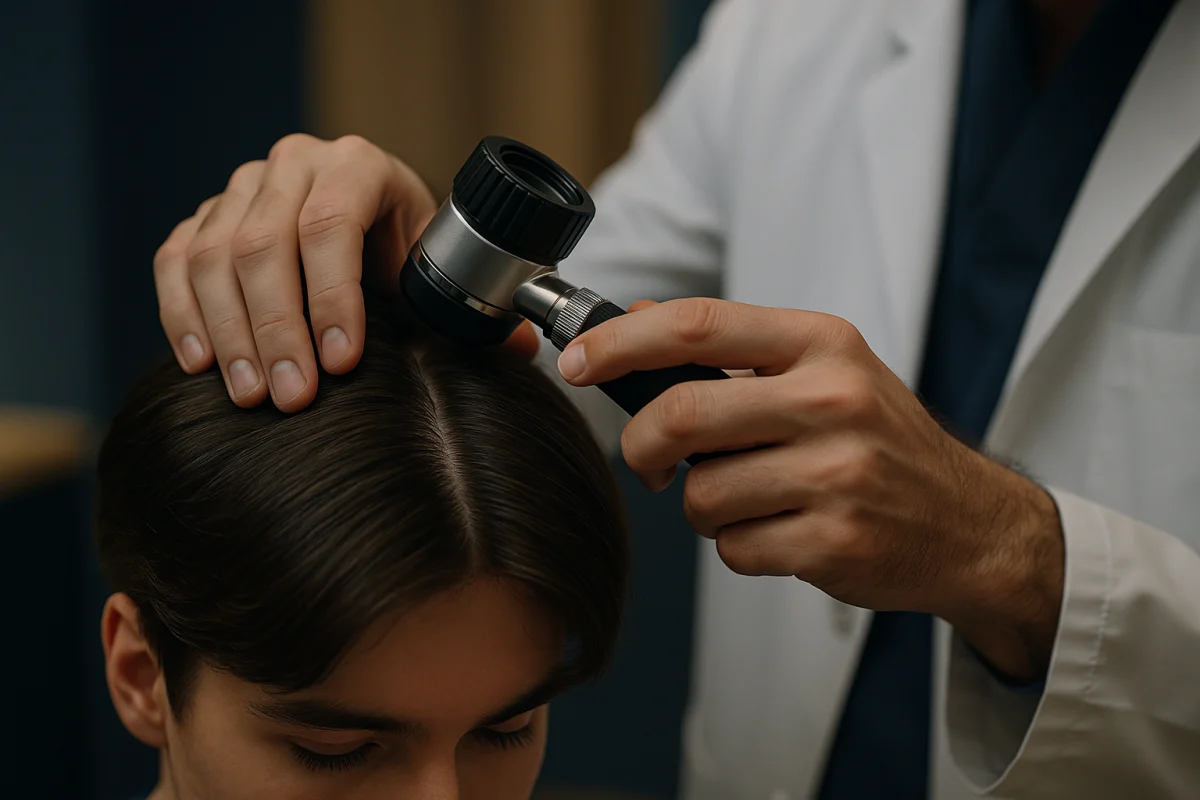
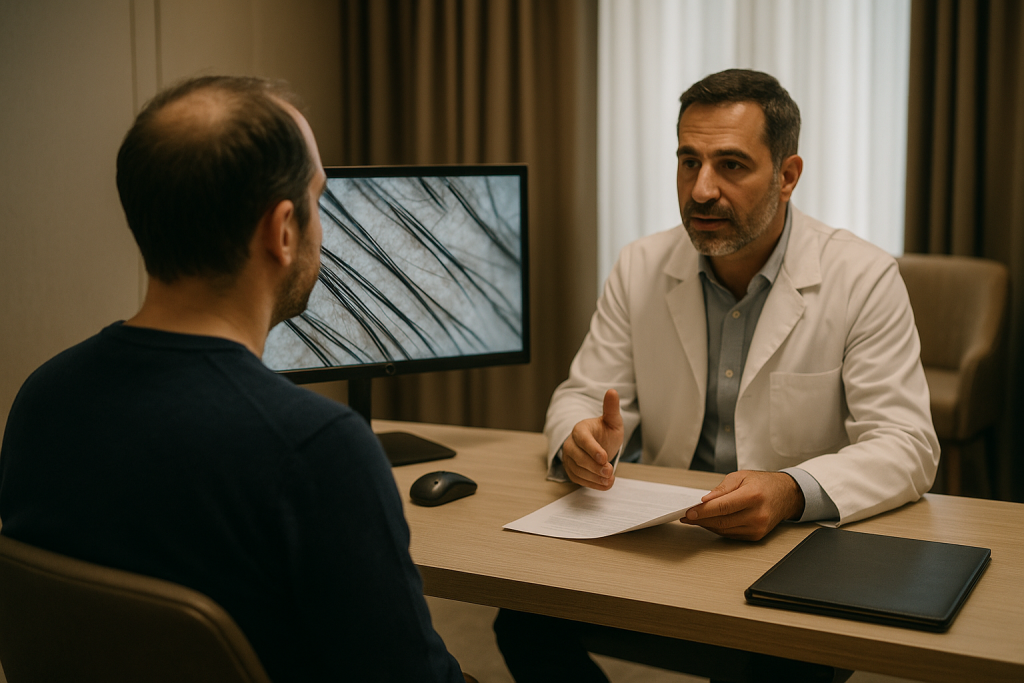
A doctor may use close scalp examination and trichoscopic assessment to evaluate hair calibre, miniaturisation, and donor-area characteristics. They may also compare photographs taken over time. If ongoing shedding or progression is still evident, postponing surgery is commonly the more responsible choice.
At Acibadem Hair Transplant Center, patients can request a free online hair analysis reviewed by doctors. Photos and medical information can support an initial discussion, but they do not replace a full clinical assessment. The team can explain whether a consultation and longer-term monitoring may be more appropriate than surgery at the current stage.
07How to prepare for a medical hair consultation
Before an appointment, it can help to note when the shedding or thinning began, whether it was sudden or gradual, and whether there was illness, stress, dietary change, or medication use beforehand. Bring information about previous diagnoses, recent blood tests if available, treatments already tried, and any scalp symptoms such as itch, flakes, soreness, or redness. Accurate details help the clinician form a clearer picture.
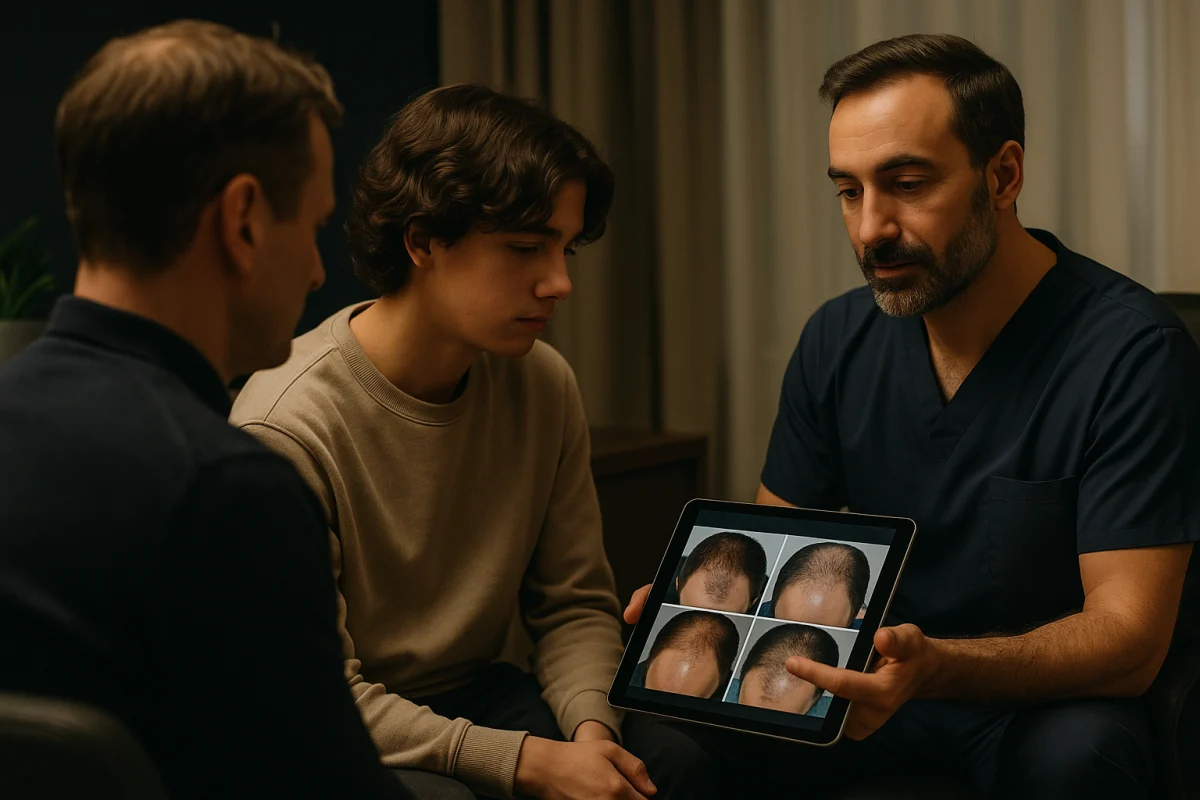
Photographs can be helpful when they are taken at regular intervals in similar lighting and from the same angles. Focus on the front hairline, temples, central part, crown, and sides where relevant. Avoid relying only on close-up images or strongly filtered photos, as these can make density appear different from reality.
For younger patients, it is useful to attend with a parent or guardian where appropriate. This can support shared understanding of the diagnosis, treatment options, costs of long-term care, and the limits of surgery. Questions should be encouraged, including whether the condition is active, what signs of progression to watch for, and when a review should take place.
Avoid choosing a surgical option based only on social media images or a desire to copy someone else’s hairline. Hair characteristics, donor density, facial proportions, and future hair-loss risks are individual. A careful consultation should provide balanced information, including reasons why waiting may be the best decision.
08Long-term planning protects future hair options
The most helpful approach to adolescent thinning is usually a long-term one. Instead of asking only whether surgery can be done now, ask what will best protect the scalp, native hair, and donor reserve over the next several years. A diagnosis, regular review, and realistic planning can reduce the risk of making a decision that is difficult to revise later.
If surgery is eventually appropriate, technique selection will be discussed according to the patient’s needs and clinical findings. Acibadem Hair Transplant Center provides Sapphire FUE and DHI techniques, and needle-free anaesthesia is available. However, the technique itself does not replace proper candidate selection, stable planning, or appropriate aftercare.
For patients who proceed with treatment at the clinic, all-inclusive packages can include VIP transfer, a 4-star hotel, a care kit, and 12 months of follow-up. The clinic is licensed by the Turkish Ministry of Health and has supported patients from 38 countries over 12 years. These practical services may make travel easier, but the medical decision should always come first.
A young person who is advised to wait has not failed to find a solution. Waiting can be an active and protective choice while doctors investigate the cause, monitor changes, and preserve future options. If you are concerned about ongoing shedding or visible thinning, seek a qualified medical assessment rather than rushing into a permanent procedure.
09Frequently Asked Questions
Can a 16-year-old have a hair transplant?
A transplant is usually approached very cautiously at this age because the cause and future pattern of hair loss may not yet be clear. A doctor will first assess scalp health, progression, donor hair, and whether non-surgical management or monitoring is more appropriate.
Is teenage hair loss always permanent?
No. Shedding can be temporary and may be linked to illness, stress, nutritional issues, scalp conditions, or hair-care practices. A medical assessment is important because the outlook depends on the cause.
How long should hair loss be stable before a transplant?
There is no fixed period that applies to everyone. Doctors usually need evidence that the pattern is understood and not rapidly progressing before they consider permanent surgical planning.
Can tight hairstyles cause thinning in teenagers?
Yes. Ongoing tension from tight hairstyles may contribute to traction-related hair loss, particularly around the hairline and temples. Early changes may improve when tension is reduced, so it is sensible to seek advice promptly.
What should parents do if their child is losing hair?
Arrange an assessment with an appropriate healthcare professional, especially if hair loss is sudden, patchy, painful, or associated with scalp changes. Keep a record of timing, symptoms, recent health events, diet changes, and photographs to support the consultation.
Cet article est fourni à titre d’information générale uniquement et ne remplace pas un avis médical professionnel.
 06
06 12
12