Dans cet article8
- Vue d’ensemble
- Reasons an earlier transplant may need correction
- How doctors assess suitability before revision surgery
- What a corrective treatment plan can include
- Scars, poor growth, and difficult donor areas
- Recovery, timeline, and realistic expectations
- Choosing a safe next step after an unsatisfactory result
- Frequently Asked Questions
Hair transplant revision may help when an earlier procedure has left an unnatural hairline, uneven density, visible scarring, poorly directed grafts, or ongoing concerns about appearance. A doctor must first assess the scalp, available donor hair, hair-loss pattern, and expectations before confirming whether corrective treatment is appropriate.
- Corrective surgery is not always necessary, but it may be considered when an earlier transplant result does not look or grow as expected.
- A careful assessment of donor reserves, scalp condition, graft direction, and future hair loss is essential before planning revision treatment.
- Revision may involve adding grafts, redistributing existing grafts, improving a hairline, reducing visible scars, or combining more than one approach.
- Recovery after a revision procedure is broadly similar to an initial transplant, although the treatment plan can be more complex.
- A transparent consultation should explain what may be improved, what limitations remain, and whether a non-surgical option is more suitable.
01Hair Transplant Revision: When Corrective Surgery May Help
A hair transplant revision is a corrective procedure that may be considered after a previous hair transplant has produced an unsatisfactory or unnatural-looking result. It is not simply a second transplant. The goal is to understand what happened during the first treatment, protect the remaining donor area, and create an improvement that fits the patient’s current and future hair pattern. In some cases, surgery can help significantly. In others, the safest recommendation may be to avoid further graft removal or to consider a non-surgical approach.
People seek corrective treatment for many different reasons. Common concerns include a hairline that looks too low, straight, or sharp; grafts placed at an unnatural angle; visible spaces between transplanted hairs; plug-like groups of grafts; poor growth; or a donor scar that is difficult to conceal. Some patients are also unhappy because their natural hair loss continued after the original procedure, making the transplanted area appear isolated. These concerns require a detailed clinical review rather than a quick visual judgement.
Revision planning is usually more demanding than planning a first transplant. The scalp may contain scar tissue, existing grafts may need to be worked around, and the donor supply may already be partly used. Your doctor will consider whether there is enough suitable donor hair and whether a realistic improvement can be achieved without compromising long-term appearance. A responsible plan focuses on balance, natural design, and preservation of available grafts rather than trying to correct every detail at once.
02Reasons an earlier transplant may need correction
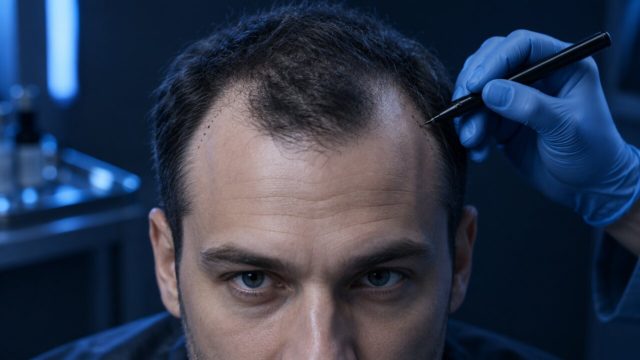
An unnatural hairline is one of the most frequent reasons patients explore corrective surgery. A natural hairline is rarely perfectly straight or equally dense along its entire edge. It normally has small irregularities, a gradual transition, and hair angles that match the surrounding native hair. If an earlier transplant created a dense, low, or overly defined line, revision may involve softening the front with carefully selected fine grafts, removing some grafts, or redistributing them where they are more useful.
Poor graft direction can also affect the appearance of the result. Hair at the front, temples, crown, and side areas grows in different patterns. When transplanted hairs point upward, forward, or sideways in a way that conflicts with the natural flow, styling may become difficult and the hair may look noticeable even when density is reasonable. Depending on the situation, a doctor may discuss removal, repositioning, camouflage with new grafts, or a combination of these methods.
Low density does not always mean that the procedure failed. It may reflect limited graft numbers, advanced hair loss, reduced graft growth, continued thinning of native hair, or an initial plan that could not adequately cover a large area. A revision can sometimes add density in a priority zone, such as the hairline or frontal third. However, it cannot create unlimited density. The available donor supply and the size of the area to be covered remain important limits in every corrective plan.
03How doctors assess suitability before revision surgery
A thorough consultation begins with your medical history and a clear review of the previous procedure. If available, information about the technique used, number of grafts placed, donor area treatment, healing, and any complications can be useful. The doctor will examine the scalp, existing graft placement, hair calibre, skin condition, and the pattern of both transplanted and native hair. Good planning starts with identifying the cause of the concern, not only the visible result.
Donor assessment is especially important after an earlier procedure. The back and sides of the scalp usually provide the donor hair used for transplantation, but these areas have a limited supply. If too many grafts were previously removed, further extraction may risk visible thinning. Doctors may use close scalp examination and trichoscopic assessment to evaluate hair density and donor stability. Your doctor will confirm whether additional graft harvesting appears appropriate and how it may affect the donor area.
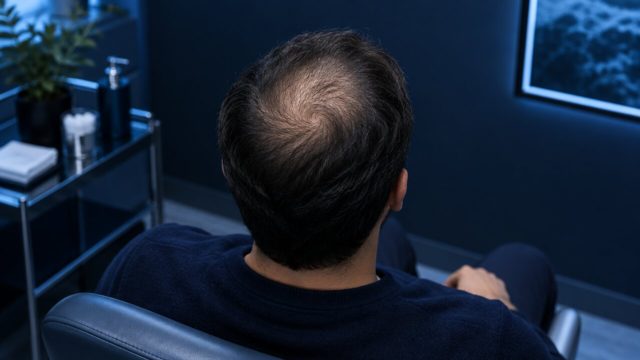
The assessment should also consider whether hair loss is stable. A transplant corrects selected areas, but it does not stop natural hair loss in untreated hair. If thinning is progressing quickly, a new surgical design may look unbalanced later unless it accounts for possible future change. For this reason, doctors may recommend waiting, monitoring hair loss, discussing medical management where clinically suitable, or choosing a conservative design. These discussions help patients make decisions with a longer-term view.
04What a corrective treatment plan can include
A revision plan may be relatively simple or may involve several stages. For example, a patient with an uneven frontal area may only need a small number of grafts to improve transition and density. Another patient may need to remove poorly placed grafts first, allow the scalp to heal, and return later for careful reimplantation. The exact approach depends on the hairline, the quality of existing grafts, the scalp tissue, and the donor resources still available.
Graft redistribution can be useful when hairs were placed too close together in one area while other areas remain thin. Existing grafts may sometimes be extracted and reused in a more suitable position. This is a delicate process, particularly if scar tissue is present. Not every graft can necessarily be recovered or moved, and outcomes can vary. The treatment goal is usually to make the overall appearance more natural and balanced rather than to achieve an artificially dense result.
At Acibadem Hair Transplant Center in Istanbul, doctors can assess candidates for Sapphire FUE or DHI techniques according to the needs of the case. These methods may be considered when additional implantation is appropriate, but technique alone does not determine the quality of a revision. Design, graft handling, donor preservation, and realistic planning are equally important. Needle-free anaesthesia is also available for eligible patients, subject to medical assessment and the planned procedure.
05Scars, poor growth, and difficult donor areas
Scarring can occur in either the recipient area, where grafts were placed, or the donor area, where follicles were removed. Some scars are mild and become less noticeable as hair grows, while others can remain visible because of their width, colour, texture, or location. Scar tissue may have a different blood supply from normal scalp skin, which can influence the way it responds to further treatment. A doctor should assess the scar directly before recommending graft placement into or around it.
In selected cases, carefully placed grafts may help camouflage a donor scar or improve the appearance of a scarred recipient area. This does not mean that a scar will disappear completely. The aim is usually to reduce visibility by adding hair coverage and blending the area with surrounding hair. The possibility of improvement depends on scar quality, skin flexibility, available donor hair, and the patient’s healing characteristics. Some patients may require other medical or procedural options in addition to grafting.
Poor growth after a previous transplant can be emotionally difficult, but the reason should be investigated before deciding on another procedure. Factors may include graft handling, scalp healing, infection, underlying scalp conditions, smoking, post-procedure trauma, or continued loss of native hair. It is not always possible to identify one clear cause from appearance alone. A revision consultation should therefore be honest about uncertainty and should not assume that adding more grafts will automatically solve a growth concern.
06Recovery, timeline, and realistic expectations
Recovery after a corrective procedure is typically similar to recovery after an initial transplant, although the details depend on the work performed. Small crusts, temporary redness, and swelling may occur in the early period. Patients are normally given instructions on washing, sleeping position, physical activity, sun exposure, and avoiding friction or trauma to the treated areas. Following these instructions closely supports safe healing, especially when previously treated or scarred skin is involved.
Transplanted hairs commonly shed during the first weeks after surgery before new growth begins. This phase can be expected and does not by itself indicate that the procedure has failed. Visible growth usually develops gradually over several months, and the result is commonly assessed over a longer period. Because revision work may involve existing grafts, scar tissue, or a limited donor area, the timeline and cosmetic change can differ from one patient to another. Your doctor will explain the expected stages for your own plan.
Realistic expectations are central to a successful hair transplant revision. Corrective surgery may improve hairline softness, hair direction, coverage, or scar concealment, but it may not recreate the density of untouched hair or completely erase evidence of a previous procedure. In most patients, a natural-looking result is built through careful prioritisation of the areas that matter most. A conservative, well-designed plan can be more valuable than an aggressive attempt to cover every area at maximum density.
07Choosing a safe next step after an unsatisfactory result
If you are considering correction, begin by gathering clear information rather than rushing into another procedure. Photographs of the hairline, crown, donor area, and sides in good lighting can help a doctor understand the situation. It is also useful to share when your first procedure took place, whether your hair loss has changed since then, and what specifically concerns you. A focused consultation should separate concerns that may be corrected surgically from those that may require time, styling adjustments, or other support.
Ask direct questions about donor availability, the likely number of stages, possible limitations, and what may happen if further natural hair loss occurs. You should also ask whether graft removal is being proposed, whether scars can realistically be camouflaged, and how the clinic will monitor progress. At Acibadem Hair Transplant Center, a free online hair analysis is reviewed by doctors, with WhatsApp replies typically provided within around two hours. This can be a practical first step for international patients seeking an initial opinion.
The center is a dedicated hair restoration clinic in Istanbul licensed by the Turkish Ministry of Health and has welcomed patients from 38 countries over 12 years. For appropriate cases, all-inclusive packages can include VIP transfer, a 4-star hotel, a care kit, and 12 months of follow-up. Results are measured by trichoscopic graft survival at month 12, with a documented 98% rate under written guarantee. However, every revision case needs an individual medical assessment, and no consultation should promise an identical outcome for every patient.
08Frequently Asked Questions
Will I need to redo my hair transplant in the future?
Not every hair transplant needs to be redone. Transplanted follicles are generally intended to be long-lasting, but native hair around them may continue to thin over time, and some patients later choose additional treatment for coverage or balance. Whether another procedure is suitable depends on donor availability, ongoing hair loss, and the condition of the scalp.
Is a hair transplant painful, especially if it is a revision?
Local anaesthesia is used so that patients typically do not feel pain during the graft extraction and implantation stages, although they may feel pressure or brief discomfort. Mild soreness, tightness, or tenderness can occur after the procedure and is usually managed with the aftercare plan provided by the medical team. Needle-free anaesthesia may be available for eligible patients following assessment.
What does a 3,000-graft hair transplant cost?
The cost of 3,000 grafts varies significantly by the complexity of the case, technique, donor condition, whether it is a first procedure or revision, and what services are included. Revision surgery can require more planning than a standard procedure, so graft number alone does not provide a reliable final price. A clinic should provide an individual quotation after a doctor-reviewed assessment.
What can I expect 10 years after a hair transplant?
Ten years after a transplant, the implanted hairs may still be present, but the appearance can change if surrounding native hair continues to thin. A well-planned hairline and conservative use of donor hair can help the result remain balanced as you age. Regular review may be useful if you notice further hair loss, changes in density, or concerns about long-term appearance.
Cet article est fourni à titre d’information générale uniquement et ne remplace pas un avis médical professionnel.
Ce guide est fourni à titre d’information générale et ne remplace pas une consultation médicale. Les décisions de traitement sont prises après une évaluation par un médecin, en personne ou en ligne.