
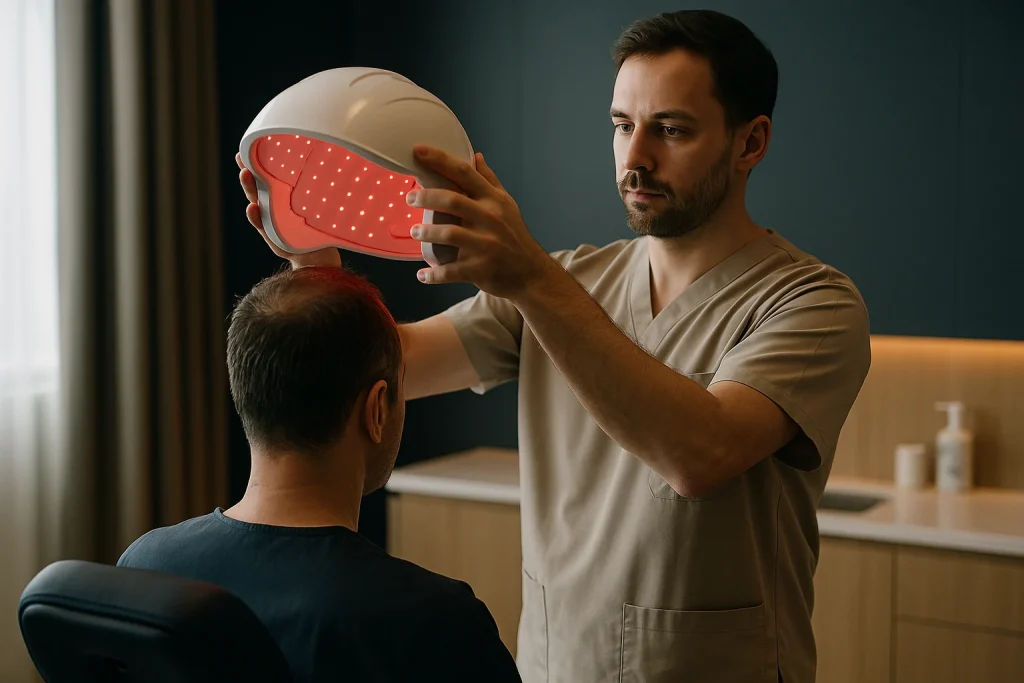
LLLT hair growth therapy may support hair quality and help some people manage ongoing thinning alongside hair transplantation. It does not replace a transplant when follicles are permanently lost, and it cannot create new grafts; your doctor can confirm whether it is appropriate before or after surgery.
- LLLT uses low-intensity light and may support hair follicles that are still present and viable.
- A hair transplant redistributes permanent donor follicles, while LLLT is usually considered a supportive treatment.
- Results from light therapy are gradual, variable and dependent on regular use and the cause of hair loss.
- After transplantation, the timing of LLLT should be confirmed by your surgical team to protect the healing scalp.
- A comprehensive hair-loss plan may include clinical assessment, transplantation when suitable and long-term monitoring of native hair.
01Lllt for Hair Growth: Its Role Alongside Hair Transplantation
Low-level light therapy, often called LLLT hair growth treatment, is a non-surgical approach that uses low-intensity red or near-infrared light on the scalp. It may be used to support follicles affected by pattern hair loss, especially when those follicles are weakened but still alive. In hair restoration, it is best understood as a possible supportive tool rather than a replacement for a well-planned hair transplant. The treatment does not move follicles from one area to another and cannot restore follicles that have been absent for many years.
Hair transplantation and LLLT have different roles. Sapphire FUE and DHI techniques transfer genetically more resistant follicles from the donor area to areas of visible thinning or baldness. LLLT, by contrast, aims to support the biological activity of existing follicles in the treated scalp. This can be relevant for native hairs around a transplanted area, because hair loss may continue in non-transplanted follicles over time.
A doctor should first identify the cause and pattern of hair loss. Not all shedding is androgenetic or pattern hair loss. Stress-related shedding, nutritional issues, inflammatory scalp conditions, hormonal changes and some medical conditions may need a different assessment and treatment plan. A free online hair analysis can be a useful first step, but an individual clinical review remains important before choosing any device or procedure.
02How Low-Level Light Therapy May Affect Hair Follicles
LLLT devices expose the scalp to low-energy light rather than the heat used in surgical or cosmetic laser procedures. The proposed effect is called photobiomodulation. In simple terms, light energy may be absorbed by cells and may influence cellular activity, circulation-related processes and signals involved in the hair cycle. Researchers are still studying exactly how these processes work in different patients and different forms of hair loss.
Hair follicles naturally move through growing, resting and shedding phases. In people with pattern hair loss, genetically sensitive follicles can gradually produce shorter, finer hairs. Low-level light therapy may help some follicles remain in or return to a more active growth phase for longer. This does not mean every follicle will respond, and it does not change the genetic tendency behind androgenetic hair loss.
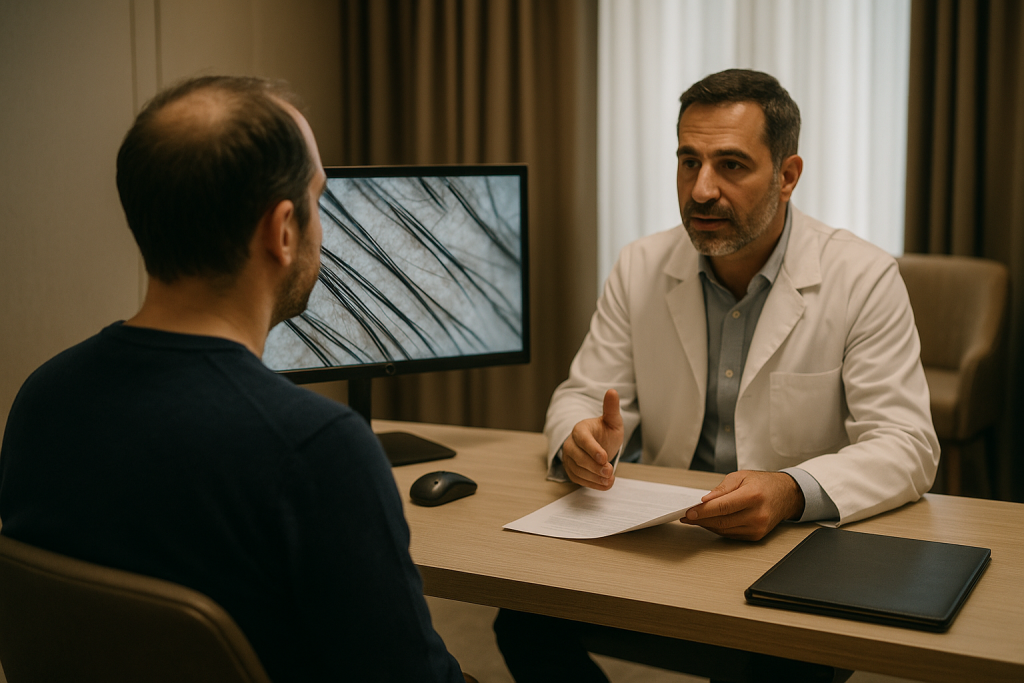
Any visible improvement is usually gradual. Patients may first notice less shedding, improved hair texture or slightly better coverage rather than dramatic new density. Photos taken under the same lighting, angle and hair length can be more helpful than day-to-day mirror checks. A doctor may also use trichoscopic assessment to review hair calibre, density and scalp condition more objectively during follow-up.
03When LLLT Hair Growth Therapy May Be Considered
LLLT hair growth therapy may be considered for adults with early to moderate thinning, particularly where miniaturised hairs are still present. It may also be discussed with patients who want to support the appearance of native hair while planning a transplant or who wish to maintain their existing hair after a procedure. Suitability depends on the diagnosis, the extent of loss, scalp health, medical history and expectations.
For advanced bald areas with few or no active follicles, light treatment alone is unlikely to provide substantial cosmetic coverage. A transplant may be the more direct option when there is sufficient donor hair and the person is a suitable candidate. Even then, the aim should be realistic: surgery improves coverage by relocating limited donor grafts, while supportive treatments may help protect the hair that was not transplanted.
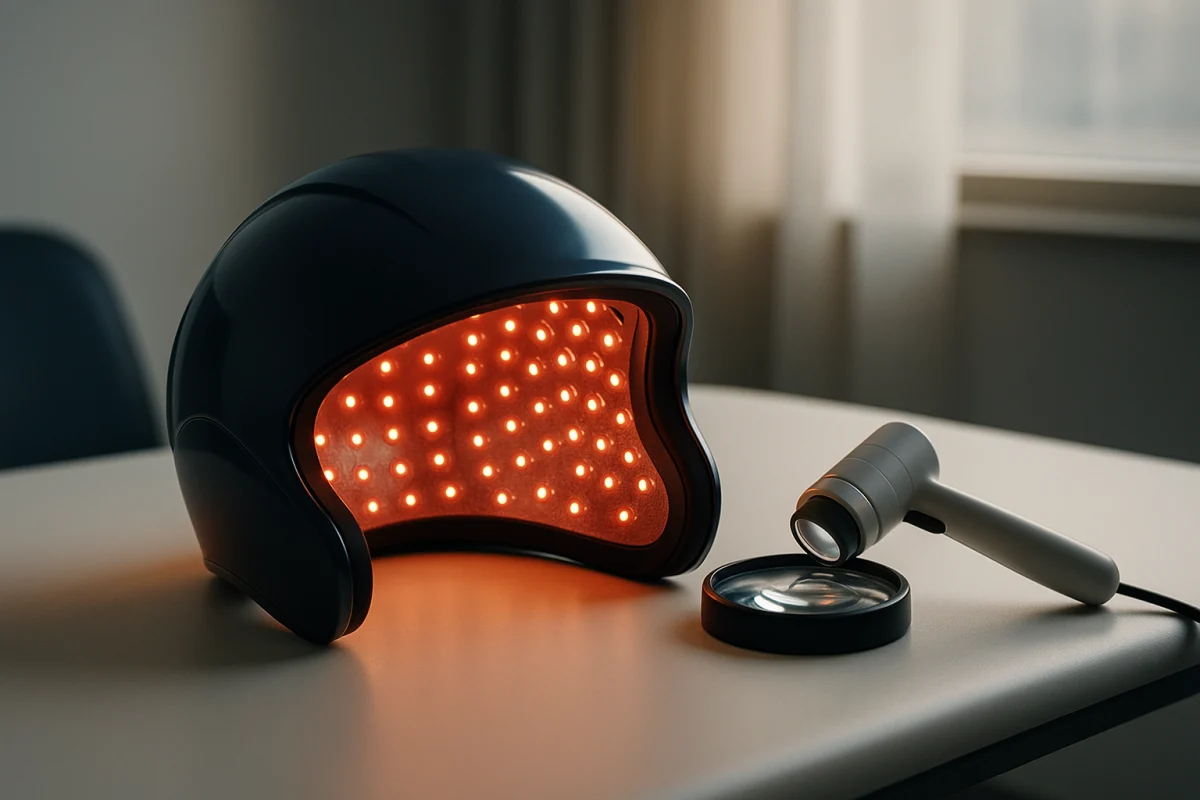
LLLT can be delivered through home-use caps, helmets, combs or other scalp devices. The practical differences between devices may include the treatment area, light source, fit, recommended schedule and quality controls. Rather than selecting a device only from advertising claims, patients should review its intended use and instructions with a qualified clinician, particularly if they have a scalp condition or are considering treatment around the time of surgery.
04Using Light Therapy Before and After a Hair Transplant
Before hair transplantation, light therapy may sometimes be part of a broader effort to assess and support existing hair. This can be useful when thinning extends beyond the planned recipient area. Stabilising the overall hair-loss picture, where possible, helps the medical team design a conservative hairline and graft distribution that can continue to look balanced if native hair changes later.
Immediately after a transplant, the scalp needs gentle care. Recipient sites and the donor area are healing, and newly placed grafts must be protected from friction, pressure and unnecessary irritation. Patients should not assume that they can restart a cap, comb or other light device straight away. The correct timing varies according to the technique used, the condition of the skin and the surgeon's postoperative protocol.
Once healing is sufficiently advanced, a doctor may permit LLLT as part of the longer-term plan for suitable patients. It is important to understand that the initial shedding of transplanted hairs can still occur as part of the usual postoperative cycle. Light therapy cannot prevent every phase of shedding or force immediate visible growth. Transplanted hair development typically requires patience, scheduled reviews and careful adherence to the clinic's aftercare instructions.
05What Results Can Realistically Be Expected?
The response to LLLT differs considerably from person to person. Some patients may notice a modest improvement in hair thickness, shedding or overall appearance, while others may see little obvious change. The best candidates are generally those with active, miniaturised follicles rather than completely smooth areas of longstanding hair loss. Consistency matters, but consistent use cannot guarantee a response.
It is also important to separate the goals of transplant surgery from the goals of supportive therapy. A transplant can create a new distribution of growing hair by placing donor grafts into a recipient area. LLLT does not increase the number of transplanted grafts, alter the quality of donor hair or replace a procedure for someone with significant permanent hair loss. It may, however, be considered to support surrounding native hair when medically appropriate.
At Acibadem Hair Transplant Center, transplanted results are assessed through trichoscopic graft survival at month 12. The clinic documents a 98% graft survival rate under its written guarantee. This measurement relates to transplanted graft survival and should not be interpreted as a promise that any LLLT device will produce the same result. Your doctor will discuss the difference between graft survival, native hair maintenance and visible cosmetic density.
06Safety, Frequency and Avoiding Excessive Red Light Exposure
Low-level light devices are generally designed to deliver low-intensity energy, but more treatment is not automatically better. Using a device longer or more often than its manufacturer guidance has not been shown to produce faster hair growth. Excessive use may increase the chance of scalp discomfort, redness, dryness or irritation, especially in people with sensitive skin or an existing scalp disorder.
Follow the instructions supplied with the specific device and do not combine multiple light devices simply to increase exposure. If the scalp becomes painful, persistently red, itchy or inflamed, stop using the device and seek medical advice. People taking medicines that can increase light sensitivity, as well as those with photosensitivity disorders, should ask their doctor before beginning any red-light-based treatment.
In a transplant setting, the safest routine is the one agreed with the surgical team. LLLT hair growth treatment should be paused or started according to the healing plan rather than according to a generic online schedule. This is especially relevant when there is crusting, irritation, delayed healing or a need for additional scalp care. A cautious approach protects both comfort and the surgical result.
07Choosing a Long-Term Hair Restoration Plan in Istanbul
Successful hair restoration is rarely based on one tool alone. A long-term plan starts with identifying the cause of hair loss, assessing the donor area, considering future thinning and discussing what level of coverage is realistically achievable. LLLT may have a place in that plan, but it should be selected for a clear reason rather than treated as a universal answer to every type of hair loss.
At Acibadem Hair Transplant Center in Istanbul, patients can request a free online hair analysis reviewed by doctors, with WhatsApp replies typically available within around two hours. The dedicated hair restoration clinic is licensed by the Turkish Ministry of Health and has welcomed patients from 38 countries over 12 years. Where transplantation is appropriate, the team can discuss Sapphire FUE and DHI techniques, as well as needle-free anaesthesia availability.
International patients may also benefit from an organised care pathway. The clinic's all-inclusive packages include VIP transfer, a 4-star hotel, a care kit and 12 months of follow-up. During consultation, patients can ask whether a supportive option such as LLLT fits their diagnosis, surgical plan and aftercare timeline. The final recommendation should always be based on a doctor-led assessment and realistic expectations.

08A Practical Recovery Timeline for LLLT After Transplantation
The early recovery period is focused on protecting grafts, not on adding extra treatments. During the first days after surgery, patients are typically asked to follow the washing, sleeping and activity instructions in their individual aftercare plan. A light-therapy helmet, cap or comb can create contact, pressure or friction on sensitive skin, even when the device itself does not feel hot. For this reason, it should not be placed on the scalp until the surgical team confirms that it is safe to do so.
In the following weeks, temporary shedding of transplanted hairs may occur. This is commonly part of the normal growth cycle after transplantation and does not necessarily mean that grafts have failed. At this stage, patients should avoid judging the value of LLLT by daily shedding or by very early appearance changes. The priority remains healthy scalp recovery, gentle hair care and attendance at scheduled reviews.
Over the months that follow, transplanted follicles typically begin their new growth cycle gradually. Native hair and transplanted hair may not develop at the same pace, and visible density can change as hairs lengthen and mature. If LLLT is approved as part of the plan, it is best treated as a consistent long-term supportive routine rather than an urgent way to speed up the transplant process. Your doctor can advise when to take progress photographs and when trichoscopic review may be useful.
09Who May Need a Different Approach Than LLLT
LLLT may not be the right first step when hair loss has started suddenly, is patchy, or is accompanied by scalp symptoms such as pain, scaling, marked redness, pustules or scarring. These features can suggest a cause other than typical pattern hair loss. In such cases, identifying and managing the underlying issue is usually more important than starting a light device. A transplant should also be delayed when the diagnosis is unclear or the scalp is not in a healthy condition for surgery.
Patients with diffuse thinning need particularly careful assessment. Diffuse loss can affect both the visible thinning area and the donor region, which may change whether transplantation is suitable and how many grafts can safely be considered. LLLT may be discussed for some people with diffuse miniaturisation, but it cannot confirm donor stability or solve every cause of widespread shedding.
Medical history also matters. People with known light sensitivity, a photosensitivity disorder, a history of scalp skin cancer, or medicines that may increase sensitivity to light should seek medical advice before using an LLLT device. Pregnancy, breastfeeding, recent illness and major hormonal changes may also affect the wider discussion around hair shedding and treatment timing. A doctor-led assessment helps separate a potentially suitable supportive option from a treatment that may be unnecessary or unsuitable.
10How to Use Progress Photos and Follow-Up to Assess Change
Hair growth changes slowly, so unstructured mirror checks can be misleading. If a doctor recommends monitoring at home, photographs are usually most useful when taken at regular intervals with the same camera, room, lighting, angle, hair parting and hair length where possible. Front, top, temple and crown views can show different patterns of thinning. Images should be kept private and shared only through an appropriate clinic channel when requested.
Do not rely only on a single good or bad photograph. Wet hair, strong overhead lighting, styling products, a new haircut and changes in hair colour can all make coverage look different. Instead, compare a series of consistent images over a longer period and discuss any concerns during follow-up. This approach is more reliable than changing treatment routines repeatedly in response to short-term appearance changes.
Clinical follow-up can add information that photographs cannot provide. A doctor may review the scalp, assess ongoing shedding, examine the donor and recipient areas, and use trichoscopy where appropriate. For transplant patients, Acibadem Hair Transplant Center assesses graft survival trichoscopically at month 12. This helps distinguish transplanted graft survival from changes in native hair, which is important when evaluating whether a supportive treatment such as LLLT has a meaningful role in the overall plan.
11Frequently Asked Questions
Does LLLT work for hair growth?
LLLT may help some people with pattern-related thinning by supporting active but weakened hair follicles. Results are usually gradual and vary between individuals, and the therapy is less likely to help areas where follicles are no longer present. A doctor can assess whether it is relevant to your type of hair loss.
Is it possible to use red light therapy too much for hair growth?
Yes. Increasing the duration or frequency beyond device instructions is unlikely to speed up results and may irritate the scalp. Follow the recommended schedule, and stop treatment and seek medical advice if you develop persistent redness, discomfort or other scalp symptoms.
What is the price of an LLLT hair-growth device?
The cost of an LLLT device varies widely by device type, design, technical specifications, seller and country of purchase. It is sensible to consider device guidance, suitability and ongoing use rather than price alone. A clinic can help you understand whether a device is likely to add value to your wider treatment plan.
Can low-level laser therapy support hair regrowth?
Low-level laser therapy may support regrowth or improve the appearance of existing miniaturised hairs in some suitable patients. It does not create new follicles, replace missing donor hair or guarantee regrowth in every case. A medical assessment is important because the likely benefit depends on the cause and stage of hair loss.
Cet article est fourni à titre d’information générale uniquement et ne remplace pas un avis médical professionnel.
 06
06 12
12