Dans cet article12
- Vue d’ensemble
- Why facial shape changes hairline design
- Age and future hair loss: planning beyond the first year
- How density is created without an artificial look
- The role of graft selection, angle and direction
- From consultation to hairline design approval
- Technique choices and what the procedure may involve
- Recovery, growth timeline and realistic expectations
- Early aftercare: protecting the new hairline in the first two weeks
- A practical month-by-month hairline growth guide
- Travel planning for international hairline patients
- Frequently Asked Questions
New hairline surgery is planned by balancing facial proportions, donor hair availability, existing density and the likely future pattern of hair loss. A natural-looking result usually comes from a conservative, age-appropriate design rather than creating the lowest or densest possible hairline.
- A successful hairline design should suit your facial shape while preserving a natural margin for future hair changes.
- Density is usually built gradually, with softer single-hair grafts placed at the leading edge.
- Age, family history and ongoing hair loss can affect how conservatively a surgeon plans the hairline.
- Donor area quality helps determine how much coverage and density can be achieved safely.
- A doctor-led consultation and scalp assessment are important before deciding whether surgery is suitable.
01New Hairline Surgery: Balancing Density, Age, and Facial Shape
New hairline surgery can restore or reshape the frontal hairline by transplanting carefully selected hair follicles into areas of thinning, recession or naturally high placement. The goal is not simply to move the hairline forward. In most patients, the aim is to create a result that looks believable from close range, fits the face, blends with existing hair and remains appropriate as the person gets older.
A hairline is one of the most visible parts of a hair restoration result. It frames the forehead, influences how the eyes and cheekbones are perceived, and often affects whether transplanted hair appears natural or artificial. For this reason, planning is usually more important than choosing a very low line or requesting maximum density in one small area. Your doctor will assess several features together before recommending a design.
These features commonly include the current position of the hairline, the shape of the forehead, facial width and length, skin and hair characteristics, existing miniaturised hairs, and the quality of the donor area. A suitable plan also considers whether hair loss may continue. This broader approach helps protect both the immediate appearance and the long-term usefulness of the available grafts.
02Why facial shape changes hairline design
There is no single ideal hairline for every person. A design that looks balanced on a long, narrow face may look too low or too straight on a broader face. During planning, the doctor generally studies the relationship between the forehead, temples, brow line, cheeks and chin rather than relying on a fixed measurement alone. Natural facial asymmetry is also common and may be considered in the final design.
For example, a softly rounded or gently irregular hairline can often reduce the appearance of a tall forehead without creating an overly sharp border. In people with a wider or more angular face, preserving appropriate temple points and avoiding an excessively flat frontal line may help maintain proportion. These are design principles, not universal rules, because hair direction, hairstyle and individual anatomy also matter.
Hairline lowering and hairline reconstruction can have different objectives. Some patients have a naturally high but stable hairline, while others have a receding hairline caused by pattern hair loss. In the second situation, the plan may need to include the frontal zone and temple areas, not only a lower front edge. A clinical examination helps clarify what is realistic and what should be prioritised.
03Age and future hair loss: planning beyond the first year
Age is an important consideration because a hairline that appears attractive at one stage of life may not remain suitable if surrounding native hair continues to thin. In younger patients, doctors commonly take a more conservative approach, particularly when the future pattern of hair loss is uncertain. This can help avoid a situation where a very low transplanted hairline becomes separated from receding hair behind it later on.
Family history, the speed and pattern of recent shedding, scalp examination and trichoscopic assessment can all contribute to planning. These factors cannot predict every future change with certainty, but they can help the doctor identify signs that a more cautious design may be sensible. In some cases, stabilising hair loss or monitoring it before surgery may be discussed.
New hairline surgery should therefore be viewed as part of a long-term hair restoration strategy, not only as a cosmetic change for the present. The surgeon may reserve donor grafts for future needs or recommend prioritising a mature-looking frontal line over a very youthful one. A slightly higher, well-blended hairline can often remain convincing for many years as facial features and hair density change.
04How density is created without an artificial look
Density does not mean placing the largest possible number of grafts into the smallest possible space. Hair naturally grows in groups and with variations in direction, calibre and spacing. A carefully planned transplant usually recreates these visual details by placing finer single-hair follicular units at the front and using grafts with more hairs behind them where additional fullness is needed.
The first few millimetres of the hairline are especially important. If this edge is too straight, too uniform or made with thicker grafts, it may be noticeable even when the overall graft count is high. A softer transition, small natural irregularities and correct angles of implantation can make the hairline appear less abrupt. The exact method depends on the patient's hair texture, colour contrast, curl pattern and scalp characteristics.
Existing native hair also affects the density plan. When hair is still present but becoming finer, transplanted grafts may be placed to improve coverage while respecting those hairs. In areas that are fully bare, the surgeon must create enough visual density from donor hair alone. Your doctor will explain that the amount of donor hair is limited, so density goals need to be balanced with coverage and future treatment options.
05The role of graft selection, angle and direction
Every graft contains one or more hair follicles, and selecting the right graft for each part of the hairline is a detailed surgical task. Single-hair grafts are typically preferred at the leading edge because they can create a finer, more gradual appearance. Grafts containing multiple hairs may be placed further behind the hairline to support density, where their stronger visual effect is less likely to be visible as a distinct border.
Implantation angle is equally important. Frontal hairs generally emerge at a shallow angle and follow a forward or slightly diagonal direction, while temple hairs may have a different orientation. If implanted too upright or in an inconsistent direction, even well-surviving grafts can be difficult to style naturally. The surgeon plans recipient sites with attention to these changes across the frontal scalp.
Hair characteristics influence what can be achieved. Curly or wavy hair may give greater visual coverage than very straight hair, while fine hair may require a different density strategy than coarse hair. A strong contrast between dark hair and light scalp can also make thinning more visible. These are practical reasons why two people receiving a similar number of grafts may see different visual effects.
06From consultation to hairline design approval
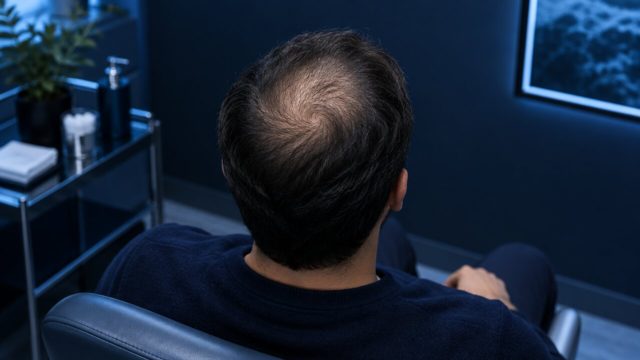
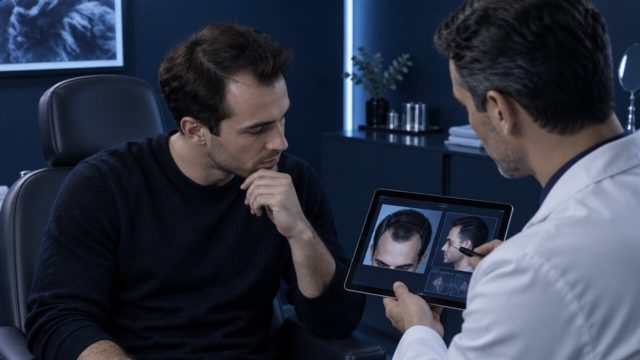
A thorough consultation should begin with your concerns, medical history and expectations. The doctor may ask when you first noticed a high hairline or recession, whether shedding is ongoing, and whether close relatives have experienced similar hair loss. Photographs, scalp examination and trichoscopy can help assess native hair quality and the donor area. This process supports an informed recommendation rather than a one-size-fits-all plan.
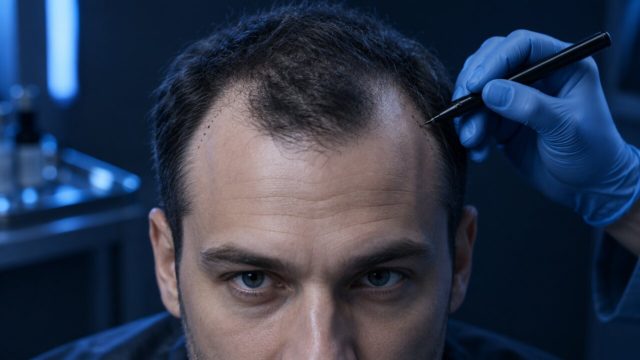
Before the procedure, the proposed line is normally drawn on the forehead and discussed with the patient. This is a useful time to review height, curvature, temple shape and how the line may look with different hairstyles. It is important to communicate preferences, but the final recommendation should also be medically responsible. A doctor may advise against a design that could place unnecessary demand on donor reserves or look unsuitable over time.
At Acibadem Hair Transplant Center, a dedicated hair restoration clinic in Istanbul licensed by the Turkish Ministry of Health, patients can begin with a free online hair analysis reviewed by doctors. Replies on WhatsApp are typically provided within about two hours. An online review can provide initial guidance, while an in-person examination and the treating doctor's assessment remain important for confirming candidacy and the surgical plan.
07Technique choices and what the procedure may involve
Hairline restoration may be performed with follicular unit extraction techniques such as Sapphire FUE or with DHI, depending on the treatment plan and clinical assessment. Both approaches involve using follicles taken from a suitable donor area and placing them in recipient sites at the frontal scalp. The appropriate technique is not automatically the same for every patient; the doctor will consider the hairline design, graft characteristics, scalp condition and overall restoration goals.
During an FUE-based procedure, follicles are individually extracted and then implanted into prepared recipient sites. Sapphire FUE refers to the use of sapphire blades when creating channels for implantation. DHI uses an implantation approach that can allow graft placement with control over angle and direction. Each technique has practical considerations, and patients should focus on the quality of planning, graft handling and medical oversight rather than assuming one name guarantees a particular result.
Local anaesthesia is commonly used for hair transplant procedures, and needle-free anaesthesia is available at our clinic for eligible patients. Your medical team will review your health information and explain the anaesthesia process, potential discomfort and aftercare instructions. The treatment schedule may also include travel planning, recovery guidance and follow-up arrangements for international patients.
08Recovery, growth timeline and realistic expectations
After a hairline transplant, small scabs, temporary redness and mild swelling can occur in the treated areas. The clinic will provide instructions on washing, sleeping position, activity and protecting the grafts during the early recovery period. It is important to follow these instructions closely and to contact the medical team if you have concerns. Recovery experiences vary according to skin sensitivity, the extent of treatment and individual healing.
Transplanted hairs often shed during the first weeks after surgery before new growth begins. This temporary shedding is a commonly expected part of the growth cycle and does not by itself indicate that the grafts have failed. Early new growth may appear fine and uneven, with gradual improvement over the following months. Hair maturation is a slow biological process, so a final assessment is generally not made immediately.
In most patients, the appearance continues to develop over many months, and month 12 is commonly used for a more meaningful review of graft survival and cosmetic growth. At Acibadem Hair Transplant Center, results are measured by trichoscopic graft survival at month 12, with a documented 98% rate under written guarantee. Individual cosmetic results can still vary because hair characteristics, healing, native hair changes and adherence to aftercare differ between patients.
09Early aftercare: protecting the new hairline in the first two weeks
The first days after surgery are important because the newly placed grafts need time to settle. Patients are usually asked to avoid touching, rubbing or scratching the recipient area, even if mild itching develops. Loose, front-opening clothing can be easier to wear than garments pulled over the head, helping reduce accidental contact with the hairline.
Your clinic will give a washing schedule and demonstrate how to clean the scalp without direct pressure on the grafts. In many cases, washing begins according to the medical team's instructions and is done gently with the recommended products. Scabs should not be picked or removed manually. They usually loosen gradually during the instructed washing period, while forceful removal may irritate the skin or disturb healing.
It is also commonly sensible to avoid strenuous exercise, swimming, saunas, steam rooms and direct sun exposure during the initial recovery period specified by your doctor. These activities may increase sweating, friction or irritation. If swelling, bleeding, increasing pain, unusual discharge or any other concern occurs, patients should contact the clinic promptly rather than relying on general online advice.
10A practical month-by-month hairline growth guide
In the first week, the hairline may look fuller because the transplanted shafts are still visible. Small crusts and redness can make the area appear different from its eventual result. During weeks two to six, many transplanted hairs enter a shedding phase. This can feel discouraging, but it is typically part of the normal cycle after transplantation rather than a reliable indication of the final outcome.
From approximately months three to five, early regrowth may become visible. New hairs can initially be fine, lighter in texture or unevenly distributed, especially along the delicate frontal edge. Between months six and nine, many patients notice more coverage and improved styling options as hairs lengthen and mature. The appearance may still change from month to month.
By month 12, the doctor can make a more meaningful review of growth, density and how the hairline blends with the surrounding hair. Some hairs may continue to gain calibre and texture beyond this point. Taking photographs in consistent lighting, from the same angles and with similar hair length can help patients and the follow-up team compare progress more accurately.
11Travel planning for international hairline patients
International patients should plan their trip around both the procedure and the early recovery period. Before travelling, it is helpful to share clear photographs and relevant health information for the doctor-reviewed online hair analysis. The final suitability decision, graft plan and hairline design should still be confirmed after clinical assessment, as photographs cannot replace an in-person scalp examination.
For travel home, choose clothing that will not catch on the hairline and keep post-procedure items, instructions and clinic contact details easily available. Patients should also consider how they will protect the recipient area from crowding, sun and accidental knocks during airport transfers and flights. The treating team can advise on the appropriate timing of travel and any individual precautions based on the procedure performed.
Acibadem Hair Transplant Center offers all-inclusive packages that include VIP transfer, a 4-star hotel, a care kit and 12 months of follow-up. This can simplify practical arrangements for patients travelling to Istanbul. Before booking flights, patients should confirm the planned schedule with the clinic and ensure they understand the aftercare and follow-up process after returning home.
12Frequently Asked Questions
What is new hairline surgery?
New hairline surgery usually refers to hair transplantation that restores, lowers or reshapes the frontal hairline. It is planned around the existing hair, donor supply, facial proportions and the likely future course of hair loss.
Can a hairline be made lower during surgery?
In suitable patients, a transplanted hairline can be positioned lower than the current line. However, doctors generally recommend a conservative position that looks natural for the face and protects donor hair for possible future needs.
How long does it take to see hairline transplant results?
The transplanted hairs may shed first, followed by gradual regrowth over several months. A more meaningful assessment is commonly made around month 12, although individual growth patterns vary.
Will a transplanted hairline look natural?
A natural appearance depends on careful design, fine single-hair graft placement at the front, correct angles and appropriate density. No clinic can guarantee that every patient will achieve the same cosmetic appearance, so a personalised medical assessment is essential.
How can international patients arrange a consultation?
International patients can request a free online hair analysis reviewed by doctors at Acibadem Hair Transplant Center. The clinic typically replies through WhatsApp within about two hours and can explain the next steps, including available all-inclusive package arrangements.
Cet article est fourni à titre d’information générale uniquement et ne remplace pas un avis médical professionnel.
Ce guide est fourni à titre d’information générale et ne remplace pas une consultation médicale. Les décisions de traitement sont prises après une évaluation par un médecin, en personne ou en ligne.