Dans cet article10
- Vue d’ensemble
- Why transplant scars can remain visible
- How smp for men works on scar tissue
- Who may be a suitable candidate for scar camouflage
- Planning sessions, shade and hairline design
- Healing timeline after scalp micropigmentation
- Combining SMP with hair transplant planning
- Limits, risks and long-term maintenance
- Choosing an informed next step for a visible scar
- Frequently Asked Questions
Scalp micropigmentation can help make some hair transplant scars less noticeable by placing tiny pigment impressions around and within suitable scar tissue. SMP for men does not remove a scar or regrow hair, but it may create a more even scalp appearance when planned carefully by an experienced practitioner.
- Scalp micropigmentation may camouflage suitable FUE, FUT and other scalp scars by reducing contrast with surrounding hair.
- A scar must be fully healed and clinically assessed before pigment is placed.
- Most patients need more than one SMP session, followed by a review and occasional maintenance over time.
- SMP creates an optical hair-density effect, but it does not restore follicles or treat ongoing hair loss.
- Medical history, scar quality, skin type and future hair restoration plans should be discussed before treatment.
01Scalp Micropigmentation for Men With Transplant Scars
SMP for men can be a useful cosmetic option when a hair transplant scar remains visible after healing. The treatment uses specialised pigments to create very small, hair-follicle-like impressions on the scalp. When placed with appropriate density, shade and spacing, these impressions can reduce the colour difference between a scar and the surrounding scalp. This may help the area blend more naturally, especially when the hair is cut short.
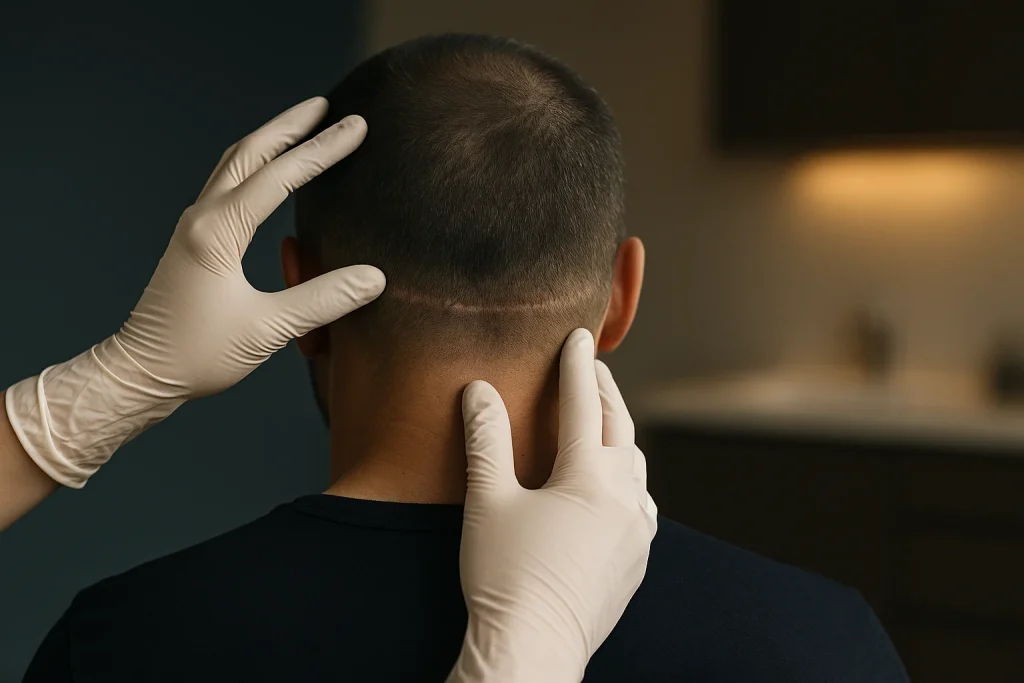
Hair transplant scars can develop after either follicular unit extraction, often called FUE, or follicular unit transplantation, often called FUT or strip surgery. FUE usually leaves many small circular donor marks, while FUT can leave a linear scar in the donor area. The visibility of any scar can vary with skin tone, healing pattern, hair length, graft extraction density and whether the person has continued hair thinning.
Scalp micropigmentation does not erase scar tissue, change its texture or make new hair grow. It is best understood as visual camouflage. In most suitable cases, it makes the scar less obvious rather than completely invisible. A careful consultation is important because very raised, wide, pale, red or unstable scars may respond differently to pigment than a flat, mature scar.
02Why transplant scars can remain visible
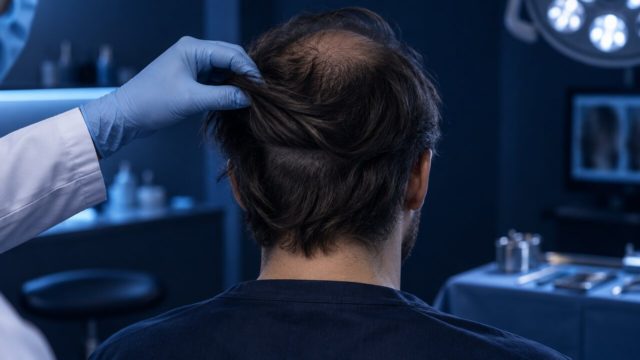
A transplant scar may be more noticeable when the surrounding hair is very short, when the scalp is exposed in bright light, or when there is a strong contrast between the scar and the natural skin colour. In the donor region, even well-healed extraction sites can become easier to see if the hair is clipped very close. A linear scar may also become more visible if hair above and below it becomes thinner over time.
Healing is individual. Some patients form scars that are fine and close to their natural skin tone, while others heal with a lighter, darker, firmer or slightly uneven area. Factors such as genetics, skin inflammation, smoking, infection, tension on the wound and aftercare can influence healing. Your doctor can assess whether a visible area is consistent with mature scar tissue or whether it needs medical review before cosmetic camouflage is considered.
It is also important to distinguish a transplant scar from ongoing hair loss. A thin-looking donor zone may result from overharvesting, diffuse thinning or a short haircut rather than scar visibility alone. SMP can sometimes improve the overall visual density of this area, but the treatment plan should address the true cause of the appearance. This helps set realistic expectations about what pigment can and cannot achieve.
03How smp for men works on scar tissue
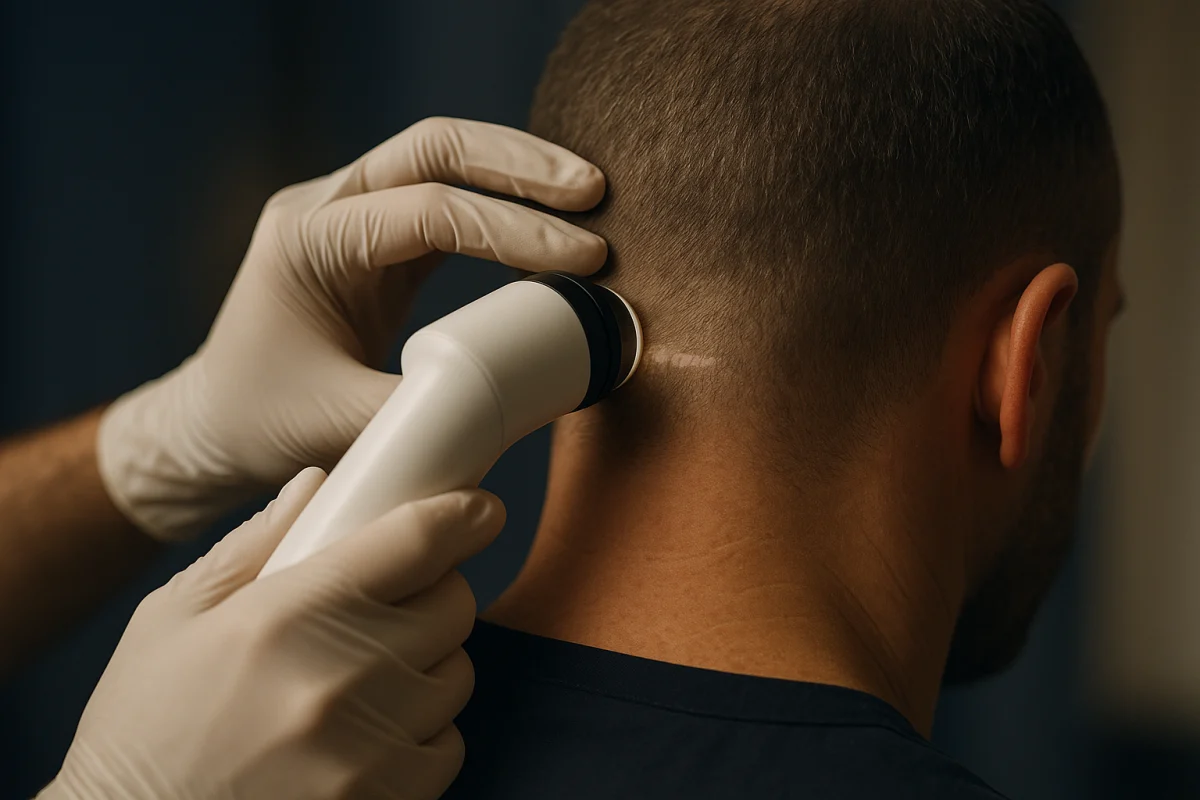
For smp for men, the practitioner places layered pigment impressions at different points in the scalp to mimic the shadow created by closely cut hair. Scar tissue is approached more conservatively than healthy scalp skin because it may hold pigment differently. The aim is usually to soften the edge of the scar and gradually build visual continuity with nearby follicles, rather than placing a dense block of colour in one session.
Pigment selection is based on the appearance of the existing hair, the skin tone and the treatment area. A suitable result should look subtle from normal conversational distance and should not appear as a flat tattoo-like patch. The practitioner may use lighter initial layering because scar tissue can react unpredictably. Additional sessions allow the colour and density to be adjusted after the scalp has settled.
For small FUE marks, pigment may be distributed across the donor area to reduce the spotted contrast that can show through a short haircut. For an FUT scar, the work may focus along and around the line while respecting the direction of surrounding hair. In selected cases, an SMP plan can also support the appearance of thinning in the crown or hairline, although each area requires its own careful design.
04Who may be a suitable candidate for scar camouflage
A suitable candidate typically has a stable, fully healed transplant scar and understands that SMP is a camouflage technique rather than a surgical correction. The scar should be assessed for colour, thickness, sensitivity, blood supply and texture. A doctor or qualified clinical team may advise waiting longer if the scar is still changing, inflamed, painful or recently treated.
Men who prefer a short hairstyle are often interested in SMP because the follicle-like effect can complement a closely shaved or clipped look. It may also be considered by men with limited donor hair, those who do not wish to undergo another procedure, or those who want to make a previous transplant less noticeable. Suitability still depends on an individual scalp assessment and a discussion of expected coverage.
Some situations need extra caution. People with a history of problematic scarring, active scalp conditions, uncontrolled skin disease, recent infection or known pigment sensitivities may require medical clearance or may not be suitable at that time. If you are considering future hair transplant surgery, tell the team before starting SMP. The placement and density of pigment should be planned so that it does not interfere with future clinical decisions.
05Planning sessions, shade and hairline design
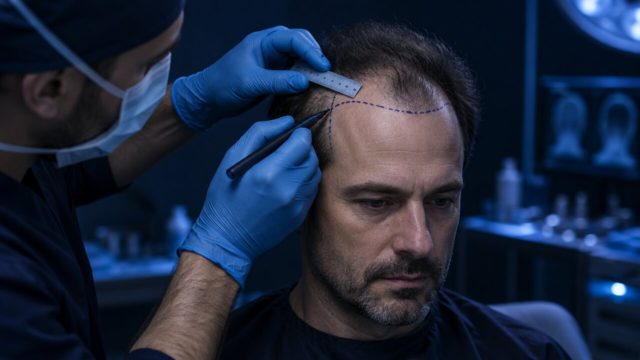
Good scar camouflage begins with planning, not with immediate pigment placement. During a consultation, the team should review the scar under suitable lighting, examine the donor and recipient areas, discuss hairstyle preferences and ask about previous surgeries or scalp treatments. Clear photographs can support planning, but an in-person assessment may be needed before treatment is confirmed.
The first session is commonly designed as a conservative foundation. It may look lighter than the final intended effect because the pigment needs time to settle in the skin. Further sessions can add definition and depth gradually. This layered method is particularly valuable over scars, where pigment retention may vary from one part of the scar to another.
Hairline work requires restraint. A very sharp, low or dark hairline may look unnatural as a person ages or if hair loss progresses. For men with transplant scars, the main priority may be the donor zone rather than a new hairline. If a hairline is included, it should be designed in a way that suits facial proportions, likely future hair loss and the remaining natural hair pattern.
06Healing timeline after scalp micropigmentation
After scalp micropigmentation, the treated area can appear slightly darker or more defined at first. Mild redness, tenderness or tightness may occur for a short period, particularly on sensitive skin or around scar tissue. In many patients, the surface healing period takes around five to ten days, although the exact timeline can differ depending on the skin, the extent of treatment and aftercare.
During early healing, patients are commonly advised to protect the scalp from friction, sweating, direct sun exposure and water contact for the period recommended by their practitioner. Picking at dry skin or scabbing should be avoided because this can affect how evenly the pigment settles. Your treating team will provide specific aftercare instructions based on the treatment area and your skin response.
The final appearance should not be judged immediately after a session. As the scalp recovers, the colour usually softens and the practitioner can see how the skin has retained the pigment. Follow-up sessions are generally spaced to allow proper assessment. If a scar absorbs less pigment in one area, a gradual adjustment may be considered instead of trying to create full coverage too quickly.
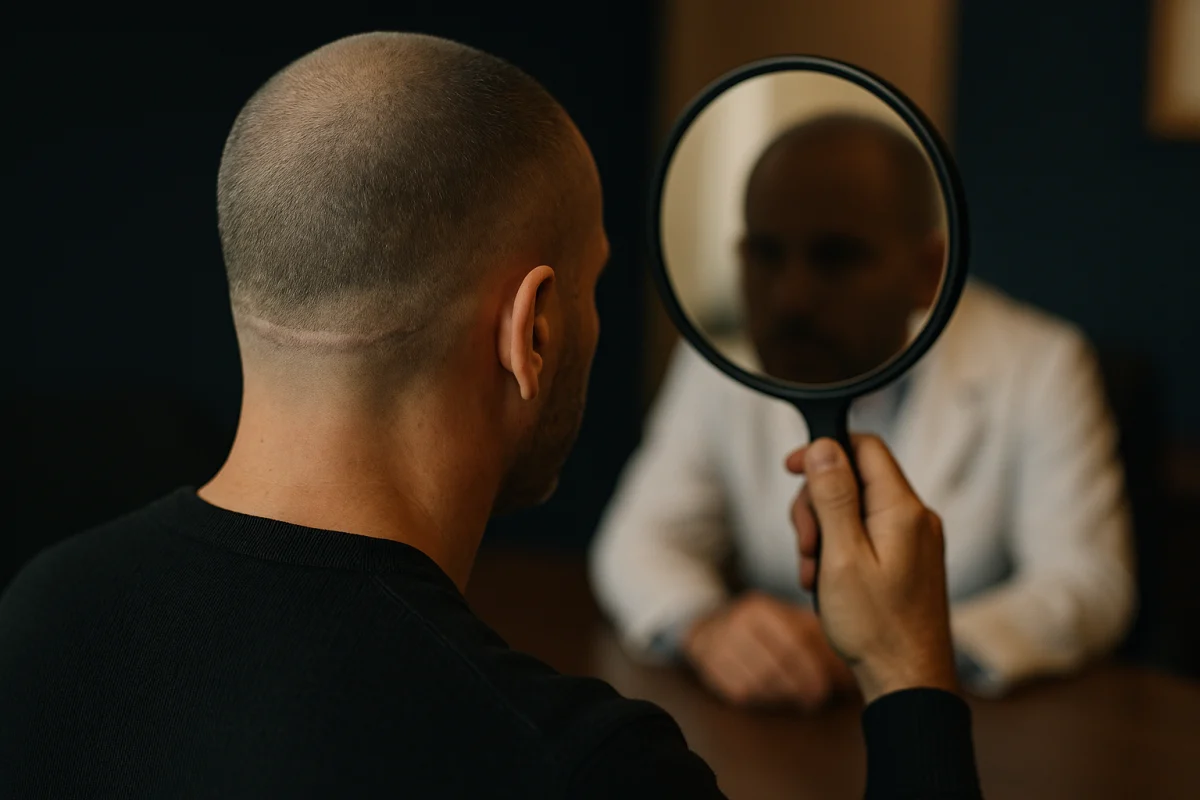
07Combining SMP with hair transplant planning
SMP for men can be used after a previous transplant, but timing matters. Newly transplanted grafts and donor wounds need adequate time to heal before any scalp pigmentation procedure is considered. Your doctor will confirm when the scalp is stable enough. Starting too soon may irritate healing skin, complicate evaluation of the transplant result or affect the planned placement of pigment.
For some patients, a further transplant may be more appropriate than SMP alone, especially when there is sufficient donor capacity and the main concern is low density rather than a scar. For others, SMP may be a practical complement to surgery by visually increasing the appearance of density between existing hairs. The right approach depends on donor availability, hair-loss progression, scalp condition and personal goals.
At Acibadem Hair Transplant Center in Istanbul, doctors can review a free online hair analysis before advising on the next appropriate step. The clinic is licensed by the Turkish Ministry of Health and provides Sapphire FUE and DHI techniques for suitable candidates. A consultation should remain focused on safety, realistic coverage and long-term planning, rather than on a one-size-fits-all cosmetic result.
08Limits, risks and long-term maintenance
SMP cannot flatten a raised scar, restore sensation, treat infection or correct a wide scar caused by poor wound healing. If the texture is the main concern, your doctor may discuss other medical or surgical scar-management options first. Even when the colour contrast improves, the scar may remain detectable on close inspection or under strong lighting.
Potential risks include uneven pigment retention, colour changes over time, infection, allergic reaction and an unnatural appearance if the shade or density is poorly matched. These risks can be reduced through proper hygiene, conservative technique, appropriate pigment selection and qualified assessment, but they cannot be removed completely. Patients should disclose previous reactions to cosmetic pigments, skin treatments and relevant medical conditions.
Results are not permanent in exactly the same way for every person. Sun exposure, skin turnover, immune response and lifestyle factors can gradually soften the pigment. Some patients choose a maintenance session after a period of time to refresh the appearance. A responsible plan includes the possibility of future maintenance and avoids creating an overly dark result that may be difficult to adapt as the natural hair changes.
09Choosing an informed next step for a visible scar
If a transplant scar affects confidence, begin with a professional assessment instead of choosing treatment based only on online photographs. A useful consultation should explain whether the visible concern is scar contrast, scalp thinning, donor depletion, active hair loss or a combination of these factors. It should also explain the likely benefit, the limits of camouflage and the expected treatment stages in clear language.
Bring details of any previous transplant procedure if available, including the technique used and when it was performed. Inform the team about medication, scalp symptoms, allergies and any history of unusual scarring. This information helps them assess whether SMP is appropriate and whether another medical review is needed first. It also supports a safer plan if you may want further hair restoration in the future.
For international patients, a remote review can be a convenient first step, but photographs do not replace clinical judgement. Acibadem Hair Transplant Center offers doctor-reviewed online hair analysis, with WhatsApp replies usually available within around two hours. If SMP or another approach is considered suitable, the final recommendation should be confirmed after appropriate assessment of your scalp and medical history.
10Frequently Asked Questions
Can scalp massage remove DHT from the scalp?
No. Scalp massage does not remove dihydrotestosterone, known as DHT, from the scalp or reliably treat androgenetic hair loss. Massage may feel relaxing and can help distribute hair-care products, but it should not replace a medical assessment or evidence-based treatment discussion.
What does male alopecia mean?
Male alopecia is a general term for hair loss in men. The most common form is androgenetic alopecia, also called male pattern hair loss, which is influenced by genetics and hormones and often affects the hairline, temples and crown. Other causes of hair loss can occur, so a doctor can help identify the likely type.
How long does scalp micropigmentation take to heal?
The outer scalp surface commonly settles within about five to ten days, although healing can vary between patients. The pigment appearance continues to settle over the following weeks, which is why sessions are usually spaced apart. Follow the aftercare instructions given by your practitioner and seek medical advice if you develop concerning redness, pain or discharge.
What are the big 3 treatments for thinning hair?
The phrase big 3 commonly refers to minoxidil, finasteride and ketoconazole shampoo. These options have different uses, benefits and possible side effects, and they are not suitable for every person. A doctor should confirm whether any medical treatment is appropriate for you, particularly before using prescription medication.
Can scalp micropigmentation damage transplanted hair grafts?
SMP should only be considered after transplanted grafts and surrounding scalp tissue have healed adequately. When performed at the correct time and with proper technique, it is designed to place pigment in the superficial scalp rather than damage follicles. Your doctor should confirm the timing after a transplant.
Cet article est fourni à titre d’information générale uniquement et ne remplace pas un avis médical professionnel.
Ce guide est fourni à titre d’information générale et ne remplace pas une consultation médicale. Les décisions de traitement sont prises après une évaluation par un médecin, en personne ou en ligne.