Dans cet article9
- Vue d’ensemble
- Why an active scalp problem can delay a hair transplant
- Common reasons a scalp sore stays tender or crusted
- When a scalp sore won't heal: what a clinical assessment may involve
- Scalp fungal infections and their effect on hair
- Hard lumps on the scalp: possible explanations and warning signs
- Stress, scratching and the scalp healing cycle
- Planning transplant surgery after the scalp has healed
- Frequently Asked Questions
A scalp sore won't heal should be assessed before hair transplant surgery, because an active infection, inflammatory condition, wound or unclear lesion may affect safety and graft healing. Transplant surgery is typically delayed until the scalp has healed and a doctor has confirmed that the donor and recipient areas are suitable.
- An open, infected or unexplained scalp lesion should be medically assessed before a hair transplant is planned.
- Common causes include folliculitis, fungal infection, dermatitis, scratching, skin trauma and cysts.
- Hair transplant surgery is usually postponed until inflammation, infection and broken skin have fully settled.
- A hard or changing scalp lump needs clinical assessment, especially if it is painful, bleeding or growing.
- A doctor-reviewed online hair analysis can help begin planning, but an in-person examination may still be needed for a scalp concern.
01A Scalp Sore That Will Not Heal Before Transplant Surgery
If a scalp sore won't heal before a planned hair transplant, it is important not to ignore it. A persistent sore may be a simple result of scratching or minor trauma, but it can also be linked to infection, inflammation, a skin condition or, less commonly, another type of lesion that needs examination. Hair restoration involves working carefully with the skin and hair follicles. For this reason, the scalp should usually be intact, calm and free from active disease before graft extraction or implantation takes place.
A hair transplant team will normally assess both the donor area, often at the back and sides of the scalp, and the recipient area where grafts are planned. Redness, crusting, drainage, tenderness, scaling or an open wound can make it difficult to plan safely. These signs may also change the estimated graft yield or the design of the transplant. The first priority is to understand why the sore has remained present rather than attempting to cover it with hair or proceed around it.
Healing time varies widely. A small irritated spot may settle in days once the cause is removed, while an infection or inflammatory condition can take longer and may need medical treatment. It is not possible to confirm readiness for surgery from a photograph alone in every case. Your doctor will consider the appearance of the skin, your symptoms, medical history and any treatment already used before advising on the next step.
02Why an active scalp problem can delay a hair transplant
Hair transplantation creates many tiny openings in the skin during graft extraction and placement. When the scalp already has inflammation or infection, creating additional openings may increase irritation and can make aftercare more difficult. In most patients, surgeons prefer to operate only after the skin barrier has recovered. This approach supports cleaner wound healing and allows the surgical team to identify healthy areas for reliable graft placement.
An active bacterial or fungal infection may spread through scratching, shaving or close contact during preparation. Even when a sore is limited to one small area, the cause may affect surrounding follicles or skin that looks normal at first glance. Persistent inflammation can also lead to temporary shedding around the involved area. Treating the underlying problem first helps distinguish temporary hair changes from stable pattern hair loss that may be suitable for restoration.
Delaying a procedure can feel disappointing, especially when travel has been planned. However, a short delay is generally safer than operating on a scalp that has not fully recovered. A responsible treatment plan should include time for reassessment after symptoms have resolved. The aim is not simply for a scab to disappear, but for the underlying skin condition to be controlled and the scalp to be comfortable and stable.
03Common reasons a scalp sore stays tender or crusted
Folliculitis is one common cause of tender bumps, pustules or crusted sores on the scalp. It occurs when hair follicles become inflamed, sometimes due to bacteria, yeast, friction, sweating, oils or shaving. Some cases are mild and short-lived, while recurrent or widespread folliculitis needs assessment. Picking at bumps can prolong healing, introduce more bacteria and leave small scars that may influence where grafts can be placed later.
Scalp dermatitis can also cause itching, redness, flaking and broken skin from repeated rubbing or scratching. Seborrhoeic dermatitis, contact reactions to hair products and eczema-like conditions may all look similar to a patient. Psoriasis can form thicker, well-defined plaques with scale. These conditions are not automatically a permanent barrier to hair transplantation, but symptoms should usually be well controlled before surgery and during the healing period.
Sometimes a scalp sore won't heal because the skin is repeatedly exposed to a trigger. Examples include tight headwear, harsh styling practices, adhesive products, hair dye reactions, scratching during sleep or pressure on one area of the head. A clinician can help identify whether the problem is mechanical, allergic, infectious or inflammatory. Bringing clear information about new products, recent treatments and the timing of symptoms can make assessment more useful.
04When a scalp sore won't heal: what a clinical assessment may involve
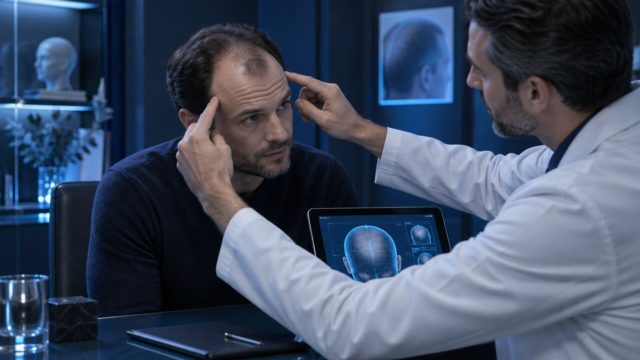
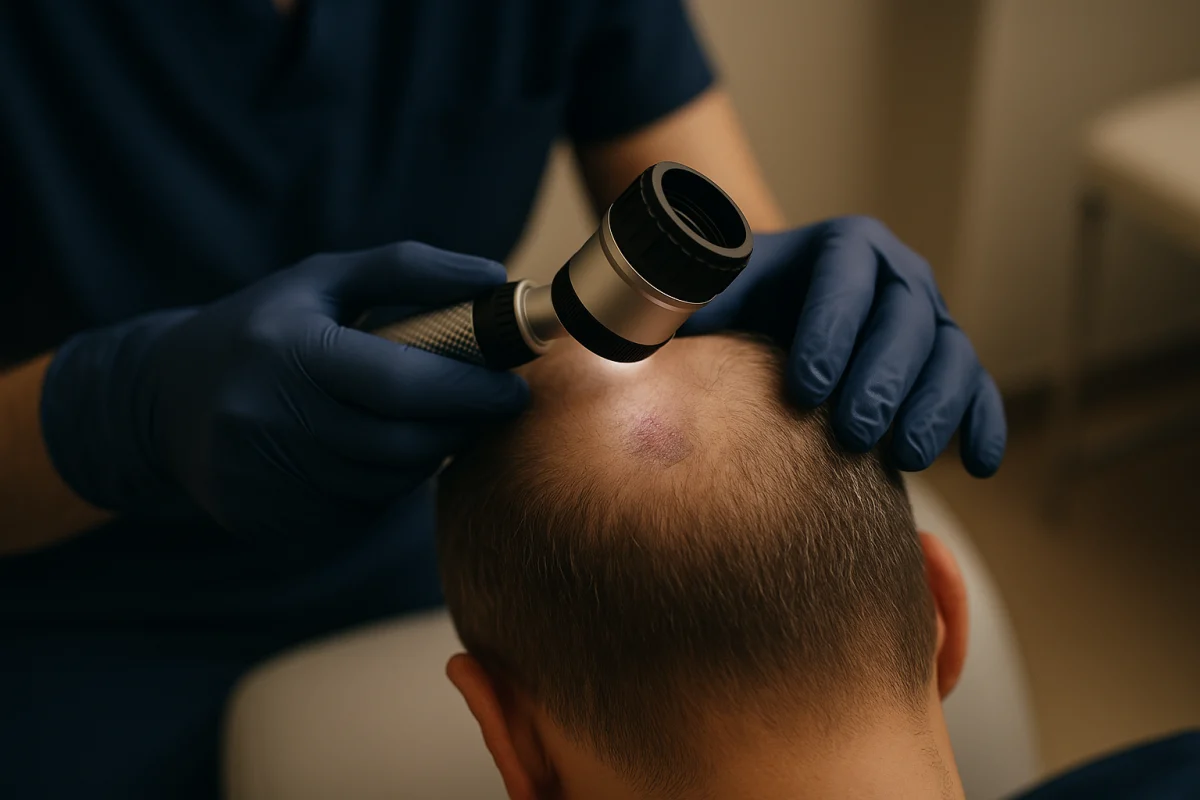
A clinician will usually begin by looking closely at the sore and the surrounding scalp. Important details include how long it has been present, whether it itches or hurts, whether there is bleeding or discharge, and whether hair has broken or fallen out nearby. They may also ask about fever, swollen lymph nodes, recent illness, contact with children or animals, previous scalp conditions, medication use and recent salon or grooming treatments.
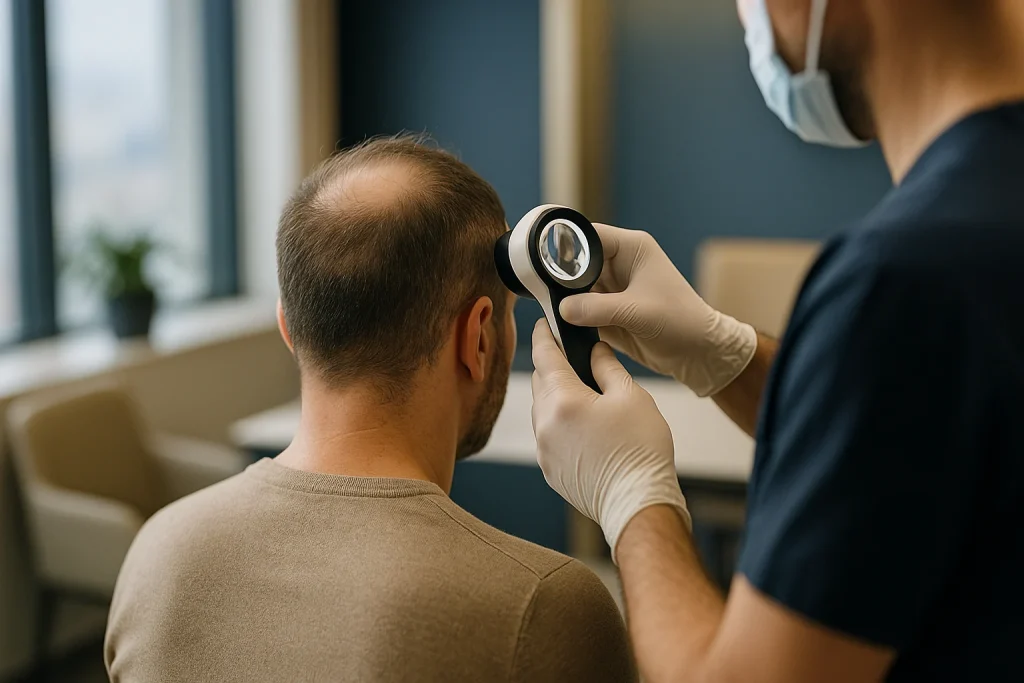
Depending on the appearance, assessment may include a close scalp examination with magnification, a sample of scale or discharge, or testing for infection. In selected cases, referral to a dermatologist or another medical specialist may be appropriate. A biopsy is not needed for most common scalp sores, but a clinician may consider it when a lesion is unusual, persistent, ulcerated, pigmented or not responding as expected to treatment.
Seek prompt medical attention for a sore that is rapidly enlarging, very painful, warm and swollen, producing pus, accompanied by fever, or associated with spreading redness. A sore that repeatedly bleeds, develops a changing dark colour, forms a non-healing ulcer or causes a new patch of scarring hair loss should also be examined without delay. These features do not confirm a serious diagnosis, but they should not be managed only with cosmetic scalp care.
05Scalp fungal infections and their effect on hair
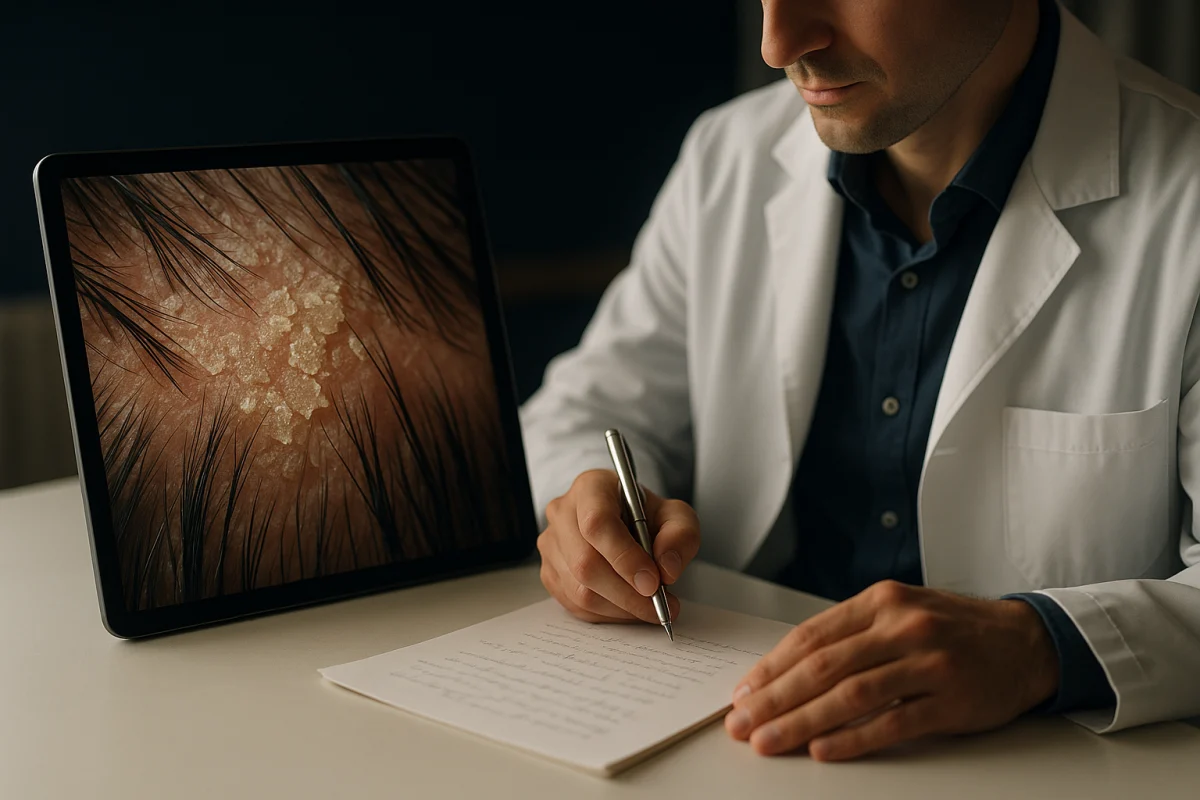
Fungal infections of the scalp are often grouped under the term tinea capitis, also called scalp ringworm. Despite the name, this condition is caused by fungi rather than worms. It can lead to scaling, itching, broken hairs, black dots where hairs break at the skin surface and round areas of hair loss. It is seen more often in children, but adults can also develop it, particularly when there are risk factors or close contact with an affected person or animal.
Different clinical patterns of tinea capitis include gray-patch infection, black-dot infection, favus and kerion. Gray-patch patterns can produce scaly areas with broken hair. Black-dot patterns may leave short broken hairs that look like dark dots. Favus can cause thick yellowish crusting, while kerion is a more inflamed, tender swelling that may ooze and can be mistaken for a bacterial abscess. The exact appearance varies, so diagnosis should be confirmed by a clinician rather than by appearance alone.
Scalp fungal infections generally need medical treatment, often with prescription antifungal medicine because surface-only products may not reach the affected hair follicles sufficiently. Household contact advice may also be important, as some fungal infections can spread. Hair transplant surgery should not be performed during active tinea capitis or an unexplained scaly hair-loss patch. The scalp needs to be clinically clear, and your doctor should confirm that there is no ongoing infection before surgery is reconsidered.
06Hard lumps on the scalp: possible explanations and warning signs
A hard lump on the scalp can have several causes, many of which are benign. Pilar cysts, sometimes called hair-root cysts, are common rounded lumps that arise from hair follicles and may feel firm beneath the skin. Epidermoid cysts, old injury-related swelling, inflamed follicles and small bony prominences can also be noticed as scalp lumps. A lump may become tender if it is irritated, infected or repeatedly pressed by a comb, helmet or headwear.
It is important not to squeeze, pierce or try to drain a scalp lump at home. This may cause inflammation, infection or scarring. A clinician can assess whether a lump is mobile or fixed, soft or firm, painful or painless, and whether the skin above it is normal. They may recommend observation, treatment for inflammation, imaging or removal, depending on the suspected cause and its location.
Before a hair transplant, any unexplained lump in a planned donor or recipient area should be reviewed. Grafts should not be placed through an active cyst, infected bump or lesion that has not been diagnosed. More urgent assessment is appropriate when a lump grows quickly, becomes persistently painful, bleeds, ulcerates, feels fixed to deeper tissue or is accompanied by other concerning symptoms. Most lumps are not dangerous, but a transplant consultation is not a substitute for proper diagnosis.
07Stress, scratching and the scalp healing cycle
Stress can affect the scalp indirectly. During stressful periods, some people scratch more, sleep less, change hair-washing habits or experience flares of conditions such as dandruff, eczema or psoriasis. Stress may also contribute to increased shedding in some people several months after a physical or emotional event. However, stress alone should not be assumed to explain a persistent sore, especially when there is crusting, discharge, pain, a lump or visible hair loss in one area.
Itching and scratching can create a difficult cycle. A small itchy area is scratched, the skin breaks, a scab forms, and then the scab is picked or rubbed before the skin has repaired. Repeated trauma can delay healing and may lead to post-inflammatory colour changes or scarring. Keeping nails short, avoiding harsh scalp scrubs and using only clinician-recommended treatment can help reduce further irritation while the cause is being investigated.
Good general recovery habits can support skin health but do not replace medical care for an ongoing lesion. Regular sleep, balanced nutrition, hydration and gentle hair care may be helpful as part of an overall routine. If anxiety about hair loss is contributing to frequent checking or picking, discussing this openly with a healthcare professional can be valuable. The safest transplant schedule is one that allows the scalp and the patient to feel physically ready.
08Planning transplant surgery after the scalp has healed
Once the cause has been treated, the doctor may recommend a period of observation before booking surgery. They will look for healed skin without active tenderness, drainage, expanding redness, thick scale or fresh lesions. If there has been infection, recurrent folliculitis or a scarring condition, the appropriate waiting period depends on the diagnosis and response to treatment. Your doctor will confirm whether the donor area and recipient area are stable enough for graft harvesting and implantation.
A scalp sore won't heal is a useful reason to pause and obtain clear answers before committing to travel or a procedure date. Take photographs over time if the appearance changes, and note treatments already tried, including medicated shampoos, creams, oral medicines or new hair products. Do not stop prescribed treatment solely because a transplant is being considered. The treating clinician and hair restoration team need accurate information to coordinate a safe plan.
Acibadem Hair Transplant Center is a dedicated hair restoration clinic in Istanbul, licensed by the Turkish Ministry of Health. Our doctors can review a free online hair analysis and typically reply on WhatsApp within around two hours. If your scalp appears to have an active concern, the team may recommend further medical evaluation before discussing Sapphire FUE or DHI planning. For suitable patients, all-inclusive packages can include VIP transfer, a 4-star hotel, a care kit and 12 months of follow-up, but medical suitability always comes first.
09Frequently Asked Questions
How long does a tender scalp usually take to heal?
A mildly irritated scalp may improve within several days after the trigger is removed, while a deeper infection, dermatitis flare or injury can take weeks or longer. Healing time depends on the cause, whether the skin is broken, and whether appropriate treatment is needed. If tenderness persists, worsens or returns repeatedly, a clinician should assess it before hair transplant surgery is planned.
What types of fungal infection can affect the scalp?
The main fungal scalp infection is tinea capitis, which may appear as gray-patch infection, black-dot infection, favus or a highly inflamed kerion. These patterns can cause scaling, broken hairs, hair loss, crusting or tender swelling. A clinician can confirm the cause and advise treatment, as other scalp conditions may look similar.
What may cause a hard lump on the scalp?
Possible causes include a pilar cyst, epidermoid cyst, inflamed hair follicle, previous injury or a normal bony prominence. Many scalp lumps are benign, but an unexplained lump should be examined if it grows, hurts, bleeds, becomes infected or changes in appearance. It should also be reviewed if it is located in an area planned for transplant grafts.
Can stress lead to scalp sores?
Stress can contribute indirectly by increasing scratching, disrupting sleep or worsening inflammatory scalp conditions in some people. However, stress should not be used to explain away a persistent, painful, crusted or draining sore. Medical assessment is important to rule out infection or another treatable scalp condition.
Cet article est fourni à titre d’information générale uniquement et ne remplace pas un avis médical professionnel.
Ce guide est fourni à titre d’information générale et ne remplace pas une consultation médicale. Les décisions de traitement sont prises après une évaluation par un médecin, en personne ou en ligne.