Dans cet article9
- What 500 hair grafts can realistically cover
- Areas where a small graft session may help
- Why graft count does not equal visible density
- Planning with 500 hair grafts: what doctors assess
- What results and recovery may look like
- How a small procedure is performed
- When a larger graft plan may be more suitable
- Preparing for a consultation and setting clear expectations
- Frequently Asked Questions
500 hair grafts can typically improve a small, clearly defined area, such as mild temple recession, a hairline corner, a small scar, or limited crown thinning. The final visual change depends on the number of hairs in each graft, hair characteristics, the size of the treatment area, and your available donor supply.
- 500 grafts are usually suitable for a targeted refinement rather than full coverage of extensive hair loss.
- A graft may contain one to several hairs, so graft count and hair count are not the same.
- Hairline design, existing hair density, curl, colour contrast, and scalp condition all influence the visible result.
- Doctors assess the donor area and long-term hair-loss pattern before recommending a graft number.
- A free online hair analysis can provide an initial assessment, while the final plan requires medical confirmation.
01What 500 hair grafts can realistically cover
500 hair grafts are generally used for a focused improvement, not for rebuilding a large bald area. In most patients, this number may help soften early recession at the temples, reinforce a small section of the frontal hairline, add coverage to a narrow scar, or increase density in a limited thinning zone. The goal is usually to create a subtle but meaningful change that blends with the person’s existing hair rather than to produce a dramatic transformation across the whole scalp.
A hair graft, also called a follicular unit, is a natural group of hairs taken from the donor area. Some grafts contain one hair, while others contain two, three, or occasionally more hairs. This means that 500 grafts may represent a different total number of hairs from one patient to another. Your doctor considers both graft count and the likely hair yield when estimating the potential coverage.
The same graft number can look fuller on one person than on another. A small treatment zone needs fewer grafts than a wide one, and fine hair may create a different visual effect than thick or curly hair. A low contrast between hair and scalp can also make coverage appear denser. For this reason, an appropriate plan is based on area, hair quality, and future needs, not only on a single number.
02Areas where a small graft session may help
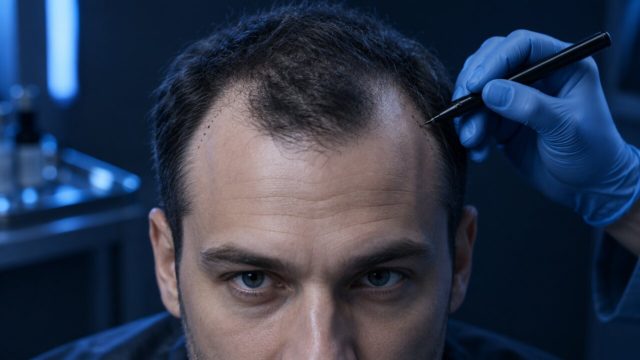
The frontal hairline is one of the most common areas for a smaller procedure. A patient with generally good density may wish to improve two receding corners or make a slightly uneven hairline look more balanced. In this situation, the surgeon can place grafts carefully at the transition between existing and transplanted hair. Fine single-hair grafts are often selected for the leading edge to support a soft, natural appearance.
A small session may also be considered for a localised scar, depending on its size, blood supply, thickness, and stability. Scars can result from injury, previous surgery, or an earlier hair restoration procedure. Transplanting into scar tissue may require a particularly cautious approach because circulation can differ from normal scalp skin. A doctor will assess whether the area is suitable and may advise that the result develops gradually.
Limited crown thinning can sometimes be improved with a modest graft number, especially when the thinning spot is small and surrounding hair remains strong. However, the crown often requires more grafts than patients expect because of its circular pattern and the way hair naturally grows in a whorl. When the area is broader or hair loss is progressing, preserving donor hair for a larger future plan may be more appropriate than using a small session alone.
03Why graft count does not equal visible density
Visible density is not simply a matter of placing as many grafts as possible into one area. Natural hair grows at different angles and directions, especially at the hairline and crown. During planning, the surgeon considers how to place grafts so they follow the existing growth pattern. Correct direction, spacing, and distribution can help a limited number of grafts create a more balanced visual effect.
Hair calibre has an important role. Coarser hair can often create more coverage than very fine hair because each strand has a wider diameter. Curly or wavy hair may also give an impression of greater fullness than straight hair. In contrast, a large difference between dark hair and a light scalp can make thinning more visible, meaning that more grafts may be needed to achieve a similar cosmetic effect.
When discussing 500 hair grafts, it is also important to consider native hair that is still present. If the area has many miniaturised hairs, adding transplanted hair can improve the look in the short term, but future loss of surrounding native hair may change the overall appearance. Doctors therefore aim to plan a result that remains reasonable if hair loss progresses, rather than concentrating only on today’s appearance.
04Planning with 500 hair grafts: what doctors assess
Before recommending a graft number, doctors normally review the pattern and likely stability of hair loss. They look at the hairline, temples, mid-scalp, crown, and donor area, as well as family history and general medical information. This evaluation helps determine whether a small treatment is likely to meet the patient’s goals or whether a broader strategy should be discussed. Your doctor will confirm whether transplantation is suitable for you.
Donor management is essential because donor hair is limited. Grafts are usually harvested from the back and sides of the scalp, where hair is often more resistant to pattern hair loss. Removing too many follicles, or using donor hair without considering future needs, can affect the appearance of the donor area and reduce options for later treatment. A conservative graft plan can be particularly valuable for younger patients or those with ongoing hair loss.
At Acibadem Hair Transplant Center, patients can begin with a free online hair analysis reviewed by doctors. Photos and medical information can help the team provide an initial indication of the possible treatment approach. Replies on WhatsApp are typically available within around two hours. This remote assessment is helpful for planning travel, but an in-person clinical review remains important before a procedure is confirmed.
05What results and recovery may look like
After a hair transplant, the transplanted hairs commonly shed during the early weeks. This is a normal part of the growth cycle and does not necessarily mean that the follicles have been lost. New growth often begins gradually over the following months, with the appearance continuing to mature over time. Patients should expect variation in the speed and pattern of growth and should follow their clinic’s aftercare instructions closely.
With a 500-graft procedure, the visible change may be modest at first because the treated area itself is usually small. The benefit can be a better frame around the face, less visible temple recession, or improved blending in one specific location. It is important to understand that transplanted hair does not stop natural hair loss in untreated areas. A doctor may discuss medical options or a long-term monitoring plan where clinically appropriate.
Acibadem Hair Transplant Center uses trichoscopic assessment of graft survival at month 12 and documents a 98% rate under a written guarantee. Individual cosmetic outcomes can still differ because graft survival is only one part of the result. Hair characteristics, healing, the progression of existing hair loss, styling choices, and the size of the treatment area all affect how full the hair looks.
06How a small procedure is performed
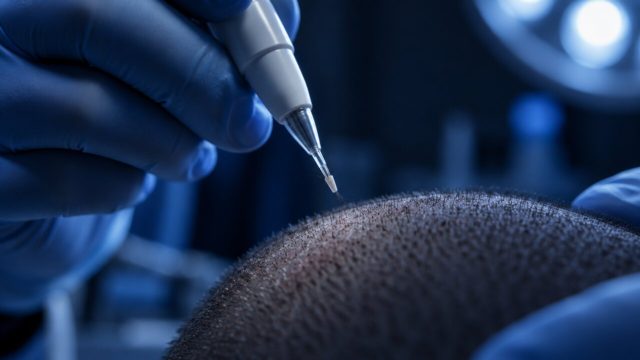
Sapphire FUE and DHI are both techniques that may be used in hair restoration, depending on the treatment plan. With Sapphire FUE, follicles are extracted individually and recipient channels are created before placement. With DHI, extracted follicles are implanted using a specialised implanter approach. The best technique depends on the target area, hair characteristics, scalp condition, and the doctor’s clinical assessment rather than on a universal preference.
A smaller graft session does not mean that careful surgical standards are less important. Hairline work needs detailed placement to avoid an overly straight or artificial look. The team must also protect existing hairs, manage the donor area gently, and create recipient sites that fit the natural angle of growth. For localised treatment, precision can matter as much as the total number of grafts.
Needle-free anaesthesia is available at the clinic for patients who are suitable for it. Before treatment, the medical team reviews relevant health information, medications, allergies, and scalp findings. Patients should disclose their complete medical history and follow pre-procedure guidance. Only the treating medical team can explain the expected process and any individual risks after a proper assessment.
07When a larger graft plan may be more suitable
A person with extensive frontal, mid-scalp, and crown loss will usually need more than 500 hair grafts to create meaningful overall coverage. Trying to spread a small number of grafts over a large bald area may lead to a sparse result that does not meet expectations. In these cases, a doctor may recommend prioritising the frontal zone, where hair framing the face can often have the greatest cosmetic impact, or may discuss treatment in stages.
Some people asking about 500 hair grafts have already had a transplant and need a small adjustment. A focused session can sometimes be used to soften a previous hairline, fill a small gap, or improve density around a scar. Revision work needs a detailed review because the donor supply, scalp tissue, and placement of previous grafts can influence what is safely achievable.
A staged approach may be useful when hair loss is likely to continue. The first procedure can focus on the most important visible area while retaining donor capacity for later needs. This approach does not guarantee that another procedure will be necessary or suitable, but it reflects the fact that pattern hair loss can change over the years. A responsible plan balances present goals with the long-term protection of donor hair.
08Preparing for a consultation and setting clear expectations
The most useful consultation begins with clear goals. Patients can describe which area concerns them most, whether they want a subtle refinement or broader coverage, and what they consider a successful change. Sharing photos taken in good light from the front, sides, top, crown, and donor area helps doctors make a more informed initial review. Photos should show the current hair pattern without filters or heavy styling products where possible.
It is also helpful to ask what the proposed graft number is designed to achieve. Patients should understand the treatment area, the expected distribution of grafts, the likely timeline for growth, and whether future hair loss could affect the result. No clinic can ethically guarantee a particular cosmetic appearance, but clear planning can reduce misunderstandings and help patients make an informed decision.
International patients may value practical support alongside medical communication. Acibadem Hair Transplant Center is a dedicated hair restoration clinic in Istanbul licensed by the Turkish Ministry of Health. Its all-inclusive packages include VIP transfer, a 4-star hotel, a care kit, and 12 months of follow-up. The clinic has welcomed patients from 38 countries over 12 years, while each treatment plan remains subject to individual medical evaluation.
09Frequently Asked Questions
Is 500 grafts considered a large amount for a hair transplant?
No. In hair transplantation, 500 grafts is generally considered a small, targeted session. It may be enough for minor hairline refinement, temple recession, a small scar, or a limited thinning area, but it is not usually enough for extensive baldness.
How much does a 500-graft hair transplant cost?
The cost of a 500-graft procedure can vary according to the country, clinic, technique, medical requirements, and what is included in the treatment package. A graft count alone does not provide a reliable final price, so it is best to request a written quotation after a medical review. The clinic team can explain package details following your online assessment.
Is 1,000 grafts a high number?
1,000 grafts is still usually a relatively modest number, although it can create a noticeable improvement in the right treatment area. It may suit a stronger hairline refinement, wider temple work, a small frontal zone, or selected localised density concerns. Whether it is enough depends on hair characteristics and the extent of hair loss.
Is 5,000 grafts too many for a hair transplant?
5,000 grafts is a large transplant session or total treatment plan and may be considered for extensive hair loss in selected patients. It is not suitable for everyone because donor capacity, scalp condition, medical factors, and long-term planning must be assessed carefully. Your doctor will determine whether this number can be harvested and placed safely.
Cet article est fourni à titre d’information générale uniquement et ne remplace pas un avis médical professionnel.
Ce guide est fourni à titre d’information générale et ne remplace pas une consultation médicale. Les décisions de traitement sont prises après une évaluation par un médecin, en personne ou en ligne.