
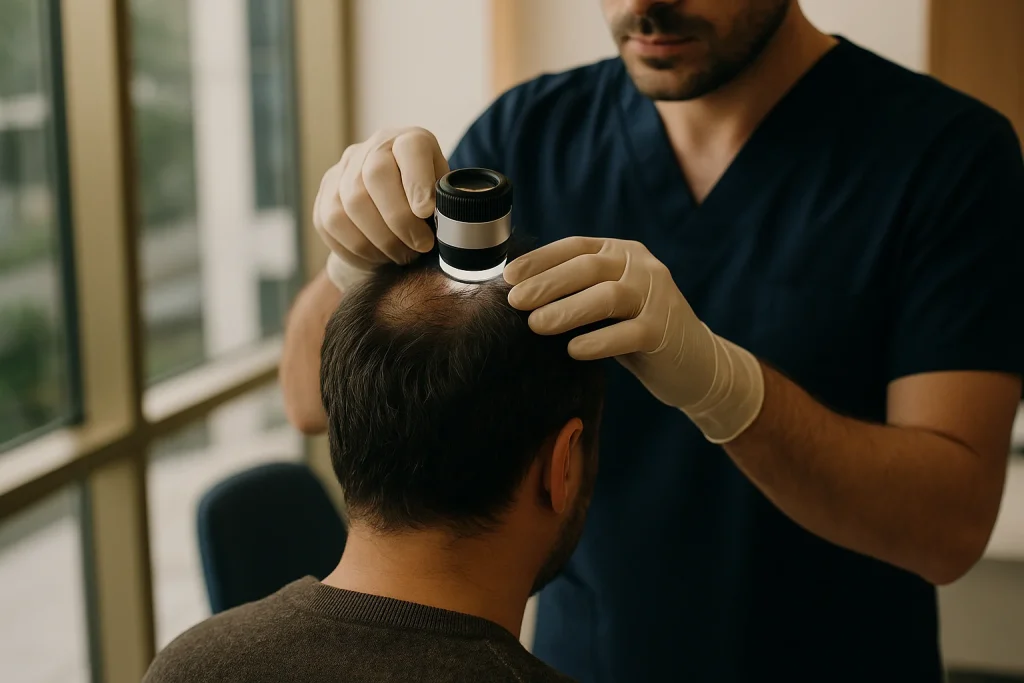
When you stop minoxidil after a hair transplant, the transplanted grafts usually remain because they are typically more resistant to pattern hair loss. However, the non-transplanted native hair that minoxidil was helping to maintain may gradually shed, which can make the overall result look thinner. If you are wondering what happens if you stop taking minoxidil, speak with your hair restoration doctor before changing your routine.
- Stopping minoxidil usually affects susceptible native hair more than permanently transplanted grafts.
- In many patients, increased shedding becomes noticeable several weeks to months after treatment is stopped.
- A sudden change in hair density can make a successful transplant appear less full, even when grafts are growing normally.
- Minoxidil is not necessary for every transplant patient, but it may be recommended to protect existing hair in selected cases.
- Your doctor can assess your donor area, native-hair stability and long-term hair-loss pattern before advising on continued treatment.
01What Happens When You Stop Minoxidil After Hair Transplant?
After a hair transplant, what happens if you stop taking minoxidil depends mainly on which hairs are being supported by the medicine. Minoxidil can help some weakened, non-transplanted follicles remain in their active growth phase for longer. When it is discontinued, those genetically vulnerable native hairs may return to their previous pattern of thinning. The transplanted follicles themselves are usually less affected, but the visual balance between transplanted and native hair can change over time.
A transplant redistributes healthy follicles from the donor area to areas with reduced density. It does not automatically stop ongoing pattern hair loss in the surrounding, original hair. For this reason, some patients are advised to use medical treatment after surgery to help preserve the hair that was already present. Whether this is appropriate depends on the cause of hair loss, age, family pattern, scalp findings and the stability of the existing hair.
Stopping minoxidil is not usually an emergency, and it does not mean that a transplant has failed. Still, it can lead to a period of increased shedding or gradual thinning in hairs that depended on the treatment. A doctor should confirm whether minoxidil is contributing meaningfully to your maintenance plan and whether another approach, monitoring plan or no treatment is suitable for you.
02The usual timeline after minoxidil is discontinued
Hair changes after stopping minoxidil are rarely immediate. Hair follicles move through natural growth, resting and shedding stages, so a visible difference may take time to develop. In many patients, shedding associated with discontinuation becomes noticeable within a few weeks to several months. The exact timing varies because hair growth cycles, treatment duration and the underlying reason for hair loss are different for every person.
At first, you may notice more hairs in the shower, on a pillow or while styling. This can be concerning, particularly after investing in a hair transplant, but shedding does not always mean transplanted grafts are being lost. It may reflect native hairs moving into a shedding phase after losing the stimulation previously provided by minoxidil. Your doctor can examine the pattern of density change and help distinguish expected shedding from other scalp or hair conditions.
Over subsequent months, hair that was being maintained by minoxidil may become finer or less dense if the underlying hair-loss process remains active. The final appearance depends on how much native hair was present around the transplant zone and how strongly those follicles were affected by pattern hair loss. Photographs taken in similar lighting and trichoscopic follow-up can provide a more reliable picture than checking the hairline day by day.
03What happens if you stop taking minoxidil while native hair is still thinning?
What happens if you stop taking minoxidil while your native hair is still susceptible to thinning is often a gradual loss of the treatment-supported density. Minoxidil does not permanently change the genetic tendency of a follicle to miniaturise. Therefore, hairs that were preserved or thickened during use may slowly return towards the density they would likely have reached without ongoing treatment.
This is especially relevant when a transplant has been placed between existing hairs rather than into a completely bald area. If the original hairs around the new grafts continue to thin, the scalp may become more visible behind or between the transplanted hairs. The result can look less even, although the transplanted hairline or grafted area may remain healthy and continue to grow.
Not every patient will experience the same amount of change. Some people have relatively stable native hair and may notice little difference, while others have active diffuse thinning that requires closer long-term planning. A professional assessment is important because sudden shedding can also be related to stress, illness, nutritional factors, hormonal changes, inflammation or other causes that should not be assumed to be caused by minoxidil alone.
04Why transplanted grafts and native hairs respond differently
Hair transplant grafts are commonly harvested from the back or sides of the scalp, where follicles are often more resistant to the hormonal process involved in pattern hair loss. Once these follicles establish blood supply in the recipient area, they generally keep many of their donor-area characteristics. This is why transplanted hair can provide long-lasting coverage even if medical treatments are later changed.
However, “resistant” does not mean that every graft will behave identically throughout life. Individual biology, scalp health, surgical planning and the quality of post-operative care can all influence the appearance of a transplant. A specialist should also evaluate whether the donor area is suitable and whether the planned density can remain natural if hair loss progresses in nearby non-transplanted areas.
Native hairs have not been moved from the donor zone and may remain sensitive to progressive pattern hair loss. Minoxidil may be used to support these follicles in selected patients, but it does not replace careful transplant design. A conservative, age-appropriate hairline and an adequate reserve of donor hair help protect the overall appearance if additional native hair is lost in the future.

05Taking a break, tapering treatment and restarting later
Some people consider taking a break from minoxidil because of travel, a changed routine, scalp irritation or difficulty maintaining daily application. A short interruption may not produce an immediate visible change, but there is no fixed number of days that is risk-free for every patient. Repeated or prolonged gaps can reduce the consistency of treatment and may allow vulnerable hairs to resume their natural thinning pattern.
Do not assume that tapering minoxidil will prevent shedding after discontinuation. The best approach depends on why it was prescribed, how long it has been used and whether you have ongoing native-hair miniaturisation. If you are considering a pause, ask the clinician who manages your hair loss whether a gradual adjustment, a different formulation, another treatment or observation is medically appropriate.
Restarting minoxidil after a break may support follicles that are still viable, but results are variable and should not be guaranteed. Some hairs may recover thickness over time, while others may have continued to miniaturise during the interruption. It is generally better to make a sustainable long-term plan than to repeatedly start and stop treatment without medical guidance.
06Minoxidil during the hair transplant recovery period
Immediately after surgery, the priority is protecting the newly placed grafts and allowing the scalp to heal. Minoxidil is not usually restarted on the same day as a transplant because the recipient area needs time to settle. Your surgical team will provide specific instructions about washing, touching the scalp, exercise and when any topical product can be safely reintroduced.
The timing of restarting minoxidil can vary according to healing, redness, crusting, sensitivity and the method used for treatment. Applying a topical solution too early may irritate the scalp or interfere with post-operative care. It is important not to follow generic online timelines in place of the written instructions provided by your own transplant clinic.
After the initial recovery phase, minoxidil may be discussed as part of a wider strategy for retaining native hair. At Acibadem Hair Transplant Center in Istanbul, free online hair analysis is reviewed by doctors before planning, and follow-up is included for 12 months in all-inclusive packages. Your care team can explain how medical maintenance and recovery guidance fit your individual surgical plan.
07How to tell normal post-transplant shedding from loss after stopping minoxidil
Early shedding after a transplant can be normal and should not automatically be linked to minoxidil. Transplanted shafts often shed in the weeks after surgery while the follicles remain under the skin and prepare for a new growth cycle. This temporary process is different from losing the transplanted follicles themselves, and visible new growth commonly takes several months to develop.
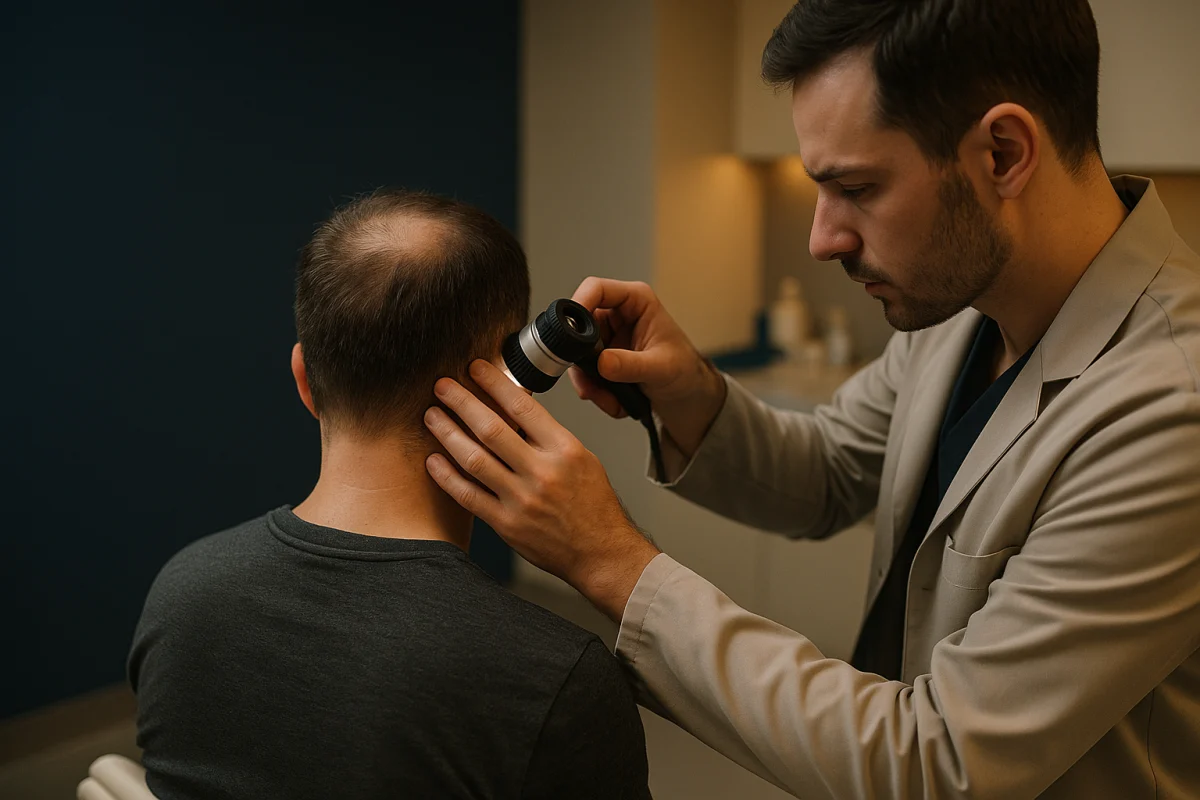
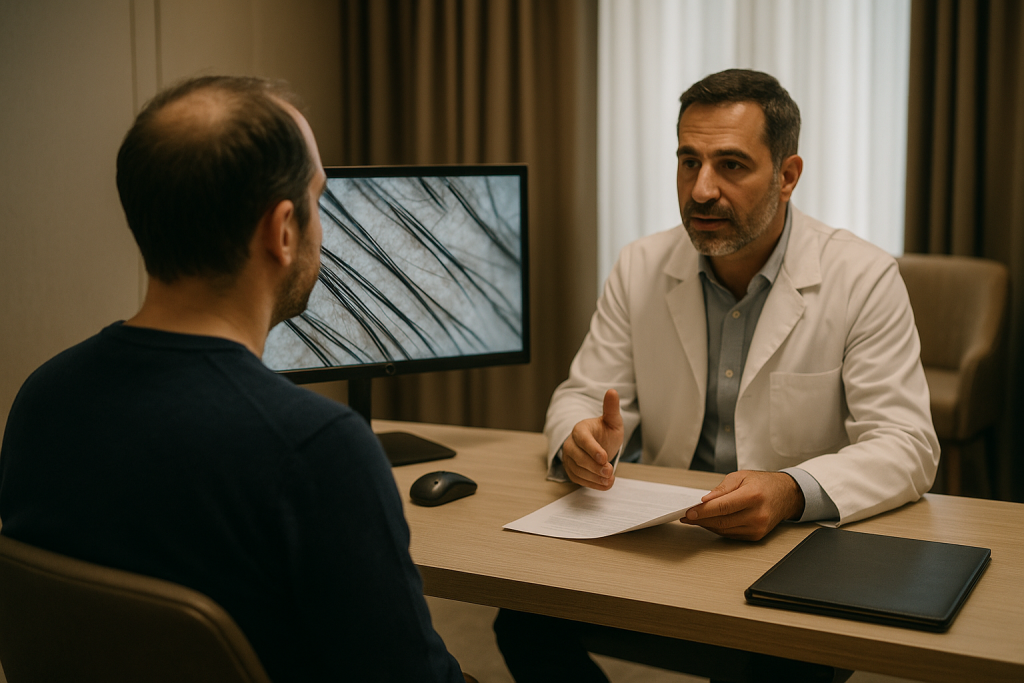
In contrast, thinning after stopping minoxidil may be more noticeable in pre-existing hair around the transplanted zone, crown or mid-scalp. The timing, distribution and appearance of the shed hairs can offer clues, but self-assessment is not always reliable. A doctor may use scalp examination and trichoscopy to assess hair calibre, follicular density and signs of miniaturisation.
What happens if you stop taking minoxidil can also be confused with the natural progression of androgen-related hair loss. Comparing clear baseline images with follow-up photographs is useful because changes can be gradual. Seek professional review if you notice persistent redness, pain, scaling, patchy loss, rapid diffuse shedding or any concern about graft healing rather than trying to diagnose the cause alone.
08Building a long-term plan for your transplant result
A hair transplant is best viewed as one part of a long-term hair restoration plan rather than a one-time solution for all future hair loss. The plan may include observation, medical treatment, scalp care and periodic reviews, depending on your hair-loss pattern. Patients with stable loss may need a different approach from those who have ongoing thinning across the crown, mid-scalp or frontal region.
Before surgery, a realistic assessment should consider the quality and availability of donor hair, the likely progression of hair loss and the desired coverage. Sapphire FUE and DHI are available at Acibadem Hair Transplant Center, a dedicated hair restoration clinic in Istanbul licensed by the Turkish Ministry of Health. Technique selection should be based on clinical suitability and the treatment plan, not on a promise of a particular density or future outcome.
If you wish to stop minoxidil, arrange a review before making the change whenever possible. A doctor can explain what areas of your scalp may be dependent on treatment, what changes are realistic to expect and how to monitor your hair over time. This careful approach can help you make informed decisions while protecting both your recovery and the long-term appearance of your transplant.
09How to monitor your hair if you stop minoxidil
If you stop minoxidil, monitor your hair in a structured way rather than judging it every day. Take baseline photographs before the change, then repeat them at planned intervals using the same room, lighting, hairstyle, camera distance and angle. Include the hairline, temples, mid-scalp, crown and donor area where possible. This makes gradual changes easier to identify and avoids misleading comparisons caused by wet hair, bright overhead light or a different haircut.
Keep a simple record of the date you stopped, the type of minoxidil used, any missed periods before stopping and any changes in your health or routine. Recent illness, major stress, weight change, new medication or scalp inflammation can also affect shedding. Recording these factors can help your doctor understand whether a density change is likely related to treatment discontinuation or may need a broader assessment.
Try not to count individual hairs each day. Normal daily shedding varies, and frequent checking can increase anxiety without giving a clear clinical answer. Instead, look for a persistent change in coverage, hair shaft thickness or scalp visibility over several weeks. A scheduled review with clinical photographs or trichoscopy is particularly useful when transplanted and native hairs are growing close together.
10Practical travel and packing considerations after hair transplant surgery
Patients travelling for a hair transplant should discuss their current minoxidil routine before arriving, especially if they use a topical product. Your surgical team may ask you to pause or delay topical scalp products around the procedure to protect the recipient area during early healing. Bring a list or clear photograph of the treatments you use, but do not apply anything to the scalp after surgery unless your team has specifically approved it.
If you are flying home after treatment, keep your written aftercare instructions, clinic contact details and prescribed or recommended care items accessible in your hand luggage. Avoid packing your recovery schedule too tightly. You may need time for gentle washing, rest and follow-up communication during the first days after surgery. Wearing loose, front-opening clothing for travel can also help you avoid pulling a garment over the recipient area.
At Acibadem Hair Transplant Center, all-inclusive packages include VIP transfer, a 4-star hotel, a care kit and 12 months of follow-up. This can make it easier for international patients to focus on recovery rather than arranging early post-operative logistics. However, your exact travel schedule, return-flight timing and any plan to resume minoxidil should always be confirmed with your care team according to your healing progress.
11When stopping minoxidil may need a wider medical review
Stopping minoxidil may require more careful review when hair loss is diffuse, sudden or unlike a typical pattern of gradual thinning. For example, rapid shedding across the whole scalp, clearly patchy bald areas, scalp pain, marked itching, scaling or pus-like lesions should not simply be treated as an expected effect of discontinuation. These signs may indicate another hair or scalp condition that needs professional assessment.
Your age and stage of hair loss also matter. A younger patient with active miniaturisation and a strong family pattern may have more native hair to protect over the long term than a patient whose hair loss has been stable for years. Likewise, people with limited donor reserves need a cautious plan because future thinning may change the balance between transplanted coverage and the surrounding hair. Minoxidil use or discontinuation should be considered within this wider picture, not as an isolated decision.
Before deciding to remain off treatment, a doctor can assess whether the visible density is mainly from transplanted grafts, stable native hair or native hair that may still be vulnerable. A free online hair analysis at Acibadem Hair Transplant Center is reviewed by doctors, with WhatsApp replies typically available within around two hours. This initial review cannot replace an in-person examination when symptoms are concerning, but it can help patients understand what information and photographs are useful before planning the next step.
12Frequently Asked Questions
Will I need to use minoxidil for the rest of my life?
Not necessarily. Minoxidil may be recommended for ongoing maintenance when native hair remains vulnerable to pattern hair loss, but some transplant patients may not need it. Your doctor can advise based on your scalp assessment, the stability of your existing hair and your long-term goals.
Can I safely pause minoxidil for a while?
A brief pause may not cause immediate visible changes, but there is no universal safe break length. If minoxidil is helping maintain susceptible native hairs, a longer interruption may lead to shedding or reduced density over time. Discuss the reason for the break with your doctor before changing treatment.
Can minoxidil make me age faster?
There is no recognised evidence that topical minoxidil accelerates the general ageing process. Some people may experience scalp dryness, irritation or changes in the appearance of facial hair if the product transfers beyond the scalp, and these concerns should be discussed with a clinician. If you notice side effects, seek medical advice rather than continuing without review.
How long can I be without minoxidil before it affects my hair?
The answer varies between individuals, and hair changes are usually not immediate. In many patients, changes linked to stopping become noticeable over weeks to months rather than days. The risk depends on how active your underlying hair loss is and how much your native hair was benefiting from treatment.
Cet article est fourni à titre d’information générale uniquement et ne remplace pas un avis médical professionnel.
 06
06 12
12