Dans cet article9
- What week three usually looks like after surgery
- Why transplanted hairs can shed around day 21
- 21 days after hair transplant: washing and scalp care
- Redness, numbness, and the appearance of the donor area
- Returning to exercise, work, sun, and styling
- From day 25 to week four: the transition to the resting phase
- What the second and third months may bring
- When to contact your hair transplant team
- Frequently Asked Questions
At 21 days after hair transplant, most patients have completed the initial wound-healing stage. Scabs are usually gone, while some redness, temporary numbness, and shedding of transplanted hairs can still be normal; visible new growth is not expected yet.
- By day 21, the recipient area is usually healed on the surface and scabs have generally cleared.
- Temporary shedding of transplanted hair shafts often begins around this period and does not usually mean the grafts have failed.
- Mild redness, dryness, itching, or reduced sensation may remain, especially in lighter or sensitive skin.
- Patients can often return gradually to normal routines, but their surgeon’s washing, sun, exercise, and medication instructions still apply.
- New hair growth commonly starts later, so the 21-day stage is mainly about healing rather than visible results.
01What week three usually looks like after surgery
At 21 days after hair transplant, the scalp is typically much calmer than it was during the first two weeks. The small extraction and implantation sites are usually closed, crusting has generally resolved, and the grafts are considered settled beneath the skin. However, this is still an early recovery point. The scalp and the newly transplanted follicles continue their biological healing process, even when the area looks almost normal from a distance.
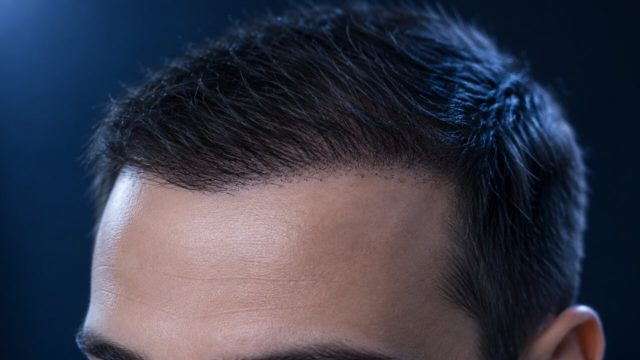
Many patients notice that their appearance is becoming easier to manage at this stage. The recipient area may look short, uneven, or slightly patchy because the implanted hairs do not all follow the same shedding pattern. The donor area, often at the back or sides of the scalp, commonly appears more even as surrounding hair grows over the extraction points. Your exact appearance depends on your natural hair length, skin tone, graft number, and healing response.
It is important to separate surface healing from final hair growth. A calm-looking scalp does not mean that the cosmetic result is already visible. Transplanted follicles need time to rest, enter a new growth cycle, and produce hairs that emerge through the skin. Your doctor will confirm whether your recovery is progressing as expected during follow-up.
02Why transplanted hairs can shed around day 21
One of the most common changes in the third week is temporary shedding of the transplanted hair shafts. This phase is often called shock shedding or postoperative shedding. The hair shaft that was visible after the procedure may fall out, while the follicle remains protected below the skin. In most patients, this is an expected part of the recovery cycle rather than a sign that the transplant has been lost.
Shedding may happen gradually during washing, on a pillowcase, or while gently touching the hair. Some patients see only a small amount of hair fall, while others notice a more obvious reduction in the newly implanted hairs. The timing also varies. It may begin before day 21, continue after it, or occur later in the first few weeks. Comparing your progress with another person’s timeline can therefore be misleading.
The surrounding native hair can also react temporarily to surgery, particularly when hair was already thin in the treated area. This can make the area look less dense for a period. A careful preoperative plan and appropriate follow-up help the medical team assess this possibility. Avoid judging density or graft survival based on shedding alone, because neither can be accurately measured by the visible hairs at week three.
0321 days after hair transplant: washing and scalp care
By the third week, most patients can usually wash their hair more normally, but the exact method should follow the instructions given by their surgical team. If all scabs have cleared and there are no healing concerns, gentle fingertip washing is commonly permitted. It remains sensible to avoid aggressive scratching, harsh rubbing with a towel, or very hot water, as the scalp may still be dry or sensitive.
Dryness and mild itching can occur as the skin barrier continues to recover. A prescribed or recommended scalp-care product may be appropriate in some cases, but patients should not introduce strong exfoliants, hair dyes, or unapproved topical products without checking first. Products that cause burning, persistent irritation, or flaking may complicate an already sensitive scalp. Your clinic can advise on when it is suitable to return to your usual grooming routine.
Pat the hair dry rather than rubbing it vigorously. Combing can usually be done carefully once the surface has healed, especially around longer existing hair, but avoid pulling through tangles in the recipient zone. If you have questions about a specific shampoo, styling product, or topical hair treatment, ask your doctor or aftercare team rather than relying on a general timeline.
04Redness, numbness, and the appearance of the donor area
Some remaining pinkness or redness at day 21 can be normal, especially in the recipient area. It is often more visible in fair or sensitive skin and may last longer than patients expect. In darker skin tones, redness may be less obvious, while changes in texture, dryness, or mild discoloration can be more noticeable. These differences do not automatically indicate a complication.
Temporary reduced sensation, tightness, or tingling can also occur in the donor area and occasionally in the treated area. These sensations often improve gradually as small sensory nerves recover. The pace of recovery is individual. Mild intermittent itching may occur as well, but scratching with fingernails should be avoided because it can irritate the skin and introduce bacteria.
The donor region may still look slightly shorter or lighter where hair was extracted, particularly if you keep your hair very short. In Sapphire FUE, follicles are extracted individually, while DHI and Sapphire FUE differ mainly in the implantation approach selected by the surgeon. Whichever technique is used, the donor area needs time for the surrounding hair to grow and blend. Your clinician can assess donor healing at follow-up photographs or in-person review.
05Returning to exercise, work, sun, and styling
Many people are back at desk-based work long before week three. At this point, routine daily activity is commonly comfortable, provided there has been no unusual bleeding, swelling, or pain. For physically demanding work, contact sports, swimming, sauna use, or high-intensity exercise, the safest return date depends on your procedure, scalp condition, and your surgeon’s guidance. Do not assume that feeling well means every activity is suitable.
Sun protection remains especially important because a healing scalp can be more prone to irritation and color changes. Direct strong sun should generally be avoided unless your medical team has said otherwise. A loose, clean hat may be acceptable after the appropriate recovery period, but it should not create friction or pressure. Your team can explain how to protect the area based on the season and your travel plans.
At 21 days after hair transplant, many patients want to cover uneven length with styling products or a haircut. A gentle haircut of existing hair may be possible, but clippers, razors, coloring, and styling products should be approached carefully around the recipient area. Tell a barber or stylist that you have had a recent procedure, and confirm the timing with your clinic first.
06From day 25 to week four: the transition to the resting phase
Between approximately day 25 and the fourth week, the scalp often looks increasingly healed while transplanted hairs continue to shed. This combination can feel confusing: the skin looks better, but the visible implanted hair may look less dense. In most patients, this is the transition into a resting phase for the transplanted follicles. It is not the stage when final coverage can be assessed.
Some patients also notice small pimple-like bumps or ingrown-looking hairs later in the first few weeks or months. These may be linked to hairs trying to emerge or to follicular irritation, but they should not be squeezed or picked. Contact your surgical team if bumps are painful, spreading, filled with pus, or associated with increasing redness. They can decide whether examination or treatment is needed.
Good recovery habits at this stage are uncomplicated: wash as directed, protect the scalp, avoid trauma, take only medications approved by your doctor, and attend planned follow-up. Photographs taken in consistent lighting can be more useful than daily mirror checks. They allow the team to compare healing over time without the distortion caused by different hair lengths, lighting, or camera angles.
07What the second and third months may bring
During the second month, the transplanted area can appear relatively unchanged or even thinner than it did immediately after surgery because many implanted shafts have shed. This is usually a quiet period in the visible recovery timeline. The follicles are still present under the skin and are preparing for a new growth cycle. Patience is important because early growth cannot be forced safely by changing products or routines without medical advice.
Early new hairs may begin to appear for some patients toward the later part of the second or third month, although timing differs. The first hairs can be fine, soft, pale, or irregular in direction. They often become stronger and more mature through later growth cycles. A gradual change is more typical than a sudden transformation, so the final cosmetic appearance should not be judged during these early months.
Follow-up is valuable throughout this period. At Acibadem Hair Transplant Center, patients receive 12 months of follow-up as part of all-inclusive care, and progress can be reviewed through appropriate check-ins. The clinic uses trichoscopic graft-survival assessment at month 12, when results can be evaluated more meaningfully than they can at the three-week stage. Your doctor will explain the follow-up schedule for your case.
08When to contact your hair transplant team
Most healing changes around week three are mild and improve over time. However, you should contact your medical team promptly if you develop worsening rather than improving pain, expanding redness, marked warmth, significant swelling, persistent bleeding, a foul odor, fever, or discharge from the scalp. These symptoms need professional assessment and should not be managed with home remedies or leftover medication.
It is also sensible to ask for advice if scabs remain firmly attached beyond the expected period, if you are uncertain about washing, or if you have accidentally bumped or scratched the treated area. A message and clear photographs may help the team determine whether an in-person assessment is needed. Early communication is preferable to waiting while worrying about a change you do not understand.
International patients can benefit from planning follow-up before travel. Acibadem Hair Transplant Center is a dedicated hair restoration clinic in Istanbul licensed by the Turkish Ministry of Health. A free online hair analysis can be reviewed by doctors before treatment planning, and WhatsApp enquiries typically receive a reply within around two hours. This information supports clinical communication, but it does not replace an individual medical assessment.
09Frequently Asked Questions
Will my hair transplant still be noticeable after two weeks?
It can still be noticeable after two weeks, especially because of short implanted hairs, mild redness, remaining crusts, or an uneven-looking recipient area. Many patients look more comfortable in public by this point, but the level of visibility varies with skin tone, hairstyle, graft placement, and healing. Any remaining scabs should only be removed according to your clinic’s washing instructions.
What is usually expected around four weeks after a hair transplant?
Around four weeks, the surface of the scalp is typically healed and most scabs have gone. Transplanted hairs may be shedding or may already have shed, so the treated area can look temporarily sparse. This is generally part of the normal resting phase, and meaningful new growth is not usually expected yet.
What may happen about 25 days after a hair transplant?
At about 25 days, many patients are entering or continuing the temporary shedding phase. The scalp often looks calmer, but the visible transplanted hairs can become thinner or patchier as the follicles rest beneath the skin. Mild dryness, itching, or residual redness may continue, but worsening pain, swelling, or discharge should be reported to the clinic.
What should I expect two months after a hair transplant?
At two months, the transplant area may still look quiet because the follicles are commonly in a resting phase after shedding. Some patients may see the earliest fine hairs starting to emerge, but others will not notice growth until later. The pace of new growth varies, so your doctor will assess progress according to your individual timeline rather than a single fixed date.
Cet article est fourni à titre d’information générale uniquement et ne remplace pas un avis médical professionnel.
Ce guide est fourni à titre d’information générale et ne remplace pas une consultation médicale. Les décisions de traitement sont prises après une évaluation par un médecin, en personne ou en ligne.