In questo articolo9
- Panoramica
- Why Local Anaesthesia Is Commonly Used
- What It Feels Like to Be Awake During Treatment
- A Typical Hair Transplant Day, Step by Step
- How Clinics Help Patients Feel More Comfortable
- Can You Sleep or Have Sedation During a Hair Transplant?
- What Happens Immediately After the Procedure
- Questions to Ask Before Booking Your Procedure
- Frequently Asked Questions
Yes, in most cases, patients are awake during hair transplant surgery because the procedure is usually performed with local anaesthesia. If you are asking, “are you awake during hair transplant,” you can generally expect to be conscious but comfortable, with the scalp numbed while the medical team monitors you throughout the session.
- Hair transplant procedures are typically performed while the patient is awake under local anaesthesia.
- You should not usually feel sharp pain after the anaesthetic has taken effect, although pressure or movement sensations may occur.
- Many patients rest, listen to entertainment, speak with the team or take planned breaks during the procedure.
- Needle-free anaesthesia may be available for suitable patients as part of a comfort-focused treatment plan.
- Your doctor will confirm whether a hair transplant and the anaesthesia approach are appropriate for your health needs.
01Are You Awake During Hair Transplant Surgery?
Are you awake during hair transplant surgery? In most patients, the answer is yes. Hair restoration procedures such as Sapphire FUE and DHI are usually carried out using local anaesthesia, which means you remain conscious while the treatment area is carefully numbed. You can normally communicate with the medical team, ask for a break when appropriate and let them know if you feel uncomfortable. Being awake does not mean being expected to tolerate pain. The purpose of local anaesthesia is to reduce sensation in the scalp so the procedure can be performed as comfortably and safely as possible.
For many international patients, the idea of being awake can sound worrying before they understand how the day is organised. In practice, the clinical team prepares the donor and recipient areas, checks that the anaesthetic is working and continues to assess comfort during the procedure. The sensation is often very different from what patients imagine. Most people describe the early anaesthetic stage as the part they notice most, followed by a long period in which the scalp feels numb. Individual experiences can vary according to anxiety level, scalp sensitivity, medical history and the treatment plan.
At Acibadem Hair Transplant Center in Istanbul, a doctor reviews the free online hair analysis before treatment planning begins. This is important because an appropriate method, graft target and comfort approach should be based on your hair loss pattern, donor area and health information rather than a standard plan. The clinic is licensed by the Turkish Ministry of Health and provides dedicated hair restoration care for international patients. Your doctor will explain what being awake involves before you decide whether to proceed.
02Why Local Anaesthesia Is Commonly Used
Local anaesthesia is commonly used in hair transplantation because it allows the scalp to be numbed without making the patient unconscious. The medicine is applied to the treatment areas so that follicular units can be extracted from the donor area and placed into thinning or balding areas with reduced pain sensation. This approach also allows the team to observe how you are feeling and to adjust comfort measures when clinically appropriate. General anaesthesia is not usually required for a standard hair transplant procedure.
Before graft extraction or implantation begins, the medical team normally cleanses and marks the scalp, reviews the plan and administers anaesthesia in stages. The exact sequence may differ between Sapphire FUE and DHI because the tools and implantation steps are different. However, the overall goal is the same: to protect the grafts, work with controlled precision and keep the patient comfortable. A responsible clinic should allow enough time for the anaesthetic to take effect rather than rushing directly into extraction or implantation.
Needle-free anaesthesia may be available for suitable patients. This option can be helpful for people who feel particularly nervous about injections, although suitability is always a clinical decision. It does not remove the need for a full medical assessment or for the doctor to discuss possible limitations. Tell the clinic in advance about allergies, regular medicines, previous reactions to anaesthetics, heart conditions, bleeding concerns or any other relevant health issue. Complete information helps the medical team plan treatment more safely.
03What It Feels Like to Be Awake During Treatment
Once the scalp is adequately numbed, you would not usually be expected to feel sharp pain during graft extraction or implantation. Some patients may notice pressure, light pulling, vibration, movement around the head or changes in position. These feelings are not necessarily signs that the anaesthesia is ineffective. Still, you should always speak up if you feel pain, burning, severe discomfort, dizziness or anxiety. The team can assess the situation and determine the appropriate next step.
A hair transplant takes time because each graft needs careful handling. During parts of the procedure, you may lie face down, on your side or on your back, depending on whether the donor area or recipient area is being treated. The team will guide you through position changes and protect your comfort as much as possible. Short breaks for water, food or the restroom are usually planned into a longer procedure, although the timing depends on the clinical workflow and your individual treatment plan.
When people search are you awake during hair transplant, they are often also asking whether they will remember the day clearly. With local anaesthesia alone, you will usually remain aware of your surroundings and remember conversations or breaks. Some patients choose calming entertainment or quiet rest. Others prefer to chat with staff. There is no single correct response. The most useful approach is to tell the team what helps you feel settled, while following all pre-procedure instructions provided by your doctor.
04A Typical Hair Transplant Day, Step by Step
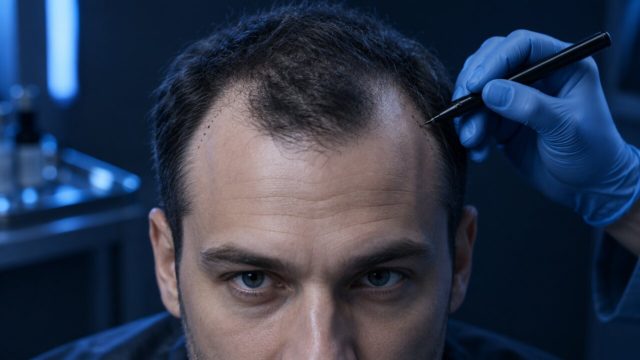
Your treatment day generally begins with arrival, final checks and a discussion of the agreed plan. The team may take clinical photographs, reassess the donor area and confirm the hairline or recipient-area design. This final review matters because the donor supply needs to be managed carefully for both present coverage and possible future hair loss. A good plan aims for a natural-looking result that respects the characteristics of your face, existing hair and available grafts. Your doctor will confirm the final clinical decisions.
After preparation and local anaesthesia, grafts are commonly extracted from the donor area. In Sapphire FUE, follicular units are removed individually and recipient channels may be created using sapphire blades. In DHI, grafts are typically implanted with a specialised implantation tool. The most suitable technique depends on factors such as hair characteristics, scalp condition, the planned recipient area and donor capacity. Neither technique should be presented as automatically right for every patient, and an honest assessment should explain why a particular method is recommended.
The implantation stage can be lengthy because direction, angle and distribution affect the visual result. You remain awake while this work is completed, but much of the time may feel quiet and routine once the anaesthetic is effective. At the end, the team provides early aftercare guidance and explains how to protect the transplanted area. Acibadem Hair Transplant Center offers all-inclusive packages that include VIP transfer, a 4-star hotel, a care kit and 12 months of follow-up, helping international patients organise the practical parts of the visit.
05How Clinics Help Patients Feel More Comfortable
Comfort starts before the procedure, not only with anaesthesia. Clear explanations can make a meaningful difference because patients know what will happen, how long each stage may take and when they can ask for help. If you are concerned about needles, long procedures, enclosed clinical environments or feeling out of control, mention this during your consultation. The team can explain which comfort options may be available and whether they are clinically suitable in your case.
Simple preparations may also support a calmer experience. Follow the clinic’s instructions about sleep, food, hydration, smoking, alcohol and medicines before your appointment. Wear comfortable clothing that does not need to be pulled over the head after treatment. Bring permitted entertainment if the clinic allows it, but avoid assuming that you can use any device at every stage. Clinical safety, sterility and the team’s instructions should always come first during the procedure.
Emotional comfort is also important. Some patients feel reassured by asking questions before the procedure begins, while others prefer a quieter environment. Both reactions are normal. You may wish to write down your questions before travelling, especially if you are an international patient. Acibadem Hair Transplant Center replies to free online hair analysis enquiries on WhatsApp in around two hours, allowing you to ask about the process before you travel. A reply is not a diagnosis, and the final plan must be confirmed clinically.
06Can You Sleep or Have Sedation During a Hair Transplant?
Patients may rest deeply during a long procedure, but local anaesthesia does not normally make you unconscious. Some people drift off briefly because they are relaxed, while others remain awake and alert throughout. Whether any additional calming medication or sedation is appropriate depends on your health status, the clinic’s protocols and the doctor’s assessment. It should never be assumed or requested as a routine substitute for discussing anxiety, medical history and safety concerns openly.
In some clinical settings, a doctor may consider medication to help a suitable patient feel calmer. However, this can involve additional safety checks, monitoring requirements and practical considerations, such as whether you need an escort or should avoid certain activities afterwards. Sedation may not be appropriate for everyone. Conditions affecting breathing, heart health, blood pressure, medication interactions or previous anaesthetic reactions can influence the decision. Your doctor will explain the options that are relevant to you.
If your main concern is, “are you awake during hair transplant,” it can help to separate wakefulness from discomfort. Being conscious does not mean you should be frightened or in pain. Many patients are able to complete treatment comfortably with local anaesthesia, planned breaks and supportive communication. However, every procedure has individual considerations. A clinic should not guarantee an identical experience for all patients, and you should receive clear consent information about benefits, risks and alternatives before treatment.
07What Happens Immediately After the Procedure
After the transplant, the scalp may feel numb for a period as the local anaesthetic wears off. Mild tenderness, tightness, swelling or temporary discomfort can occur in the early recovery phase. Your clinical team will provide instructions about washing, sleeping position, activity, headwear and medicines if prescribed. Follow these directions carefully because the transplanted grafts are delicate in the first days. Contact the clinic promptly if you have symptoms that concern you or if you are unsure whether a reaction is expected.
Small scabs and redness are commonly part of the healing process. The appearance of the donor and recipient areas changes over the following days and weeks, and transplanted hairs often shed before new growth becomes visible. This can be surprising if you are not prepared for it. Hair growth timelines vary, so photographs from the first week should not be used to judge the final outcome. Your team should explain the recovery stages and schedule follow-up support rather than leaving you without guidance after travel.
At Acibadem Hair Transplant Center, results are measured using trichoscopic graft survival at month 12. The clinic documents a 98% rate under a written guarantee. This measurement describes the clinic’s documented protocol and should not be understood as a promise of an identical cosmetic outcome for every individual. Final appearance can be influenced by healing, hair characteristics, existing hair loss progression, adherence to aftercare and other personal factors. Your doctor can discuss what is realistically achievable in your case.
08Questions to Ask Before Booking Your Procedure
Before booking, ask who will assess your donor area, which technique is being recommended and why, how many grafts may be appropriate, and what the planned day will involve. You can also ask how pain control is provided, whether needle-free anaesthesia is an option, how breaks are managed and who you should contact after treatment. Clear answers help you compare a medically led plan with a generic sales message. You should never feel pressured to decide before you understand the information.
International patients should also ask about travel timing, accommodation, transfers, follow-up and what happens if they need advice after returning home. A well-organised package can reduce practical stress, but it does not replace informed consent or medical assessment. Acibadem Hair Transplant Center has welcomed patients from 38 countries over 12 years and offers structured support for international travel. Even so, each patient should make sure they understand their own treatment plan, follow-up responsibilities and recovery instructions.
The key message is straightforward: hair transplant surgery is typically performed while you are awake, with local anaesthesia used to numb the scalp. Ask direct questions about comfort and safety, share your full medical history and choose a licensed clinic that gives you time to understand the process. An online assessment can be a useful first step, but the doctor’s in-person evaluation and informed consent discussion remain essential before any procedure takes place.
09Frequently Asked Questions
Where can I watch the series You?
The television series You is unrelated to hair transplant treatment. Streaming availability can change by country and over time, so the most reliable option is to check the official catalogue of major streaming services available in your region. The series has been associated with Netflix in many markets.
Is the TV series You based on a true story?
No. You is a fictional psychological thriller based on novels by Caroline Kepnes. Its characters and storyline are not presented as a true story, although the show explores themes that may feel realistic to some viewers.
Is there a fifth season of You?
Yes. The fifth season of You was released in 2025 and was announced as the final season of the series. Release information may differ in availability between regions, so viewers should check their local streaming service.
What is a balanced review of the Netflix series You?
You is widely known for its tense storytelling, unreliable narrator and dark exploration of obsession, identity and online culture. It can be engaging for viewers who enjoy psychological thrillers, but its disturbing themes, violence and manipulative behaviour may not suit everyone. This entertainment question is separate from the medical topic of hair transplant surgery.
Questo articolo ha scopo puramente informativo e non sostituisce il parere medico professionale.
Questa guida ha scopo informativo generale e non sostituisce una visita medica. Le decisioni sul trattamento vengono prese dopo una valutazione del medico, di persona o online.