
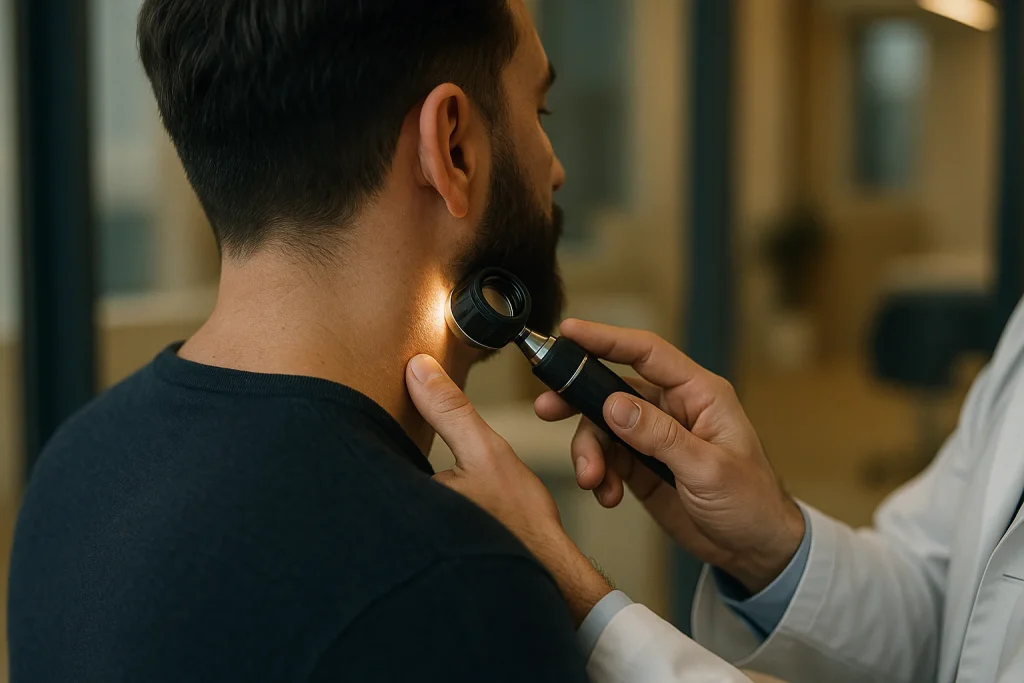
Beard hair loss can happen because of autoimmune conditions, skin infections, irritation, hormonal factors, scarring, nutritional issues, or natural differences in beard growth. A doctor should identify the cause before treatment; options may include treating an underlying condition, supporting regrowth where appropriate, or considering a beard transplant once hair loss is stable.
- Patchy, sudden, itchy, painful, or scarred beard loss should be assessed by a qualified doctor.
- Alopecia barbae is an autoimmune form of patchy beard loss and has an unpredictable recovery timeline.
- Treatment depends on the cause and may involve medical care, skin treatment, observation, or hair restoration planning.
- A beard transplant can improve permanent sparse areas when the skin and hair-loss condition are suitable.
- Transplanted beard hairs usually grow gradually, and the final appearance is assessed over many months.
01Beard Hair Loss: Causes and Beard Transplant Options
Beard hair loss may appear as one smooth round patch, several uneven gaps, gradual thinning, breakage, or a beard that has always grown sparsely. It is not always a cosmetic issue alone. The pattern, speed of change, skin condition, and other symptoms can provide useful clues about the possible cause. A medical assessment is particularly important when loss starts suddenly, spreads quickly, causes discomfort, or leaves changes in skin texture.
In many patients, a beard can look uneven without there being a medical disease. Facial hair density is influenced by genetics, age, hormones, ethnicity, and the sensitivity of hair follicles to androgens. Some men develop denser facial hair later than expected, while others naturally have limited cheek, jawline, or moustache growth. However, a new change from a person’s usual beard pattern deserves closer attention.
There is no single solution for every type of facial hair loss. Some causes are temporary and may improve after the trigger is addressed. Others need dermatological treatment to limit further loss, while scarring conditions may permanently damage follicles. For stable areas that do not regrow, beard transplantation may be discussed as a reconstructive option after a doctor confirms that it is appropriate.
02Normal Beard Variation Versus a Concerning Change
A naturally patchy beard often develops gradually and stays broadly similar over time. The skin usually looks healthy, with visible fine hairs in less dense areas. It may become fuller through the late teens, twenties, or sometimes later, although the timing varies widely. Comparing old photographs can help distinguish lifelong lower density from a recent reduction in coverage.
A concerning change is more likely when there are clearly defined bald circles, sudden shedding, redness, scaling, pimples, crusting, burning, or pain. Broken hairs and dark dots at the skin surface can also be useful clinical signs. These features may point to inflammation, infection, traction, grooming-related irritation, or an immune-related condition rather than ordinary variation in beard density.
Scarring requires prompt professional attention. Skin that looks shiny, raised, depressed, unusually pale, or noticeably darker after inflammation may have lost follicles permanently. Injuries, burns, acne-related scars, surgery, and certain inflammatory skin disorders can all affect beard growth. Early treatment may help control active inflammation, but it cannot always restore follicles that have already been destroyed.
03Medical and Lifestyle Causes of Facial Hair Loss
Common causes of beard hair loss include alopecia barbae, fungal infection, bacterial inflammation around hair follicles, contact dermatitis, psoriasis, seborrhoeic dermatitis, and physical damage from repeated pulling or harsh grooming. Less commonly, endocrine changes, nutritional deficiencies, medications, systemic illness, or inherited conditions may contribute. A doctor considers the whole clinical picture rather than assuming one cause from appearance alone.
Alopecia barbae is usually considered a localized form of alopecia areata affecting the beard. It is an autoimmune condition in which the immune system mistakenly targets active hair follicles. The typical presentation is one or more smooth, round or oval patches with little visible scaling. It can affect only the beard or occur alongside hair loss elsewhere on the scalp or body, although this is not the case for every patient.
Fungal infection in the beard area, sometimes called tinea barbae, can look very different from alopecia barbae. It may cause redness, tenderness, scaling, pustules, swollen follicles, or hairs that break easily. Because untreated infection can lead to complications and sometimes scarring, it should not be treated as a simple cosmetic concern. A clinician may use an examination and, where needed, laboratory testing to clarify the diagnosis.
Daily habits can worsen an already sensitive beard area. Frequent close shaving, fragranced products, strong exfoliants, aggressive brushing, and repeated friction from protective equipment may irritate the skin in some people. These factors do not usually cause autoimmune hair loss, but they can create inflammation or breakage that makes the beard appear thinner. Gentle grooming and an appropriate skin-care routine may support comfort while the underlying issue is investigated.
04How Doctors Assess Beard Hair Loss
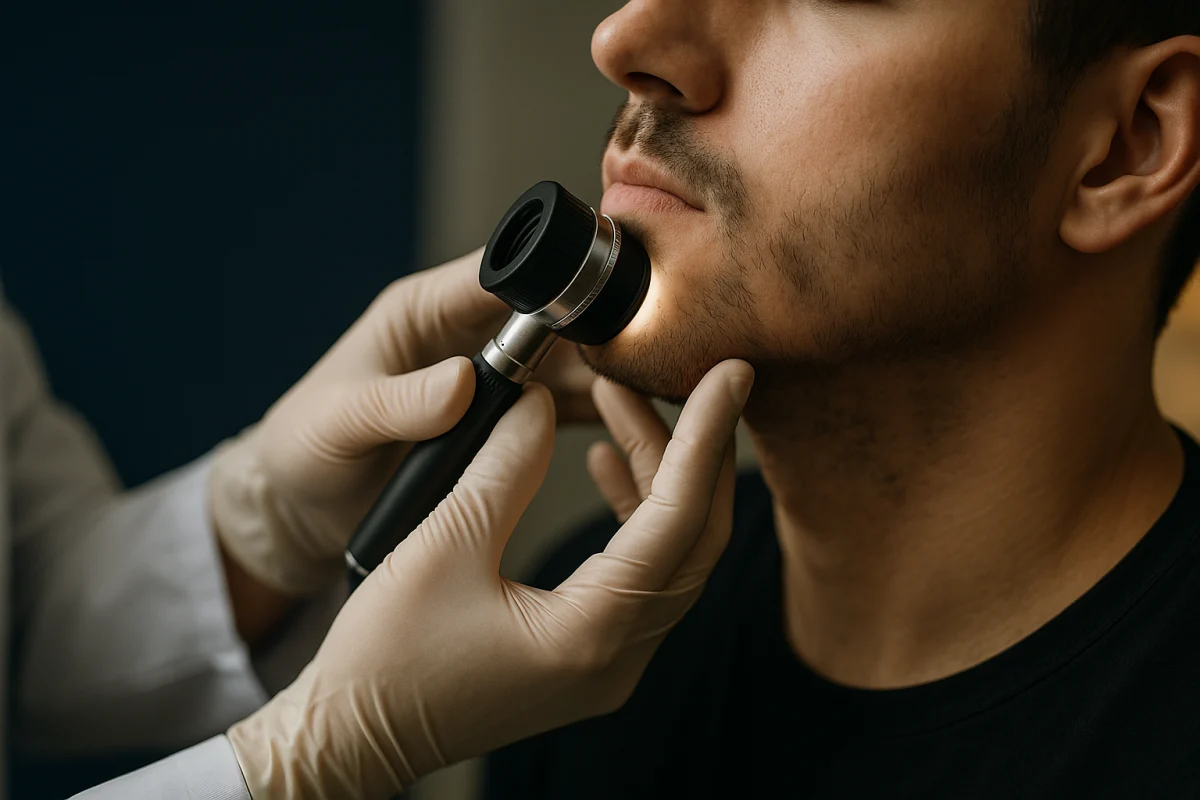
An assessment for beard hair loss generally begins with questions about when the change began, whether it is progressing, and whether there are symptoms such as itch, pain, flaking, or discharge. Your doctor may also ask about scalp hair changes, family history, recent illness, stressors, new medicines, grooming habits, and existing skin or autoimmune conditions. This history helps guide the next steps without assuming that every patch has the same explanation.
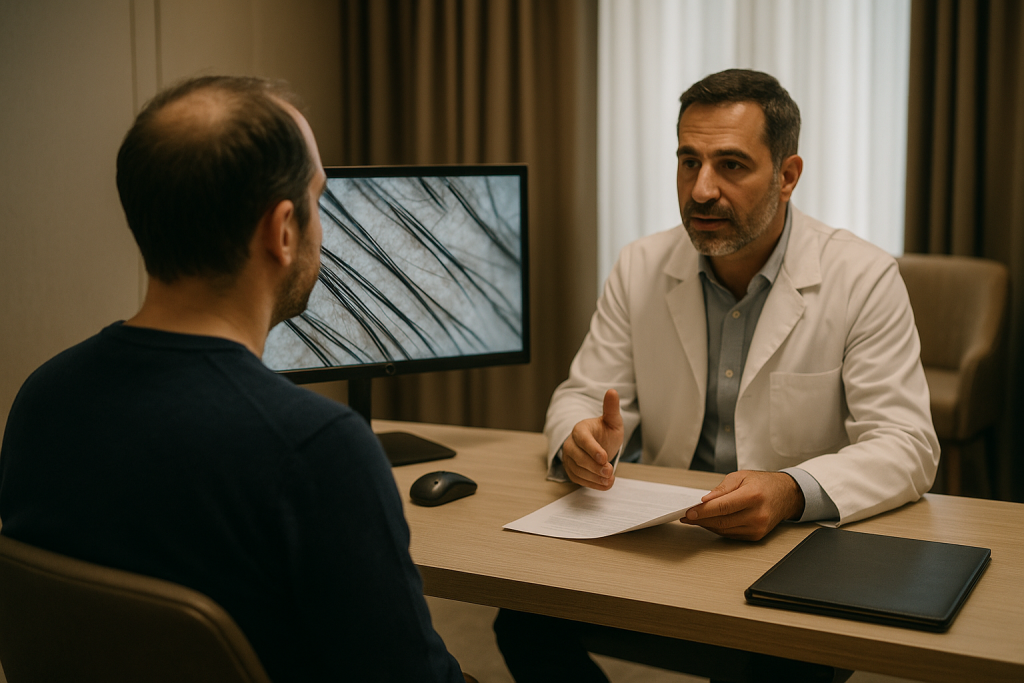
The skin and hair are then examined closely. Doctors may use dermoscopy or trichoscopy, a magnified view of the hair and scalp or facial skin, to look for signs of broken shafts, inflammation, follicle openings, regrowth, or scarring. If an infection is suspected, samples of hair or skin may be tested. Blood tests or a skin biopsy are not required in every case, but may be considered when findings are unclear or an associated condition is suspected.
It is useful to avoid concealing important symptoms before an appointment where possible. For example, note the products used, bring a timeline of changes, and take clear photographs as the area develops. Do not share razors or beard trimmers if an infection is possible. A diagnosis should come before any surgical hair restoration plan, because transplantation into actively inflamed, infected, or unstable skin is generally not appropriate.
05Treatment and Regrowth Expectations for Alopecia Barbae
Whether beard hair regrows depends mainly on the cause. In non-scarring conditions, follicles may remain capable of producing new hair once inflammation, infection, or another trigger is controlled. Alopecia barbae can improve spontaneously in some patients, but the timing is unpredictable. Regrowth may begin as fine, pale hairs before becoming thicker and more pigmented, and recurrence can happen even after a patch improves.
For immune-related patchy loss, a dermatologist may discuss observation, anti-inflammatory treatments, or other therapies according to the extent of hair loss, the skin findings, and a patient’s medical history. There is no universal timetable for recovery. Some small patches may improve within months, while others persist longer, fluctuate, or recur. Your doctor can explain the likely course based on the diagnosis, but cannot reliably predict the outcome for an individual patch.
Minoxidil is sometimes discussed as an off-label supportive treatment for certain types of facial hair thinning or alopecia areata, but it is not a cure for alopecia barbae and it may not be suitable for everyone. It can cause local irritation and unwanted hair growth outside the intended area, among other possible effects. A dermatologist should confirm whether it has a role in your situation and explain safe use, expected limits, and when to stop.
06When a Beard Transplant May Be Considered
A beard transplant may be considered for stable, non-infectious areas of permanent sparse growth, scar coverage, or a beard pattern that has remained unchanged and does not meet the patient’s aesthetic goals. It may also be considered after a past condition has been inactive for an appropriate period, as confirmed by the treating doctor. Surgery is not typically the first choice for new, active, or unexplained patchy hair loss.
The procedure transfers follicles, most often taken from the scalp donor area, into carefully planned recipient sites on the face. Follicular unit extraction techniques can allow individual grafts to be placed according to the natural angle, direction, and density of beard hair. The surgeon considers facial proportions, existing beard characteristics, skin quality, donor supply, and whether the desired density is realistic and safe to achieve.
At Acibadem Hair Transplant Center, a dedicated hair restoration clinic in Istanbul licensed by the Turkish Ministry of Health, Sapphire FUE and DHI techniques are available for suitable candidates. A free online hair analysis can be reviewed by doctors before travel planning, with WhatsApp replies typically provided within around two hours. This initial review cannot replace an in-person medical examination, but it can help identify whether further assessment is sensible.
07Beard Transplant Procedure, Healing, and Growth Timeline
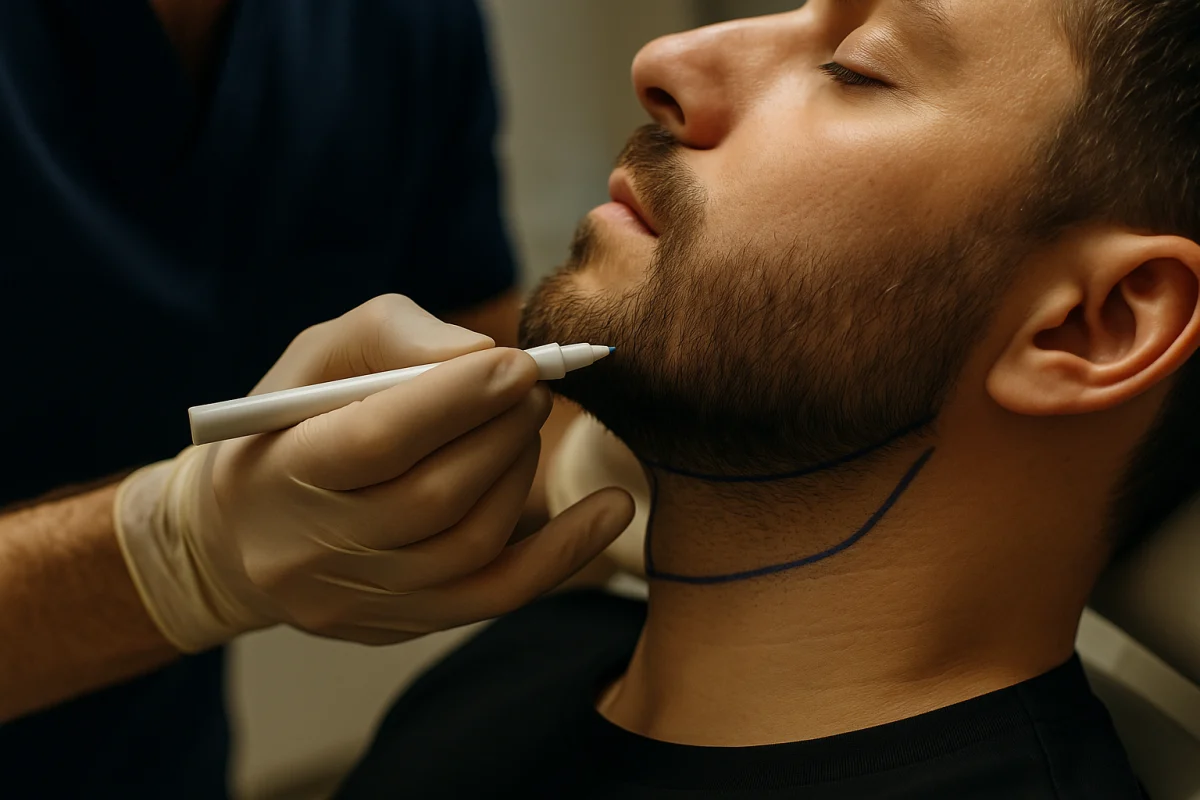
Before a beard transplant, the doctor reviews the donor area and maps the intended facial hair design. The aim is usually to create an age-appropriate, natural-looking outline rather than an overly dense or artificial result. Local anaesthesia is used for the procedure, and needle-free anaesthesia is available at our clinic for eligible patients. The right approach depends on clinical assessment and the individual treatment plan.
After placement, small crusts and temporary redness are common in the recipient area. The clinic team provides washing instructions and explains how to protect the grafts during early healing. Transplanted hairs often shed within the first weeks; this can be an expected part of the growth cycle and does not necessarily mean that the follicles have failed. Patients should avoid judging the result too early.
New growth commonly starts gradually over several months, with density and texture continuing to mature over the following months. Transplanted scalp hairs in the beard area may initially behave more like scalp hair and can require trimming or grooming. At Acibadem Hair Transplant Center, graft survival is measured trichoscopically at month 12, with a documented 98% rate under a written guarantee. Individual cosmetic appearance still depends on factors such as healing, skin characteristics, graft placement, and donor hair quality.
08Planning Safely for Long-Term Beard Restoration
A safe plan begins with realistic expectations. A transplant can add hairs to an area, but it cannot fully remove the effects of scar tissue, active skin disease, or limited donor supply. The desired shape should be discussed in detail, including cheek lines, jawline density, moustache connection, and whether the goal is complete coverage or a subtle improvement. Conservative planning often helps the result remain natural if facial preferences change over time.
Choose a clinic that provides a proper medical review, explains the technique and aftercare clearly, and does not encourage surgery before the cause of hair loss is understood. Ask how graft placement is planned, how follow-up is organized, and what happens if there are signs of infection or inflammation after treatment. Patients travelling internationally should also consider recovery time before flying and the practical need to protect the recipient area during the journey.
Our all-inclusive packages can include VIP transfer, a 4-star hotel, a care kit, and 12 months of follow-up for patients travelling to Istanbul. We have welcomed patients from 38 countries over 12 years. However, the decision to proceed should always follow doctor review and a clear understanding of the potential benefits, limitations, healing process, and possible risks of beard restoration surgery.
09Frequently Asked Questions
What can cause hair to fall out from the beard area?
Hair loss from the beard area can result from autoimmune alopecia barbae, skin infection, inflammation, contact reactions, repeated trauma, scarring, or natural low facial hair density. Less commonly, wider medical or hormonal factors may play a role. A doctor can assess the pattern and skin signs to identify the most likely cause.
Is it possible to regrow beard hair?
Regrowth may be possible when hair follicles are still present, especially in non-scarring conditions such as some inflammatory or autoimmune forms of hair loss. The chance and speed of recovery depend on the cause, how long it has been active, and the response to treatment. Where follicles are permanently lost or the area has stable sparse growth, a beard transplant may be an option for suitable candidates.
How long does alopecia barbae usually take to improve?
Alopecia barbae has no fixed recovery timeline. Some patches may show regrowth within months, while others can last longer, recur, or spread. A dermatologist can monitor changes and discuss treatment options, but individual outcomes cannot be predicted with certainty.
Can minoxidil be used for alopecia barbae?
Minoxidil may sometimes be considered as an off-label supportive option, but it is not an approved cure for alopecia barbae and may not work for every patient. It can also cause side effects such as skin irritation or unwanted hair growth in nearby areas. A dermatologist should advise whether it is appropriate and how it should be used safely.
Questo articolo ha scopo puramente informativo e non sostituisce il parere medico professionale.
 06
06 12
12