In questo articolo12
- Alopecia Is a Description, Not One Single Diagnosis
- Can Someone with Alopecia Get a Hair Transplant? How Type Changes the Answer
- Why Disease Stability Matters Before Surgery
- How Doctors Confirm the Cause of Hair Loss
- Donor Area Assessment Is Central to Candidacy
- What Surgery Can and Cannot Do for Alopecia
- When a Hair Transplant May Need to Be Delayed or Avoided
- Planning a Safe Consultation and Long-Term Strategy
- Aftercare Considerations When Alopecia Has Been Part of the History
- Hair Transplant Timeline: What to Expect During the First 12 Months
- Travel Planning for International Alopecia Patients
- Frequently Asked Questions
Can someone with alopecia get a hair transplant? In some cases, yes, but eligibility depends mainly on the type of alopecia, whether hair loss is stable, and whether there is enough healthy donor hair. A doctor should confirm the diagnosis and assess the scalp before any procedure is planned.
- Alopecia is a broad term, so the exact diagnosis is the starting point for transplant planning.
- Pattern hair loss may be suitable for transplantation when the donor area and long-term plan are appropriate.
- Active alopecia areata or active scarring alopecia can make surgery less suitable until the condition is controlled.
- A scalp examination, medical history, blood tests when indicated, and sometimes a biopsy can help clarify the cause of hair loss.
- A hair transplant redistributes existing healthy follicles; it does not cure the underlying cause of alopecia.
01Alopecia Is a Description, Not One Single Diagnosis
Can someone with alopecia get a hair transplant? The answer cannot be based on the word alopecia alone. Alopecia simply means hair loss, and it may result from inherited sensitivity, an autoimmune process, scalp inflammation, traction, medication, nutritional problems, hormonal changes, infection, or scarring conditions. Each cause behaves differently, so a safe transplant decision begins with finding out why the hair has been lost.
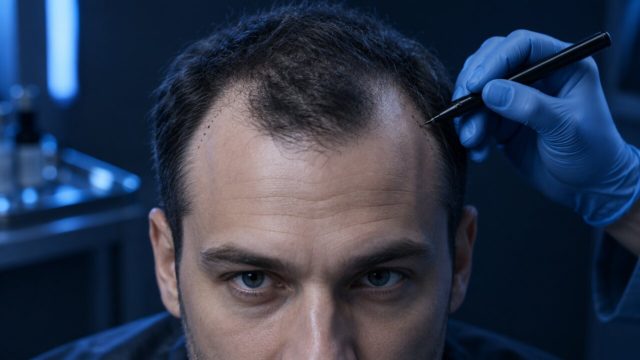
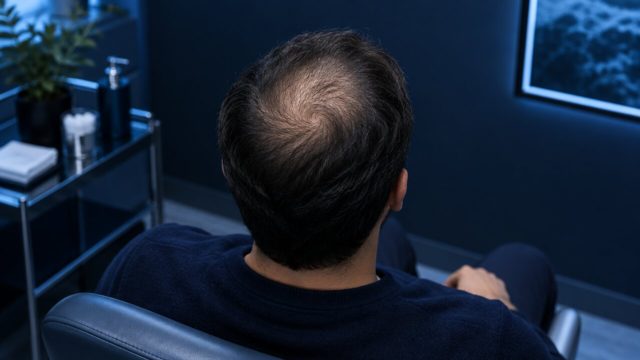
The most common reason people seek hair restoration is androgenetic alopecia, also called pattern hair loss. In this condition, genetically sensitive follicles gradually become thinner, especially around the hairline, temples, crown, or central parting. The follicles at the back and sides of the scalp are often more resistant, which may make them available as donor hair in carefully selected patients.
Other forms of alopecia need more caution. Alopecia areata can cause sudden round or irregular patches of hair loss and may become active again after a period of regrowth. Cicatricial, or scarring, alopecia damages follicles and can change the scalp tissue itself. Diffuse shedding may look dramatic but can have a temporary or treatable trigger. A clear diagnosis helps avoid performing surgery for a problem that needs medical treatment first.
02Can Someone with Alopecia Get a Hair Transplant? How Type Changes the Answer
Can someone with alopecia get a hair transplant when the diagnosis is pattern hair loss? Often, this may be possible if the donor area is healthy, the expected hair-loss pattern has been considered, and the plan is conservative enough for the future. A transplant moves follicles from one area to another; it does not stop genetically susceptible native hairs from becoming thinner over time.
With alopecia areata, transplantation is usually approached more carefully. The immune process may affect the scalp unpredictably, including areas where grafts have been placed. If there are signs of current activity, such as new patches, rapid shedding, eyebrow involvement, nail changes, or active inflammation, doctors may recommend stabilising and monitoring the condition before considering any surgical option.
Scarring alopecias require specialist assessment because inflammation may remain present even when the scalp looks calm. In selected cases where the disease has been clinically inactive for a meaningful period, transplantation may be discussed cautiously. However, graft growth can be less predictable in scarred tissue, and a small test session or other staged approach may sometimes be considered by the treating team.
03Why Disease Stability Matters Before Surgery
Hair transplantation creates many small channels in the recipient area and removes follicles from the donor area. When a scalp condition is active, this surgical trauma may be poorly tolerated or may coincide with continued hair loss. For this reason, doctors generally look for evidence that shedding, patch expansion, redness, scale, itching, tenderness, or pustules are under control before they advise a procedure.
Stability does not always mean that no hair has fallen out for a fixed number of months. It is a clinical judgement based on the type of alopecia, the history of change, examination findings, photographs, treatment history, and sometimes follow-up over time. A person with slowly progressing inherited hair loss needs a different assessment from a person with rapidly appearing bare patches or a painful, inflamed scalp.
It is also important to distinguish stable disease from a stable-looking day. Some inflammatory conditions can fluctuate, and some people may have subtle activity that is not obvious without close examination. Your doctor may recommend medical management, repeat assessment, or monitoring before surgery. Waiting can be frustrating, but it can help protect both the donor supply and the chance of a satisfactory cosmetic result.
04How Doctors Confirm the Cause of Hair Loss
There is no single universal test that confirms every type of alopecia. Diagnosis typically combines a detailed medical history with an examination of the scalp and hair. A doctor may ask when shedding started, whether it happened suddenly or gradually, whether relatives have similar hair loss, which medicines are being used, and whether there have been illnesses, weight changes, childbirth, stress, dietary changes, or scalp symptoms.
Trichoscopy is a close examination of the scalp and hair shafts using magnification. It can help doctors see signs such as variation in hair-shaft thickness, broken hairs, empty follicular openings, inflammation, scaling, or scar-related changes. This information may support the diagnosis and can be useful when comparing the donor and recipient areas before a hair transplant is considered.
Blood tests may be requested when the medical history or hair-loss pattern suggests a possible underlying contributor, such as iron deficiency, thyroid disease, hormonal factors, or another medical condition. In uncertain cases, a dermatologist may advise a scalp biopsy. A biopsy is a small sample examined in a laboratory and may be particularly valuable when scarring alopecia is suspected.
05Donor Area Assessment Is Central to Candidacy
Can someone with alopecia get a hair transplant if the donor area is also thinning? This is one of the most important questions in the consultation. A transplant depends on a supply of follicles that are likely to remain healthy after relocation. If the back and sides are affected by diffuse thinning, autoimmune loss, scarring, or another unstable process, removing grafts may not be advisable or the plan may need to be significantly limited.
The donor area is assessed for density, hair calibre, scalp condition, and the distribution of thinning. The doctor also considers how much donor hair can be taken while preserving a natural appearance in the back of the head. Although donor hair is sometimes described as permanent, its long-term behaviour can vary between individuals, especially when there is diffuse or progressive hair loss.
Hair characteristics influence the visual result as well. Curl, colour contrast between hair and skin, strand thickness, and the size of the area needing coverage can affect what is realistically achievable. A responsible plan does not focus only on the number of grafts requested. It considers whether the available donor hair can support a natural-looking design now while leaving options for the future.
06What Surgery Can and Cannot Do for Alopecia
For suitable candidates, modern techniques such as Sapphire FUE or DHI may be used to transplant individual follicular units into areas of established hair loss. The technique is selected according to the clinical plan, hair characteristics, scalp condition, and the surgeon’s assessment. The aim is typically to create an age-appropriate, balanced distribution of hair rather than an unrealistically dense result.
A transplant does not treat autoimmune activity, reverse scarring, correct a nutritional deficiency, or prevent further loss of non-transplanted hair. This is especially important for people with androgenetic alopecia because native hair may continue to miniaturise around the transplanted area. Doctors may discuss medical treatment or non-surgical strategies as part of a longer-term plan when medically appropriate.
Can someone with alopecia get a hair transplant and expect every graft to grow in the same way? No procedure can offer that certainty. Healing, scalp biology, disease behaviour, aftercare, and donor quality can all affect the outcome. Temporary shedding of transplanted or nearby hairs may occur after surgery, while visible growth usually develops gradually over several months rather than immediately.
07When a Hair Transplant May Need to Be Delayed or Avoided
A person may be advised to postpone or avoid a hair transplant when there is active scalp inflammation, untreated infection, unstable patchy hair loss, insufficient donor hair, or uncertainty about the diagnosis. Uncontrolled medical conditions, factors that make surgery unsafe, and an inability to follow aftercare instructions can also affect candidacy. These are not always permanent exclusions, but they should be addressed before elective surgery is considered.
Unrealistic expectations can be another reason to pause planning. A limited donor supply cannot always cover a large area at high density, and a very low or juvenile hairline may not remain suitable as future hair loss progresses. A good consultation should explain the likely cosmetic trade-offs, the possibility of future loss, and whether the desired outcome can be supported by the available donor reserve.
Smoking, some medicines, and health issues that affect wound healing or bleeding may require additional medical review. Patients should give a complete and accurate health history and should not stop prescribed medication without advice from their own doctor. The final decision about suitability should be made after clinical assessment, not from online photos alone.
08Planning a Safe Consultation and Long-Term Strategy
A useful hair restoration consultation should review the hair-loss history, family pattern, scalp condition, donor area, health background, and personal goals. Clear photos can support an initial online assessment, but they cannot replace an in-person examination when a diagnosis is uncertain or an inflammatory condition is possible. Asking about the type of alopecia and whether it appears stable is more valuable than focusing only on graft numbers.
At Acibadem Hair Transplant Center, a dedicated hair restoration clinic in Istanbul licensed by the Turkish Ministry of Health, free online hair analysis is reviewed by doctors. Patients can share their concerns and photographs for an initial discussion, with WhatsApp replies typically provided within around two hours. If surgery is appropriate, planning may include Sapphire FUE or DHI, and needle-free anaesthesia is available for eligible patients.
Long-term follow-up matters because the hair-loss pattern may change after the procedure. The clinic provides all-inclusive packages with VIP transfer, a 4-star hotel, a care kit, and 12 months of follow-up. Results are measured by trichoscopic graft survival at month 12, with a documented 98% rate under written guarantee. This measurement relates to graft survival monitoring and does not remove the need to assess the underlying alopecia carefully before treatment.
09Aftercare Considerations When Alopecia Has Been Part of the History
Aftercare is especially important when a person has a history of scalp inflammation, patchy hair loss, or sensitive skin. The first days after transplantation usually involve protecting the grafts from rubbing, pressure, scratching, and accidental contact. Patients are normally given instructions for washing, sleeping position, activity, and use of any prescribed or recommended products. These instructions should be followed exactly, as the early healing period is when grafts are most vulnerable.
Alopecia patients should also watch for changes that may suggest their underlying condition is becoming active again. New rapidly enlarging patches, marked redness, burning, increasing pain, pustules, heavy scaling, or unexpected shedding should be reported to the treating medical team promptly. These signs do not always mean a transplant has failed, but they need clinical review rather than self-treatment.
Do not restart, stop, or add medication, supplements, scalp treatments, or topical products without medical guidance. Some patients use treatment for pattern hair loss or another scalp condition before surgery, and the timing of continuing or restarting this treatment should be confirmed by a doctor. Gentle aftercare and regular communication can help the team distinguish normal healing changes from symptoms that require attention.
10Hair Transplant Timeline: What to Expect During the First 12 Months
A hair transplant does not produce immediate cosmetic density. In the first one to two weeks, small scabs and temporary redness are common parts of healing. The appearance of the recipient and donor areas can vary according to skin type, technique, the number of grafts, and individual healing. Patients should avoid judging the final result during this early stage and should follow their clinic's washing and protection schedule.
Transplanted hairs commonly shed during the first weeks after the procedure. This is often called temporary shedding or shock shedding and does not necessarily mean that the follicles have been lost. The follicles remain under the skin and may enter a resting phase before new growth begins. Some nearby native hairs may also appear temporarily thinner, particularly when existing hair was already fragile or miniaturised.
New visible growth often starts gradually over the following months, but the pace and texture can differ between patients. Hair may initially look fine, uneven, or different in direction before it matures. A more meaningful assessment is generally made later in the growth cycle, and Acibadem Hair Transplant Center measures trichoscopic graft survival at month 12. For patients with alopecia, follow-up also gives an opportunity to check whether the underlying hair-loss condition remains stable.
11Travel Planning for International Alopecia Patients
International patients should plan their trip only after the diagnosis and suitability review have been completed. Before travelling, it is helpful to share clear scalp photographs, a summary of the hair-loss history, and information about previous treatments, allergies, medical conditions, and regular medicines. If alopecia areata, scarring alopecia, or another inflammatory condition has been diagnosed, relevant dermatology records may help the reviewing doctor understand the disease course.
Patients should allow enough time in Istanbul for the planned consultation, procedure, and early post-operative review if this is part of their treatment schedule. It is sensible to travel with loose, comfortable clothing that does not need to be pulled over the scalp. Sun exposure, heavy exercise, swimming, and situations where the scalp could be bumped or rubbed may need to be avoided for the period advised by the clinical team.
Acibadem Hair Transplant Center offers all-inclusive packages that include VIP transfer, a 4-star hotel, a care kit, and 12 months of follow-up. However, travel arrangements do not replace medical planning. Patients should ensure they can be reached after returning home, understand how to send follow-up photographs if requested, and know who to contact if they have concerns about healing or a possible recurrence of scalp symptoms.
12Frequently Asked Questions
What may happen if a person with alopecia has a hair transplant?
The outcome depends on the specific type and activity of alopecia. In stable pattern hair loss with healthy donor follicles, transplanted hair may provide coverage in selected patients. If autoimmune or scarring alopecia is active, however, further loss, inflammation, or unpredictable graft growth may occur, which is why diagnosis and stability are essential before surgery.
Is there a test that can diagnose alopecia?
There is not one test for every form of alopecia. Doctors usually diagnose it through medical history, scalp examination, and trichoscopy, with blood tests used when an underlying contributor is suspected. A scalp biopsy may be recommended when the diagnosis is unclear or scarring alopecia needs to be ruled out.
What factors can disqualify a person from hair transplant surgery?
Active scalp disease, insufficient or unstable donor hair, untreated infection, medical risks related to surgery, and unrealistic expectations can make transplantation unsuitable or mean it should be delayed. Some factors can improve with treatment or further assessment, while others may limit what is safely achievable. Your doctor will confirm suitability after reviewing your health and scalp condition.
Can autoimmune conditions lead to hair loss?
Yes. Autoimmune conditions can affect hair growth, and alopecia areata is a well-known example in which the immune system targets hair follicles. Autoimmune hair loss may be patchy or more extensive and can be unpredictable, so medical assessment is important before considering cosmetic surgery.
Questo articolo ha scopo puramente informativo e non sostituisce il parere medico professionale.
Questa guida ha scopo informativo generale e non sostituisce una visita medica. Le decisioni sul trattamento vengono prese dopo una valutazione del medico, di persona o online.