
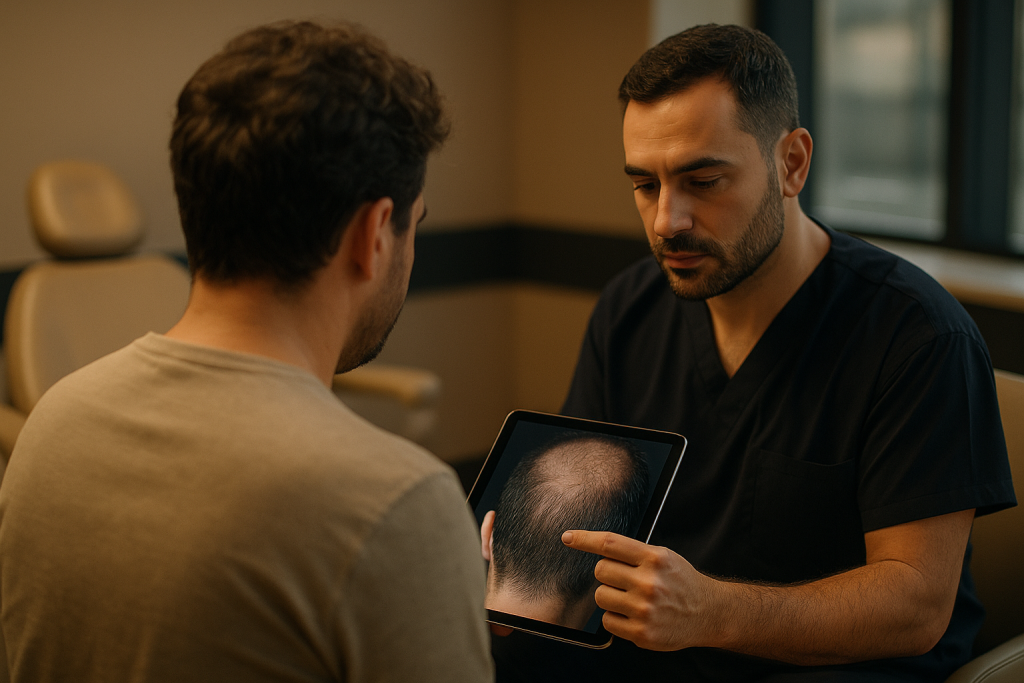
Hair plugs were an older transplant method that used relatively large round grafts, which could sometimes create an obvious or “doll-like” pattern. Modern hair restoration techniques such as Sapphire FUE and DHI use much smaller graft units and detailed placement planning to support a softer, more natural-looking result.
- Hair plugs usually refer to larger circular grafts used in older hair transplant procedures.
- Modern FUE and DHI techniques transplant naturally occurring follicular units rather than large plug-shaped grafts.
- A well-planned modern transplant considers hairline design, graft angle, direction, density and the future pattern of hair loss.
- Older plug procedures could leave visible spacing, larger scars or an unnatural hairline, although correction may be possible in suitable cases.
- A doctor-led assessment is important before a first transplant or a repair procedure because donor hair supply must be protected.
01Hair Plugs Vs Modern Hair Transplant Techniques
Hair plugs are part of the history of surgical hair restoration, but they are very different from the grafts commonly used in contemporary practice. In older procedures, surgeons often removed relatively large, round sections of hair-bearing scalp from the donor area and inserted them into thinning or bald areas. These grafts could contain many hairs together. While the method was designed to restore coverage, the size and distribution of the grafts sometimes made the result easier to notice.
Modern transplantation is based on a more refined understanding of natural hair growth. Hair generally grows in small groups called follicular units, often containing one to four hairs. Techniques such as Sapphire FUE and DHI are designed to harvest and place these naturally occurring units with closer attention to the shape of the hairline, the direction of growth and the gradual change in density from the front to the crown.
The goal of a current procedure is not simply to move the highest possible number of hairs. It is to create a balanced plan that respects the patient’s facial features, age, existing hair and likely future hair loss. Your doctor will assess whether transplantation is suitable, how many grafts can be harvested safely and which areas should be prioritised for the most natural-looking result over time.
02What Were Hair Plugs and Why Were They Used?
A hair plug was typically a larger circular piece of scalp tissue containing multiple hair follicles. It was taken from a denser area, usually at the back or sides of the scalp, and transferred to an area affected by hair loss. Earlier methods had fewer tools for precise graft separation and placement, so larger grafts were used to cover a wider area with fewer individual insertions.
For many people at the time, this approach offered an important option when non-surgical treatments could not provide enough visible coverage. Some historical procedures produced acceptable results, especially when plugs were carefully placed and the patient had thick surrounding hair. However, results varied because graft size, hair characteristics, surgical technique and the pattern of continued hair loss all influenced the final appearance.
The term hair plugs is still widely used online, but it is often used loosely to describe any hair transplant. This can be confusing. Modern FUE and DHI procedures do not normally involve placing the large, round grafts associated with older plug techniques. Instead, the surgical team works with individual follicular units to allow more precise distribution and a less uniform-looking pattern.
03How Modern FUE and DHI Graft Placement Differs
Follicular Unit Extraction, known as FUE, involves extracting follicular units one by one from the donor area. In Sapphire FUE, sapphire blades may be used to create recipient channels before graft placement. The surgeon or medical team plans these channels at appropriate angles and directions, which is important because transplanted hairs continue to grow in the direction in which they are placed.
Direct Hair Implantation, or DHI, also uses individual follicular units. The grafts are implanted with a specialised implantation tool, allowing controlled placement into the recipient area. Whether Sapphire FUE or DHI is more appropriate depends on factors such as the person’s hair characteristics, the size of the area to be treated, donor capacity and the doctor’s clinical assessment. Neither technique is automatically best for every patient.
Modern planning often uses finer single-hair grafts at the front of the hairline, where softness is especially important. Grafts with more hairs may be placed farther behind to help create visual density. This variation can mimic the way natural hair grows. By contrast, large older grafts could create rows or clusters with a more regular appearance, particularly if surrounding native hair became thinner later.
04Natural Appearance, Density and Hairline Design
One of the clearest differences between historical plug procedures and modern transplantation is the focus on irregularity and transition. A natural hairline is not usually a straight, solid line. It has small variations, finer hairs at the leading edge and a gradual increase in density behind it. Contemporary hair restoration planning aims to reproduce these features while keeping the hairline age-appropriate and realistic for the available donor supply.
Density must also be considered carefully. It is not always possible, or medically advisable, to place grafts at the same density as naturally dense teenage hair. The scalp has a limited blood supply during healing, and the donor area has a limited number of safely harvestable follicles. A responsible plan balances cosmetic goals with graft survival, scalp health and the need to preserve donor hair for the future if progressive hair loss continues.
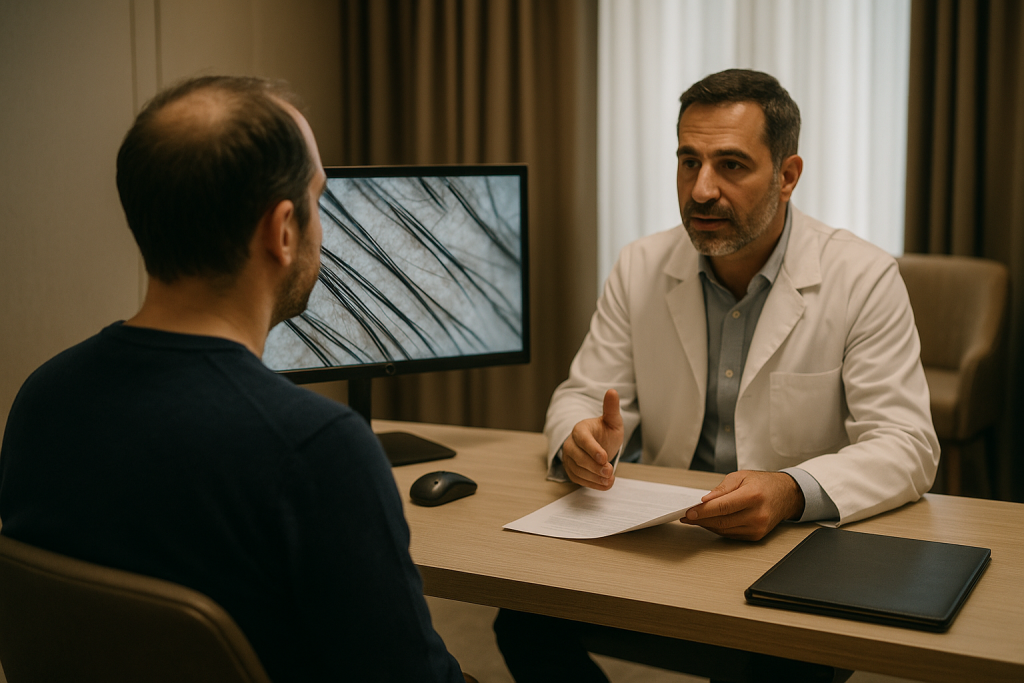
In most patients, an experienced clinical assessment will include the quality of the donor area, hair shaft thickness, curl pattern, colour contrast between hair and scalp, and the amount of existing hair. These factors can affect how much coverage is visually achievable. At Acibadem Hair Transplant Center, results are measured through trichoscopic graft survival at month 12, with a documented 98% rate under written guarantee; however, individual cosmetic appearance can still vary according to hair and scalp characteristics.

05Can Older Plug Transplants Be Corrected?
In many cases, older transplant work can be improved, but repair is more complex than a first procedure. A doctor may consider strategies such as removing selected large grafts, reducing their size, redistributing follicles, adding finer grafts around the hairline or placing grafts between visible clusters. The suitable approach depends on scalp flexibility, scar tissue, graft position, donor reserve and the person’s expectations.
Repair work needs especially careful planning because the donor area may already have been used extensively. Removing too many additional follicles can thin the back and sides of the scalp, while aggressive work in scarred tissue may affect healing. For this reason, a consultation should include a review of previous procedures, the current pattern of hair loss and a realistic discussion of what may or may not be achievable.
Some people choose correction because their older hair plugs have become more visible as their native hair has continued to thin. Others are mainly concerned about a hairline that sits too low, looks too straight or has clearly defined clusters. A staged plan may be recommended in suitable cases, as this can allow the medical team to assess healing and make careful decisions about any later treatment.
06Comfort, Recovery and Scarring: Then and Now
Older plug procedures were often more invasive because larger sections of tissue were removed and inserted into the scalp. This could involve greater tissue trauma, more noticeable post-procedure swelling or discomfort, and a longer healing period. Larger circular donor scars and recipient-site marks may also be visible in some people, particularly when hair is worn short.
Modern FUE and DHI procedures use much smaller extraction and implantation sites. This generally supports a more comfortable recovery compared with historical large-graft techniques, although a hair transplant remains a medical procedure and temporary tenderness, swelling, redness, crusting or numbness can occur. Your doctor will explain the expected recovery process, prescribed medicines if appropriate and the aftercare steps needed to protect the grafts.
Local anaesthesia is typically used so that patients do not feel sharp pain during the procedure, although they may feel pressure or brief sensations. Needle-free anaesthesia is available at Acibadem Hair Transplant Center for suitable patients. Pain and comfort levels differ from person to person, and a clinical team should review medical history, allergies and any concerns before treatment rather than assuming the same experience for everyone.
07Choosing a Modern Hair Transplant Plan Safely
The best starting point is a medical assessment rather than choosing a technique based only on photographs or social media. A doctor should evaluate whether hair loss is stable enough for surgery, whether there may be an underlying cause requiring attention and whether the donor area can support transplantation. People with rapidly changing hair loss may need a more cautious approach because a transplant does not stop the loss of non-transplanted hair.
A good treatment plan should explain the proposed hairline, the estimated graft range, the donor strategy, the expected timeline and the possible limitations. Newly transplanted hairs commonly shed in the early weeks before new growth begins. Visible growth usually develops gradually over several months, while a fuller assessment is commonly made around 12 months. No ethical clinic should guarantee an identical cosmetic result for every patient.
Acibadem Hair Transplant Center is a dedicated hair restoration clinic in Istanbul licensed by the Turkish Ministry of Health. The clinic offers Sapphire FUE and DHI techniques, as well as a free online hair analysis reviewed by doctors, with WhatsApp replies typically within around two hours. International patients can also ask about all-inclusive packages that include VIP transfer, a 4-star hotel, a care kit and 12 months of follow-up, while the doctor confirms whether treatment is clinically appropriate.
08Aftercare After Modern FUE or DHI: Protecting Newly Placed Grafts
Modern grafts are small, but they still need careful protection during the first days after a procedure. Your medical team will give individual instructions, which should always take priority. In general, patients are asked to avoid touching, rubbing or scratching the recipient area. Friction from fingers, tight hats or bedding can disturb healing tissue, especially before the grafts have become more secure.
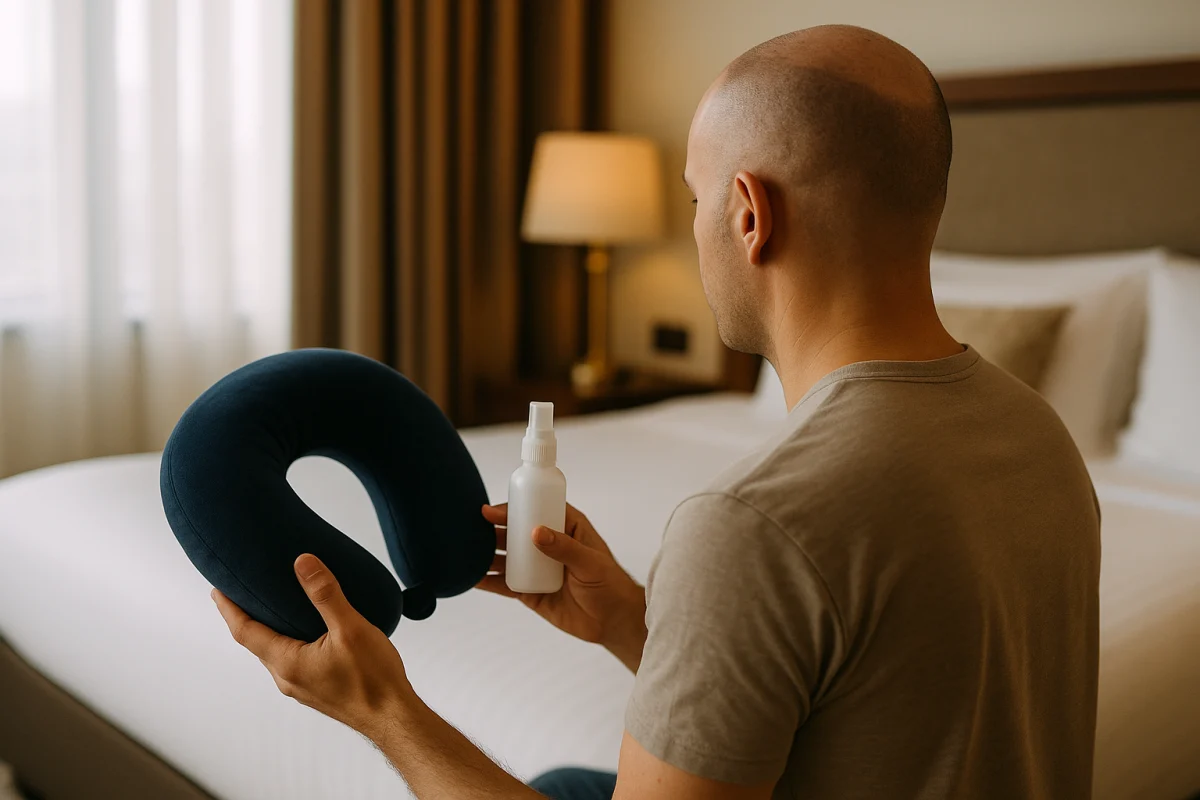
Sleeping position is also important in the early recovery period. Many patients are advised to rest with the head elevated for the first few nights to help limit swelling. It may be helpful to use the neck pillow or protective items provided in the care kit, if recommended by the clinic. Avoiding direct pressure on the transplanted area is usually part of these instructions.
The first wash is normally performed or explained by the clinical team. Patients are often instructed to apply the recommended lotion or foam gently, rinse with low-pressure water and avoid rubbing with a towel. Small crusts can form around the grafts as part of normal healing. They should soften and come away gradually according to the washing plan rather than being picked off early.
Strenuous exercise, swimming, sauna use and heavy sweating are commonly restricted for a period advised by the doctor. These activities may increase irritation, swelling or infection risk while the scalp is healing. Alcohol, smoking and medicines or supplements that can affect bleeding should be discussed before the procedure and managed only according to medical guidance. Contact the clinic promptly if you develop worsening pain, increasing redness, discharge, fever or another concern that does not match the recovery advice provided.
09Modern Hair Transplant Growth Timeline: What Usually Happens Month by Month
A modern hair transplant does not create immediate visible density. During the first one to two weeks, the scalp usually heals and temporary redness, mild swelling or small crusts may be present. The donor area also needs time to settle. Healing speed varies according to skin type, the extent of the procedure and how closely aftercare instructions are followed.
It is common for transplanted hairs to shed during the first several weeks after surgery. This is often called shedding or shock shedding. It can be worrying, but it does not necessarily mean that the follicles have been lost; the follicles remain beneath the scalp and enter a resting phase before beginning a new growth cycle. Existing, non-transplanted hair can also temporarily appear thinner in some patients, particularly where hair was already fine or fragile.
Early new growth may start to become noticeable from around months three to four, although it is often fine, uneven or lighter in texture at first. More visible change commonly develops between months five and eight as additional hairs grow and gradually gain thickness. The crown may appear slower to mature than the frontal area because of its natural growth pattern and the larger area often involved.
A more meaningful assessment is typically made at around month 12. Some patients, especially those receiving crown work or with slower-growing hair, may continue to see refinement after this point. At Acibadem Hair Transplant Center, graft survival is assessed trichoscopically at month 12, with a documented 98% rate under written guarantee. This measurement concerns graft survival; the final cosmetic impression still depends on factors including hair calibre, hair-to-scalp contrast, ongoing native hair loss and the original treatment plan.
10Who May Need a More Cautious Assessment Before Surgery?
Not every person with hair loss is immediately ready for transplantation. Hair loss can have different causes, including hereditary pattern hair loss, traction-related loss, inflammatory scalp conditions, nutritional factors, medical conditions and temporary shedding after illness or stress. A doctor should first assess the pattern and possible cause, particularly when hair loss is sudden, patchy, associated with scalp symptoms or changing quickly.
Age alone does not decide candidacy, but younger patients with an evolving hair loss pattern often need especially careful planning. Creating a low, dense hairline too early can use donor grafts that may be needed later if hair loss progresses. In many cases, a conservative and age-appropriate hairline design helps protect future options. The doctor will consider family history, the current distribution of thinning and likely donor reserve before recommending a graft strategy.
Donor quality is as important as the size of the bald area. Thick, stable hair in the back and sides of the scalp may provide stronger coverage potential than very fine or widely spaced donor hair. However, the donor area cannot be treated as unlimited. Taking too many grafts can leave visible thinning, so a safe extraction plan should preserve an even appearance in the donor zone.
People considering repair after older hair plugs should also expect a more detailed assessment than first-time patients. Previous scars, plug placement, scalp tightness and the amount of remaining donor hair can all affect what is possible. Clear photographs in good lighting, a history of earlier procedures and information about any medical conditions can help the doctor provide an initial online review, but an in-person clinical assessment may still be necessary before treatment is confirmed.
11Travel Planning for International Hair Transplant Patients in Istanbul
International patients should plan their visit around both the procedure and the early recovery period. It is sensible to allow enough time in Istanbul for the scheduled treatment, the first aftercare review if arranged and clear travel instructions from the clinic. Do not book non-refundable flights or make final travel commitments until the clinic has reviewed your information and confirmed the proposed treatment schedule.
Before travelling, prepare a list of current medicines, allergies, medical diagnoses and previous scalp procedures. Share these details honestly during the medical review. Patients should also ask whether they need to pause any medicine, supplement or activity before treatment; this decision must be made with the prescribing doctor and hair restoration medical team, not independently. Bring comfortable button-front or zip-front clothing, as pulling a tight top over the head may be inconvenient immediately after the procedure.
The journey home requires practical planning. Patients are generally advised to protect the scalp from contact and avoid carrying heavy luggage if this is not recommended during the early recovery period. A loose, clinic-approved head covering may be appropriate in some circumstances, but patients should follow the specific instructions provided. Airline travel itself is usually discussed as part of the individual schedule, particularly if swelling, medical history or a long journey creates additional considerations.
Acibadem Hair Transplant Center offers all-inclusive packages for international patients, including VIP transfer, a 4-star hotel, a care kit and 12 months of follow-up. The clinic also provides a free online hair analysis reviewed by doctors, and WhatsApp replies typically arrive within around two hours. This can help patients clarify practical questions before travelling, while the doctor remains responsible for confirming clinical suitability and the final treatment plan.
12Frequently Asked Questions
What is a hair plug?
A hair plug is typically a larger, round graft containing multiple hair follicles that was used in earlier hair transplant procedures. Modern methods generally use much smaller follicular units, allowing more controlled placement and a softer hairline appearance.
How long do hair plugs last?
Hair follicles transplanted in a plug can continue to grow for many years if they survive and remain healthy. However, the appearance may change over time because the person’s non-transplanted hair can continue to thin, making the larger graft clusters more noticeable. A doctor can assess the current condition of older grafts and surrounding hair.
Can you tell if someone has hair plugs?
In some cases, older plugs may be noticeable because of larger grouped hairs, a row-like pattern, visible spacing or a sharply defined hairline. This is not always obvious, especially if the person has thick surrounding hair. Modern repair options may help soften the appearance in suitable candidates.
How painful is the hair plug procedure?
Historical plug procedures could be more uncomfortable than modern methods because they involved larger grafts and more tissue handling. Modern hair transplantation is usually performed under local anaesthesia, so sharp pain during the procedure is typically limited, although pressure and temporary discomfort during recovery can occur. Your medical team will explain pain-control options and aftercare before treatment.
Questo articolo ha scopo puramente informativo e non sostituisce il parere medico professionale.
 06
06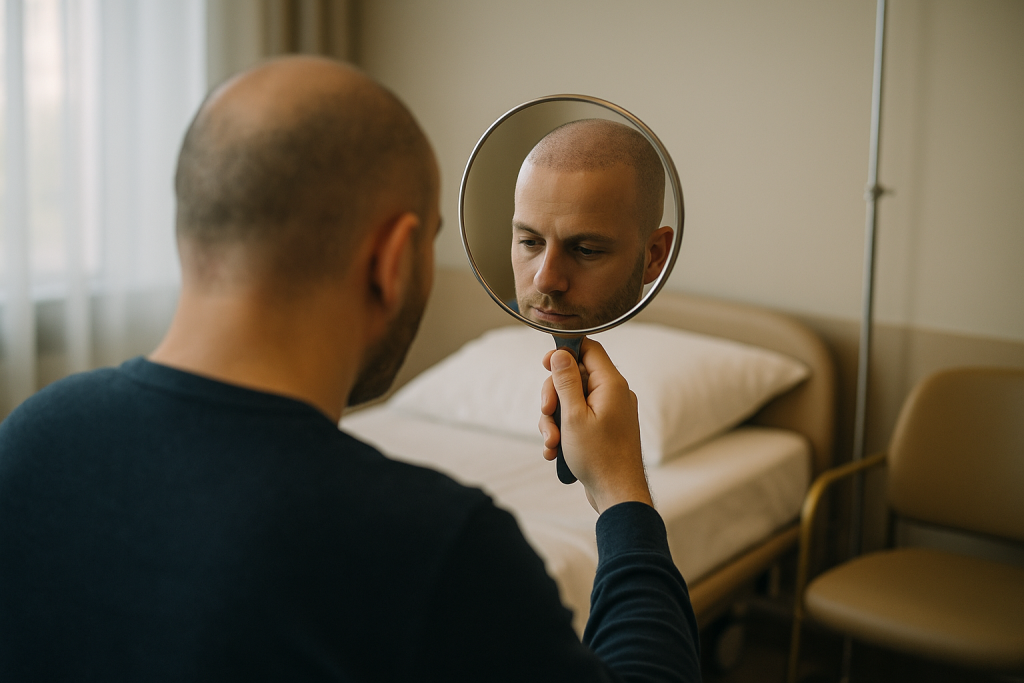 12
12