
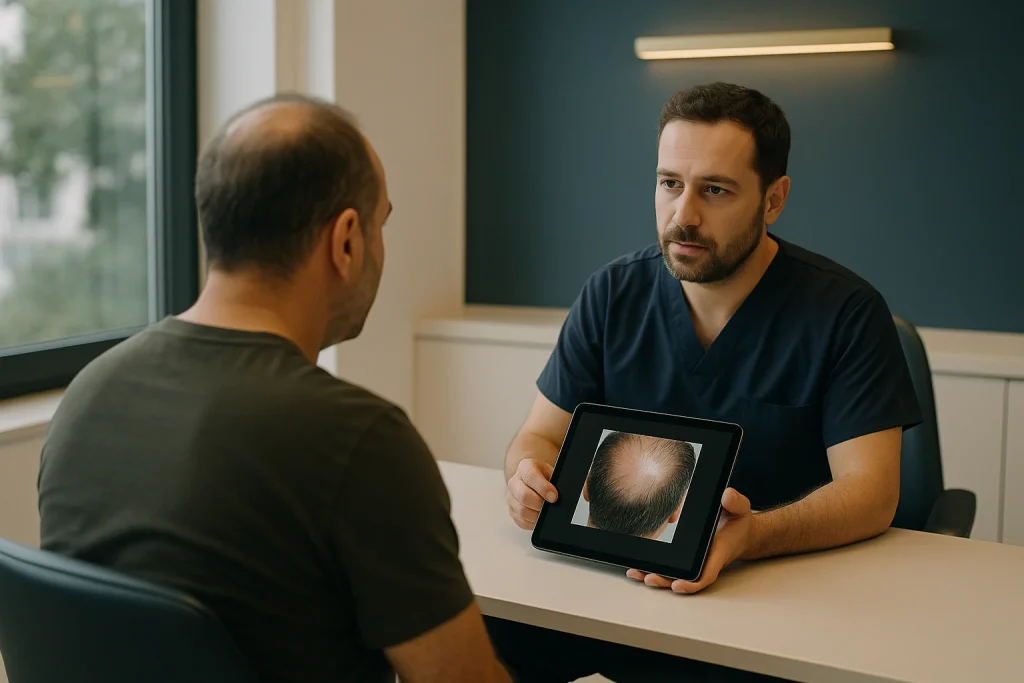
Hair regrowth therapy is usually worth discussing before a hair transplant because it may slow ongoing thinning, improve existing hair quality, and help clarify whether surgery is needed. The right approach depends on the cause and pattern of hair loss, your medical history, and realistic treatment goals, so a doctor should confirm the plan after assessment.
- Hair loss should be assessed before treatment because temporary shedding, pattern hair loss, and scalp conditions may need different approaches.
- Doctor-supervised medicines can help some suitable patients maintain or improve existing hair, but they require time and ongoing review.
- Supportive procedures and scalp-care measures may complement medical treatment, although their evidence and suitability vary.
- A transplant redistributes permanent donor hair; it does not stop future thinning in untreated native hair.
- A period of stabilisation before surgery can help doctors design a more conservative, long-term transplant plan.
01Why Treatment Often Comes Before Surgical Planning
Hair regrowth therapy is often considered before a transplant because surgery does not stop the underlying process that may be causing hair to thin. A transplant moves follicles from a donor area to a thinning area, while non-surgical treatment may help protect vulnerable native hair around those grafts. In many patients, starting with a careful assessment can reveal whether shedding may settle, whether hair loss is still progressing, and whether medical treatment could improve the appearance without surgery or reduce the scale of a future procedure.
Not every person with visible thinning needs a transplant straight away. Sudden shedding after illness, stress, major weight change, childbirth, nutritional deficiency, or a medication change can look worrying but may have a different course from gradual pattern hair loss. Scalp inflammation, breakage, and certain skin conditions can also affect hair density. Identifying the cause matters because a transplant is generally not the first step when active shedding or scalp disease has not been evaluated.
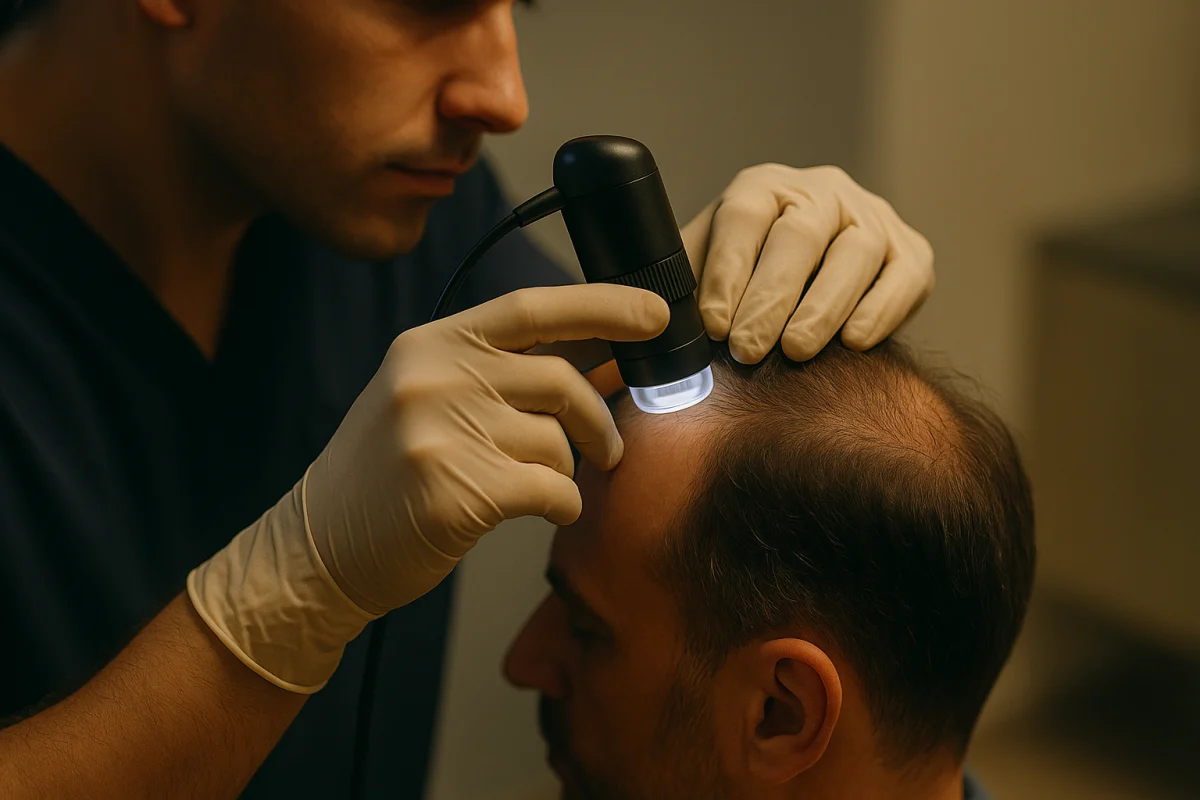
A consultation should focus on more than the hairline. Doctors typically ask when the change began, whether close relatives have similar hair loss, which areas are affected, and whether there are symptoms such as itching, scaling, pain, or patchy loss. They may examine the scalp and use magnification to assess follicle variation and density. When clinically indicated, they may recommend further medical evaluation before suggesting a treatment pathway.
02Hair Regrowth Therapy: Main Options to Discuss With a Doctor
Hair regrowth therapy can include prescription medicines, topical treatments, selected in-clinic procedures, and measures that support scalp health. These options do not have the same evidence, risks, or expected benefits, and no single approach is best for everyone. A doctor will consider the likely diagnosis, extent of loss, age, family history, medical conditions, pregnancy plans where relevant, and your willingness to continue treatment over time.
For people with pattern hair loss, a doctor may discuss topical medicines that encourage follicles to remain in the growth phase for longer. In suitable patients, oral prescription medicines that influence hormonal pathways may also be considered. These treatments can be effective for some people, especially when hair loss is addressed early, but responses vary. They should only be used under appropriate medical guidance because side effects, interactions, and situations where treatment is unsuitable need to be reviewed carefully.
Some patients ask about platelet-based scalp injections, microneedling, low-level light devices, or other supportive procedures. The strength of clinical evidence differs between these options, and results can be less predictable than online advertising may suggest. They may be offered as an addition to a broader plan rather than as a replacement for proven medical management. Your doctor can explain what is reasonable for your pattern of hair loss and what should not be expected from any procedure.
03Finding the Cause of Thinning Before Choosing Treatment
The word hair loss describes several different situations. Pattern hair loss usually develops gradually and follows a recognisable distribution, such as recession at the temples, thinning at the crown, or widening of the central part. In contrast, telogen shedding often presents as increased daily hair fall from across the scalp. Patchy loss, redness, pustules, scarring, or significant discomfort requires timely medical assessment because it may indicate a condition that needs specific treatment.
A medical history can provide important clues. Recent infections, hospital treatment, restrictive dieting, iron deficiency, thyroid concerns, hormonal changes, and some medicines may contribute to shedding in certain people. This does not mean that every person needs extensive testing. Rather, testing is usually directed by symptoms, examination findings, and individual history. Self-diagnosing from photographs or social media can delay appropriate care, particularly if the pattern is unusual or changes quickly.
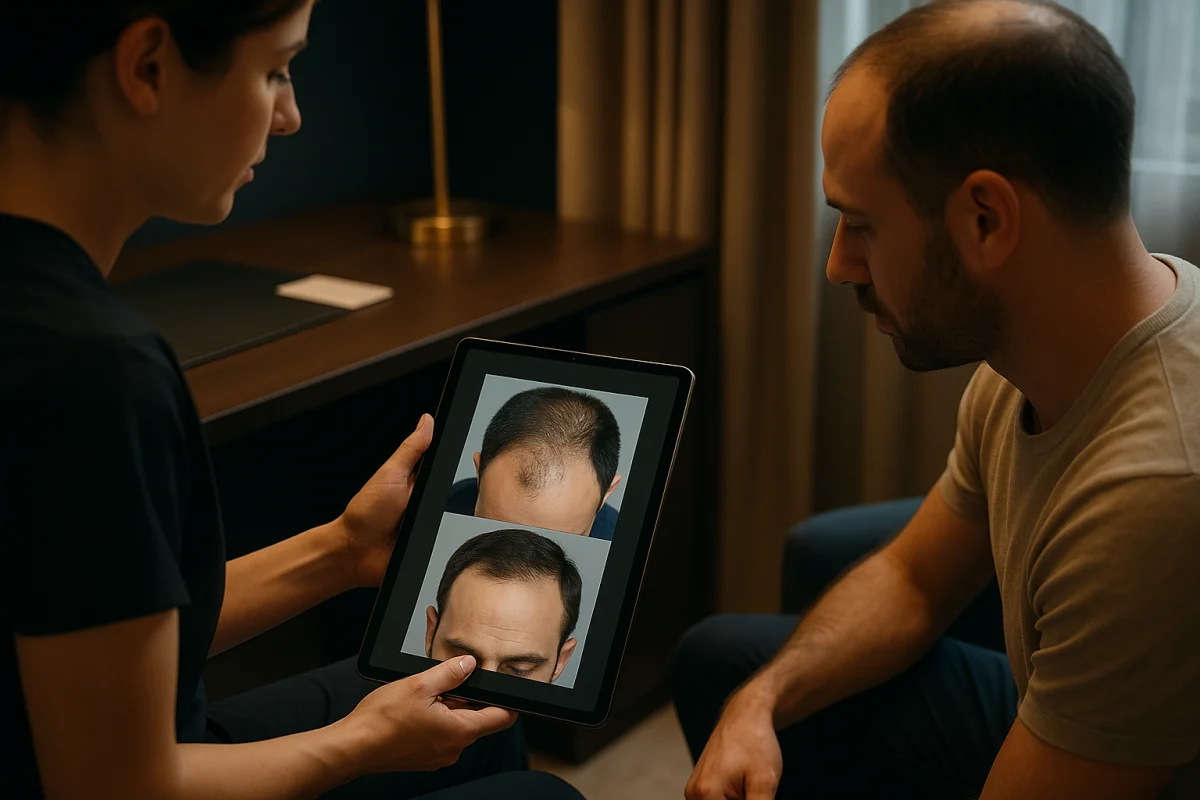
Hair characteristics also affect planning. Fine hair may show scalp more readily than coarse hair at the same follicle density. Curly, straight, light, and dark hair can create different visual effects, while previous styling damage can mimic loss through breakage. A doctor may compare photographs taken over time and examine miniaturisation, which is the gradual narrowing of follicles seen in pattern loss. This baseline helps make later treatment decisions more objective.
04What Medical Treatments Can Realistically Achieve
Hair regrowth therapy usually aims first to slow further thinning and preserve existing follicles. Visible thickening can occur in some patients, particularly where follicles are miniaturised but still active. However, a treatment is less likely to restore a completely bare area where follicles have been absent for a long time. Understanding this difference helps patients set realistic goals and avoid changing plans too quickly when new growth is not immediately visible.
Treatment response takes patience. Hair grows in cycles, and an early increase in shedding can occur with some topical treatments as follicles transition through those cycles. This can be distressing, but it does not automatically mean that treatment has failed. A doctor can explain what changes may be expected, when reassessment is appropriate, and which symptoms should prompt earlier review. Stopping and restarting treatment repeatedly can make it harder to judge its true effect.
Prescription treatment is a medical decision, not simply a cosmetic choice. Potential side effects may include scalp irritation with topical products or systemic effects with oral medicines, depending on the option used. Individual risk varies, and certain treatments are not appropriate during pregnancy, breastfeeding, or for people with particular health conditions. It is important to disclose all medicines and supplements to the clinician reviewing your hair loss, rather than relying on a general online recommendation.
05Supportive Procedures, Nutrition, and Everyday Hair Care
In-clinic supportive procedures may be discussed when they fit the diagnosis and goals, but they should be presented honestly. Some people choose platelet-based treatments or carefully selected device-based approaches as part of a maintenance plan. These options may support hair quality for selected patients, yet they do not produce identical outcomes for everyone and often require repeated sessions. A reputable clinic should explain the proposed role, expected commitment, possible discomfort, and limitations before treatment begins.
Nutrition is important for normal hair growth, but supplements are not automatically necessary. Taking high-dose vitamins or minerals without a confirmed need may be ineffective and can occasionally cause harm or interfere with other care. A balanced diet with adequate protein and varied nutrient sources supports general health. If a doctor suspects a deficiency or another medical contributor, they may recommend targeted testing and treatment rather than a long list of unproven supplements.
Daily habits can help reduce avoidable damage to fragile hair. Gentle washing, appropriate management of dandruff or scalp irritation, reduced traction from tight styles, and limiting repeated heat or chemical exposure may improve the condition of the hair shaft. These measures do not reverse genetic follicle miniaturisation on their own, but they can improve the appearance and comfort of the scalp. Smoking cessation and management of general health conditions may also be relevant to overall wellbeing and surgical planning.
06How Long to Assess Progress and When to Review
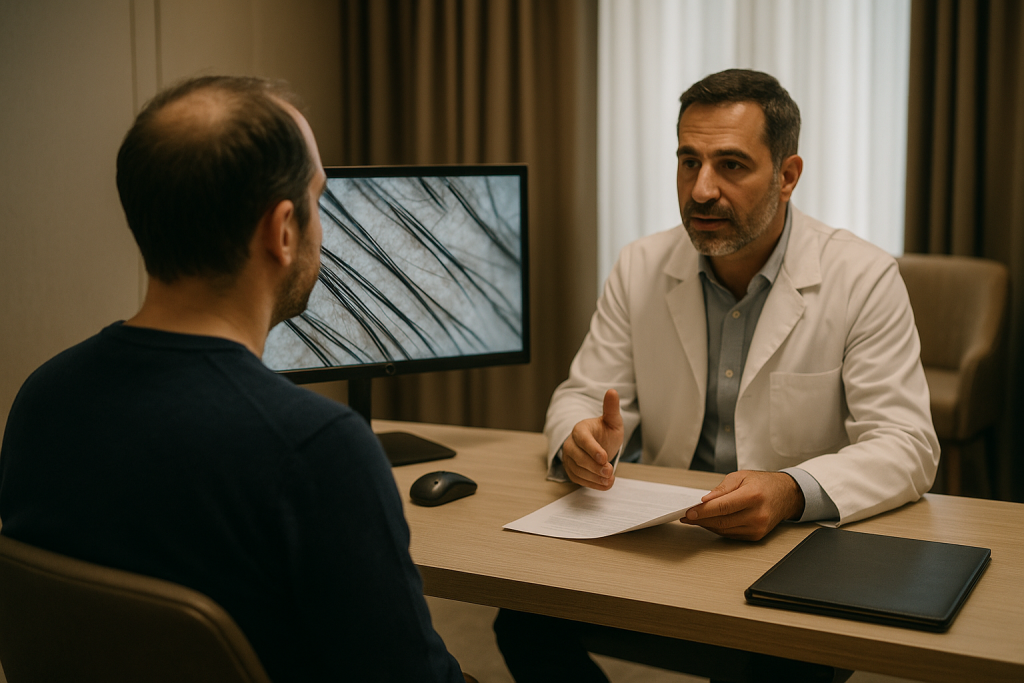
Most hair treatments need several months before changes can be assessed fairly. This is because the visible hair shaft grows slowly and follicles do not all cycle at the same time. Doctors commonly use standardised photographs, scalp examination, and, where available, trichoscopic assessment to compare density and hair shaft calibre over time. Looking at the hair every day in different lighting is much less reliable and may create unnecessary anxiety.
A structured review period helps distinguish stabilisation from true regrowth. In some people, the most valuable result is reduced shedding or slower progression rather than a dramatic increase in density. This can still be important because preserving existing hair may reduce the number of grafts needed if surgery is considered later. Hair regrowth therapy should therefore be judged against realistic goals agreed with the clinician, not against edited online images or a celebrity hairstyle.
If thinning continues despite appropriate treatment, a review can consider several possibilities. The initial diagnosis may need revisiting, adherence may have been difficult, the treatment may not suit that person, or the loss may be progressing faster than expected. A doctor can discuss whether an alternative approach, further investigation, or a surgical consultation is appropriate. Do not increase doses or combine treatments independently, as this can raise the risk of side effects without ensuring better results.
07When a Hair Transplant May Be the Better Next Step
A hair transplant may be considered when the pattern of loss is sufficiently understood, the donor area appears suitable, and goals are realistic. It can be particularly helpful for restoring a receded hairline, adding density to selected areas, or covering areas where medical treatment is unlikely to reactivate follicles. The decision should account for likely future loss, not only the appearance desired today. A very low or densely packed hairline may not be sustainable if thinning continues.
Stabilising hair loss before surgery is often helpful, although the exact approach depends on the individual. When native hair around a transplant continues to thin, the contrast between transplanted and non-transplanted hair can become more noticeable over time. Medical management may help reduce this risk in suitable patients, while a conservative graft placement plan can preserve donor resources. Your doctor will confirm whether a period of treatment, monitoring, or direct surgical planning is appropriate.
At Acibadem Hair Transplant Center, a dedicated hair restoration clinic in Istanbul licensed by the Turkish Ministry of Health, surgical suitability is assessed individually. Sapphire FUE and DHI techniques are available for appropriate candidates. The clinic also offers a free online hair analysis reviewed by doctors, with WhatsApp replies typically provided within around two hours. An online review can help begin the conversation, but final planning requires clinical assessment and an honest discussion of limitations.
08Preparing for a Long-Term Hair Restoration Plan
A long-term plan should protect both appearance and donor supply. Donor follicles are limited, so they need to be used carefully, especially for younger patients or those with a strong family history of progressive hair loss. The goal is usually a natural-looking result that can continue to look balanced if further thinning occurs. This may mean choosing a mature hairline design and prioritising areas that will make the greatest visual difference.
If surgery is selected, patients should receive clear information about the procedure, recovery, aftercare, and the fact that transplanted hair also needs time to grow. Early shedding of transplanted hairs is typically part of the normal healing and growth cycle, while visible maturation develops gradually. Existing non-transplanted hair can still need medical maintenance after surgery if the underlying hair loss process remains active. A transplant should be viewed as one part of a broader plan, not as a permanent cure for every type of thinning.
International patients may also benefit from understanding practical arrangements before travelling. Acibadem Hair Transplant Center provides all-inclusive packages that include VIP transfer, a 4-star hotel, a care kit, and 12 months of follow-up. Needle-free anaesthesia is available for suitable patients. The clinic documents trichoscopic graft survival at month 12 and reports a 98% rate under its written guarantee, although individual aesthetic outcomes still depend on factors such as donor quality, scalp characteristics, healing, and future native hair loss.
09Frequently Asked Questions
Which treatment is most effective for hair regrowth?
There is no single best treatment for every type of hair loss. For pattern hair loss, doctor-supervised topical or prescription medicines are often discussed first because they may help preserve and thicken existing hair in suitable patients. The best option depends on the diagnosis, medical history, side-effect considerations, and treatment goals.
Do hair regrowth treatments actually work?
Some treatments can work for suitable patients, particularly when follicles are still active and treatment is continued consistently. Results may include reduced shedding, slower progression, or visible thickening rather than complete restoration of lost density. A doctor can help determine whether a treatment has a reasonable chance of helping in your specific type of hair loss.
What is known about Matthew McConaughey’s reported hair regrowth?
Public interviews and media reports have described a non-surgical scalp treatment routine, but the full details and medical context cannot be independently confirmed. Celebrity experiences are not clinical evidence and may not apply to another person’s cause of hair loss. A medical assessment is more reliable than trying to copy a public figure’s approach.
What did Elon Musk reportedly use to regrow his hair?
Public discussion has widely suggested that his appearance changed after hair restoration surgery, but the exact procedures, timing, and any additional treatments have not been medically confirmed by a treating clinic. It is therefore not possible to state with certainty what he used. Hair transplant planning should always be based on your own donor area, pattern of loss, and long-term goals.
Questo articolo ha scopo puramente informativo e non sostituisce il parere medico professionale.
 06
06 12
12