

Is baldness hereditary? In many people, genetic sensitivity of the hair follicles is an important cause of progressive pattern hair loss, but it is not inherited from only one parent. A hair transplant plan should consider your pattern of loss, rate of change, donor hair quality, health history and realistic long-term goals.
- Pattern hair loss often has a genetic component, but genes from both sides of the family may contribute.
- A parent with a full head of hair does not rule out inherited thinning in a child.
- Fast or sudden shedding needs medical assessment because it may have causes beyond genetic pattern loss.
- Hair transplantation redistributes permanent donor follicles; it does not stop future loss in untreated areas.
- A careful plan protects donor supply and considers how your hair may change over time.
01Is Baldness Hereditary? Hair Transplant Planning Factors
Is baldness hereditary? Often, yes: the most common form of gradual hair loss, called androgenetic alopecia or pattern hair loss, usually involves inherited follicle sensitivity. However, heredity is not a simple one-parent rule. Many genes can influence how follicles respond to natural hormones, when thinning begins, how quickly it progresses and which parts of the scalp are affected. This is why two relatives can have noticeably different hair-loss patterns.
In pattern hair loss, genetically susceptible follicles may gradually produce finer, shorter hairs over time. This process is called miniaturisation. In men, it commonly affects the temples, frontal hairline, mid-scalp or crown. In women, it more often appears as widening of the central part or diffuse thinning over the top of the scalp, although patterns vary. A qualified clinician can distinguish these changes from other reasons for shedding.
Genetics are only one part of the picture. Age, hormone changes, some medical conditions, nutritional status, scalp inflammation, emotional or physical stress and certain medicines can influence hair growth or shedding. For this reason, a family history can be useful, but it cannot confirm a diagnosis alone. Before discussing surgery, doctors typically assess the scalp, the hair shafts and the history of hair change in detail.
02Hair-loss genes can come from both sides of your family
A common belief is that hair loss comes only through the mother’s family. This idea is too limited. Some genetic factors linked with androgen sensitivity are located on the X chromosome, which a man receives from his mother, but many other relevant genes are inherited from either parent. The combined effect of these factors may influence a person’s individual risk rather than creating a predictable family pattern.
It is possible to have relatives with thick hair and still develop noticeable thinning. A gene may be carried without causing obvious hair loss, or it may have a milder effect in one family member than another. Hair characteristics also differ naturally between people. Curl pattern, hair-shaft thickness, density and contrast between hair and scalp can make similar levels of follicle loss look very different.
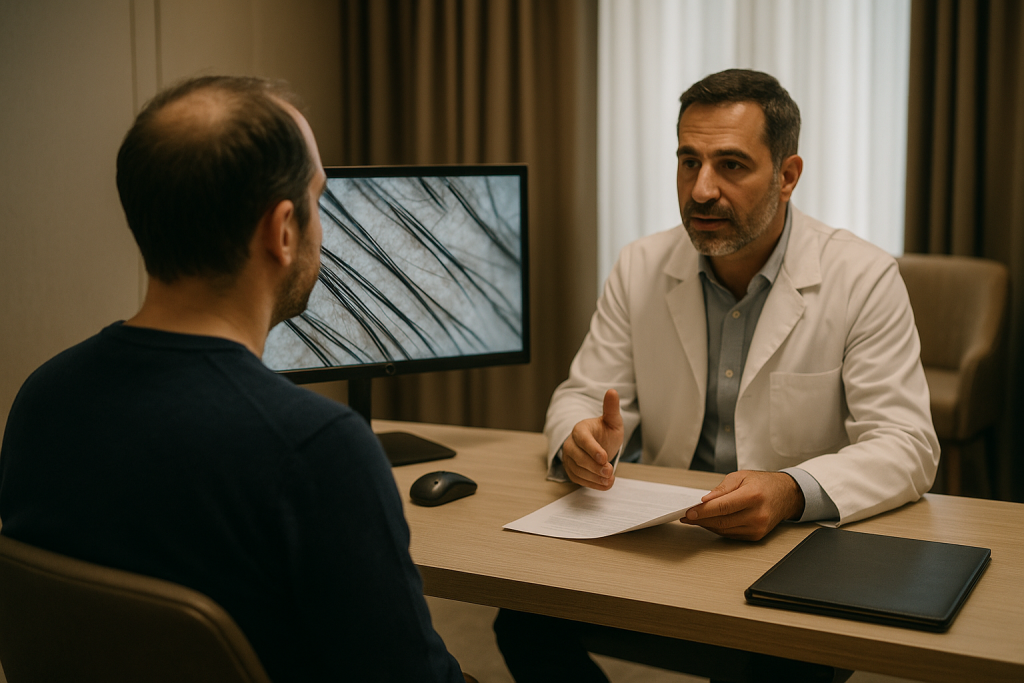
Family photographs and a discussion of close relatives may help a doctor understand possible long-term tendencies. They are not a diagnostic test and should not be used to predict an exact future hairline. Trichoscopic examination, which magnifies the scalp and hair shafts, can provide more relevant information about miniaturisation, hair calibre variation and donor-area quality at the time of assessment.
03Why younger adults may notice thinning earlier
Many younger adults seek advice because they first notice temple recession, more scalp visibility in photographs or increased hair in the shower. Early recognition does not always mean that hair loss is progressing unusually fast. Social media, high-resolution phone cameras, close-cropped hairstyles and greater awareness of appearance can make small changes easier to see than they were for earlier generations.
That said, pattern hair loss can begin after puberty in genetically predisposed people. Its pace is highly individual. Some patients experience a slow change over many years, while others see more obvious progression over a shorter period. It is important not to assume that all shedding in a young person is genetic, especially when the change is sudden, patchy, associated with itching or scaling, or follows illness, major stress or a significant weight change.
When people ask whether Gen Z is balding faster, there is no single explanation that applies to everyone. Sleep disruption, restrictive diets, styling practices, stress and untreated scalp conditions may affect the appearance of hair or trigger temporary shedding in some individuals. A medical review can help clarify whether the concern is pattern loss, a temporary shedding episode, hair breakage or another scalp-related issue.
04Confirming the cause before planning treatment
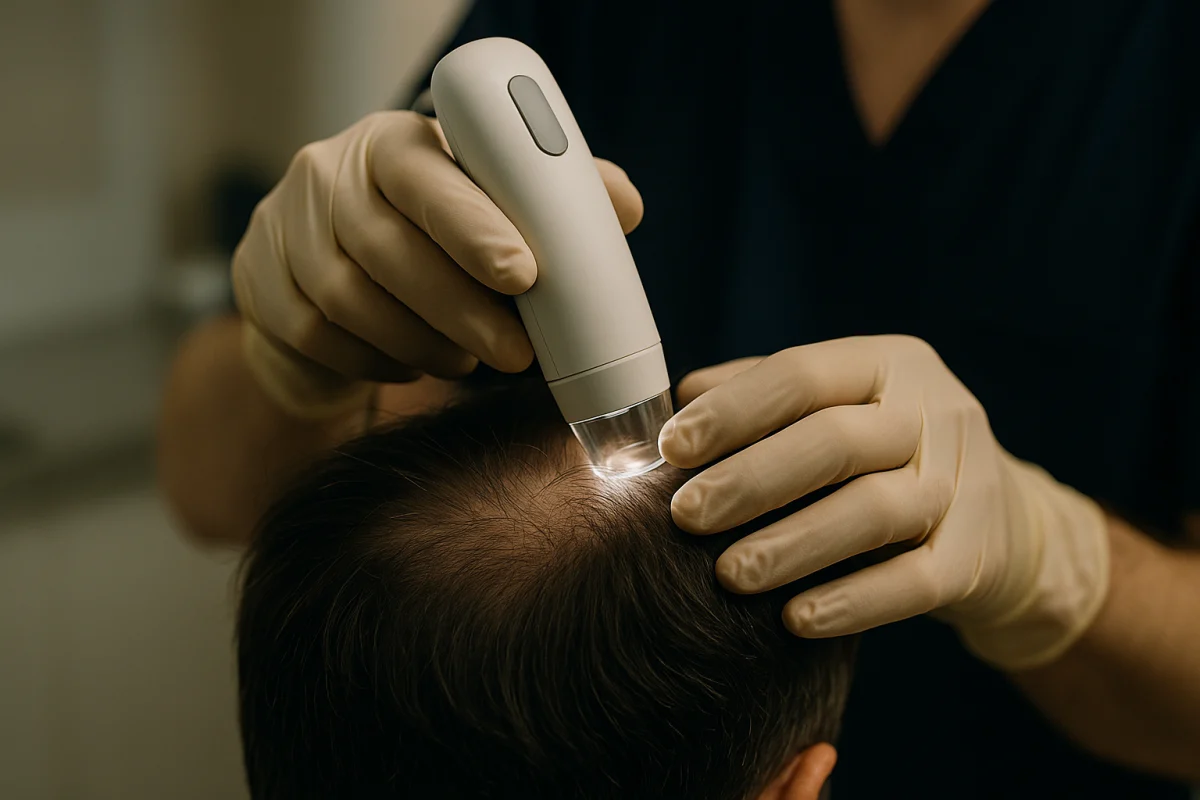
A hair transplant is designed for selected forms of permanent hair loss, most commonly stable pattern hair loss. It is not usually the first response to unexplained shedding. During an evaluation, the clinician will ask when the change began, whether it is gradual or sudden, which areas are involved, and whether there have been recent health or lifestyle changes. Your doctor may also consider your medical history and current medicines.
The scalp examination is central to safe planning. Doctors commonly look at the distribution of thinning, the calibre of existing hairs, signs of inflammation and the density of the donor region at the back and sides of the head. Trichoscopy may help identify miniaturised hairs and support the diagnosis. In some cases, further medical investigation or a dermatology opinion may be appropriate before any cosmetic procedure is considered.
Early diagnosis helps avoid treating the wrong problem. For example, temporary shedding after a trigger can often improve when the underlying issue resolves, whereas transplanting during an active, unclear shedding phase may not address the cause. Scarring conditions, autoimmune hair loss and active scalp disease need especially careful assessment. Your doctor will confirm whether transplantation is suitable and when it may be safest to plan it.
05Is baldness hereditary and does that affect transplant candidacy?
When is baldness hereditary, the main planning concern is not simply whether you have a family history. The important question is how likely your existing non-transplanted hair is to continue thinning. Transplanted follicles are usually taken from the more resistant donor zone, but the native hairs around them may still be vulnerable to future miniaturisation. A good plan therefore considers both today’s appearance and likely future needs.
Age is relevant because the final pattern may not yet be clear in a younger patient. A very low or dense-looking hairline can use a large number of grafts and may be difficult to maintain if recession continues behind it. Doctors generally aim for a conservative, age-appropriate design that protects donor reserves and can remain natural as the face and hair pattern change over time.
For some patients, non-surgical management may be discussed first to support existing hair and observe stability. The appropriate options depend on the diagnosis, health history and individual circumstances, so they should be reviewed with a doctor rather than chosen from online advice. If surgery is later appropriate, stabilising the overall situation may help the surgical design blend more naturally with surrounding hair.
06Donor supply, graft choice and a natural hairline
Hair transplantation moves follicles rather than creating new follicles. The donor area is usually located at the back and sides of the scalp, where hairs may be more resistant to pattern loss. Donor density, hair thickness, curl, colour contrast and scalp flexibility all influence what can be achieved. Even a person with advanced thinning may be a candidate in some circumstances, but the available donor supply sets important limits.
At Acibadem Hair Transplant Center in Istanbul, doctors may discuss Sapphire FUE or DHI techniques according to the clinical plan. With FUE, follicular units are extracted individually and then placed into prepared recipient sites. DHI uses an implantation approach that may be selected for certain placement needs. Neither technique is automatically best for every person; the suitable method depends on the area to cover, existing hair, graft characteristics and surgical objectives.
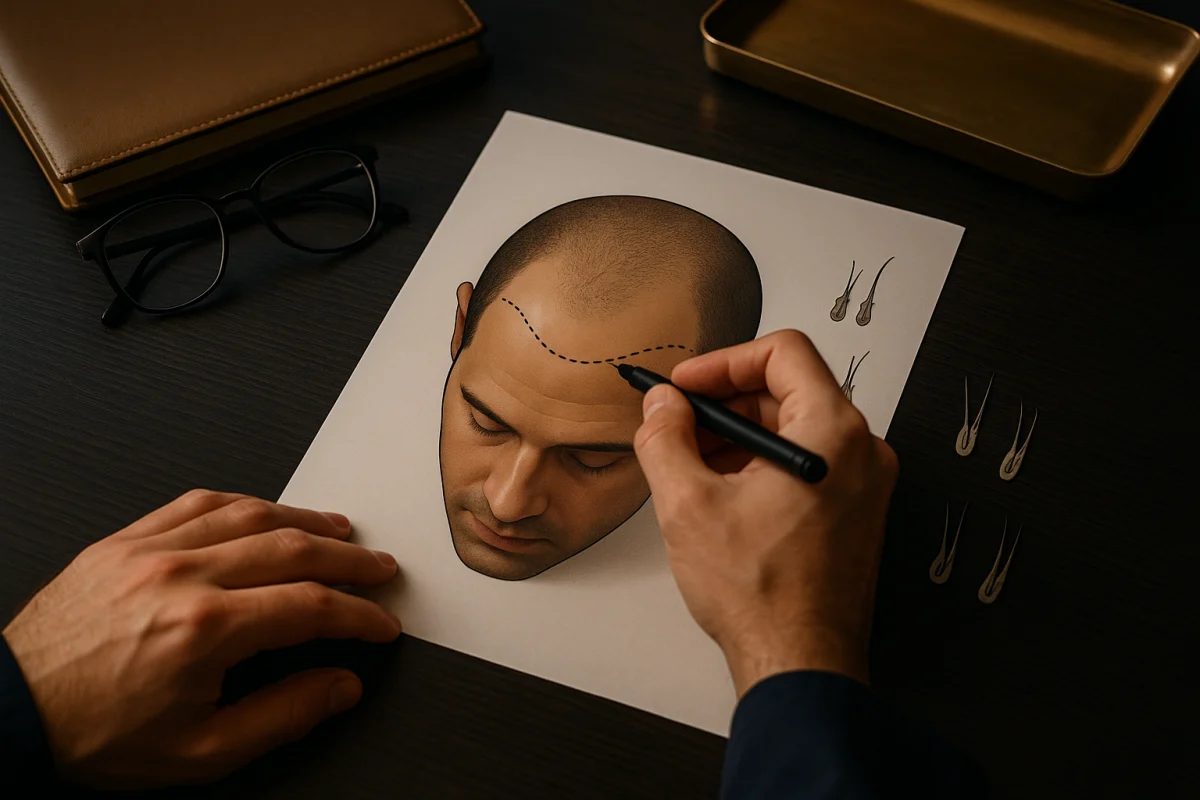
Hairline planning requires particular care. Single-hair grafts are typically used at the leading edge to create a softer transition, while grafts containing more hairs may contribute density behind it. The direction, angle and irregularity of placement matter as much as graft number. A natural result should respect facial proportions, likely future loss and the limited nature of donor hair rather than simply copying a youthful hairline.
07Timing surgery around future hair loss
The right time for surgery is different for each patient. Progressive hair loss does not always prevent a transplant, but it changes the planning discussion. If the pattern is still changing quickly, the surgeon may recommend monitoring it, treating contributing factors where appropriate or designing a smaller first session. This can reduce the risk of a transplanted area becoming isolated as nearby native hair becomes thinner.
Coverage priorities should be agreed clearly before surgery. Some patients place the highest value on framing the face with the frontal hairline, while others are more concerned about the mid-scalp or crown. Because the crown can require many grafts to create visual density, it may be planned conservatively, especially where donor capacity is limited. Doctors will explain the trade-offs rather than promise full density across every area.
Recovery and results also require patience. Transplanted hairs commonly shed in the early weeks before new growth develops, and visible improvement is gradual. Final maturation is often assessed around month 12, although individual timelines differ. At Acibadem Hair Transplant Center, graft survival is measured trichoscopically at month 12, with a documented 98% rate under a written guarantee. This measurement does not remove the need for an individual clinical assessment or ensure the same cosmetic outcome for every patient.
08Preparing for an informed online hair assessment
A useful transplant consultation begins with clear information, not only a single front-facing photograph. Images of the hairline, temples, top, crown and donor area in good natural light can help doctors make an initial assessment. It is also helpful to share your age, how long thinning has been present, any previous procedures, relevant health information and what result you hope to achieve. The doctor may request further images or advise an in-person examination.
International patients can request a free online hair analysis at Acibadem Hair Transplant Center. The submitted information is reviewed by doctors, and WhatsApp replies are typically provided within about two hours. An online review can offer preliminary guidance, but it does not replace a full medical consultation, physical examination or any investigations your doctor considers necessary.
If treatment is appropriate, practical planning should include travel, recovery time and follow-up. The clinic provides all-inclusive packages that include VIP transfer, a 4-star hotel, a care kit and 12 months of follow-up. Needle-free anaesthesia is also available. These services can make the journey more manageable, while the medical plan should remain focused on safety, diagnosis, donor preservation and realistic long-term expectations.
09Frequently Asked Questions
Why am I losing hair when no one in my family seems to be bald?
You may still have inherited a combination of genes that affects follicle sensitivity, even if close relatives have not shown obvious thinning. Family members can also have different patterns, ages of onset and rates of progression. In addition, not all hair loss is genetic, so sudden or unusual shedding should be medically assessed.
Why do some Gen Z adults seem to be balding so quickly?
Pattern hair loss can begin in younger adulthood in people with genetic susceptibility, but greater awareness and photography can make early change more noticeable. Stress, illness, dietary changes, scalp problems and hair breakage may also contribute to shedding or an appearance of lower density. A scalp assessment is the best way to identify the likely cause.
Can balding be reversed?
The answer depends on the cause. Some temporary shedding can improve when the trigger or underlying condition is addressed, while genetic miniaturisation is usually progressive without management. A hair transplant can redistribute resistant donor follicles to thinning areas, but it does not reverse the biological tendency for untreated native hair to thin.
Can I develop baldness if my father has not?
Yes. Hair-loss risk can be influenced by genes from both sides of the family, not only by your father’s hair pattern. The expression of these genes varies between individuals, and non-genetic causes of hair loss are also possible. A doctor can assess your own pattern rather than relying on family history alone.
Questo articolo ha scopo puramente informativo e non sostituisce il parere medico professionale.
 06
06 12
12