In questo articolo9
- The Islamic Perspective on Hairline Restoration
- Why Intention Matters in Islamic Medical Decisions
- Hair Transplants, Wigs, Extensions, and External Hair
- Is Hairline Transplant Haram? Key Factors Scholars May Consider
- Hairline Lowering and Receding Hairlines Are Different Requests
- Medical Safety, Modesty, and Informed Consent
- Questions to Ask a Scholar and Hair Restoration Doctor
- Choosing Responsible Care for a Hairline Transplant
- Frequently Asked Questions
For many scholars, hair transplantation using a person’s own follicles may be permissible when it restores hair lost through baldness, illness, injury, or a noticeable condition. Whether is hairline transplant haram can depend on the purpose, the method, and the individual circumstances, so it is wise to ask a qualified Islamic scholar and a licensed doctor before proceeding.
- Islamic views on hair transplantation often distinguish treatment or restoration from unnecessary alteration for appearance alone.
- A transplant using your own healthy hair follicles is generally discussed differently from wigs, hair extensions, or donor hair from another person.
- Hairline lowering may need more careful consideration when the aim is only cosmetic enhancement rather than correction of a clear concern.
- A qualified scholar can give guidance based on your school of thought, intentions, medical history, and planned procedure.
- A medical consultation is important to confirm whether hair transplantation is suitable and to discuss realistic, long-term results.
01The Islamic Perspective on Hairline Restoration
The question is hairline transplant haram is important for Muslim patients who wish to address hair loss while remaining faithful to Islamic values. In general, many contemporary scholars consider medical hair restoration potentially permissible when it aims to treat hair loss, restore a person’s usual appearance, or correct a condition that causes meaningful distress. However, Islamic rulings can differ according to the details of the procedure, its purpose, and the guidance followed within a person’s community.
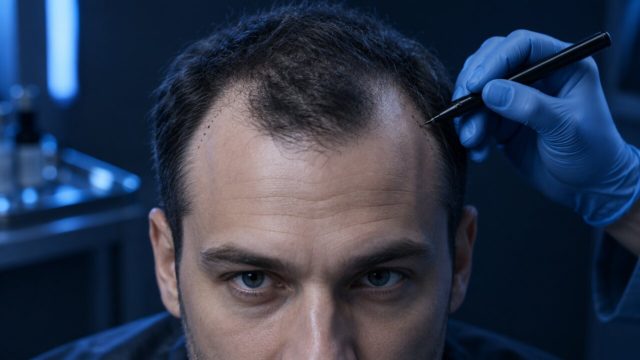
Hairline transplantation is a surgical form of hair restoration. It commonly involves moving healthy follicles from a fuller donor area, often at the back or sides of the scalp, to an area with thinning hair or a receding hairline. Because the follicles are usually the patient’s own, some scholars view this as a restorative treatment rather than the addition of artificial or external hair. This distinction is often central to the discussion.
There is no single answer that applies to every Muslim patient. A person with hair loss caused by genetics, burns, trauma, a scalp condition, or previous surgery may have a different situation from someone seeking to create a fashion-led hairline shape. Before making a decision, patients should understand both the religious considerations and the medical limits of a transplant. A qualified scholar can provide religious advice, while a hair restoration doctor can assess clinical suitability.
02Why Intention Matters in Islamic Medical Decisions
In Islam, intention is an important consideration when evaluating many personal and medical choices. A procedure intended to restore what has been lost, manage a visible effect of illness, or correct an abnormality may be understood differently from a procedure chosen solely to pursue a changing beauty trend. For hair transplantation, the patient’s reason for treatment can therefore be relevant to a scholar’s guidance.
Hair loss can affect confidence, social comfort, and emotional wellbeing. It may also be associated with medical conditions, hormonal changes, injury, or treatments that affect hair growth. Seeking a medically appropriate option for these concerns is not automatically viewed in the same way as making an unnecessary change to the body. Still, emotional distress should be discussed honestly, and patients should avoid feeling pressured by social media images or unrealistic ideals.
A useful question to consider is whether the planned treatment is intended to restore a previous or typical appearance, or to create an entirely new feature. This is not always a simple distinction. For example, rebuilding a hairline after progressive recession may be viewed differently from dramatically lowering a naturally high but healthy hairline. The final religious assessment should come from a trusted scholar who understands the specific situation.
03Hair Transplants, Wigs, Extensions, and External Hair
Islamic discussions about hair procedures often refer to teachings concerning the attachment of external hair. Wigs, hair extensions, and hair from another person can raise specific religious questions, especially when they are worn as if they were natural hair. The exact ruling may vary by context and scholarly interpretation, but these methods are commonly considered separately from surgical follicle transplantation.
In a standard hair transplant, the surgeon redistributes follicles that already belong to the patient. The transplanted hair can grow from the scalp in the new location after the healing process. It is not a removable attachment placed over the head, and it does not normally involve hair taken from another person. For this reason, some scholars describe autologous transplantation, meaning transplantation using one’s own tissue, as closer to treatment or repair.
When asking is hairline transplant haram, it is helpful to explain the method clearly to the scholar you consult. Patients can state that the plan involves their own follicles, a surgical procedure, and a natural growth process rather than a wig or extension. Clear information can help avoid confusion and allow the scholar to consider the matter through the appropriate Islamic principles.
04Is Hairline Transplant Haram? Key Factors Scholars May Consider
Is hairline transplant haram is not usually answered by looking at the procedure name alone. Scholars may consider why the transplant is requested, whether the patient is using their own follicles, whether there is a medical or restorative purpose, and whether the procedure carries avoidable harm. They may also consider the patient’s sex, the area being treated, and modesty requirements during medical care.
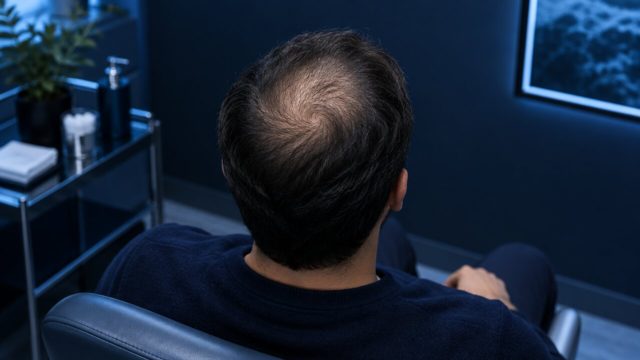
Many patients seek hairline restoration because of male or female pattern hair loss, which can gradually change the shape and density of the frontal scalp. Others have uneven hairlines after an injury, scar, burn, or previous surgery. In these situations, a scholar may regard the procedure as an attempt to restore a normal appearance. This does not replace individual religious advice, but it explains why a transplant is often discussed differently from non-medical adornment.
In contrast, a request to alter a normal hairline significantly, without hair loss or a corrective reason, may receive more cautious consideration. Some scholars may advise against procedures that are primarily for changing a naturally healthy appearance. Others may examine the level of distress and the cultural context. Patients should not assume that an online opinion applies to their own case, particularly if they follow a specific school of Islamic jurisprudence.
05Hairline Lowering and Receding Hairlines Are Different Requests
A receding hairline and a naturally high hairline may look similar at first glance, but they can involve different medical and religious questions. Recession often develops over time and may be linked to androgenetic hair loss. A transplant may be planned to rebuild areas that have gradually lost density. Your doctor can assess the pattern of loss, donor hair availability, scalp health, and whether future loss may continue.
Hairline lowering generally means moving the frontal hairline forward. This may be requested by someone who has always had a high forehead or who wants a different facial proportion. While some patients may have a clear concern that affects wellbeing, this procedure is more likely to be assessed carefully in relation to the difference between restoration and elective cosmetic alteration. A scholar can help the patient reflect on this distinction in a balanced way.
Long-term planning is also essential. A very low or sharply designed hairline may not remain natural if surrounding hair continues to thin. In most patients, experienced clinical planning considers age, family history, current hair loss pattern, donor capacity, and possible future treatment needs. A conservative design may support a more natural-looking outcome, but no surgical plan can stop future genetic hair loss by itself.
06Medical Safety, Modesty, and Informed Consent
Islamic medical ethics also values avoiding unnecessary harm and making informed decisions. Hair transplantation is a medical procedure, not a simple beauty service. It may involve local anaesthesia, follicle extraction, recipient-site preparation, and a recovery period. Potential risks can include swelling, temporary shedding, infection, scarring, poor growth, numbness, or an unnatural result. Your doctor should explain the possible benefits, limitations, and risks before treatment.
Patients may also wish to ask how privacy and modesty will be managed during consultation and treatment. A licensed clinic should explain who needs to be present, what parts of the scalp must be exposed, and how the care team protects personal dignity. Where relevant and practical, patients can discuss preferences regarding the clinical team in advance. Medical necessity and professional standards should guide these arrangements.
Informed consent means having enough information to make a voluntary decision. It is sensible to ask about the technique proposed, the expected timeline, aftercare, future hair loss, and what happens if growth is less than expected. Do not feel rushed by promotional claims or by pressure to book immediately. A careful consultation gives time to seek religious guidance and consider whether the plan is appropriate for your goals.
07Questions to Ask a Scholar and Hair Restoration Doctor
Before booking a procedure, consider speaking with a qualified scholar who is familiar with contemporary medical treatments. You may ask whether using your own hair follicles to restore hair lost through baldness or injury is permissible according to the Islamic guidance you follow. It can help to describe your hair loss history, the proposed transplant method, and whether your goal is restoration, scar coverage, or a lower hairline.
During a medical consultation, ask the doctor whether your hair loss has been diagnosed and whether it is stable enough for transplantation. The doctor may examine the scalp and donor area, review your health history, and discuss whether non-surgical management should be considered first. Some causes of shedding can be temporary or related to an underlying health concern, so an accurate assessment is important before any surgical decision.
You can also ask how many grafts may be appropriate, how the hairline will be designed, what recovery may involve, and how future loss could affect the result. Avoid requesting an exact result based only on another person’s photographs. Hair characteristics, donor density, scalp condition, and the extent of loss differ between individuals. Ethical care should focus on an achievable plan rather than a promise of perfection.
08Choosing Responsible Care for a Hairline Transplant
Patients considering a hair transplant should choose a properly licensed medical provider and make sure the procedure is planned by qualified doctors. At Acibadem Hair Transplant Center, a dedicated hair restoration clinic in Istanbul licensed by the Turkish Ministry of Health, patients can request a free online hair analysis that is reviewed by doctors. This first review can help clarify whether an in-person assessment may be appropriate, but it cannot replace a full clinical examination.
For patients who have considered the religious question is hairline transplant haram and wish to explore the medical side, it is important to ask for transparent information. Acibadem Hair Transplant Center offers Sapphire FUE and DHI techniques, with needle-free anaesthesia available for eligible patients. The appropriate technique depends on clinical findings, hair characteristics, and the treatment plan confirmed by the doctor.
Care should continue beyond the day of surgery. The clinic provides all-inclusive packages that include VIP transfer, a 4-star hotel, a care kit, and 12 months of follow-up. Results are measured through trichoscopic graft survival at month 12, with a documented 98% rate under written guarantee. Individual healing and cosmetic outcomes can still vary, so patients should follow aftercare instructions and keep realistic expectations throughout the process.
09Frequently Asked Questions
Is hair transplantation generally halal in Islam?
Many scholars consider transplantation with a patient’s own hair follicles potentially permissible when it is used to restore hair lost through baldness, illness, injury, or another noticeable condition. The ruling may depend on intention, the method used, and the interpretation of the scholar or school of thought you follow. For personal guidance, discuss your planned procedure with a qualified Islamic scholar.
Is having a hair transplant considered sinful?
A hair transplant is not automatically considered sinful. Some scholars may view it as permissible restoration when it corrects hair loss or a visible defect using the patient’s own follicles. A procedure sought only to make a major change to a normal appearance may need more careful religious consideration.
Are transplants halal in Islam more broadly?
The permissibility of transplantation in Islam depends on the type of transplant, medical need, source of the tissue, potential harm, and relevant ethical issues. Hair transplantation using one’s own follicles is commonly considered separately from transplants involving another person’s tissue. A qualified scholar can advise on your particular treatment plan.
Is using minoxidil haram?
Minoxidil is a topical medical treatment used for some types of hair loss, and it is not generally discussed in the same way as wigs or hair extensions. Whether it is suitable for you medically depends on your health, scalp condition, and the product instructions, so speak with a doctor or pharmacist. If you have religious concerns about ingredients or use, a qualified scholar can provide guidance.
Questo articolo ha scopo puramente informativo e non sostituisce il parere medico professionale.
Questa guida ha scopo informativo generale e non sostituisce una visita medica. Le decisioni sul trattamento vengono prese dopo una valutazione del medico, di persona o online.