
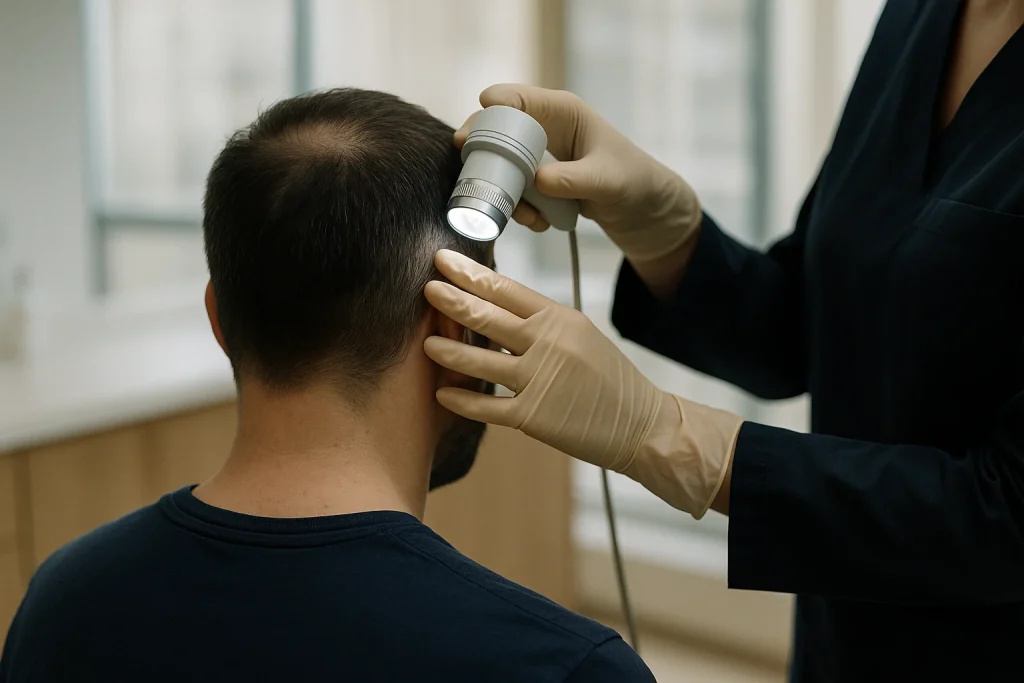
It is important to treat scalp fungus fully before considering a hair transplant. A fungal scalp infection can cause inflammation, scaling and temporary hair loss, and your doctor should confirm that the infection has cleared and the scalp barrier has recovered before any procedure is planned.
- Scalp fungus should be medically assessed because several scalp conditions can look similar but need different treatment.
- Antifungal treatment is commonly needed for scalp fungal infections; medicated shampoo alone may not be enough.
- Hair transplant surgery is usually postponed while there is active infection, inflammation, crusting or unexplained shedding.
- Home remedies such as apple cider vinegar should not replace an accurate diagnosis and prescribed treatment.
- After the scalp is healthy, a doctor can assess whether hair loss is temporary, permanent or suitable for transplant planning.
01Treating Scalp Fungus Before Hair Transplant Consideration
A healthy scalp is an essential starting point for any hair restoration plan. If you need to treat scalp fungus, the first priority is not graft placement but finding the cause of itching, flakes, redness, broken hairs or patches of hair loss. An active fungal infection may irritate the skin, weaken the scalp barrier and affect existing hairs. For these reasons, a hair transplant consultation should normally focus first on diagnosis and treatment rather than setting an immediate surgery date.
The term “scalp fungus” is often used for a fungal infection of the scalp and hair shafts, medically called tinea capitis. However, not every itchy or flaky scalp is fungal. Dandruff, seborrhoeic dermatitis, psoriasis, allergic contact dermatitis, bacterial folliculitis and other inflammatory conditions can create similar symptoms. A clinician may examine the scalp closely, take a sample of scale or hair, or request laboratory testing when the diagnosis is unclear.
In most patients, treatment can control a confirmed fungal infection, but the correct medicine and treatment duration depend on the type of infection, its severity, the person’s age, medical history and other medicines. Do not assume that a visible improvement means the infection has fully resolved. Your doctor will confirm when the scalp is calm, infection-free and suitable for further hair-loss assessment.
This guide explains why scalp infections matter before transplantation, how fungal scalp problems are investigated, what treatment may involve and when it may be reasonable to revisit a hair transplant consultation. It is general educational information and does not replace an in-person medical examination. If there is pain, pus, swelling, fever, rapidly spreading rash or sudden patchy hair loss, seek prompt medical care.
02How to Treat Scalp Fungus Safely Before Surgery
The safest way to treat scalp fungus is to obtain a medical diagnosis and follow a treatment plan designed for the scalp, not only for the skin surface. Fungal infections involving scalp hair often need prescription oral antifungal medicine because the organism can live within the hair shaft and follicle. The exact medicine, dose and course are decided by a qualified clinician. Medicated antifungal shampoos may be recommended as an additional measure to reduce surface spores and lower spread to others, but they are not always sufficient as the only treatment.
Treatment should be taken for the full prescribed course, even when itching and flaking improve early. Stopping too soon may allow the infection to persist or return. Your clinician may also arrange a review to check the response, particularly if there are areas of broken hair, black dots, tender bumps, swollen glands or a thick inflammatory plaque. In some situations, fungal testing or a culture helps identify the organism and guide treatment more precisely.
Good hygiene supports medical treatment. Avoid sharing combs, brushes, hats, pillowcases, hair accessories or towels until the condition has been assessed and managed. Wash personal items according to their care instructions, clean combs and brushes, and consider whether close household contacts or pets may need medical or veterinary assessment if a clinician suspects a contagious fungal source. This is especially relevant when other people in the home have itchy scaling or circular patches of hair loss.
A planned hair transplant should wait until the treatment course is complete and the doctor is satisfied that active infection and significant inflammation are no longer present. Surgery creates tiny openings in the scalp, so performing it through infected or inflamed skin could increase avoidable risks and make healing harder to assess. Delaying a procedure can feel disappointing, but restoring scalp health is an important part of responsible surgical preparation.
03Signs That May Suggest a Fungal Scalp Problem
Scalp fungus can look different from one person to another. Common features include persistent flaking, itchiness, redness, round or irregular scaly patches, hairs that break close to the scalp and areas of patchy thinning. Some people notice short broken hairs that leave a dark “black dot” appearance. Others may have dry-looking scale that is mistaken for ordinary dandruff. Symptoms alone cannot confirm the cause, but they are useful reasons to arrange a medical assessment.
More inflamed forms can cause tenderness, swollen areas, pustules, crusting or a soft, boggy swelling known as a kerion. A kerion needs timely clinical attention because severe inflammation may increase the chance of scarring and longer-lasting hair loss. Swollen lymph nodes in the neck can also occur with scalp infection. Avoid picking, shaving over, scratching aggressively or applying multiple irritating products, as these actions can damage the skin further and blur the clinical picture.
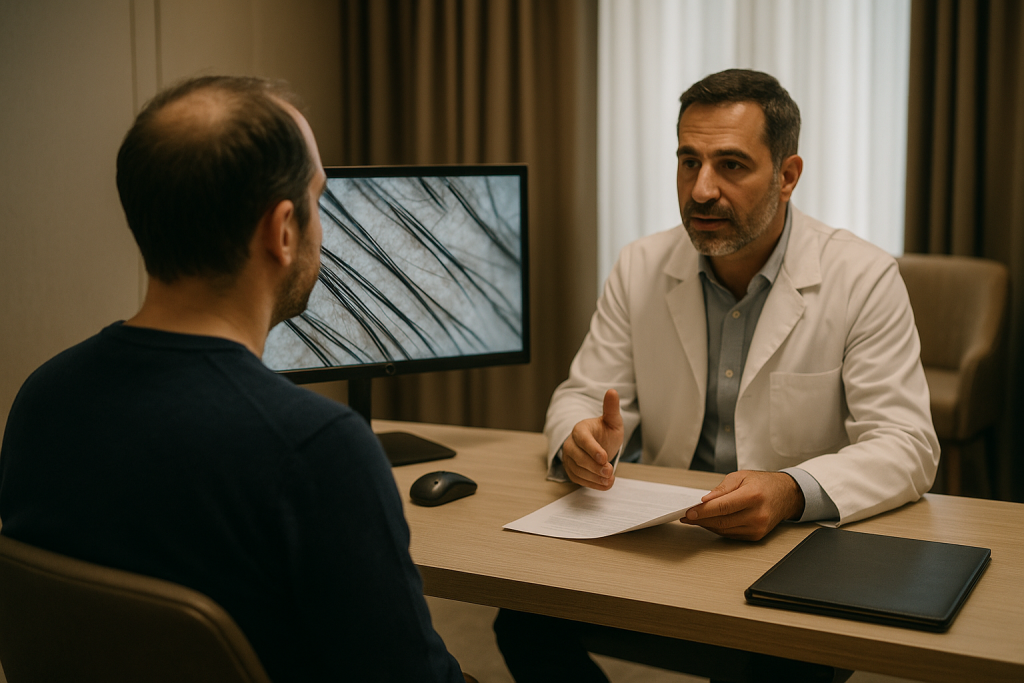
Hair shedding after infection does not automatically mean that permanent hair loss has occurred. When inflammation settles, hair may regrow gradually if follicles have not been scarred. The timing and degree of recovery vary. A doctor can examine the follicular openings and use tools such as trichoscopy to assess patterns of breakage, inflammation, miniaturisation and possible scarring. This is more reliable than judging the scalp only from photographs or from the amount of visible hair.
It is also possible to have more than one scalp issue at the same time. For example, a person with genetic pattern hair loss may develop dandruff or an inflammatory scalp condition that makes shedding seem suddenly worse. This is one reason a careful assessment is important before discussing surgical density, graft numbers or a hairline design. The underlying cause of hair loss should be understood before surgery is considered.
04Why Active Scalp Infection Can Delay Hair Transplant Planning
Hair transplantation is a medical procedure that moves hair follicles from a donor area to areas of thinning. Whether Sapphire FUE or DHI is being considered, the procedure relies on a stable scalp environment and careful healing after graft placement. Active infection may create inflammation around follicles, make the scalp more sensitive and interfere with the clinician’s ability to distinguish temporary infection-related shedding from permanent hair loss.
An infected recipient area may be more difficult to prepare and monitor after surgery. Redness, scaling, crusting and itch can overlap with normal early healing signs, making it harder to identify a problem quickly. Scratching an itchy scalp may also disturb healing grafts. These concerns do not mean that anyone who has ever had scalp fungus cannot have a transplant. They mean that the infection should be appropriately managed first, with the timing of any later procedure confirmed by the treating doctor.
The donor area also needs review. If fungal changes, diffuse scale or inflamed follicles affect the back or sides of the scalp, harvesting should not proceed until the area is healthy. A responsible assessment considers the whole scalp, not only the visible thinning zone. It may include medical history, current symptoms, scalp examination, hair-density evaluation and discussion of any past episodes of infection or skin disease.
At Acibadem Hair Transplant Center in Istanbul, patients can begin with a free online hair analysis reviewed by doctors. This can help identify concerns that may require local medical assessment before travel or before a surgical plan is discussed. Online images are helpful for initial guidance, but they cannot replace a direct diagnosis of a suspected infection. The clinic’s care team typically replies on WhatsApp within around two hours, while treatment decisions remain subject to medical evaluation.
05Medical Treatment, Follow-Up and Scalp Recovery
A clinician will select treatment according to the likely or confirmed diagnosis. For tinea capitis, systemic antifungal treatment is often considered because topical products may not reach the infection adequately inside the hair shaft. The doctor may discuss possible side effects, interactions and whether any monitoring is appropriate based on your health profile. Do not use leftover prescription medicine, share treatment with another person or combine several treatments without medical advice.
Your clinician may recommend an antifungal shampoo alongside oral treatment. Use it exactly as directed, including how long to leave it on before rinsing. Some products can cause dryness or irritation, especially when used more often than recommended. If the scalp becomes increasingly sore, swollen, blistered or develops a new rash after a product is used, stop the suspected irritant and ask a healthcare professional for advice. Gentle cleansing and avoiding harsh cosmetic treatments can support recovery.
During recovery, it is usually sensible to pause hair colouring, bleaching, chemical straightening, strong exfoliating products and tightly pulled hairstyles if they irritate the scalp. These measures do not cure infection, but they can reduce additional stress on already inflamed skin and fragile hairs. Keep nails short if itching is difficult to control, and avoid scratching as much as possible. Scratching can cause skin breaks and may increase the risk of secondary infection.
Follow-up matters because scalp appearance can improve before the infection is completely controlled. The doctor may decide whether further assessment is needed, particularly when patchy hair loss remains, symptoms return or there are signs of scarring. Once the scalp has remained stable, a hair restoration professional can reassess hair density and donor availability. In patients whose hair loss was mainly due to temporary inflammation or breakage, surgery may not be needed at all.
06Home Remedies and Everyday Scalp Care: What to Avoid
People often search for quick home treatments because an itchy scalp can be uncomfortable and embarrassing. However, home remedies should not delay medical assessment when scalp fungus is suspected. Oils, acidic rinses, essential oils, strong antiseptics and undiluted household ingredients may irritate the scalp or trigger contact dermatitis. They may also leave residue that makes symptoms harder to interpret. A treatment that feels soothing briefly is not proof that it has removed a fungal infection.
Apple cider vinegar is sometimes promoted online for scalp problems, but there is not reliable clinical evidence that it cures fungal infection of the scalp. It can sting, dry the skin or cause irritation, particularly on scratched or inflamed areas. If someone uses it instead of prescribed antifungal treatment, diagnosis and effective care may be delayed. Ask a doctor or pharmacist before trying any product on a scalp that is painful, broken, crusted or shedding hair in patches.
To support a cleaner scalp environment, use a gentle shampoo as advised by your clinician, rinse thoroughly and avoid sharing personal hair items. Wash pillowcases, hats and towels regularly during treatment. If a child or adult in the household has confirmed scalp fungus, close contacts may need advice because some infections can spread through direct contact or shared objects. Pets with hairless or scaly areas should be checked by a veterinarian rather than treated with human products.
If your goal is to treat scalp fungus before a future transplant, think of home care as supportive rather than curative. The key steps are an accurate diagnosis, appropriate prescribed treatment, sensible hygiene and a follow-up review. This approach protects both scalp health and the quality of later decision-making about hair restoration.
07When Can Hair Transplant Consideration Resume?
There is no single calendar rule for everyone. In most cases, hair transplant consideration can resume after the prescribed treatment has been completed, symptoms have resolved, the scalp skin has recovered and a doctor finds no evidence of active infection or significant inflammation. If infection caused patchy shedding, additional time may be needed to observe whether natural regrowth occurs. Your doctor will confirm the appropriate timing based on direct examination and your individual history.
At a later consultation, the clinical team should assess whether hair loss follows a stable pattern and whether the donor area is adequate. They should also ask about previous infections, recurring flaking, allergies, skin conditions and medicines. This information helps reduce surprises around surgery and aftercare. A transplant does not treat the underlying cause of fungal infection, so any tendency toward recurrent scalp disease should remain under medical management.
For suitable candidates, Acibadem Hair Transplant Center offers Sapphire FUE and DHI techniques, with needle-free anaesthesia available. The clinic is licensed by the Turkish Ministry of Health and provides all-inclusive packages that can include VIP transfer, a 4-star hotel, a care kit and 12 months of follow-up. These services are relevant only after medical suitability for surgery has been confirmed; they do not replace treatment for an active scalp disorder.
The center has welcomed patients from 38 countries over 12 years. For transplant cases that proceed, results are measured through trichoscopic graft survival at month 12, with a documented 98% rate under written guarantee. Individual healing, cosmetic density and hair-growth outcomes can vary, and no surgical result should be assumed in advance. A careful infection-first approach gives the scalp the best possible foundation for any future plan.
08Frequently Asked Questions
What is the fastest safe way to clear scalp fungus?
The fastest safe route is a prompt medical assessment and the correct antifungal treatment for the confirmed condition. Scalp fungal infections often need prescription oral medication, sometimes supported by a medicated shampoo. Improvement may begin before the infection is fully cleared, so complete the prescribed course and attend follow-up if advised.
Can apple cider vinegar cure a fungal infection on the scalp?
Apple cider vinegar is not a proven cure for scalp fungus. It may irritate inflamed, scratched or sensitive skin and should not replace a medical diagnosis or prescribed antifungal treatment. Speak with a clinician or pharmacist before applying home remedies to an affected scalp.
Can scalp fungus disappear permanently?
Many scalp fungal infections can clear with appropriate treatment, but recurrence is possible if there is re-exposure, incomplete treatment or another source of infection. Some people may also have a different ongoing scalp condition that resembles fungus. A doctor can confirm whether the infection has resolved and investigate repeated symptoms.
How can you tell whether a scalp problem is fungal?
Possible signs include scaling, itch, redness, broken hairs, black-dot areas and patchy hair loss, but these signs are not specific to fungus. A clinician may diagnose the condition through scalp examination and, when needed, testing of hairs or skin scale. This is particularly important before considering a hair transplant.
Questo articolo ha scopo puramente informativo e non sostituisce il parere medico professionale.
 06
06 12
12