

What stimulates hair growth before hair transplant surgery depends on the cause of hair thinning. In most patients, the best preparation includes a doctor-led assessment, correction of confirmed nutritional deficiencies, gentle scalp care and management of factors that may contribute to shedding.
- A hair transplant does not stop ongoing hair loss, so identifying the cause of thinning is an important first step.
- Protein, iron, zinc, vitamin D and other nutrients support normal hair function when a true deficiency is present.
- No food, drink or supplement can reliably reverse genetic hair loss or guarantee faster growth.
- Medical hair-loss treatments may be helpful for some patients, but your doctor should decide whether they suit you before surgery.
- A healthy donor area, a stable scalp and realistic expectations can support safer transplant planning.
01How Hair Growth Works Before Transplant Planning
Hair grows in repeated cycles. During the active growth phase, known as anagen, the follicle produces a hair shaft. This is followed by a transition phase and a resting phase, after which the hair may shed and a new cycle can begin. What stimulates hair growth is not one single factor. Follicles need normal blood supply, adequate nutrients, healthy scalp conditions and signals from the body that support their normal cycle. The pattern can be affected by genetics, hormones, illness, stress, medications and nutritional status.
Before hair transplant surgery, doctors usually look at whether hair loss is stable, active or caused by a temporary trigger. Genetic pattern hair loss gradually makes susceptible hairs thinner and shorter. By contrast, sudden shedding can sometimes follow fever, major stress, rapid weight change, childbirth, restrictive dieting or certain health conditions. These situations need a careful medical review because a transplant is designed to redistribute healthy donor follicles, not to treat every cause of shedding.
Hair transplantation can improve coverage in selected areas when the donor supply and hair-loss pattern are suitable. However, transplanted grafts do not make surrounding non-transplanted hair permanently resistant to further loss. Preparing for surgery therefore involves more than choosing a technique. It also means understanding the condition of existing hair, protecting the donor area and making a plan that remains natural if hair loss continues over time.
02What Stimulates Hair Growth Before a Transplant?
Before a transplant, what stimulates hair growth most safely is addressing a confirmed reason for poor hair growth or shedding. For example, replacing an identified nutrient deficiency may help normal hair cycling return over time. Treating scalp inflammation, improving protein intake after a restrictive diet, or reviewing a possible medical trigger may also be appropriate in some patients. These measures support the health of existing follicles, but they do not create new follicles or guarantee regrowth.
Genetic hair loss behaves differently from temporary shedding. In genetic hair loss, follicles in certain scalp areas are sensitive to hormonal signals and gradually miniaturise. Healthy habits can support overall hair quality, yet they may not be enough to stop this process. A doctor may discuss evidence-based medical options where appropriate, taking into account your medical history, examination findings and plans for surgery. Self-treatment without assessment can delay the correct diagnosis.
The aim before surgery is usually to create the best possible starting point rather than chase a rapid change. Your clinician may assess hair density, shaft thickness, scalp condition and the quality of the donor region. At Acibadem Hair Transplant Center, a free online hair analysis can be reviewed by doctors before travel. This early review can help clarify whether an in-person assessment and transplant planning may be suitable.
03Start With the Cause of Thinning, Not a Supplement
Hair thinning has many possible causes, and the visible pattern offers useful clues but is not enough for a complete diagnosis. Wider parting, recession at the temples, thinning at the crown, diffuse shedding and patchy hair loss can have different explanations. A doctor may ask about family history, recent illness, menstrual changes, dietary changes, stress, medications and scalp symptoms. In some cases, a physical examination or blood tests may be considered to investigate possible contributing factors.
Iron deficiency, thyroid disorders, low vitamin D levels, low vitamin B12 levels and inadequate protein intake are examples of issues that can be relevant in some patients. They are not present in everyone with hair loss. Taking high-dose vitamins “just in case” is not always harmless, and some nutrients can cause side effects or interact with medicines when used in excess. A test result and clinical assessment are more useful than guessing which supplement is needed.
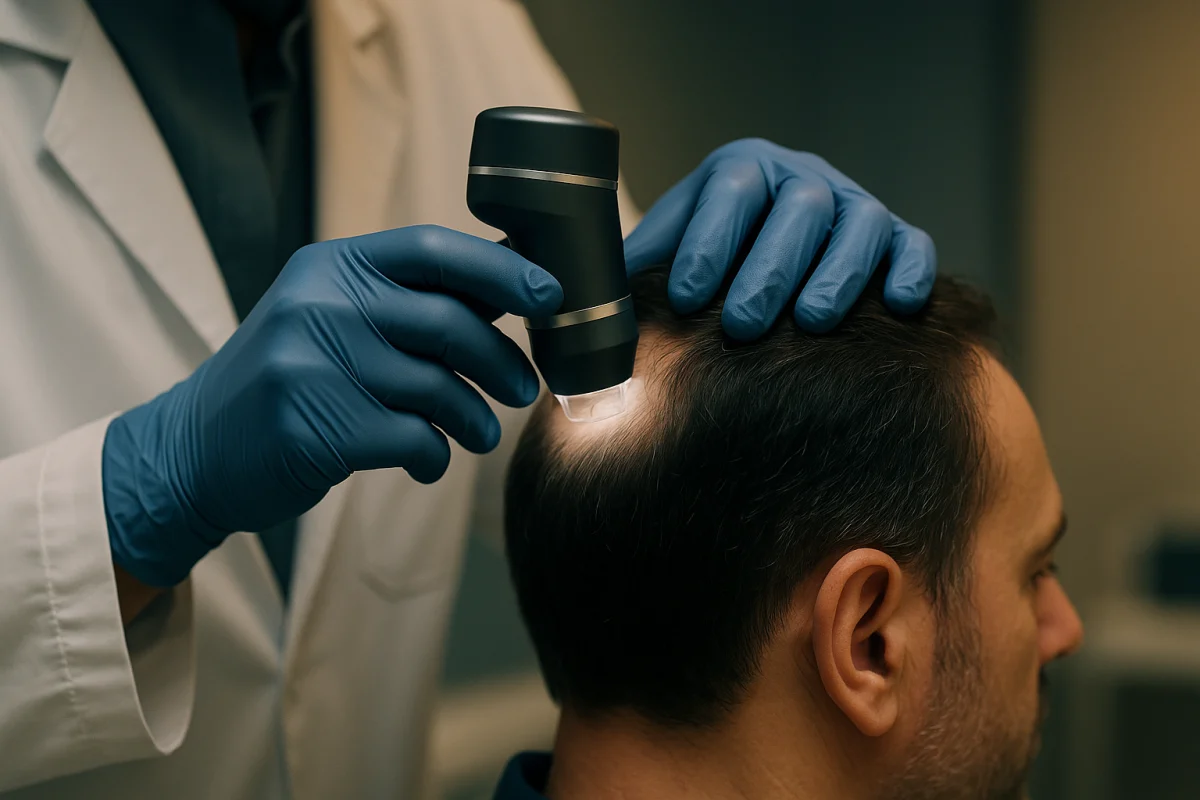
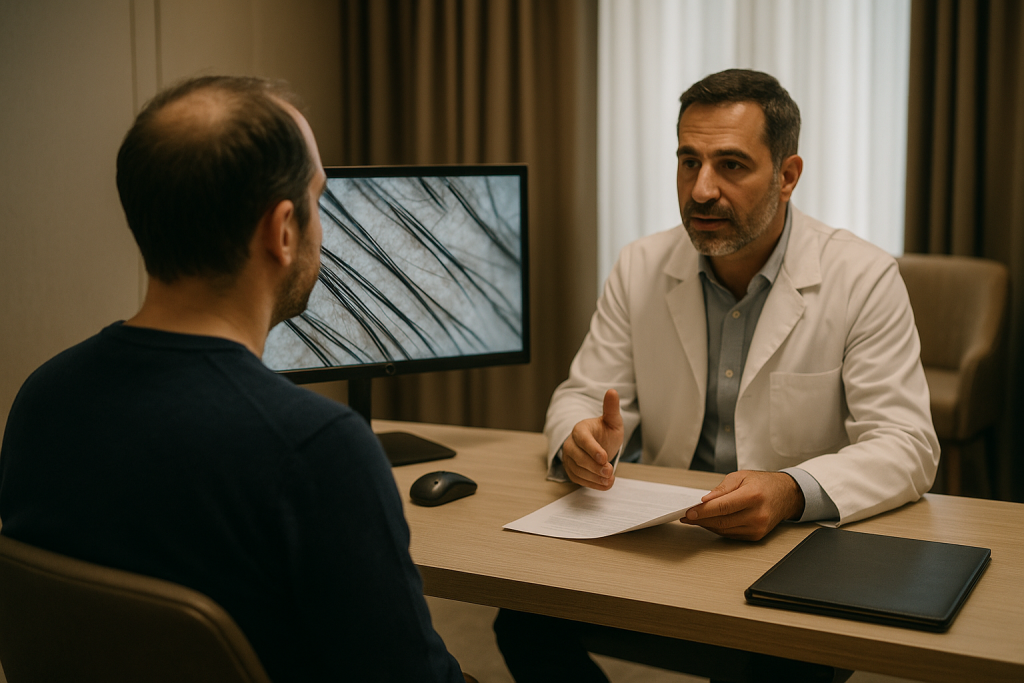
A trichoscopic examination can help a clinician study the scalp and hair shafts at close range. It may show variation in hair diameter, signs of inflammation, breakage or other features that guide the evaluation. For transplant candidates, this assessment also helps estimate the available donor hair and the likely long-term pattern of loss. A thoughtful diagnosis supports safer planning and more realistic expectations.

04Nutrition That Supports Normal Hair Follicle Function
Hair is mainly made of keratin, a protein. For this reason, a balanced diet with sufficient protein is important for normal hair production. Useful sources can include eggs, fish, poultry, dairy foods, beans, lentils, tofu and other protein-rich foods that fit your dietary pattern. Very restrictive diets, prolonged under-eating and rapid weight loss can contribute to shedding in some people. A gradual, nutritionally balanced approach is generally kinder to the body and hair.
Iron, zinc, vitamin D, vitamin B12, folate and essential fatty acids are also involved in normal body functions that can influence hair health. Foods such as leafy vegetables, legumes, meat or fortified alternatives, seafood, eggs, nuts, seeds and whole grains can contribute to a varied intake. Absorption matters too. For example, individual dietary needs may vary with digestive conditions, dietary restrictions or other health concerns. A healthcare professional can advise whether testing or targeted support is needed.
What stimulates hair growth through nutrition is usually consistency rather than a single “superfood.” A nutritious meal pattern may improve the conditions needed for healthy hair production, especially when it corrects an inadequate intake. It cannot reliably override inherited follicle sensitivity or replace medical care for a scalp disorder. Before surgery, avoiding crash diets and maintaining stable nutrition can be a sensible part of general preparation.
05Scalp Care, Sleep and Everyday Habits
A comfortable, clean scalp provides a better environment for normal hair care and clinical assessment. Gentle washing helps remove oil, sweat and product build-up, while an appropriate treatment plan may be needed if there is dandruff, itching, redness or scaling. Persistent scalp discomfort should not be ignored before a transplant consultation. Inflammation, infection or active skin disease may need attention first, because surgery is usually planned when the scalp is in a stable condition.
Hair shafts can break when exposed to repeated traction, harsh chemical processing, very high heat or tight hairstyles. Breakage is different from hair loss at the root, but it can still make the hair appear thinner and shorter. Choosing gentler styling methods, limiting tension and handling wet hair carefully can reduce avoidable damage. These changes may improve the appearance of existing hair, although they do not increase the number of follicles.
Sleep, stress management and avoiding smoking are important for overall health and may also support surgical readiness. Severe physical or emotional stress can be associated with temporary shedding in some people. It is not realistic to expect that relaxation alone will reverse established genetic hair loss, but stable routines can support wellbeing. Your surgical team may provide specific pre-operative instructions about alcohol, smoking and medicines based on clinical safety considerations.
06Medical Treatments and Their Place Before Surgery
Some patients may be candidates for medical treatment to help slow ongoing genetic hair loss or support existing hairs. The right approach depends on the diagnosis, age, sex, medical history, pregnancy plans where relevant, current medicines and the condition of the scalp. A doctor may discuss topical or oral options only after considering these factors. These treatments can have side effects and are not appropriate for every patient.
It is especially important not to begin, stop or restart a prescription or over-the-counter hair treatment solely because of online advice. Certain products may need to be paused around a procedure, while others may be continued under medical guidance. The timing varies by treatment and by individual health factors. Your doctor and surgical team will confirm a plan that is appropriate for your situation before the operation.
Medical treatment and transplantation can sometimes be part of the same long-term strategy. Medication may help preserve vulnerable native hair, while transplantation may improve selected areas where density has already been lost. Results vary, and no treatment can guarantee that future hair loss will not occur. A conservative hairline design and sensible use of donor grafts are important when planning for changes that may happen over the years.
07Preparing the Donor Area and Existing Hair
The donor area is commonly the zone at the back and sides of the scalp where hairs may be more resistant to genetic thinning. Its density, hair calibre, curl pattern and stability influence what can be safely harvested. A good donor area cannot be created quickly through supplements, special drinks or cosmetic products. It is assessed carefully so that extraction does not leave the area looking noticeably depleted.
Sapphire FUE and DHI are techniques used to place transplanted grafts, but the best method depends on the individual plan rather than a universal rule. Before surgery, the team considers the recipient area, donor capacity, hair characteristics and desired coverage. In some situations, it may be safer to treat a smaller area first or postpone surgery while active hair loss or scalp concerns are evaluated. This is part of responsible clinical planning.
Patients should share a complete and accurate medical history during their assessment. This includes allergies, chronic conditions, medicines, supplements, previous procedures and recent changes in health. Clear information helps the medical team identify potential risks and give appropriate instructions. At Acibadem Hair Transplant Center in Istanbul, doctors review the pre-treatment assessment before confirming suitability for a procedure.
08A Realistic Timeline for Stronger-Looking Hair
Hair changes take time because follicles work through biological cycles. If a temporary trigger or a confirmed deficiency is corrected, reduced shedding or improved hair quality may take several months to become noticeable. This timeline can feel slow, but it is normal for hair-related improvements to develop gradually. Be cautious of products that promise dramatic growth within days or weeks, especially when they do not explain the cause of hair loss.
After a transplant, newly placed hairs also follow a recovery timeline. Initial shedding of transplanted hairs can occur, and visible new growth typically develops gradually rather than immediately. Follow-up appointments allow the team to monitor healing and answer questions during this process. Individual recovery differs according to skin healing, hair characteristics, adherence to aftercare and other personal factors.
For international patients, clear follow-up can make the journey easier. Acibadem Hair Transplant Center offers all-inclusive packages that include VIP transfer, a 4-star hotel, a care kit and 12 months of follow-up. Needle-free anaesthesia is also available. The clinic is licensed by the Turkish Ministry of Health and has supported patients from 38 countries over 12 years. Your doctor will confirm whether surgery, timing and technique are suitable after assessment.
09Frequently Asked Questions
Which vitamin deficiency can be linked with thinning hair?
Several deficiencies may be associated with hair shedding or poorer hair quality, including low vitamin D, vitamin B12 or folate in some patients. However, iron deficiency and low protein intake can also be relevant, and genetic hair loss often occurs without a vitamin deficiency. A clinician can decide whether blood testing is appropriate rather than assuming one vitamin is the cause.
How can I encourage hair to grow faster naturally?
There is no reliable natural method that makes every person’s hair grow substantially faster than their normal biological rate. A balanced diet, enough protein, good sleep, gentle hair handling and avoiding crash diets may support normal growth and reduce preventable breakage. If shedding is new, severe or persistent, medical assessment is more useful than relying on home remedies.
Are there foods that can stop hair loss?
No specific food can reliably stop all forms of hair loss, especially inherited pattern hair loss. A varied diet that provides adequate protein, iron, zinc, vitamins and healthy fats can support normal follicle function and may help when poor nutrition is contributing. Ongoing thinning should be assessed because the cause may not be dietary.
Is there a drink that makes hair grow?
No drink has been shown to make hair grow on demand or reverse genetic hair loss. Water, milk, fortified drinks or smoothies can contribute to hydration and nutrition as part of a balanced diet, but they are not a standalone hair treatment. Be cautious with highly marketed drinks or detox plans that make rapid-growth claims.
Questo articolo ha scopo puramente informativo e non sostituisce il parere medico professionale.
 06
06 12
12